
30th Sunday in Ordinary Time. October 29, 2017 [Matthew 22:34-40]
“You shall love the Lord, your God, with all your heart, with all your soul, and with all your mind. (Mat 22:34)”
 What is love? If we ask young couple who are in love, love means more time together and be connected online even up to late hours of the night. For young priests, love may mean patiently listening to confessions for hours, and attending to sick calls. For a couple who have their newly-born baby, love is changing the baby’s diapers even at middle of the night. Love is passion, dedication and sacrifice.
However, love is also one of the most abused and misused words in human history. In the name of love, a young man lures his girlfriend into premarital sex. For the love of their country and race, some men persecute another ethic group and burn their villages. For the love of God and religion, some men blow themselves up and kill the innocent people, including children whom they consider the enemies of their God.
Surprisingly, the situation is not much different from the time of Jesus. For the love of the Law, the Pharisees keep and observe the Law even to its meticulous details in their daily lives. For the love of God and their country, the Zealots fight and kill the Romans and those who work for them. For the love of God, the Essenes separate themselves from the rest of the corrupted world and build their own exclusive communities. For the love of the Temple, the priestly clan work hard to offer sacrifices daily and is ready to die for the Temple.
When the Pharisees ask Jesus what is the greatest law, the law of laws, it is not simply about theological exercise, but it is to reveal Jesus’ fundamental attitude towards God and the Jewish Law. Is He a Pharisee who loves the Law more than anything else, a Zealot who loves the country zealously, or something else? Jesus answers, “You shall love the Lord, your God, with all your heart, with all your soul, and with all your mind.” Jesus quotes part of the Shema or the basic Jewish Creed that every devout Jews would recite every day (see Deu 6:4-5). Yet, Jesus does not stop there. He completes the first and the greatest law with another one, “You shall love your neighbor as yourself.” It also comes from the Old Testament (see Lev 19:18). To the delight of the Jews, Jesus’ answer is basically an orthodox one, but there is something novel as well.
The connection between first and second turns to be a watershed. For Jesus, true love for God has to be manifested in the love for others, and genuine love for others has to be oriented toward God. Thus, it is unthinkable for Jesus to order His disciples to kill for the love of God. Or, Jesus will not be pleased if His followers are busy with performing rituals, but blind to the injustices that plague their communities.
Once I asked my brother who is studying Canon or Church Law, what is the highest law in the Canon Law? He immediately answered, the suprema lex, all laws are governed and ordained for the salvation of souls. The Code of Canon Law contains more than 2 thousand provisions governing various aspects of Church’s life, and all these will be absurd if not for the love of God and neighbors. In the same manner, do our love for God, our prayers and celebration of sacraments bring us closer to our neighbors, to be more committed in doing justice, to be dedicated in our responsibilities as members of a family and a society? Does our love for others, our affection for our children and friends, our passion for ministry bring them closer to God?
Br. Valentinus Bayuhadi Ruseno, OP


 Why does Jesus, the compassionate man and just God, have to “humiliate” the Canaanite woman? If we put ourselves in the context of Jesus’ time and culture, we will understand that what Jesus does is just expected of him. Jesus is dealing with a woman of gentile origin. Generally, Jews avoid contacts with the non-Jews, and a Jewish man does not engage in dialogue with a woman who is not his wife or family in public. Jesus does what every Jewish man has to do. However, in the end, Jesus praises the woman’s faith and heals her daughter. Eventually, mercy overcomes differences and love conquers all.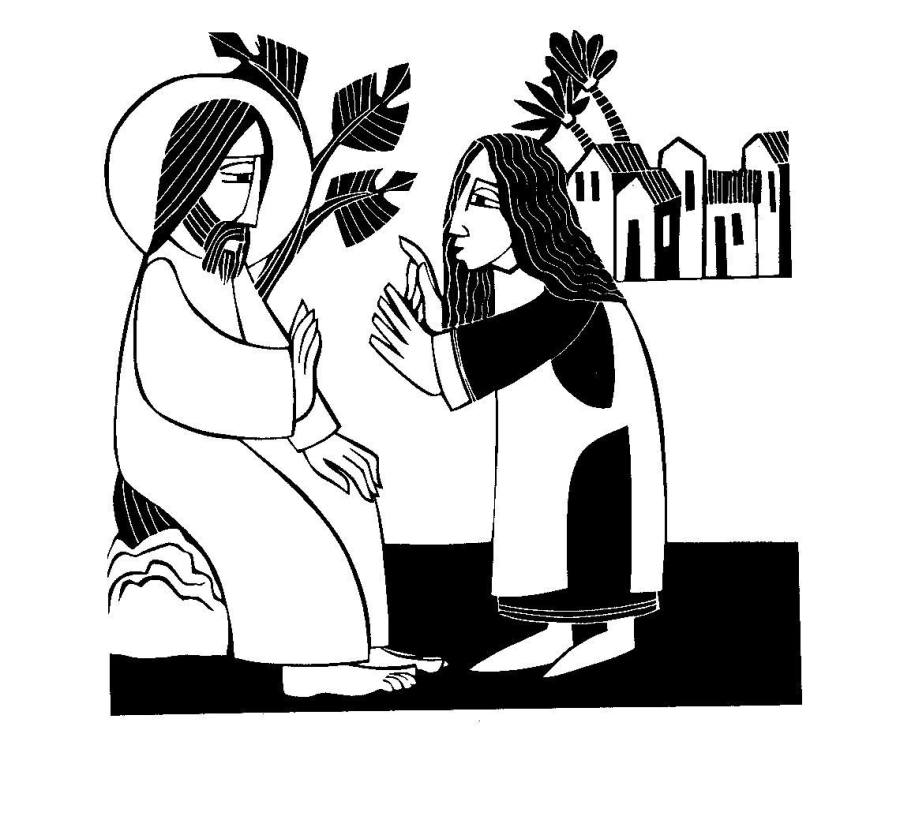

 This Sunday, the Church is celebrating the feast of Transfiguration. The word ‘transfiguration’ comes from Matthew who writes Jesus transfigures before the three disciples, Peter, James and John, his face shines like the sun and his clothes become white as light (17:2). The word “transfigure” is the direct transliteration of the Latin Vulgate Bible “transfigurare”. It is a combination of two words “trans” meaning to across, and “figura” meaning figure. Thus, transfiguration literally means the change of figure. It is a fitting word to describe what happens to Jesus.
 Minggu ini, Gereja merayakan Pesta Yesus yang menampakkan kemulian-Nya yang juga dikenal sebagai Transfigurasi. Kata “transfigurasi” adalah transliterasi dari kata Latin “transfigurare” yang digunakan oleh Alkitab Latin Vulgata. Ini adalah kombinasi dua kata “trans” yang berarti melintasi, dan “figura” yang berarti bentuk atau figur. Dengan demikian, transfigurasi secara harfiah berarti bahwa perubahan bentuk atau figur. Ini adalah kata yang tepat untuk menggambarkan apa yang terjadi pada Yesus di Gunung tinggi.
 When God calls us, God does not only call us privately and individually. In the Bible, God also calls us with our family, our community. God created the first man and woman not only to complete each other, but also to “multiply” or to build a human family. Noah entered the ark together with his wife and children. They were saved as a family from the flood. Abraham and Sarah were called from the land of Ur, and establish their own family and clan in the land of Canaan. When God called Moses to deliver the Israelites from slavery, God also called Aaron and Miriam, Moses’ brother and sister, to assist him in his mission. Finally, the life of Jesus of Nazareth would not be complete without the family of Mary and Joseph of Nazareth.
 Ketika Tuhan memanggil kita, Tuhan tidak hanya memanggil kita secara individual. Dalam Alkitab, Tuhan juga memanggil kita dengan keluarga kita dan komunitas kita. Tuhan menciptakan pria dan wanita pertama yang tidak hanya untuk saling melengkapi, tapi juga “berkembang biak” atau membangun keluarga manusia. Nuh masuk ke dalam bahtera bersama istri dan anak-anaknya. Mereka diselamatkan sebagai keluarga dari banjir besar. Abraham dan Sarah dipanggil dari tanah Ur untuk membangun keluarga dan klan mereka sendiri di tanah Kanaan. Ketika Tuhan memanggil Musa untuk membebaskan orang Israel dari perbudakan, Tuhan juga memanggil Harun dan Miriam, saudara laki-laki dan perempuan Musa, untuk membantu dia dalam misinya. Akhirnya, kehidupan Yesus dari Nazaret tidak akan lengkap tanpa keluarga Maria dan Yusuf dari Nazaret.
 St. Francis of Assisi once said, “Preach the Gospel all time. When necessary, use words.” He correctly points out that preaching is not only the job of the priests in the pulpit, or lay preachers in the prayer meetings. Preaching the Gospel is the mission of all of us. The preaching can happen in the family, as we show our children the meaning of true love, fidelity and respect. Preaching can take place in our workplaces as we uphold honesty, hard work, and dedication. Preaching may manifest in our daily life as we do justice, service to the needy, and kindness to our neighbors.
 Santo Fransiskus dari Asisi pernah berkata, “Wartakanlah Injil sepanjang waktu. Bila perlu, gunakan kata-kata.” Dia menunjukkan bahwa pewartaan bukan hanya tugas para imam di mimbar, atau pengkhotbah awam dalam pertemuan doa. Pewartaan Injil adalah misi kita semua. Pewartaan bisa terjadi dalam keluarga saat kita menunjukkan kepada anak-anak kita arti kasih sejati, kesetiaan dan hormat. Pewartaan dapat berlangsung di tempat kerja saat kita menjunjung tinggi kejujuran, kerja keras, dan dedikasi. Pewartaan dapat terwujud dalam kehidupan kita sehari-hari saat kita berlaku adil, melayani saudara dan saudari kita yang kekurangan, dan berbuat kebaikan kepada sesama.
 In Medio Ecclesiae