

18th Sunday in Ordinary Time [August 5, 2018] John 6:24-35
“This is the work of God, that you believe in the one he sent.” (Jn. 6:29)
 To say “Amen” is something usually we do in prayer. Commonly it is used to end a prayer. Our biblical prayers like Our Father and Hail Mary are usually concluded by amen. In several occasions, amen is mentioned more often. One of my duties as a hospital chaplain is to lead a prayer of healing for the sick. I always ask the family and friends who accompany the patients to pray together. Sometimes, they will say amen at the end of the prayer. However, some others will utter several amens within the prayer, and in fact, some people will say more amens than my prayer! In several occasions, amen is utilized outside the context of prayer. Preachers with a charismatic gift will invite their listeners to say amen. Surely, it is a good technique to keep the listeners awake!
Amen is a simple and yet very powerful word. Amen indicates our strong affirmation and agreement to something. It is the most concise manifesto of our faith. Amen is a biblical language, and in fact, it is a Hebrew word, that means “surely!” or “Let it be done!”. It is interesting to note that the early usage of amen in the Bible is to affirm curses and punishments (see Num 5:22; Deu 27:15). Fortunately, the Book of Psalm teaches us to use amen to affirm God’s blessings. Jesus Himself is fond of saying Amen. He uses amen to affirm the truth and power of His words (see Mat 5:18; Mat 8:5). There is a radical shift here. Unlike the usual practice to affirm God’s blessing, Jesus says amen to His own words. This is because Jesus’ words are God’s blessing per se. Thus, learning from the Biblical tradition, we say amen to affirm God’s blessings. Moreover, learning from Jesus, we say amen to express our faith in His words, and ultimately to Jesus Himself. Surprisingly, the first person in the New Testament to proclaim the great amen to Jesus is none other than His mother, Mary. Before the angel Gabriel, she says “Be it done to me according to your words,” in short, “Amen!” (see Luk 1:38)
One of the greatest amen we proclaim is when we receive the Eucharist. For hundreds of millions of Christian Catholics who receive the Holy Communion every Sunday, to say amen seems rather usual. Yet, it is supposed to be the most difficult amen we say. To believe and affirm that a little consecrated white bread is the Body of Christ containing the fullness of Jesus’ divinity and humanity is either totally insane or a sign of extraordinary faith. Yet, I do believe this is Jesus’ invitation to believe in Him in the Eucharist. Relating to this Sunday’ Gospel, Jesus says that the work of God is to believe in Jesus, the one sent by the Father (see John 6:29). Continue reading chapter 6 of this Gospel of John, we discover that to believe in Jesus means to accept that He is the Bread of Life, and those who eat this Bread will have eternal life (see John 6:51). Thus, to say faith-filled amen to the Eucharist is the fulfillment of Jesus’ words, and leading to the fullness of acceptance of Jesus as God and Savior.
As people who go to the Church every Sunday and receive the Eucharist in a regular basis, do we say our Amen in the fullness of our faith or is it just a mechanical repetition? Does our Amen enable us to recognize the daily blessing we receive? Like Mary, does our faith manifest in our daily actions, and make a difference in lives?
Br. Valentinus Bayuhadi Ruseno, OP
 Mengatakan “Amin” adalah sesuatu yang biasanya kita lakukan dalam doa. Kata ini biasanya digunakan untuk mengakhiri doa. Doa alkitabiah seperti Bapa Kami dan Salam Maria biasanya disimpulkan oleh kata amin. Namun, dalam beberapa kesempatan, amin disebut lebih sering. Salah satu tugas pastoral saya di rumah sakit adalah memimpin doa penyembuhan bagi yang sakit. Saya selalu meminta keluarga dan mereka yang menemani pasien untuk berdoa bersama. Biasanya, mereka akan mengatakan amin di akhir doa. Namun, ada juga beberapa orang akan mengucapkan beberapa amin dalam doa, dan bahkan, ada beberapa orang mengucapkan lebih banyak amin dari pada doa yang saya ucapkan! Dalam beberapa kesempatan, amin digunakan di luar konteks doa. Pengkhotbah karismatik akan mengajak pendengar mereka untuk mengatakan amin sebagai bentuk penegasan. Tentunya, ini adalah juga teknik yang bagus untuk membuat pendengar tidak tertidur!
 Unlike the other Gospels, the Gospel of John does not have the story of the Institution of the Eucharist on the Last Supper. However, it does not mean John the evangelist does not write anything about the Eucharist. In fact, John includes the most sublime discourse on the bread of life in his chapter 6. The chapter itself is relatively long, and the Church has distributed it into several Sunday Gospel readings (from today up to August 26). This discourse on the Bread of Life begins with the lovely story of Jesus feeding the multitude.
 Tidak seperti Injil lainnya, Injil Yohanes tidak memiliki kisah tentang penetapan Ekaristi dalam Perjamuan Terakhir. Namun, ini tidak berarti Yohanes penginjil tidak menulis apa pun tentang Ekaristi. Nyatanya, Yohanes menulis tulisan yang paling luhur tentang roti hidup dalam bab 6 Injilnya. Bab itu sendiri relatif panjang, dan Gereja telah distribusikannya ke beberapa bacaan Injil hari Minggu (dari hari ini hingga 26 Agustus). Penjelasan tentang Roti Hidup ini dimulai dengan kisah Yesus yang memberi makan banyak orang.
 I am currently having my clinical pastoral education at one of the hospitals in Metro Manila. It has been one month since I started my pastoral visits. Since then, I have encountered people in different stages of illness. Many of them are fast recovering, some are taking more time to get cured, but some others have to face serious conditions. It is my ministry as a chaplain to accompany them in their journey of healing. I feel immense joy when I can witness their healing process, from one who is weak on the bed, to one who is standing and ready to leave the hospital.
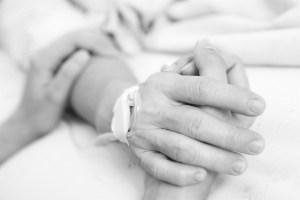 Saat ini saya menjalani pastoral di salah satu rumah sakit di Metro Manila. Sudah satu bulan sejak saya melakukan kunjungan pastoral pertama saya. Saya telah bertemu banyak pasien yang bergulat dengan berbagai jenis penyakit. Tugas pelayanan saya sebagai pekerja pastoral adalah untuk menemani mereka dalam perjalanan penyembuhan mereka. Saya merasakan sukacita yang luar biasa ketika saya dapat menjadi saksi dalam proses penyembuhan mereka, dari seseorang yang terbaring lemah di tempat tidur, sampai menjadi seseorang yang berdiri tegak dan siap untuk meninggalkan rumah sakit.
 Our Gospel today speaks of the mission of the Twelve. They are sent to perform the threefold task: to exorcise the evil spirits, to heal the sick and to preach repentance. This threefold missionary duty reflects Jesus’ mission also in the Gospel according to Mark. To facilitate their preaching ministry, they need to travel light. No extra baggage, no extra burden. They need to travel two by two as a sign of communal and ecclesial dimension of the mission. They shall depend also their sustenance on the generosity of the people. And, when they face rejection, they shall shake the dust off their feet as a symbolic judgment against those who reject them. In ancient time, the Jews shake the dust off their feet when they reenter the Israel soil from the Gentile territories, as a sign of disowning and disapproval of the Gentiles nations.
 Injil hari ini berbicara tentang misi dua belas rasul. Mereka dikirim untuk melakukan tiga tugas pokok: mengusir roh jahat, menyembuhkan orang sakit dan memberitakan pertobatan. Misi ini mencerminkan misi Yesus dalam Injil Markus. Untuk memfasilitasi misi mereka, mereka perlu melakukan perjalanan dengan ringan. Mereka perlu melakukan perjalanan berdua-dua yang menandakan dimensi komunal dan eklesial misi Yesus. Mereka akan bergantung juga pada kemurahan hati orang-orang yang mereka layani. Ketika mereka menghadapi penolakan, mereka akan mengebaskan debu dari kaki mereka sebagai peringatan simbolis terhadap mereka yang menolaknya. Pada zaman itu, orang-orang Yahudi mengebaskan debu dari kaki mereka ketika mereka masuk kembali ke tanah Israel dari wilayah non-Yahudi, sebagai tanda penolakan dan ketidaksetujuan mereka terhadap bangsa-bangsa non-Yahudi.
 When Jesus teaches in the synagogue in Nazareth, the listeners are amazed by his wisdom. Jesus speaks like a mighty prophet. However, the people soon make a background check on Jesus, and they realize Jesus’ identity and his family background. Nazareth is a small rural town in Galilee, and everyone knows everyone in this kind of setting. The people of Nazareth know Jesus as a son of a carpenter, and himself a carpenter. They are familiar also with Jesus’ family and relatives.
 Ketika Yesus mengajar di sinagoga di Nazaret, para pendengar kagum dengan kebijaksanaan-Nya. Yesus berbicara seperti seorang nabi yang perkasa. Namun, orang-orang segera melakukan pemeriksaan latar belakang pada Yesus, dan mereka menyadari identitas Yesus dan latar belakang keluarganya. Nazaret adalah desa kecil di Galilea, dan semua penduduk saling mengenal satu sama lain di lingkungan seperti ini. Orang-orang Nazaret mengenal Yesus sebagai putra seorang tukang kayu, dan dirinya sendiri adalah tukang kayu. Mereka juga akrab dengan keluarga dan kerabat Yesus.
 In Medio Ecclesiae