

Second Sunday in Ordinary Time [January 20, 2019] John 2:1-12
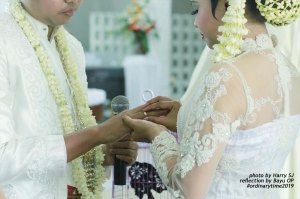 Mary who was once a bride and has passed through the tiny-gritty of a Jewish wedding can sense immediately something goes wrong. The wine is running out. In the Jewish context, wine is an essential ingredient in every joyous occasion, as it is ordained by God to “gladden men’s hearts” (Ps 104:15) The lack of it can spell a disastrous result. It is the source of shame, and even a family dispute.
Everyone knows that it is the responsibility of the bridegroom to provide the wine, yet Mary does something unexpected. Instead of notifying the groom, she approached Jesus and points to him the gravity of the looming disaster. However, instead of getting an immediate favorable response, the plot twists even more. In a surprising statement, Jesus says to his mother, “Woman, how does your concern affect me?” (Jn 2:4). This statement is a Semitic expression indicating that the issue at hand is not Jesus’ problem. In a sense, Jesus is right because it is the job of the groom to fix the problem, but in a much more profound sense, Mary is also right because Jesus is the true Bridegroom.
Jesus understands that He is the Bridegroom, but the hour is not at Cana, but at the Cross. Thus, He says, “My Hour has not yet come.” (Jn 2:4) Yet, Mary as a mother knows her Son best. She has faith in Jesus, that Jesus is not only the Bridegroom at the Cross who gives His life for His Bride, the Church, but Jesus is also the Bridegroom in every marriage, family, a community that reflects this Church. Thus, when Jesus transforms the water into wine, it does not happen in historical level, but in a more profoundly symbolical way. Yes, Jesus helps the couple from disaster, but more than that, He supplies what is fundamentally lacking in every marriage: the best wine, the true joy of married life.
One of my duties as a deacon is to check whether the particular couple is canonically fit for the Church’s marriage. To fulfill this, I need to interview the couple and ask some pertinent questions. Yet, I usually go beyond, and I remind them why the Church does not recognize civil marriage. The answer is plain yet very basic: Jesus, the true Bridegroom, is not there, or to be precise, we make a deliberate effort to exclude Him in our marriage. The union between man and woman is not just a human, social and cultural phenomena but a divine reality. When a man and a woman commit themselves into marriage, God Himself who wills to make them one. Therefore, marriage is primarily and fundamentally God’s grace working in the human relationship. And if God unites them together, He will be the one who sustains and brings into perfection. This is why marriage is elevated into the level of sacraments of the Church.
However, I continue reminding the couples that marriage in the Church does not only mean to celebrate the sacrament of matrimony but to stay within the Church, the Bride of Christ, throughout their lives: to attend the Eucharist as a family, to participate actively in the Church as a couple, to pray regularly together. As the wine is impossible without a jar of waters, God’s grace will not work in our marriages unless we open ourselves to this grace. Like Mary who points Jesus what is lacking in the wedding in Cana, so the Church asks Jesus to fulfill every marriage with the best wine.
Deacon Valentinus Bayuhadi Ruseno, OP
 In Medio Ecclesiae