

Second Sunday of Easter [A]
April 12, 2026
John 20:19-31
On the Second Sunday of Easter, we celebrate the Sunday of Divine Mercy. But what exactly is mercy? Why did the Church choose the Second Sunday of Easter for this feast? And how do our readings teach us about acts of mercy?
To understand mercy, we first need to know the meaning of the virtue of justice. Justice means giving someone what is due to them. To be merciful, however, means giving someone far beyond what they are due. If we correctly answer 5 out of 10 questions on a test, we deserve a 5 as our mark—that is justice. Yet, if our teacher decides to add two extra points to our grade, that goes beyond what is due to us; that is mercy. From a divine perspective, God does not owe us anything. We cannot demand anything from Him. Therefore, everything we have is a free gift born of His mercy: our lives, our talents, our families, our friends, and our wealth, to name just a few.
Why choose the Second Sunday of Easter? This feast was established relatively recently by Pope John Paul II on April 30, 2000, during the canonization of St. Faustina Kowalska. His decision was based on private revelations given to St. Faustina, in which Jesus expressed His desire for the Second Sunday of Easter to be celebrated as Divine Mercy Sunday. But why did Jesus specifically want the Second Sunday?
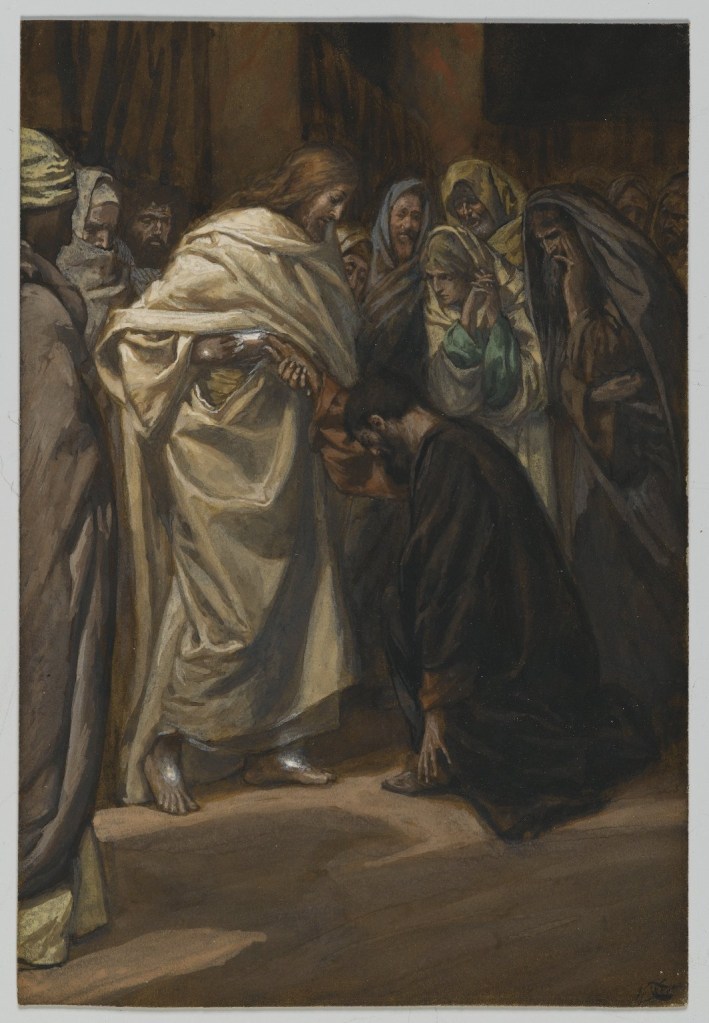
The answer lies in today’s Gospel. A week after the resurrection, Jesus once again appeared to His disciples. Specifically to Thomas, who doubted the resurrection, Jesus showed Himself and His wounds. Thomas became the recipient of God’s mercy. He did not have the right to demand proof; in fact, he deserved to be reprimanded, as he had abandoned Jesus at a critical moment. Yet, Jesus forgave his cowardice and unreasonable demands, showing him the proof of His limitless love: “I die for you that you may live.”
We are often like Thomas and the other disciples. God has given us everything we have, yet we still betray Him, trade Him for worldly things like money or fame, and run from Him when life gets tough. Furthermore, instead of asking for forgiveness, we frequently demand more from the Lord. We are incredibly blessed that, despite our ungratefulness, Jesus still shows us the proof of His love and remains deeply merciful to us.
As people who have received such profound mercy, we are called to be merciful in turn. But how? We can learn from the lives of the first believers in Jerusalem. They sold their properties so they could help one another. Helping our brothers and sisters in need is a profound act of mercy. Yet, this act of sharing must be based upon the teachings of the Apostles, rooted in communal life, and draw its strength from the breaking of the bread and prayer. In the Eucharist, we find the core reason why we must be merciful: God has shown us mercy by giving us His Son, Jesus, for our salvation. Jesus, in turn, has been merciful to us by giving up His body and blood for our sanctification. Without uniting ourselves to Jesus’ mercy, our own acts of mercy are empty and self-seeking. Only in Jesus do our acts of mercy find true fulfillment and perfection.
Rome
Valentinus Bayuhadi Ruseno, OP
Guide Questions:
When have I experienced God’s mercy in my own life, receiving blessings or forgiveness that went far beyond what I felt I deserved? In what ways do I sometimes act like Thomas—doubting God’s presence or demanding proof when life gets difficult? What is one tangible, concrete way I can show mercy to someone in need this week? How can I better unite my daily actions with Jesus’s sacrifice?
 In Medio Ecclesiae