

Second Sunday in Ordinary Time. January 15, 2017 [John 1:29-34]
“Behold, the Lamb of God, who takes away the sin of the world (Jn 1:29).”
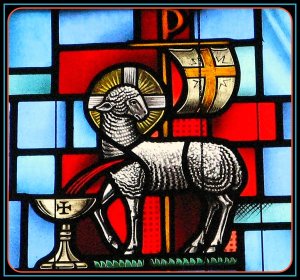
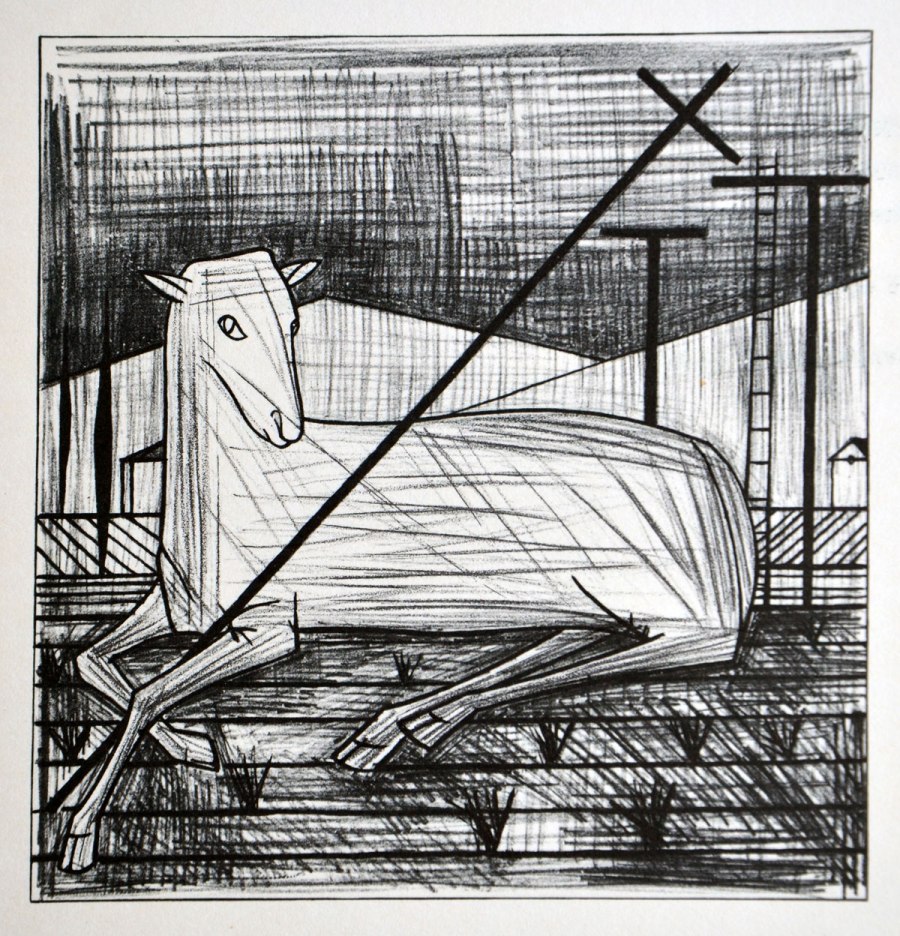
John the Baptist calls Jesus the Lamb of God who takes away the sin of the world. This very phrase eventually became part of the Eucharist and we faithfully recite or sing ‘the Lamb of God’ just before we receive holy communion. But, what does it mean? Why does it have to be a lamb? Not an orangutan, a giraffe or a komodo dragon? Why an animal, not a plant, a fruit or a mobile phone? To make it more intelligible, we have to go back to the Jewish ritual meal of Passover.
The first Passover meal took place before the Hebrews escaped their slavery in Egypt. Every family has to slaughter an unblemished lamb, put its blood on the doorpost and lintel, and roast the lamb before the entire family consumes it. The story goes that the angel of God came to take every firstborn of the Egyptians, but, he passes over the houses of the Hebrew families because of this blood of the Lamb (see Exo 12). This historic event then was institutionalized and became an annual celebration for the Jewish people, even up this day.
Now, John the Baptist announced a new revelation: Jesus is the Lamb, not only any ceremonial lamb, but of God. This Lamb of God has much superior mission than the first Passover lambs: to take away the sin of the world. This lamb would be sacrificed on the cross and His blood will be poured for our salvation. Like the lamb of Passover which is consumed by the Jews, so the Lamb of God would be partaken by the Christians in the Eucharist. Thus, it is proper for us to remember Jesus as the Lamb of God right before we take the Body of Christ in the Mass.
However, it is true as well that for many of us, a lamb has not much meaning. How many among us have a first-hand experience with this four-legged animal? I myself have no immediately encounter with this mammal, except when I eat it at a restaurant! Yet, we know what it means to sacrifice for the persons we love. A wife faithfully taking care of his aging and sickly husband. Parents giving all their effort, time and money so their children may get the best education and life. A woman abandoning her promising career, entering religious life and serving the poor and homeless. Sacrifice entails pain, it gives away the best of us, our time, life and future, and yet, all sacrifice might not be fully appreciated. But, we continue to sacrifice because we know that is for the best of our loved ones. If we are empowered to give ourselves as a sacrifice, we have become the little lambs of God. We sacrifice ourselves because Jesus has sacrificed Himself for us and made our own sacrifices meaningful and fruitful.
Every time, we participate in the Eucharist, we remember someone has loved us so much and sacrificed Himself for us, and we still receive the fruits up to this day. Now, we are also called to be the little lambs of God for others.
Br. Valentinus Bayuhadi Ruseno, OP


 The story of Nativity of Jesus Christ began with a great person in ancient time. He was Caesar Augustus. He was considered to be one of the greatest Roman Emperors because during his reign, he was able to establish peace and prosperity within his territory. The people adored him and worshiped him as the Savior and the Son of God. He was the hero of the ancient world, but fortunately, he was not the hero of Christmas.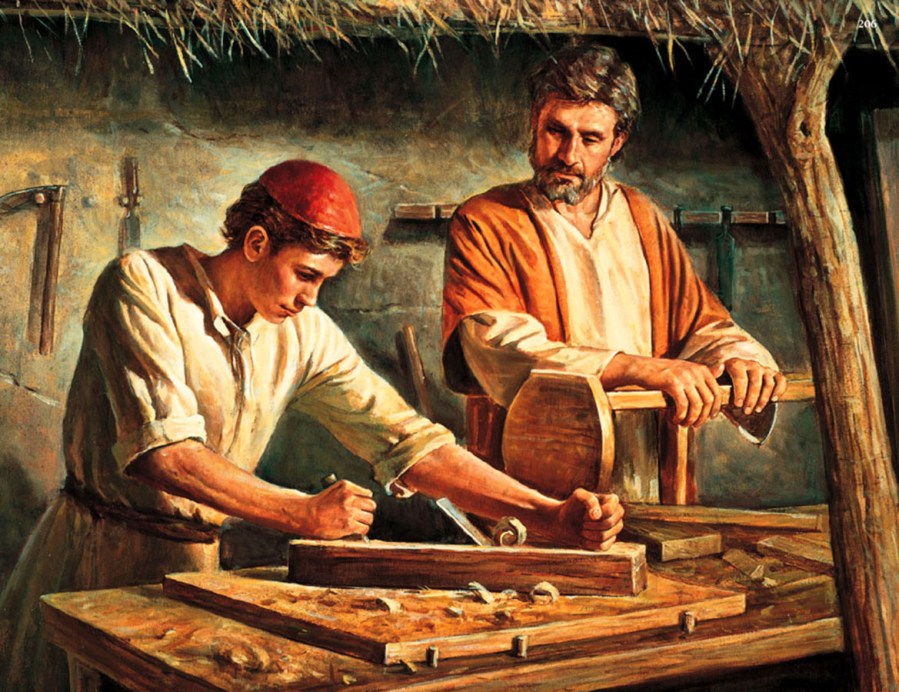
 If there is one important person in the life of Jesus, but gets very little attention, this person is no other than Joseph, Jesus’ foster father. He was absent in the Gospel of Mark. In John, he was mentioned only by name. In Luke, his presence was felt, but he was overshadowed by Mary and her unique mission. Only in Matthew, Joseph had a more active role in the beginning of Jesus’ life. Yet, again, he remained a voiceless character, and simply disappeared as Jesus began his mission. Still, Joseph had significantly influenced the life of Jesus.
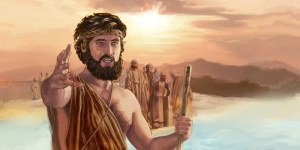 Why did many people come to John the Baptist and listen to him? I believe that the Jewish people hungered for the truth. It might be an inconvenient and hurtful truth, but they longed to hear it. They were tired of listening to their leaders, like the Pharisees and the Sadducees, who were not honest but were living in hypocrisy. They were exhausted by numerous religious obligations but did not find any inspiration and a good example from their leaders. John came and preached to them the truth with simplicity and integrity, and the Israelites knew that they had to hear him.
 We are entering the Season of Advent. This season marks the beginning of the new Church’s liturgical year as well as of the four Sundays preparation for Christmas. Advent is from the Latin word ‘Adventus’ meaning ‘arrival’, and thus, this season prepares us for the coming of Christ.
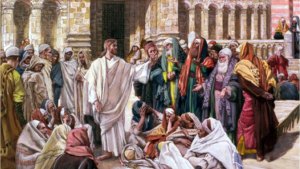 In many other ancient religions, temple was a sacred place. It is holy because their gods or goddesses chose to make their dwelling place and they may serve and worship their gods there. Thus, many cultic rituals in honor of their gods like animal sacrifices and prayers took place in the temples. The temple became the visible signs of the divine presence among the people. Zeus was felt alive in his temple in Mount Olympus, or the gods of Rome were present in the Pantheon.
 The month of November is dedicated to honor all the saints in heaven as well as to pray for the souls in the purgatory. It begins with the celebration of All Saints’ Day on November 1 and the commemoration of the All Souls Day on November 2. We, the Dominicans, celebrate the all Dominican Saints on November 7 and pray for the souls of our Dominican family on November 8. This Church’s celebration traces its origin to Pope Boniface IV in the 7th century, yet its roots go deeper into Jesus Christ Himself.

 In Medio Ecclesiae