

Sixth Sunday in Ordinary Time [B]
February 14, 2021
Mark 1:40-45
 Leprosy in the time of Jesus is not only physically and mentally deadly, but also spiritually incapacitating. Leprosy or currently known as the Hansen’s disease is horrifying sickness because it does not kill the person slowly, but it gradually deforms and incapacitates the person. The bacteria cause terrible damage in peripheral nervous to the point that the person is no longer feeling the sensation, especially pain. Without this sensation, the person fails to recognize and avoid bodily injuries. Losing limbs is shared among the victims with advanced stages of leprosy.
Since the sickness was incurable and highly contagious in ancient time, it was a natural reaction for the people to exclude the infected persons from the community. We can imagine the effects of exclusion suffered by the victims. They were cut from the bare necessities, separated from their family and friends, and aware that they will die a horrible death. People could quickly become insane. This awareness that they would not survive outside society pushes the people with leprosy to gather and form their community. Thus, lepers’ colonies were deemed a practical solution to support one another in the face of the bleak reality of life.
In the Jewish context, skin diseases, especially leprosy, are about biological and mental problems, but it is a religious issue. The Book of Leviticus states that people with certain skin diseases, including leprosy, have to present themselves to the priest and have their bodies examined. The priest may declare that persons as unclean. After the verdict, the persons have to go out from the community, wear rent cloth, and let their hair dishevel. These become visible signs that they are with contagious diseases and unclean. Yet, if a person remains going closer to them, they shall shout, “Unclean! Unclean!” This is to make sure healthy and clean persons will not come nearer. Being declared unclean means the person is not fit for the religious service and cannot enter the holy ground like the temple. Thus, for a Jew who contracted leprosy, he was excluded physically and mentally and religiously. The sickness also cut them from God they serve and worship.
In the Gospel, we see the leper who took the initiative to approach Jesus, thus breaking the most fundamental prohibition to stay away from people and God. The leper’s request was not to be healed, but rather to be ‘clean.’ The deepest desire of this leper is not physical healing, but to worship his God. The real healing comes only when we can approach and worship the true God. Looking at his courage and deepest longing, Jesus was moved by pity and made him clean.
The leper in the Gospel teaches us a lot about the genuine desire for healing. Perhaps, many of us look for God because we wish to be cured of diseases, seek financial success, or free from other problems. Yet, we seldom desire to see God because we want to be healed spiritually, liberated from sins, and be one with Him. The Gospel teaches us that true healing is more than physical health and economic stability, but the union with God.
Valentinus Bayuhadi Ruseno, OP
Photocredit: Claudio Schwartz
 Penyakit kusta pada zaman Yesus tidak hanya mematikan secara fisik dan mental, tetapi juga melumpuhkan secara rohani. Kusta atau yang sekarang dikenal dengan penyakit Hansen adalah penyakit yang mengerikan karena tidak hanya membunuh orangnya secara perlahan, tetapi lambat laun akan merusak wujud dan melumpuhkan orang tersebut. Bakteri kusta menyebabkan kerusakan yang parah pada jaringan saraf sehingga orang tersebut tidak lagi dapat merasakan sensasi, terutama rasa sakit. Tanpa sensasi ini, orang tersebut gagal mengenali dan menghindari cedera pada tubuh. Kehilangan anggota tubuh seperti jari adalah hal yang biasa terjadi pada penderita kusta stadium lanjut.
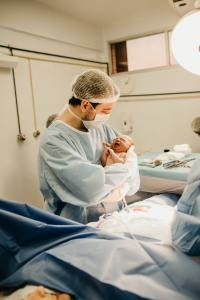 Jesus cannot be separated from His healing ministries. Some of the healings are remarkable, like the healing of a woman with the hemorrhage and Jarius’ daughter [Mark 5:321-43]. They are astonishing because these are practically impossible cases. The woman has suffered for twelve years without sign of hope, and Jarius’ daughter is as good as dead. Yet, Jesus does heal not only those with grave illness but also those with curable sickness.
 Yesus tidak dapat dipisahkan dari pelayanan penyembuhan-Nya. Beberapa kisah kesembuhan merupakan kejadian yang luar biasa seperti kesembuhan seorang wanita dengan pendarahan dan juga anak perempuan Jarius [Markus 5: 321-43]. Penyembuhan ini adalah mujizat karena kasus-kasus yang dihadapi Yesus adalah hal-hal mustahil disembuhkan pada zaman-Nya. Sang wanita telah menderita pendarahan selama dua belas tahun tanpa harapan, dan putri Jarius sebenarnya sudah meninggal. Di sisi lain, Yesus tidak hanya menyembuhkan orang yang sakit parah, tapi juga mereka yang sakitnya tergolong tidak membahayakan.
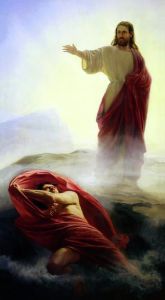 Jesus performed His first exorcism in the Gospel of Mark. Reading the context, we discover that Jesus was teaching in the synagogue, and the people recognized Him teaching with authority. When Jesus taught with authority, it does not merely mean He preached with eloquence and chrism, but His teachings manifested in powerful signs, like healings and exorcism.
 Yesus melakukan pengusiran setan atau eksorsisme pertama-Nya dalam Injil Markus. Membaca konteksnya, kita menemukan bahwa Yesus sedang mengajar di sinagoga dan orang-orang mengenali Dia mengajar dengan otoritas. Ketika Yesus mengajar dengan otoritas, ini tidak hanya berarti Dia berkhotbah dengan kefasihan dan krisma, tetapi ajaran-Nya dimanifestasikan dalam tanda-tanda yang nyata dan menakjubkan, seperti penyembuhan dan pengusiran setan.
 We once again listen to the story of the calling of the first disciples: Simon and Andrew, as well as James and John, the sons of Zebedee. Jesus called them, and He would make them ‘the fishers of men.’ Yet, from countless possibilities of professions and occupations, why did they have to be ‘the fishers of men’? Why not merely Jesus’ promotion team? Why not Jesus’ soldiers?
 Kita mendengarkan kisah panggilan murid-murid pertama: Simon dan Andreas, juga Yakobus dan Yohanes, anak-anak Zebedeus. Yesus memanggil mereka dan Dia akan menjadikan mereka ‘penjala manusia’. Namun, dari berbagai profesi dan pekerjaan yang tak terhitung jumlahnya, mengapa mereka harus menjadi ‘penjala manusia’? Mengapa tidak jadi tim promosi Yesus? Mengapa bukan tentara Yesus?
 Yohanes Pembaptis menyebut Yesus sebagai ‘Anak Domba Allah.’ Jika kita menghadiri perayaan Ekaristi, kita akan selalu mendengar ungkapan ini. Tepat sebelum komuni, imam akan memegang roti dan anggur yang telah dikonsekrir, dan memperlihatkan kepada kita semua, lalu berkata, “Lihatlah Anak Domba Allah, Lihatlah Dia yang menghapus dosa dunia. Berbahagialah kita yang diundang ke perjamuan-Nya!”
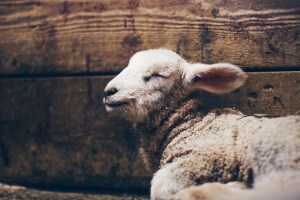 John the Baptist identified Jesus as the ‘Lamb of God.’ If we are attending the celebration of the Eucharist, we cannot miss hearing this phrase. Just before the communion, the priest will hold the consecrated bread and wine, and present them to the faithful, then saying, “Behold the Lamb of God, Behold Him who takes away the sin of the world. Happy are those invited to the supper of the Lamb!”
 In Medio Ecclesiae