

Fourth Sunday in Ordinary Time [February 3, 2019] Luke 4:21-30
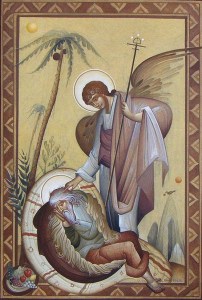 In today’s Gospel, Jesus compares Himself with the Israelite greatest prophets, Elijah and Elisha. But, who are these two prophets? For many Catholics, we are not familiar with these two prominent figures in the Old Testament, and thus, we often do not appreciate why Jesus deliberately cites their names.
Seven hundred years before Jesus, the great kingdom established by David had split into two smaller and weaker kingdoms, the Kingdom of Judah in the south, and the Kingdom of Israel in the north. The leaders of both Judah and Israel have both broken the covenant with the God of Israel, as they worshiped pagan idols, and established their temples. Not only did these leaders incur the sin of idolatry, they also committed gross injustices to the people. The worst would be the child sacrifices and slavery of the poor.
In this terrible time in the history of Israel, God raised up prophets. Thus, God’s prophets are not the fancy guys who foretell future events, but they are God’s spokespersons to remind the people to go back to the Lord and do justice. Often, the prophets of God are also given the power to perform miracles as a sign that they were truly prophets coming from the true God. Among them, were two great names: Elijah and his disciple, Elisha.
Elijah was a fearless prophet who confronted Ahab, the king of Israel and his wife, Jezebel. In one famous event, Elijah challenged the prophets of Baal in Mount Carmel to bring down rain and he proved them as hoax (1 Ki 18). He also rebuked Ahab who allowed Jezebel to kill Naboth and stole his vineyard (1 Ki 21). Another miracle story would be Elijah who provided food for the poor widow of Zarephath, as mentioned by Jesus in the Gospel (1 Ki 17). At the end of his ministry, he was rode on a chariot of fire going up to the sky (2 Ki 2).
Elisha meanwhile was a disciple and successor of Elijah. As his mentor exited, Elisha requested for “double portion of Elijah’s spirit” and it was granted upon him. Thus, while Elijah was able to perform seven miracles, Elisha was able to double the number, fourteen miracles. Among his miracles was the healing of Naaman, the valiant army commander of Aram (Syria) but also a leper (2 Ki 5), and the multiplication of loaves (2 Ki 4:42-44). However, despite their strong prophesy and miracles, the Israelites did not change their hearts, and they kept worshiping idols and doing injustice.
Like Elijah and Elisha, Jesus reveals a deeper nature of God and His relationship with creations, condemns unjust practices, and performs miracles. Surely, Jesus is much greater than Elijah and Elisha. Yet, Jesus’ lot is not far different from Elijah, Elisha and other prophets of Israel: Jesus was rejected by own people.
When we are baptized, we are anointed as a prophet, and we share the lot of the prophet before us. Parents who do their best and want nothing but the best for their children are being misinterpreted as ‘controlling’ by their own kids. Teachers who try to inculcate the value of study life and culture of discipline, are considered to be ‘terror’. At times, however, being a prophet means nothing but total sacrifice. Many priests, religious and lay people work tirelessly and courageously in the most dangerous places around the globe, serving the poor of the poorest. Some of them eventually were abducted, tortured and killed. Special mention goes to the parishioners of Our Lady of Mount Carmel Cathedral, in Sulu, Philippines who sacrificed themselves as the bomb exploded during the liturgical service. It is really tough to become a prophet, but this is our vocation and mission to follow Elijah, Elisha, and Jesus.
Deacon Valentinus Bayuhadi Ruseno, OP
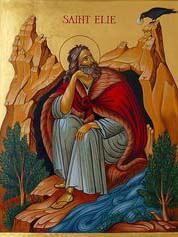 Yesus membandingkan diri-Nya dengan nabi-nabi besar Israel, Elia dan Elisa. Tetapi, siapakah kedua nabi ini? Bagi banyak orang Katolik, kita tidak begitu mengenal kedua tokoh terkemuka ini dalam Perjanjian Lama ini, dan karena itu, kita sering tidak menghargai mengapa Yesus dengan sengaja menyebut nama mereka.
 The synagogue is the place of prayer for the Jews. On the center during the service in the synagogue is the reading of the Hebrew Bible (or what we call the Old Testament) and the explanation of those readings. In the Gospel, we learn that Jesus stands as the leader of the service. First, He stands and reads the Scriptures, and the chosen portion is from the Prophet Isaiah. Then, He sits down, assuming the position of teacher. The Jews in the synagogue are eager to listen to Jesus. However, there is something different in Jesus’ teaching from other Jewish Rabbis. Jesus neither simply expounds the reading from Isaiah, nor makes commentaries on the text. He neither simply discusses the meaning of the readings, nor explains the context of the text. He fulfills what is written in the Scriptures. He says, “Today this scripture passage is fulfilled in your hearing.” (Lk. 4:14)
 Sinagoga adalah tempat beribadah bagi orang Yahudi. Jantung dari peribadatan di sinagoga adalah pembacaan Alkitab Ibrani (yang kita sebut Perjanjian Lama) dan penjelasan bacaan-bacaan tersebut. Dalam Injil, kita belajar bahwa Yesus berdiri sebagai pewarta. Pertama, Dia berdiri dan membaca Kitab Suci, dan bagian yang dibaca adalah dari Nabi Yesaya. Kemudian, Dia duduk, yang adalah posisi guru. Orang-orang Yahudi di sinagoga ingin sekali mendengarkan Yesus. Namun, ada sesuatu yang berbeda dari Yesus dari para guru Yahudi lainnya. Yesus tidak hanya menguraikan bacaan dari Yesaya, atau membuat komentar pada teks. Dia tidak hanya membahas makna bacaan, atau menjelaskan konteks teks. Ia menggenapi apa yang tertulis dalam Alkitab. Ia berkata, “Pada hari ini genaplah nas ini sewaktu kamu mendengarnya.” (Luk. 4:14)
 Today we are celebrating the feast of the conversion of St. Paul, the Apostle. St. Paul is one of the greatest names in our Church. Many churches are named after him, like one of the major Basilica in Rome, St. Paul outside the Wall. Not only churches but also many Christians are named after him, including our brothers in the house of formation, Bro. John Paul Sontillano, Bro. Paulus Gabriel Rambang Ngawan, and our former formator, Fr. Pablo Tiong.
 Mary who was once a bride and has passed through the tiny-gritty of a Jewish wedding can sense immediately something goes wrong. The wine is running out. In the Jewish context, wine is an essential ingredient in every joyous occasion, as it is ordained by God to “gladden men’s hearts” (Ps 104:15) The lack of it can spell a disastrous result. It is the source of shame, and even a family dispute.
 Maria yang pernah menjadi seorang pengantin dan mengerti detail pernikahan Yahudi dapat segera merasakan ada sesuatu yang tidak beres. Anggur habis! Dalam konteks Yahudi, anggur adalah unsur penting dalam setiap acara yang menggembirakan, karena anggur telah dijadikan oleh Allah untuk “membuat hati manusia gembira” (Mzm 104: 15). Kekurangan anggur dapat menyebabkan konsekuensi buruk. Itu adalah sumber rasa malu, dan bahkan pertikaian antar keluarga.
 The third question Archbishop Socrates Villegas asked me during my ordination was “Are you afraid enough? Just like the first two questions, this one is also counterintuitive. One of my favorite phrases in the Bible is “Do not be afraid!” In many occasions in the Scriptures, this statement does not simply convey encouragement, but also a life-changing mission. When Abram was getting old and he was childless, he doubted to enter the convent with the Lord who promised him descendants like the stars in heaven, God said, “do not fear!” (Gen 15) Then, Abraham became the father of all nations. When God called Jeremiah to prophesy to Judah, he found an excuse in his young age, but God said, “do not be afraid!” (Jer 1:8) Then, Jeremiah became one of the greatest prophets of Israel. When Joseph felt betrayed and yet in his mercy, planned to divorce Mary in secret, the angel said to him, “Joseph, son of David, do not be afraid to take Mary your wife into your home.” (Mat 1:20) Then, Joseph became the foster father of the Son of God. When Mary received the Good News from the angel Gabriel, she did not understand what was happening, Gabriel said to her, “Do not be afraid, Mary, for you have found favor with God.” (Luk. 1:30) Then, she became the Mother of God.
 Pertanyaan ketiga yang diajukan Uskup Agung Socrates Villegas kepada saya saat saya ditahbiskan adalah, “Apakah kamu takut? Sama seperti dua pertanyaan sebelumnya, pertanyaan ini juga berlawanan dengan intuisi dasar. Salah satu ungkapan favorit saya dalam Alkitab adalah “Jangan takut!” Dalam banyak kesempatan dalam Kitab Suci, pernyataan ini tidak hanya menyampaikan dorongan semangat, tetapi juga sebuah misi yang mengubah hidup. Ketika Abram menjadi tua dan tidak memiliki anak, dia ragu dengan janji Tuhan yang menjanjikan keturunan seperti bintang-bintang di langit, Allah berkata, “Jangan takut!” (Kej 15) Akhirnya, Abraham menjadi bapak dari bangsa-bangsa. Ketika Allah memanggil Yeremia untuk bernubuat kepada Yehuda, ia ragu dan beralasan bahwa usianya yang masih muda, tetapi Tuhan berkata, “Jangan takut!” (Yer 1:8) Lalu, Yeremia menjadi salah satu nabi terbesar Israel. Ketika Yusuf merasa dikhianati saat dia mengetahui Maria mengandung diluar nikah, namun dalam belas kasihannya, ia berencana untuk menceraikan Maria secara rahasia, malaikat pun berkata kepadanya, “Yusuf, anak Daud, jangan takut untuk mengambil Maria sebagai istrimu.” (Mat 1:20) Kemudian, Yusuf menjadi ayah angkat Putra Allah. Ketika Maria menerima Kabar Baik dari malaikat Gabriel, dia tidak mengerti apa yang sedang terjadi, Gabriel pun berkata kepadanya, “Jangan takut, Maria sebab engkau beroleh kasih karunia di hadapan Allah.” (Luk. 1:30) Lalu, dia menjadi Bunda Allah.
 We are celebrating the feast of the Holy Family of Nazareth, the feast day of Jesus, Mary, and Joseph. The last event in the Bible that presents the Homily Family together is the Finding of the Child Jesus in the Temple. After this event, Joseph no longer appeared in the Bible, and according to the tradition, he passed away even before he was able to see Jesus in His public ministry. Since this is the last episode where Joseph gets involved in the narrative, we shall reflect more about him.
 In Medio Ecclesiae