

22nd Sunday in the Ordinary Time [C] – September 1, 2019 – Luke 14: 1, 7-14
 Humility is actually being simple and doing simple, yet it is so simple that many of us find it difficult to be and do. It seems paradoxical but it is the reality that we experience in our day to day life. It is because we are living in the world that is so proud with itself and it continuously influences us to become proud as well. We can practically be proud of anything. We can be proud of our personality, family and clan, personal achievements, successful careers and status in life. We can be proud of the good things we have done or even the bad things we have committed. Eventually, the awful irony in our life is when we are even proud of our humility.
Pride occupies a prominent place among the seven deadly sins or vices. It seduces people believe that we are self-sufficient and we do not need others and God. We are our own god. The Bible says that the angel of light has fallen from heaven [see Isa 14:12], and according to the Latin tradition, his name is Lucifer, the brightest angel in heaven. He and some other angels revolted against God since they were too proud to serve God that would become man. If lust aligns us with animals, pride makes us coequal with the fallen angels.
To remedy this terrible pride, humility is then chiefly necessary. But, it is simply difficult to become one since it leads us to acknowledge our true nature that we own nothing and everything we have is a gift. Humility is derived from Latin word humus which means soil. Humility brings back us to the ground after the air of pride lifts us our nose up.
Humility is also primarily important since it enables us to listen and through listening we are able to be obedient (Latin word ob-audire means to listen attentively). With pride just around the corner, it is difficult to listen since we start believing that we are the center of the universe and everything else revolves around us. Simon Tugwell, OP writes that humble prayer is just to take a break from our tyrannical and dictatorial self that occupies the center of our life and let God be God. In the same line of thought, Henry Nouwen writes that a sincere prayer is just like opening our tightly closed fist.
St. Augustine believes that humility is one of the most fundamental virtues especially in our relationship with God. He says, “Are you thinking of raising the great fabric of spirituality? Attend first of all to the foundation of humility.” It is because humility is the virtue that facilitates us in listening to God’s words and in following them. In humility, we participate in Mary’s words, “I am the servant of the Lord. Be it done to me according to your word.” And not, “I am the boss here. Be it done to me and to you according to my word.” In humility, we pray in Jesus’ prayer, “Your will be done.” And not, “Your will be changed”.
Valentinus Bayuhadi Ruseno, O.P
Spiritual Director of Presidium Refugis Peccatorum
 Salvation is one of the burning topics of discussion in Christian circles. In several discussions I facilitated, I often encountered some participants asked: Who will be saved? By what means are we going to be saved? When will be saved? Do we need to believe in Jesus to be saved? The answers can be as simple as yes or no, but often, the audience with critical minds demand more comprehensive and sensible answers. Yet, I always bring the listeners to see salvation from a different and deeper angle.
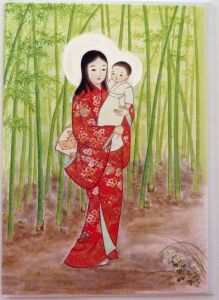 Today the Church is celebrating the solemnity of the Assumption of Mary. Rooted in the Scriptures and Tradition, the Church firmly believes that Mary was assumed into heaven body and soul after she completed her life here on earth. This belief is crystallized in the form of Dogma or the highest teaching of the Church. As a dogma, the Assumption requires the assent of faith from the faithful. The assumption itself is not the sole Marian Dogma. There are four dogmas related to her: Mary is the Mother of God, ever-virgin, immaculately conceived, and assumed into heaven. No other human, except Jesus, has accumulated that much honor in the Church and no other men or women have blessed conditions like hers.
 In ancient Israel, the masters of the house were often leaving their homes for business trips or attending social gatherings like weddings. They would entrust their houses and their possessions to chief servants. And this was the world without a cellular phone, internet, and GPS. Thus, the servants have no idea of the ETA (estimated time of arrival) of their masters. It could be 8 PM, midnight or even early in the morning. The best attitude of a servant in this scenario is to be always vigilant and prepared for the arrival of his master.
 Today, we are celebrating the feast of St. Dominic de Guzman. St. Dominic was born around 1170 in Caleruega, Old Castile, Spain. As a saint, he was not that famous as his counterpart, St. Francis of Assisi, perhaps because he did not write any book or writings that would echo his spirituality. Maybe this is the reason why we do not have a solid and systematic understanding of Dominican Spirituality.
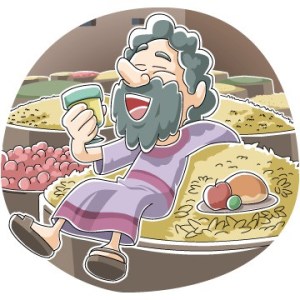 We were all born without bringing anything with us, and for sure, when we die, we will bring nothing with us. Job once said, “Naked I came forth from my mother’s womb, and naked shall I go back there. The LORD gave, and the LORD has taken away; blessed be the name of the LORD!” (Job 1:21). However, as we grow up and old, we begin to acquire things and possessions. Some are given, but some we earn it. As we are accumulating, we start attaching ourselves to these material belongings. Some of us are obsessed with collecting bags, shoes, and clothes, some others with more expensive things like electronic devices and cars. We believe these are ours, and we can own them until the Kingdom comes.
 One of the greatest as well as most humbling realization is that my life and existence is a gift from God. All that exist, from the sub-atomic particle to the purest seraphim owe their being from the Lord. If St. Thomas Aquinas defines justice as to give what is due, then existence is neither due to me nor to all of us. I cannot demand the Lord that He should create me to be the handsomest of all, the richest of all, and the brightest of all. Not even I can ask from Him to possess a face like a Korean actor! Then why did God create me?
 The journey from Jericho to Jerusalem was notoriously dangerous. The path was narrow, steep, filled by sudden turnings. The road became the favorite spot for the robbers to ambush any unguarded traveler. Some criminals were often violent, not only they took everything from the victims, but they would beat them mercilessly. Up to early twentieth century, some tourists and pilgrims were caught off guard when they passed this path, as their cars were ambushed and robbed. The brigands would swiftly escape before the police came.
 In today’s Gospel, Jesus is sending His seventy disciples for a mission. Yes, we are reading it correctly; it is not just twelve disciples, but seventy. While we are used to the celebrated mission of the Twelve, Luke informs us about the less famous mission of the seventy. We are not sure who are these people, but for sure, these are people who have the same commitment, dedication, and passion like the big names like Peter, John, Andrew, and Matthew. They follow Jesus, leave everything and are willing to be dispatched into a difficult mission to preach the Kingdom, to heal the sick, and to drive out the demons. The story of the seventy disciples gives us a hint about those dedicated and more numerous disciples of Jesus and yet somehow forgotten. While the Twelve represents the well-known figures of the Church like the pope and the bishops, the seventy bring to mind the nameless yet countless priests, religious men and women, and laity who are tirelessly building up the Body of Christs.
 In Medio Ecclesiae