
Amin

Minggu ke-18 Pada Masa Biasa [5 Agustus 2018] Yohanes 6: 24-35

“Inilah pekerjaan yang dikehendaki Allah, yaitu hendaklah kamu percaya kepada Dia yang telah diutus Allah” (Yoh 6:29)

amen 2Mengatakan “Amin” adalah sesuatu yang biasanya kita lakukan dalam doa. Kata ini biasanya digunakan untuk mengakhiri doa. Doa alkitabiah seperti Bapa Kami dan Salam Maria biasanya disimpulkan oleh kata amin. Namun, dalam beberapa kesempatan, amin disebut lebih sering. Salah satu tugas pastoral saya di rumah sakit adalah memimpin doa penyembuhan bagi yang sakit. Saya selalu meminta keluarga dan mereka yang menemani pasien untuk berdoa bersama. Biasanya, mereka akan mengatakan amin di akhir doa. Namun, ada juga beberapa orang akan mengucapkan beberapa amin dalam doa, dan bahkan, ada beberapa orang mengucapkan lebih banyak amin dari pada doa yang saya ucapkan! Dalam beberapa kesempatan, amin digunakan di luar konteks doa. Pengkhotbah karismatik akan mengajak pendengar mereka untuk mengatakan amin sebagai bentuk penegasan. Tentunya, ini adalah juga teknik yang bagus untuk membuat pendengar tidak tertidur!

Amin adalah kata yang sederhana namun sangat kuat. Amin menunjukkan penegasan dan persetujuan kita yang kuat terhadap sesuatu. Ini adalah manifesto paling ringkas dari iman kita. Amin adalah bahasa alkitabiah, dan sebenarnya, ini berasal dari kata Ibrani, yang berarti “Sungguh!” Atau “Terjadilah!”. Sangat menarik untuk dicatat bahwa penggunaan awal kata amin dalam Alkitab adalah untuk menegaskan kutukan dan hukuman (lihat Bil 5:22; Ul 27:15). Syukurlah, Kitab Mazmur mengajarkan kita untuk menggunakan amin untuk menegaskan berkat Tuhan. Yesus sendiri suka mengatakan Amin [walaupun dalam alkitab Bahasa Indonesia kata ‘Amin’ diganti dengan kata ‘sesungguhnya’). Ia menggunakan amin untuk menegaskan kebenaran dan kuasa firman-Nya (lihat Mat 5:18; Mat 8: 5). Ada pergeseran radikal di sini. Berbeda dengan praktik biasa untuk menegaskan berkat Tuhan, Yesus mengatakan amin pada kata-kata-Nya sendiri. Ini karena kata-kata Yesus adalah berkat Tuhan. Dengan demikian, belajar dari tradisi Alkitab, kita mengatakan amin untuk menegaskan berkat-berkat Tuhan. Lebih dari itu, belajar dari Yesus, kita mengatakan amin untuk mengekspresikan iman kita dalam Firman-Nya, dan akhirnya kepada Yesus sendiri. Tak mengejutkan bahwa orang pertama dalam Perjanjian Baru yang menyatakan amin kepada Yesus tidak lain adalah ibu-Nya, Maria. Di hapadapan malaikat Gabriel, dia berkata, “Terjadilah padaku menurut perkataanmu,” singkatnya, “Amin!” (Lihat Luk 1:38)

Salah satu amin terbesar yang kita nyatakan adalah ketika kita menerima Ekaristi. Bagi ratusan juta umat Katolik yang menerima Komuni Suci setiap hari Minggu, mengatakan amin tampaknya biasa-biasa saja. Namun, ini sebenarnya menjadi amin yang paling sulit yang kita katakan. Untuk percaya dan menegaskan bahwa hosti kecil putih adalah Tubuh Kristus yang mengandung kepenuhan keilahian dan kemanusiaan Yesus adalah tanda iman yang luar biasa besar. Saya percaya ini adalah ajakan Yesus untuk percaya kepada-Nya dalam Ekaristi. Berkaitan dengan Injil hari Minggu ini, Yesus mengatakan bahwa pekerjaan yang dikehendaki Allah adalah percaya kepada Yesus, yang diutus oleh Bapa (lihat Yoh 6:29). Membaca bab 6 dari Injil Yohanes ini, kita menemukan bahwa percaya kepada Yesus berarti menerima bahwa Dia adalah Roti Kehidupan, dan mereka yang memakan Roti ini akan memiliki hidup yang kekal (lihat Yoh 6:51). Jadi, untuk mengatakan amin yang dipenuhi oleh iman kepada Ekaristi adalah pemenuhan kata-kata Yesus, dan menuntun kita pada Yesus sebagai Tuhan dan Juruselamat.

Sebagai umat yang pergi ke Gereja setiap Minggu dan menerima Ekaristi secara teratur, apakah kita mengatakan Amin dalam kepenuhan iman atau ini hanya sebuah kata yang diulang-ulang? Apakah Amin kita memungkinkan kita untuk mengenali berkat harian yang kita terima? Seperti Maria, apakah iman kita terwujud dalam tindakan sehari-hari kita, dan membuat perbedaan dalam kehidupan kita?


Frater Valentinus Bayuhadi Ruseno, OP

More than Bread

Seventeenth Sunday in Ordinary Time [July 29, 2018] John 6:1-15

Jesus said to Philip, “Where can we buy enough food for them to eat?” (Jn. 6:5)

barley loaves 4Unlike the other Gospels, the Gospel of John does not have the story of the Institution of the Eucharist on the Last Supper. However, it does not mean John the evangelist does not write anything about the Eucharist. In fact, John includes the most sublime discourse on the bread of life in his chapter 6. The chapter itself is relatively long, and the Church has distributed it into several Sunday Gospel readings (from today up to August 26). This discourse on the Bread of Life begins with the lovely story of Jesus feeding the multitude.
The story highlights Jesus’ question to Philip, “Where can we buy enough food for them to eat?” (Jn. 6:5) Philip, who seems to be familiar with the place, gives impossibility as an answer, “Two hundred denarii (or two hundred days’ wages) worth of food would not be enough…” (Jn. 6:7) Philip is just realistic, but he misses the mark. Jesus does not ask “how much,” but “where.” Perhaps, if Philip lives in the 21st century, he would direct Jesus to the nearest shopping mall! The point is that Philip would eagerly reduce the entire problem into a financial matter. Philip is not wrong because finance and economy are the backbones of our daily lives and even our survival as species, But money is not the only thing that matters. Philip will later see during the multiplication of the bread, that the “where” is pointing back to Jesus Himself. And as we will see in succeeding of chapter 6, the bread Jesus offers is not meant only for biological and economic benefits, but for eternal life.

I am currently having my clinical pastoral education at one of the hospitals in Metro Manila. One of the sacred missions entrusted to me as a chaplain is to distribute the Holy Communion to the sick. By ministering to the sick, especially through prayer and giving Holy Communion, I am reminded that the physical and biological aspects of our humanity are not the only things to be taken care of. It is true that many patients I have encountered are struggling with financial issues, like how to get the money to pay the hospital bills and expensive medicines. They have to wrestle also with their sickness that sometimes is incurable. I myself am at a loss on how to help them in these pressing concerns. However, often, the patients themselves are the ones who assure me that God will find a way, as He always does. What I do, then, is to affirm and strengthen their faith. Prayer and giving of the Holy Communion are the visible manifestations of Jesus’ real presence among us, and His presence is even more felt by the sick. Like our Gospel’s today, Jesus does not only take care of the physical aspect of our lives, but more fundamentally, He brings us to the deeper reality that our souls all long for. Paradoxically, in their hunger, they discover Jesus.

Being strong and healthy, we often forget this simple truth. Like Philip, we are more concerned with amassing wealth, attaining fame, and achieving success. Even as people serving the Church and the community, we are spending more time in organizing charity events, raising funds, and even arguing among ourselves over trivial matters. We miss the point why we are going to the Church. We miss encountering Jesus. We pray and hope that we are able to answer Jesus’ question rightly to Philip and us, “Where shall we find food for us to eat?”

Br. Valentinus Bayuhadi Ruseno, OP

Dying

Sixteenth Sunday in Ordinary Time [July 22, 2018] Mark 6:30-34

He said to them, “Come away by yourselves to a deserted place and rest a while.”  (Mrk 6:31)

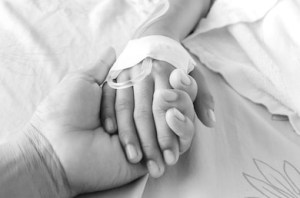
mother-holding-childs-hand-who-260nw-232137526I am currently having my clinical pastoral education at one of the hospitals in Metro Manila. It has been one month since I started my pastoral visits. Since then, I have encountered people in different stages of illness. Many of them are fast recovering, some are taking more time to get cured, but some others have to face serious conditions. It is my ministry as a chaplain to accompany them in their journey of healing. I feel immense joy when I can witness their healing process, from one who is weak on the bed, to one who is standing and ready to leave the hospital.

However, the greatest privilege for me is that I am given a chance to accompany some persons in their journey of dying. It seems rather morbid because we are all afraid of death, and many still look at talking about death as taboo. Yet, in the hospital, battling death is a daily business for both the patients and the medical professionals. It is just that some are dying longer than the others. Death and dying are terrifying because they end our life, shatter our dreams, and cut our relationship with the people we love. I befriend a young man who just graduated with a lot of dreams in his heart, yet cancer robs him of his dreams as he has to struggle with painful and unforgiving chemotherapy. I also accompany a young woman who has kidney failures and has to spend a lot on her dialysis and medicine. She is not able to finish her school, to find a job, and to pursue her dreams. A young mother has to leave behind her young children in the province, move to Manila, jump from one hospital to another, just to be cured of her breast cancer. Her only wish is to be reunited with her children.

However, as I journey with them, I discover that dying is not only terrifying but also a privilege. It is true that dying can trigger many negative feelings like denial, anger, bitterness, and even depression. One can blame himself, or get angry with God. One who can only depend on the generosity of the people around him can feel helpless and even depressed. However, when the patient begins to accept his situation, dying can be transformed into a moment of grace. The dying person can now see what truly matter in life. As healthy persons, we do a lot of things; we work hard, we achieve many things. With so much in our hands, we tend to overlook what are the most essential in our lives. Dying slows us down, and gives us time to think clearly. It provides us the rare opportunity to settle the unfinished business and to do the missions God has entrusted to us. Paradoxically, the dying is the one who is truly living. As Mitch Albom writes in Tuesdays with Morrie, “The truth is, once you learn how to die, you learn how to live.”

In today’s Gospel, Jesus invites His disciples to rest. After working so hard for their mission, Jesus brings them to a deserted place. After success in their preaching, the disciples may easily be proud and be full of themselves. Yet, a genuine rest may settle them down and reorient themselves into Jesus, the source of their mission and success.

We do not have to suffer first from terminal illness as to experience dying. We can always avail the privilege of dying through moments of rest, prayer, and reflection. It is always good to reflect the words of St. John of the Cross, “in the twilight of life, God will not judge us on our earthly possessions and human successes, but on how well we have loved.”

Br. Valentinus Bayuhadi Ruseno, OP

Shake the Dust Off Your Feet

The fifteenth Sunday in Ordinary Time [July 15, 2018] Mark 6:7-13

Whatever place does not welcome you or listen to you, leave there and shake the dust off your feet in testimony against them. (Mk. 6:11)

feet and sandOur Gospel today speaks of the mission of the Twelve. They are sent to perform the threefold task: to exorcise the evil spirits, to heal the sick and to preach repentance. This threefold missionary duty reflects Jesus’ mission also in the Gospel according to Mark. To facilitate their preaching ministry, they need to travel light. No extra baggage, no extra burden. They need to travel two by two as a sign of communal and ecclesial dimension of the mission. They shall depend also their sustenance on the generosity of the people. And, when they face rejection, they shall shake the dust off their feet as a symbolic judgment against those who reject them. In ancient time, the Jews shake the dust off their feet when they reenter the Israel soil from the Gentile territories, as a sign of disowning and disapproval of the Gentiles nations.

I am presently having a clinical pastoral education in one of the hospitals in Metro Manila. The program trains me to become a good and compassionate chaplain. One of the basic tasks of a chaplain is to visit the patients, and during our visit, we are to listen to the patients and journey with them as a companion of the sick. To a certain extent, I feel that I am participating in the mission of the twelve Jesus’ disciples, especially in the ministry of healing the sick. However, unlike Jesus’ disciples, I am aware that I do not have the gift of miraculous healing. I often pray for and together with the patients, but so far there is no instantaneous healing, and patients continue to struggle with their sickness. However, the healing is not limited only to physical and biological aspects. It is holistic and includes the emotional and spiritual healing. Our doctors, nurse, and other hospital staffs have done their best to cure their patients’ illness, or at least to help them to bear their illness with dignity. I do believe that they are essentially and primarily Jesus’ co-workers in the ministry of healing. However, with so much load work they carry and limited time and energy, they have to focus on what they are trained for. The chaplains are there to fill in the gaps, to tie the loose ends, to attend to the emotional and spiritual needs.

In my several visits, I am grateful that many are welcoming my presence. However, at times, I feel also unwelcome. At this kind of moment, I am tempted to “shake the dust off my feet” as the testimony against them. After all, the disciples are instructed to do that. However, at the second thought, I try to understand why the patient is not so welcoming. Perhaps, they are in pain. Perhaps, they need rest. Perhaps, the medication affects their emotional disposition. Perhaps, they still have some serious issues that they need to deal with. With this awareness, I cannot simply judge them as “bad guy”. Trying to understand them and empathize with them, I also “shake the dust off my feet”, but this time, it is not the testimony against them, but it is to shake the “dust” of misunderstanding, rash judgment, and apathy. A chaplain is one who carries the mission of Christ to bring healing, and if I address rejection and difficulty with anger and hatred, then I just create more pain and illness.

Whether we are medical professionals or not, all of us are called to participate in this healing ministry of Jesus Christ. All of us are wounded and in pain with so many problems and issues we have in life. Thus, it is our call to bring healing to our family, to our friends, to our society, to our natural environment, and to our Church. This begins with our willingness to “shake the dust off our feet”, the dust of fear and wrong pre-judgment, the dust of rush emotional reactions in the face of challenging situations.

Br. Valentinus Bayuhadi Ruseno, OP

Lack of Faith

Fourteenth Sunday in Ordinary Time [July 8, 2018] Mark 6:1-6

He was amazed at their lack of faith.” (Mk. 6:6)

holy family carpentry shopWhen Jesus teaches in the synagogue in Nazareth, the listeners are amazed by his wisdom. Jesus speaks like a mighty prophet. However, the people soon make a background check on Jesus, and they realize Jesus’ identity and his family background.  Nazareth is a small rural town in Galilee, and everyone knows everyone in this kind of setting. The people of Nazareth know Jesus as a son of a carpenter, and himself a carpenter. They are familiar also with Jesus’ family and relatives.
It is just impossible for a carpenter, an artisan who spends most of his time doing manual labor to acquire such profound wisdom. The people of Nazareth also recognize that Jesus is a son of Mary and they know His relatives. It seems the people are aware that Jesus’ relatives are just ordinary and poor Jews. None of them seems to possess a notable personality. Jesus should stay where He belongs: an ordinary Jewish and a poor laborer. Thus, to become a charismatic preacher and an admirable rabbi is simply unthinkable. Jesus, recognizes the root cause: lack of faith.

We are living two millennia after Christ, but unfortunately, this debilitating mentality continues to exist and even thrive in our midst. It is a mentality that boxes people in their limitations and suppresses their potential to grow and improve. This is the mentality that fuels fundamentalism, racism, negative stereotypes, and other destructive ideologies that divide people. Once a loser, always a loser; once an Asian, always an Asian; once an addict, always an addict. Yet, this mentality does not only reside the big ideologies, but it also affects our personal lives: when we think we are always right, and others are always wrong; when we believe that we are holier than others; when we only trust ourselves; when we refuse to forgive others; when we cling to our pride.

Dealing with this crippling mentality, Jesus brings to the fore the reality that humans are beings with faith. With faith, that is the spiritual gift from God; we are empowered to go beyond our own cultural, mental, bodily limitations. In the Gospels, faith enable God’s power to do much more in persons’ lives, and the same faith inspires us to see God’s works in us. The paralytic is healed because of the faith of his friends who carry him to Jesus (Mark 2:1-6); the woman with hemorrhage is healed because of her faith (Mark 5:25-34); Jesus tells Jairus, the synagogue official to have faith and Jesus brings his daughter to life (Mark 5:35-43).

I am currently doing my pastoral work as a chaplain in one of the hospitals in Metro Manila. My duty is to visit the patients, to give blessing and minister the Holy Communion, but fundamentally, to be with them and listen to them. I cannot do much in term of physical cure, but I realize that sickness is not only physical. Healing includes psychological and spiritual aspects. I journey with the patients in their joy, sorrow, frustration, and hope. I accompany them as they try to resolve some issues like anger, broken relationship, and painful memories. As I walk with them, I also realize my weaknesses. Yet, despite this brokenness, people with faith have always found strength and courage to heal, to go beyond themselves and live a meaningful life.

Br. Valentinus Bayuhadi Ruseno, OP

Woman of Faith

Thirteenth Sunday in Ordinary Time [July 1, 2018] Mark 5:21-43

“Daughter, your faith has saved you. Go in peace and be cured of your affliction.” (Mk. 5:34)

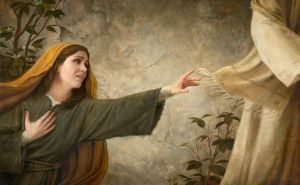
woman with hemorrhage 2Today’s Gospel seems to be just another healing miracles of Jesus, but if we read it closely, the story of the healing of the woman with hemorrhage is extraordinary tale of faith. We are not sure what kind of hemorrhage she suffers, but the fact that she bears the sickness for 12 years, spends a lot for the medication, and does not get any better, means it is pretty serious, if not terminal. During this time, the physicians are extremely rare, and expectedly, the patients need to spend a lot of money. The woman may come from a wealthy family, but she is impoverished because her prolong sickness. The woman is losing her life and facing despair. I am currently assigned as an associate chaplain in one of the hospitals in Metro Manila, and my duty is to make pastoral visit to these patients. I encounter some patients who are suffering from certain health conditions that drain all their resources, and it seems the situation does not get any better. I realize the story of the woman with hemorrhage is not only her story happened in the far past, but it is also our stories here and now.

 We must not forget that our protagonist is also a woman. Being a woman in the time of Jesus means being a second-class citizen in a patriarchal society and often, they are considered as mere properties of the husbands or the fathers. Generally, while the men work outside and socialize, women are expected to stay at home, and function as the housekeepers and babysitters. Normally, they are not allowed to communicate with the outsiders, especially men, except under the supervision of their husbands or fathers. Our protagonist is also having chronic hemorrhage, and this means she is ritually unclean, and those who are in contact with her shall be made unclean as well (Lv. 15:19).

The woman with hemorrhage has faith in Jesus and wants to be healed, yet to do that, she has to challenge the cultural norms that bind her. She traverses into greater danger. What if she is not healed? What if she makes Jesus and His disciples unclean? What if she will be branded as a shameless woman by the society? Shame restrains her, but faith propels her. Thus, she takes a ‘win-win’ approach. She tries to reach Jesus’ cloth, and she makes sure that she will not establish any contact with Jesus. Miracle happens, and she is healed. Yet, unfortunately, Jesus finds her. In tremble and fear, she fells down before Jesus and confesses. She is afraid not only because she “snatches” the power from Jesus, but because she has broken the standing cultural norms and the Law of Moses. However, Jesus’ response surprises his disciples and all who witness the event. Instead of castigating her for culturally improper behavior, Jesus praises her faith, “Daughter your faith has saved you.”

Indeed it is her faith that makes her a proactive protagonist of this particular story. She refuses to succumb to despair and makes her way all the way to Jesus. We notice most of the actions in this story is performed by the woman, and Jesus is there to affirm her. Rightly, Jesus calls her “daughter” acknowledging her also as the descendants of Abraham, the father of great faith. The story of a woman of hemorrhage is a journey of a woman of faith. It is a faith that grows even in the midst of hopeless situations of sickness, financial crisis, and uncertain future. It is a faith that thrives in the middle of human limitations, and transcend cultural boundaries. It is a faith that moves a mountain.

Br. Valentinus Bayuhadi Ruseno, OP

A Child as a Gift

Solemnity of the Nativity of John the Baptist [June 24, 2018] Luke 1:57-66, 80

“The Lord had shown his great mercy toward her, and they rejoiced with her.” (Lk. 1:58)

child in churchToday we are celebrating the birth of John the Baptist. Two figures emerge as the protagonists of our today’s Gospel, Elizabeth, and Zachariah. Luke describes the couple as “righteous in the eyes of God, observing all the commandments and ordinances of the Lord blamelessly. (Luk 1:6)”. But, they have no child. The possibility to have a child is close to zero as Elizabeth is perceived to be barren and Zachariah is already old. In ancient Jewish society, children are considered to be a blessing of the Lord and a source of honor, and barrenness is a curse and shame.
However, the archangel Gabriel appears to Zachariah and tells him that his wife will get pregnant despite her barrenness and his advanced age. Paying close attention to their names, we may discover even richer meaning. Zachariah, from the Hebrew word “Zakar” means to remember, and Elizabeth, a compound Hebrew words, “Eli,” and “Sabath” means God’s oath or promise. Thus, both names may mean God remembers His promise. In the Bible, when God remembers, it does simply mean God recalls something from memory, but it means God fulfills what He has promised. As God has fulfilled His promise to Zachariah’s ancestors, so God also remembers His promise to Elizabeth. The story of Elizabeth reverberate the stories of great women in the Old Testament: Sarah (Gen 15:3; 16:1), Rebekah (Gen 25:21), Rachel (Gen 29:31; 30:1), the mother of Samson and wife of Manoah (Jdg 13:2-3), and Hannah (1Sa 1:2).

What is God’s promise to Elizabeth and Zachariah, and eventually to all of us? St. Luke the evangelist points to us that God’s promise is to show His great mercy to Elisabeth and Zachariah (see Luk 1:58). The birth of John the Baptist is a sign of God’s mercy towards the righteous couple. Thus, the birth of every child is a sign of God’s promise fulfilled, a sign of God’s mercy to every parent. We recall that mercy is not something we deserve. Mercy is the embodiment of gratuitous love, the gift of love. Mercy is an utter gift. Through every child, God shows His great mercy to us, and together with Elizabeth and Zachariah, we shall rejoice because of this gift.

We are living in the world that is increasingly uncomfortable with the presence of the little children around us. There is this new fundamentalist mentality creeping into millennial generation. It is a mentality that promotes individual success as the prime and absolute value of happiness. Thus, anything that stands in its way has to be eradicated. This includes marriage, family life and finally children. They are no longer seen as a gift to be received with gratitude, but liabilities to be avoided. When I visited South Korea last year, my Dominican Korean friend told me that young generation of Korea is working very hard to the point that they longer consider marriage and having children as their priorities. Indeed, unlike in the Philippines or Indonesia, it was not easy to spot little children playing freely. I guess the decline in population growth is a problem in many progressive countries.

We deny neither the fact that it is a backbreaking responsibility to raise children nor the reality that not all of us are called to become parents. However, it is also true that children are a gift not only to the particular family, but to the entire humanity, and thus, every one of us has the sacred call to protect and take care of the wellbeing of our children. We shall protect our children from any form of child abuse, from the debilitating effects of poverty, from the egocentric and contraceptive mentality and from evil of abortion. To honor a gift is to honor the giver, and thus, to honor every child is to honor the God who gives them to us.

Br. Valentinus Bayuhadi Ruseno, OP


The Death of Priesthood

(a reflection of a religious brother for three Filipino priests who recently martyred)

June 17, 2018

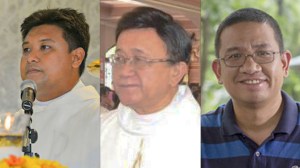
paez ventura niloThe Catholic Church in the Philippines is once again in profound grief after one of her priests was mercilessly murdered. Fr. Richmond Nilo, from the diocese of Cabanatuan was shot several times just before he celebrated the mass at a chapel in Zaragoza, Nueva Ecija. His body was laying on the floor at the foot of the image of Blessed Virgin, soaked with blood. Another disturbing and painful image. He becomes the third priest losing his life in a bloody attack in the past six months. On December 4, 2017, Fr. Marcelito Paez was ambushed in Jean, Nueva Ecija. Just a few weeks ago on April 29, Fr. Mark Ventura was also gunned down moment after celebrating the mass. We may also include Fr. Rey Urmeneta who was attacked by a hit man in Calamba, Laguna. He sustained a bullet in his body, yet he survived death.
Several weeks ago I wrote an emotional reflection on the death of Fr. Ventura (see “A Death of Priest) and I would never hope that I would write another one. Yet, just sometime after the priest was buried without justice being served, Fr. Nilo lost his life in the line of duty. Surely, this is not the first time a priest is killed in the Philippines. The history has witnessed the killing of both Filipino and foreign priests in this land, but to lose three lives in just six months is truly alarming. I was asking myself, “Are we now living in the perilous time for priests? Is to become a priest a dangerous vocation? What’s the point of becoming a priest if it brings nothing but persecution and death?” We have left everything for Christ, our family, our future. Should we give up our lives in this heinous manner as well?

These questions are valid, yet these questions also, I realize, spring from fear. Many priests and even seminarians, myself included, have lived in the comfort of our seminaries, parishes or convents. Provided with readily available basic necessities, with individual rooms, with good-quality education, with other facilities and even amenities, we are actually living as middle-class bachelors. These privileges are meant to make us better and well-formed priests for the service of the people, but getting used to these facilities, we often lose sight of their primary purpose. Our priesthood is called as the ministerial priesthood because the ordained priests are to serve the people of God, but sometimes, the priests end up being served by the people of God. At times, the virus of clericalism and careerism infect our minds. Ordinations and positions in the Church are seen as promotions, career, or prestige. A better position means better perks! If the priesthood is just another way to make us rich, we have lost the priesthood even before we die! The death of a priest is terrible sorrow, but the death of priesthood in our hearts is tragedy!

Bishop Pablo David, DD of Caloocan, Metro Manila, reminds seminarians who are aspiring to become priests, that if the deaths of the priests gave them discouragement, rather than inspiration, it is better for them to forget the priesthood and leave the seminary as soon as they can. Bishop David notes that they are not helpless victims, but rather martyrs that bravely choose to face the dangerous consequence of preaching the Gospel and working for justice.

Since the beginning of Christianity, to become Christians and especially priests are dangerous vocations because we follow Christ in His way of the Cross. Yet, the martyrdom of the three priests turns out to be a shock therapy that wakes us up from our comfortable slumber. It is a call for many of us, seminarians, religious, and priests to ask what the purpose of our priesthood is. Have we died every day to ourselves? Are we ready to give up our lives to God and His people? Are we ready to follow Christ till the end?

Br. Valentinus Bayuhadi Ruseno, OP

Jesus and His Family

10th Sunday in Ordinary Time [June 10, 2018] Mark 3:20-35

“For whoever does the will of God is my brother and sister and mother (Mrk 3:35).”

family
photo by Harry Setianto, SJ

In ancient Israel as well as in many Asian and African cultures, family and kinship are core to one’s identity. The family is practically everything. A person is born, growing, getting old and dying within a family and clan. In traditional Filipino and Indonesian settings, a house is meant for an extended and expanded family. Several generations are living in one house. When I ask some of my Filipino friends, “If your house is burning, what are the first things you will save?” Their answer is not money, important documents or jewelry, but family pictures! In 1977, the Tanzanian President Julius Nyerere, one of the most prominent African figures during that time, visited the US and talked before the African students who studied there. Before them, he criticized those Africans who received much support from their families and clan, yet refused to go back after their studies. It was an act of cowardice and betrayal to Africa.


However, closely reading today’s Gospel from Mark, a good family-oriented and devoted Catholic will be startled. Naturally, we would expect Jesus to welcome Mary, his mother, and his relatives who come and look for Him. Surprisingly, Jesus does not do what is expected, but rather He takes that occasion to show His new family, “looking around at those seated in the circle he said, ‘Here are my mother and my brothers. For whoever does the will of God is my brother and sister and mother.’” (Mk. 3:34-35) Jesus’ words seem to be harsh since Jesus appears to exclude Mary and Jesus’ relatives from the composition of His new family. Does it mean Jesus disrespect Mary, His parent? Does it mean that for Jesus, the biological and traditional family have no value?

The answer is plain no. Certainly, Jesus respects and loves His mother as He fulfills the fourth commandment of the Law, “Thou shall honor thy parents.” Jesus also upholds and teaches the sanctity of both marriage and family life (see Mat 5:31-32; Mat 19:19). The early Christians also follow Jesus’ teaching on the integrity of marriage and family life, as reflected in various letters of St. Paul and other apostles (see 1 Cor 7:1-17; Eph 6:1-5). We are sure that for Jesus, marriage and family are good, but the point of our Gospel is Jesus is calling all of us to go beyond this natural relationship. The new family of Jesus is not based on blood but rooted in following Jesus and doing the will of God. This is also the call that Jesus addresses to Mary and His relatives. Surely, Mary becomes the model of faith as she obeys the will of God in the Annunciation (Lk 2:26-38), follows Jesus even to the cross (Jn 19:25-26) and stays and prays together with the early Church (Acts 1:14). St. Augustine says about Mary in his homily, “It means more for her, an altogether greater blessing, to have been Christ’s disciple than to have been Christ’s mother.”

The family as a natural institution is good, but Jesus teaches that we need to be the good disciples of Jesus first before we become a good family member. Otherwise, the family will be exposed to evil and destruction. Corruption, nepotism, and cronyism are evil practices rooted in the natural family. Another extreme is when brothers fight, even kill, each other over inheritance as if they are not coming from the same womb. It is the will of God that we are faithful to one another, that we do justice, that we are merciful especially to the weak and poor. Without Christian values, the family will not become the source of goodness. Echoing the words of St. Augustine, it is a blessing to be part of a family, but it is an altogether a greater blessing to become Christ’s disciple.

Br. Valentinus Bayuhadi Ruseno, OP

Body

Solemnity of the Body and Blood of Jesus Christ [June 3, 2018] Mark 14:12-16, 22-26

“Take it; this is my body” (Mk 14:22)

last supper africaWe often take for granted that we are created as a bodily creature. Our body is integral to our humanity and created by God as something good; we receive our body as a gift. We freely receive our body from our parents, and our parents from their parents and this goes on till we discover God as the source of this gift. Because our body is a gift from God, we are called to honor our body as we honor the Giver of the gift Himself.

Since the earliest time, the Church has fought against various false teachings that undermine the integrity and sanctity of the body. Early Christians stoutly defended the goodness of the body against the Gnostic sects that condemned the body as evil, a prison to our soul, and a curse to our existence. The Order of Preachers where I belong was founded for the salvation of souls. Some of my friends complain why we only save the soul and disregard other aspects of our humanity. I remind them that the Order was originally established to counter the Albigensian sect, and one of its basic teachings is that the body is evil, that suicide is a great means to achieve final liberation. To preach and fight for the goodness and integrity of our body is essential to the Dominican preaching, as it is to the Church’s preaching.

Unfortunately, the gnostic teaching grows and takes modern forms. Sanctity of our body is ever compromised as our body is trivialized and even commoditized. Human trafficking is one of the greatest abuses of our body. Young women, mostly from a poor background, are lured into prostitution and turned to be sex objects. Young children are forced to work in inhuman conditions in many countries. Organ harvesting has become most luxurious business involving the countless amount of money. There is a price for every organ we have. In fact, there is a nasty story in the social media of a teenager who sells his kidney to buy the latest model of iPhone. For some people, another additional ‘bodies’ in the wombs are just liabilities and hindrance to self-progress and career development, and thus, it is better to abort these ‘bodies’ before they grow and become bigger problems.

In celebrating the solemnity of the body and blood of Jesus Christ, we are invited through our Gospel reading, to go back to Jesus’ Last Supper. There, Jesus freely offers His body as a gift to His disciples, “Take it, this My body.”  He then asks these disciples to share His body they have received to the future generations of disciples. Jesus receives His body as a gift, and now, in His Supper, He passes this gift so that we may have a life. This is the foundation of the Eucharist, as well as the core of the Christian sexuality.

Husband and wife join together in marriage, and they are no longer “two but one body.” As both spouses face the altar of God, they recognize that their bodies are gifts from God, and by lovingly offering to their spouse, they honor God who created them. We oppose any pre-marital and extra-marital sex because unless our body is given freely and totally in lifetime marriage commitment, we are always exposed to objectify our body. A husband’s or wife’s body is not simply the “property” or object to satisfy sexual, psychological needs, but it is a gift from God that even leads us to a deeper appreciation of our own body. In marriage, husband and wife give their body as a gift to each other in love and honor, so that they may have life more abundantly and in fact, they may welcome a new body, a new life, a new gift, into their marriage.

Married life is one among several ways we may accept and offer our body as a gift. Even a celibate life dedicated to service of others is another way to offer our body as a gift. Like Jesus in the Last Supper, it is only by receiving our body as a gift and freely sharing it as a gift that we may have meaningful lives.

Br. Valentinus Bayuhadi Ruseno, OP