
Our Catholic Faith

27th Sunday in Ordinary Time [C] – October 6, 2019 – Luke 17:5-10
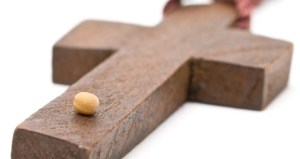
mustard seed n crossIf there is one most powerful force in the universe, it will be faith. Jesus teaches us that even faith as small as a mustard seed can do the impossible. Jesus preaches that with this little faith, we can command a sycamore tree be uprooted and be planted in the sea. One of the smallest things on earth can move the most significant reality in the world. The sycamore tree has both deep, strong and widespread roots. It is just impossible to uproot it when it has grown mature. Yet, Jesus surprises further even by saying that we can replant this on the bed of the ocean. That makes it doubly impossible. Jesus is pushing his teaching on faith beyond natural human reasoning!

The question is whether Jesus is merely exaggerating the power of faith, or He is unveiling the deepest of truth of faith. To answer this question, we need to know first what is faith? Surely there are several definitions of faith. In the broadest sense, it is a belief in the divine, something that is much more powerful than us, something beyond us. In many religious traditions, this transcendence is a person that is called God. This faith makes us different those who claim themselves as atheists. In narrower sense, it refers to a belief in a particular set of teachings about the divine. In this sense, the Catholic faith is different from the Protestant Lutheran faith.

St. Thomas Aquinas reminds us that faith is basically an ascent of the intellect. This is precisely what faith is mighty. It does not rely on earthly possession, nor our biological nature, nor our emotions. If we base our faith on moods, every time, we feel unhappy or depressed, and we may lose our faith. Mother Teresa of Calcutta once wrote in her diary that she did not feel the presence of God in her life for almost ten years. If she had depended on her emotion, she would have lost her faith. If we place our faith in our bodily wellbeing, the moment we get sick, or our body weakens, we may lose faith. Padre Pio of Pietrelcina received the gift of stigmata and had to endure the excruciating pain of the crucifixion for more than 50 years. Had he relied on his body, he would have lost his faith long time ago.

It is the ascent of the intellect that makes faith unbelievably powerful. When I was ordained to both to the diaconate and to the priesthood, especially during the most essential part of the ceremony, the laying of bishop’s hands on my head, I confess that I did not feel anything but a little pressure on my head. Does it mean my ordination invalid? Fortunately, the validity of my ordination is not based on my feelings! It is the faith, my faith, my bishop’s faith, the faith of the people, the faith of the Church. It is the faith that allows the unseen, unfelt grace of God to transform my soul into a soul of Jesus, the priest.

Our Catholic faith is indeed the mustard seed that moves a mountain. It is the faith that make our ears to hear the Word of God in the ordinary pages of the Scriptures. It is the faith that opens our minds to see the Body of Christ in a small tiny bread. It is the faith that encourages us to be humble before God and confess our sins before a priest. It is the faith that empowers many Christians to persevere in persecutions and to readily give their blood for Jesus. It is the faith that enables us to sacrifice our lives for others and to love the end.

Valentinus Bayuhadi Ruseno, OP

Iman Katolik kita

Minggu ke-27 dalam Waktu Biasa [C] – 6 Oktober 2019 – Lukas 17: 5-10

faith n fishJika ada satu kekuatan paling dahsyat di alam semesta, ini adalah iman. Yesus mengajarkan kepada kita bahwa iman sekecil biji sesawi dapat melakukan hal yang mustahil. Yesus menyatakan bahwa dengan iman yang kecil ini, kita dapat memerintahkan pohon ara dicabut dan ditanam di laut. Salah satu hal terkecil di bumi dapat menggerakkan realitas paling besar di dunia. Pohon ara memiliki akar yang dalam, kuat dan menyebar. Tidak mungkin mencabutnya ketika sudah dewasa. Namun, Yesus bahkan mengatakan bahwa kita tidak hanya mampu mencabutnya tetapi juga menanam kembali ini di dasar samudera. Itu membuatnya mustahilnya doble! Inilah hebatnya iman yang kita miliki.

Pertanyaannya adalah apakah Yesus hanya melebih-lebihkan kekuatan iman, atau Ia sedang mengungkap kebenaran iman yang paling dalam. Untuk menjawab pertanyaan ini, kita perlu tahu dulu apa itu iman? Tentunya ada beberapa definisi iman. Dalam arti yang lebih luas, iman adalah kepercayaan pada yang ilahi, sesuatu yang jauh lebih kuat dari kita. Dalam banyak tradisi keagamaan, yang ilahi ini adalah pribadi yang disebut Tuhan. Iman ini membuat kita berbeda dengan mereka yang mengklaim diri mereka sebagai ateis. Dalam arti yang lebih sempit, ini merujuk pada kepercayaan pada serangkaian ajaran tertentu tentang yang ilahi. Dalam pengertian ini, iman Katolik berbeda dari iman Lutheran Protestan.

Thomas Aquinas mengingatkan kita bahwa iman pada dasarnya adalah persetujuan dari akal budi dan kehendak. Inilah kenapa iman menjadi luar biasa kuat. Iman tidak bergantung pada kepemilikan duniawi, atau sifat biologis kita, atau emosi kita. Jika kita mendasarkan iman kita pada suasana hati, setiap saat kita merasa tidak bahagia atau tertekan, kita mungkin kehilangan iman kita. Bunda Teresa dari Calcutta pernah menulis dalam buku hariannya bahwa dia tidak merasakan kehadiran Tuhan dalam hidupnya selama hampir sepuluh tahun. Jika dia hanya bergantung pada emosinya, dia akan kehilangan imannya. Jika kita menempatkan iman kita pada kesejahteraan tubuh kita, saat kita sakit, atau tubuh kita melemah, kita mungkin kehilangan iman. Padre Pio dari Pietrelcina menerima karisma stigmata dan harus menanggung rasa sakit yang luar biasa penyaliban selama lebih dari 50 tahun. Jika dia mengandalkan tubuhnya, dia akan kehilangan imannya juga.

Persetujuan akal budi inilah yang membuat iman sangat kuat. Ketika saya ditahbiskan menjadi imam, bagian yang terpenting dari upacara ini adalah penumpangan tangan uskup di atas kepala saya. Namun, saya mengakui bahwa saya tidak merasakan apa pun kecuali sedikit tekanan di kepala saya. Apakah itu berarti tahbisan saya tidak valid? Syukurnya, validitas penahbisan saya tidak didasarkan pada perasaan saya! Ini adalah iman, iman saya, iman uskup saya, iman umat, iman Gereja. Imanlah yang memungkinkan rahmat Allah yang tak terlihat dan tak terasa mengubah jiwa saya menjadi seperti jiwa Yesus, sang imam.

Iman Katolik kita memang benih sesawi yang menggerakkan gunung. Iman inilah yang membuka pikiran kita untuk melihat Tubuh Kristus dalam roti kecil putih tak berasa. Iman inilah yang mendorong kita untuk menjadi rendah hati di hadapan Allah dan mengakui dosa-dosa kita di hadapan seorang imam. Iman inilah yang memberdayakan banyak orang beriman untuk bertahan dalam penganiayaan dan siap memberikan darah mereka bagi Yesus. Iman yang memampukan kita untuk mengorbankan hidup kita untuk orang lain dan untuk mengasihi sampai akhirnya.

Valentinus Bayuhadi Ruseno, OP

Heart of the Gospel

Reflection on the 24th Sunday in Ordinary Time [C] – September 15, 2019 – Luke 15:1-32

shepherdChapter 15 of the Gospel of Luke contains three of the most heartwarming as well as powerful parables in the entire Bible. These three parables are known as the parable of the lost sheep, the parable of the lost coin, and the parable of the prodigal son. If we look closer into these three parables, what is so stunning and astonishing is how Jesus bends, twists and stretches human logic and natural tendency to nail His point.

In ancient Israel, shepherds knew that to pastor the flock of sheep was not an easy job because they had to lead their flocks in constant search for food and water in the wilderness. Sheep was naturally dumb animal and possessed no natural defense mechanism. As a sheep looked for food, it quickly went astray and was exposed to imminent threats like wolves, hyaenas or robbers. The shepherd had to exert extra effort to watch over their sheep. Yet, occasionally, a sheep or two got lost, and the shepherd had to go into search and rescue mission.

However, Jesus tells us about a good shepherd who dares to leave the other sheep to search for a single lost sheep. Along the way, he may stumble upon life-threating dangers like robbers or pack of wolves. There is no assurance that he will find his sheep. He is practically risking his own life for this dumb sheep. What even remarkable is that after the shepherd discovers his lost animal, he rejoices exceedingly and throws a party for the finding. His mission is a huge success, and it is time to share the joy with others. It is simply heartwarming story. Then, when Jesus’ listeners are still mesmerized, Jesus drops the bomb. He points out that God is this good shepherd! God is the woman who rejoices for the small coin. God is the father who accepts and celebrates for his runaway son who returns. Through these parables, Jesus teaches us our God is merciful, and His mercy is beyond our wildest imagination. This is why they have been called “the Gospel of the Gospel” because the three parables carry the heart of the Gospel, that is the mercy of God.

Every one of us is like the lost sheep, the lost coin or the lost son. There are points in our lives we are so low and feeling meaningless. No amount of worldly happiness can fill our hearts until Jesus finds us. Carolyn Kolleger was a successful American model and movie actress. As a baby, she was baptized Catholic, but she never knew and loved her faith. As a model, she never thought anything else but herself. She also got married to Erwin Kolleger, a businessman, who enjoyed worldly pleasures. They were rich, throwing a lot of parties, drinking alcohol and even consuming drugs. Until she got pregnant. She did not want to lose her career and was pushed by her husband, she aborted the baby. She did it not only once but thrice. She got depressed, and her marriage was about to collapse. Until a priest came and helped Carolyn and Edwin. They began to meet a Catholic counselor who helped their marriage. Carolyn decided to repent and go back They were received back into the Catholic Church. She prayed the rosary and read the Bible on more regular basis, and attended the Eucharist. Eventually her husband also followed her and rebuilt their marriage and family, not based on worldly measures, but faith, hope, and love. They were blessed with four children and find true happiness.

This is our God, a compassionate and merciful God who tirelessly seeks His lost sons and daughter.

Faithful and Wise Stewards

19th Sunday in Ordinary Time [C] – August 11, 2019 – Luke 12:32-48

light lampIn ancient Israel, the masters of the house were often leaving their homes for business trips or attending social gatherings like weddings. They would entrust their houses and their possessions to chief servants. And this was the world without a cellular phone, internet, and GPS. Thus, the servants have no idea of the ETA (estimated time of arrival) of their masters. It could be 8 PM, midnight or even early in the morning. The best attitude of a servant in this scenario is to be always vigilant and prepared for the arrival of his master.

However, being prepared is not understood as being idle or passivity, like someone who does nothing but waits near the door, and opens the door when the master knocks. Jesus says, “Gird your loins and light your lamps… (Lk. 12:35)” In ancient Israel, people were wearing robe or tunic. It is a long dress that covers the entire body, from the neck down to the leg. When people are working, they gird their loins with a robe or belt, to make sure that their tunic will not get in the way. In short, the servants are doing their jobs, making sure that the house is in order, and ready to receive any order just in case their masters arrive. This is a kind of readiness and preparedness that Jesus asks of His disciples.

This kind of preparedness naturally comes the humble recognition of who we are. If the servant accepts that he is a servant and aware that the house belongs to his master, he will not act as if he is the owner of the house and neglect his jobs, but perform his tasks well despite the absence of his master. So, we need also to recognize who we are and do the works that follow from our identity well. If our pride gets in the way, and we fail to understand who we are. We start playing God, and we begin doing whatever we please, even to confidently predict the end of the world.

Based on the Scriptures, the Church always believes that Jesus will come for the second time in glory and bring the final judgment to the world. We do not know when Jesus will come as the King and those who prophesy that they understand when, turn to be a dangerous hoax. In 1997, Marshall Applewhite predicted that the earth would be destroyed by the alien spaceships, and the only way to survive was to “transfer” their souls to another planet by committing suicide. Marshall and 36 followers killed themselves, yet the earth’s destruction never happened. Marshall was playing God, and he brought calamity to himself and his followers.

Be ready for the coming of Jesus means that we realize who we are before God. If we are God’s children, we love and obey our Father, and care for the other creations because God cares for them as well. If we are God’s disciples, we faithfully follow Him and continuously learn from Him. If we are fathers, we love, protect, and provide for their family. If we are mothers, we love, care, and educate our children. And when the Lord truly comes, we may be one of those “Blessed servants who are faithful and prudent [see Lk. 12:42]”


Valentinus Bayuhadi Ruseno, OP

Hamba yang Setia dan Bijaksana

Minggu ke-19 dalam Waktu Biasa [C] – 11 Agustus 2019 – Lukas 12: 32-48

faithful servantDi Israel kuno, tuan rumah sering meninggalkan rumah mereka untuk perjalanan bisnis atau menghadiri pertemuan sosial seperti pernikahan. Mereka akan mempercayakan rumah dan harta benda mereka kepada seorang hamba yang adalah hamba utama. Dan kita perlu ingat bahwa ini adalah dunia tanpa telepon seluler, internet dan GPS. Dengan demikian, para pelayan tidak tahu dengan pasti waktu kedatangan dari tuan mereka. Bisa jadi jam 8 malam, tengah malam atau bahkan dini hari. Sikap terbaik seorang pelayan dalam skenario ini adalah untuk selalu waspada dan siap menghadapi kedatangan tuannya.

Namun, bersiap tidak dipahami seperti seseorang yang tidak melakukan apa-apa selain menunggu di dekat pintu, dan hanya membuka pintu ketika tuannya mengetuk. Yesus berkata, “Hendaklah pinggangmu tetap berikat dan pelitamu tetap menyala… (Luk. 12:35)” Di Israel kuno, orang-orang mengenakan jubah [tunik] sebagai pakaian sehari-hari. Ini adalah pakaian panjang yang menutupi seluruh tubuh, dari leher hingga kaki. Ketika orang-orang bekerja, mereka mengikat pinggang mereka, untuk memastikan bahwa tunik mereka tidak akan menghalangi kerja mereka. Singkatnya, Yesus mengingatkan bahwa para pelayan tetap melakukan pekerjaan mereka walaupun tuan mereka tidak ada, memastikan bahwa rumah sudah rapi, dan siap untuk menerima perintah apa pun sewaktu-waktu tuan mereka tiba. Ini adalah kesiapan yang Yesus minta dari para murid-Nya termasuk kita.

Kesiapsiagaan semacam ini secara alami datang dari pengakuan rendah hati tentang siapa kita. Jika hamba menerima bahwa dia adalah hamba dan dia sadar bahwa rumah itu milik tuannya, dia tidak akan bertindak seolah-olah dia adalah pemilik rumah dan mengabaikan pekerjaannya, tetapi melakukan pekerjaannya dengan baik meskipun tuannya sedang tidak ada. Jadi, kita juga perlu mengenali siapa diri kita dan melakukan pekerjaan yang sesuai dengan identitas kita dengan baik. Satu hal yang menghambat kita mengenali siapa diri kita adalah keangkuhan. Saat kita dipenuhi kesombongan, Kita mulai bertingkah seperti tuhan dan kita mulai melakukan apa pun yang kita suka, bahkan untuk memprediksi akhir dunia dengan penuh percaya diri.

Berdasarkan Kitab Suci, Gereja selalu percaya bahwa Yesus akan datang untuk kedua kalinya dalam kemuliaan dan membawa penghakiman terakhir ke dunia. Kita tidak tahu kapan Yesus akan datang sebagai Raja, dan mereka yang bernubuat bahwa mereka tahu kapan, adalah sebuah hoax yang berbahaya. Pada tahun 1997, Marshall Applewhite meramalkan bahwa bumi akan dihancurkan oleh pesawat ruang angkasa alien dan satu-satunya cara untuk bertahan hidup adalah “memindahkan” jiwa mereka ke planet lain dengan melakukan bunuh diri. Marshall dan 36 pengikut pun bunuh diri, namun alien tidak pernah datang menyerang dan kehancuran bumi tidak pernah terjadi. Marshall bertingkah seperti tuhan dan dia membawa malapetaka bagi dirinya dan para pengikutnya.

Kesiapan untuk kedatangan Yesus berarti kita menyadari siapa kita di hadapan Tuhan. Jika kita adalah anak-anak Tuhan, kita mencintai dan menaati Bapa kita, dan merawat ciptaan lain karena Tuhan juga memperhatikan mereka. Jika kita adalah murid Tuhan, kita dengan setia mengikuti-Nya dan terus-menerus belajar dari-Nya. Jika kita adalah ayah, kita mencintai, melindungi, dan memenuhi kebutuhan keluarga kita. Jika kita adalah ibu, kita mencintai, merawat, dan mendidik anak-anak kita. Dan ketika Tuhan benar-benar datang, kita mungkin salah satu dari mereka “Hamba yang setia dan bijaksana [lihat Luk 12:42]”

Valentinus Bayuhadi Ruseno, OP

Eating God

The Solemnity of the Body and Blood of Christ [June 23, 2019] Luke 9:11-17

benedict n first communicantToday the Church is celebrating the solemnity of the Body and Blood of Jesus Christ. In many countries like Indonesia, today is the best time for the children who are already prepared to receive their first Holy Communion. I still recall the day I partook of the sacred host and the holy wine. Many of us were around 10 years old, old enough to recognize the presence of Christ in the Eucharist and we were dressed in white. I was wearing long-sleeved white shirt with a tie and black pants. When the priest dipped the white bread into the chalice of wine and said, “the body and blood of Christ”, I said “Amen.” It was my first time to savor the sweetness of wine, and of course, alcoholic beverage!

At that moment, I just knew the reception of sacred host is necessary to complete the Eucharist, and I was aware I was receiving a blessing, but I never truly comprehend the profound meaning of the great mystery. For me, it was just enough that I attend the mass and consume the consecrated host. It has become a routine and tradition, from Sunday to Sunday, to from month to month, from year to year. Till we become parents and we also bring our children for their first communion. And when somebody asks us, “why do you bring your children to the first communion?”, our answer may be like, “Well, we want our kids to be like us. It is just a family tradition.” The answer is simple, but too simple that it draws more questions: why bread and wine? Why Body and Blood of Jesus? Why does it have to be eaten?

We often forget to realize that this sacred host and wine are the entire Jesus Christ Himself, with all humanity and divinity. Thus, God offers Himself to be eaten. Why eating God? The answers lie on the pages of our Old Testament. Firstly, we recall that our first parents fell because of the act of eating. Now, in the Eucharist, God uses the same act of eating to restore men and women into grace. Secondly, in the middle of the garden of Eden, there were two trees, the forbidden tree, the tree of the knowledge of good and evil, and the tree of life [Gen 2:9]. Unfortunately, our first parents chose to eat the fruits from the forbidden tree. Thus, to restore humanity to grace, now God offers us the fruits from the tree of life, the tree of the cross of Christ. Thirdly, we remember the first Passover was about the story of how God liberated Hebrew people from the slavery of Egypt. The Passover began with the slaughter of the lamb, and its blood was sprinkled on the doors of the Israelite house so that their firstborns would be saved from death. Yet, the slaughter and the sprinkling of blood were not the summit of Passover. The Hebrew people had to consume the lamb as to complete their first Passover [Exo 12:8]. Now, Jesus the Lamb of God, has been sacrificed on the cross, yet it is not the end. Like the Hebrew Passover, we need to consume the Lamb of God to complete our New Passover, the Eucharist.

There are so much themes and aspects we may ponder on the Eucharist, and particularly today, the Church reminds us that the Eucharist, especially the reception of the Holy Communion is not just our Sunday routine, a family tradition. It is of the essential plan of God for our salvation, so that we may have heaven, our Communion with God, the Holy Trinity.

Deacon Valentinus Bayuhadi Ruseno, OP

Memakan Tuhan

Hari Raya Tubuh dan Darah Kristus [23 Juni 2019] Lukas 9: 11-17

VATICAN-POPE-MEMORIALHari ini Gereja merayakan Hari Raya Tubuh dan Darah Yesus Kristus. Di banyak negara seperti Indonesia, hari ini adalah waktu terbaik bagi anak-anak yang sudah siap untuk menerima Komuni Suci pertama mereka. Saya masih ingat hari saya menerima hosti dan anggur suci. Banyak dari kami berusia sekitar 10 tahun, cukup dewasa untuk mengenali kehadiran Kristus dalam Ekaristi. Saya ingat bahwa saya mengenakan kemeja putih lengan panjang dengan dasi kecil dan celana hitam. Ketika pastor mencelupkan hosti putih ke dalam piala anggur, dan berkata “tubuh dan darah Kristus”, saya berkata “Amin.” Ini adalah pertama kalinya saya menikmati manisnya anggur, dan tentu saja, minuman beralkohol!
Pada saat itu, saya hanya tahu bahwa penerimaan hosti yang kudus diperlukan untuk melengkapi perayaan Ekaristi, dan juga menerima berkat, tetapi saya tidak pernah benar-benar memahami makna mendalam dari misteri agung ini. Bagi saya, cukuplah bahwa saya menghadiri misa dan mengonsumsi hosti yang dikuduskan. Hal ini telah menjadi rutinitas dan tradisi, dari Minggu ke Minggu, dari bulan ke bulan, dari tahun ke tahun. Mungkin banyak dari kita berpikiran yang sama dengan saya bahwa  ini hanyalah sekedar tradisi yang dihidupi sebagai seorang Katolik. Sampai saat kita menjadi orang tua dan kita juga membawa anak-anak kita untuk komuni pertama mereka. Dan ketika seseorang bertanya kepada kita, “mengapa Anda membawa anak-anak Anda ke komuni pertama?” Jawaban kita mungkin seperti, “Ya, kami ingin anak-anak kami seperti kami. Ini adalah tradisi keluarga. ”Jawabannya sederhana, tetapi terlalu sederhana sehingga memunculkan lebih banyak pertanyaan, seperti: Mengapa Tubuh dan Darah Yesus? Kenapa harus Tuhan harus dimakan?

Kita sering lupa untuk menyadari bahwa roti dan anggur yang kudus ini telah menjadi adalah Yesus Kristus yang seutuhnya, dengan segala kemanusian dan keilahian-Nya. Jadi, Tuhan sungguh menawarkan diri-Nya untuk dimakan. Kenapa harus memakan Tuhan? Jawabannya ada di Perjanjian Lama kita. Pertama, kita ingat bahwa orang tua pertama kita jatuh karena sebuah tindakan yakni makan. Sekarang, dalam Ekaristi, Tuhan menggunakan tindakan makan yang sama untuk memulihkan putra-putri dari Adam dan Hawa dalam rahmat. Kedua, di tengah taman Eden, ada dua pohon, yakni pohon pengetahuan tentang yang baik dan yang jahat yang adalah pohon terlarang, dan pohon kehidupan [Kej 2:9]. Sayangnya, orang tua pertama kami memilih untuk memakan buah dari pohon terlarang. Dengan demikian, untuk mengembalikan manusia kepada rahmat, sekarang Allah memberikan kepada kita buah-buah dari pohon kehidupan, dari pohon salib Kristus. Ketiga, kita ingat Paskah pertama adalah tentang kisah bagaimana Allah membebaskan orang-orang Ibrani dari perbudakan di Mesir. Paskah dimulai dengan penyembelihan anak domba, dan darahnya dipercikkan di pintu rumah orang Israel sehingga anak sulung mereka akan diselamatkan dari kematian. Namun, penyembelihan dan percikan darah bukanlah puncak dari Paskah Yahudi. Orang-orang Ibrani harus memakan domba untuk menuntaskan Paskah pertama mereka [Kel 12:8]. Sekarang, Yesus, Anak Domba Allah, telah dikorbankan di atas kayu salib, namun itu bukanlah puncaknya. Seperti Paskah Ibrani, kita perlu mengonsumsi Anak Domba Allah untuk menuntaskah Paskah Baru kita, yakni Ekaristi.

Ada begitu banyak tema dan aspek yang dapat kita renungkan tentang Ekaristi, dan khususnya hari ini, Gereja mengingatkan kita bahwa Ekaristi, khususnya penerimaan Komuni Kudus bukan hanya rutinitas hari Minggu kita, sebuah tradisi keluarga. Itu adalah rencana esensial Allah untuk keselamatan kita, agar kita bisa menerima kepenuhan hidup, bersekutu dengan Allah, Tritunggal Maha kudus.

Diakon Valentinus Bayuhadi Ruseno, OP

Image of the Trinity

Trinity Sunday [John 16:12-15] June 16, 2019

sign of the crossThe distinctive mark of being Christian is the Holy Trinity. We share the claim of monotheism [only one God] with other prominent religions, yet our belief in one God in three divine persons enables us to stand unique among others. Doubtless, our God is one, yet the same undoubtedly, there are three persons in this one God. The Father is different from the Son and the Holy Spirit. The Son is also unique. And, the Holy Spirit maintains His personal identity. Yet, they remain always one! How is this possible?!

Relax! The greatest minds in the Church, like St. Augustine, St. Thomas Aquinas, and Benedict XVI, have tried to dive into the mystery, and yet they just scratched the surface of this highest Truth. This is the core of our faith, yet it is the most puzzling if not intriguing teaching of the Church. However, if this is the unfathomable mystery, why should we continue to ponder, live, and celebrate it? The answer lays on the faith God has planted in us.

Often, we think Trinity as far distant reality, but we forget that our daily lives as Christian are living within the Trinity. We were baptized, we were baptized in the name of the Father, of the Son and of the Holy Spirit. When we begin our prayer, we commence with the sign of the cross. This holy sign does not only point the victorious cross of Jesus but fundamentally to the Holy Name of Trinity. After we make the sign of the cross to open the Holy Mass, the priest will greet the people by saying, “The grace of the Lord Jesus Christ and the love of God and the fellowship of the Holy Spirit be with all of you.” This is the Trinitarian formula that comes St. Paul himself (see 2 Cor. 13:13). At the Eucharistic prayer, the core prayer of the Holy Mass, the priest in the name of the Church, asks the Father to send His Holy Spirit that He may transform the bread and wine to be the body and blood of Jesus Christ. At the heart of Eucharist, the source and summit of Christian worship, is the Holy Trinity. What I mention is just the tip of the iceberg on how the Trinity permeates our worship and prayer.

The real challenge is to live and celebrate the Trinity in our daily life. Our rule of prayer should be our rule of life, as well. “Lex orandi, Lex vivendi”. Otherwise, we will fall into the trap of double-life mentality. We become Christian only on Sunday, but we turn to be people who never know God on weekdays. A hypocrite!

To live in the Trinity means to manifest to our daily lives that we are the image of God, the image of Trinity.  If the Trinity is the God of justice, do we act justly to our ourselves, our neighbors and our earth? If the Trinity is the God of mercy, are we merciful and perform the traditional seven corporeal works of mercy [feed the hungry, give drink to the thirsty, clothe the naked, shelter the homeless, visit the sick, visit those imprisoned, and bury the dead]? If Trinity is the God who is love, do we love even the worst people in our lives and forgive our enemies? If Trinity is the God of Truth, are we eager to search for the truth around us or we uncritically believe in fake news?

We are people who are living in the name of the Father, of the Son and the Holy Spirit, and we are confidently looking forward to the day we are united to this Triune God.

Deacon Valentinus Bayuhadi Ruseno, OP

Citra Allah Tritunggal

Hari Raya Tritunggal Mahakudus [Yohanes 16: 12-15] 16 Juni 2019

sign of the cross 2Tanda khas menjadi Kristiani adalah iman kepada Tritunggal Mahakudus. Kita berbagi klaim monoteisme [hanya satu Tuhan] dengan agama-agama besar lainnya, namun kepercayaan kita pada satu Tuhan dalam tiga pribadi ilahi memungkinkan kita untuk berdiri secara unik di antara yang lain. Tidak diragukan lagi Allah kita adalah satu, namun tidak diragukan juga ada tiga persona dalam satu kodrat ilahi ini. Bapa berbeda dari Putra dan Roh Kudus. Sang Putra juga benar-benar unik. Dan, Roh Kudus menjaga identitas pribadi-Nya. Namun, mereka tetap selalu satu! Bagaimana ini mungkin?!

Tapi jangan kawatir! Pemikir-pemikir terhebat di Gereja, seperti St. Agustinus, St. Thomas Aquinas, dan Benediktus XVI, telah mencoba untuk menyelami misteri ini, namun mereka hanya menyentuh permukaan Kebenaran terbesar ini. Ini adalah inti dari iman kita, namun ini adalah ajaran Gereja yang paling sulit untuk dimengerti dan juga terkadang sulit diwartakan. Namun, jika ini adalah misteri yang tak terselami, mengapa kita harus terus merenungkan, menghidupi, dan merayakannya? Karena kita telah diciptakan dalam citra Allah Tritunggal.

Seringkali, kita menganggap Tritunggal sebagai realitas yang sangat jauh, tetapi kita lupa bahwa kehidupan keagamaan kita sehari-hari sebagai orang Katolik adalah kehidupan di dalam Trinitas. Kita dibaptis, kita dibaptis dalam nama Bapa, Putra dan Roh Kudus. Ketika kita memulai doa kita, kita mulai dengan tanda salib. Tanda salib suci ini tidak hanya menunjukkan kemenangan Yesus, tetapi pada dasarnya adalah Nama Suci Tritunggal. Setelah kita membuat tanda salib untuk membuka Misa Kudus, imam akan menyapa umat dengan mengatakan, “Kasih karunia Tuhan Yesus Kristus dan kasih Allah dan persekutuan Roh Kudus bersamamu.” Ini adalah formula Tritunggal yang berasal dari St. Paulus sendiri (lihat 2 Korintus 13:13). Pada doa Syukur Agung, yang adalah doa inti di Misa, sang imam atas nama Gereja, meminta Bapa untuk mengirimkan Roh Kudus-Nya agar Dia dapat mengubah roti dan anggur menjadi tubuh dan darah Yesus Kristus. Di jantung Ekaristi, yang adalah sumber dan puncak dari liturgi kita, adalah Tritunggal Mahakudus. Apa yang saya sebutkan hanyalah puncak gunung es tentang bagaimana Tritunggal sungguh meresapi ibadah dan doa kita.

Tantangan sebenarnya adalah untuk hidup dan merayakan Tritunggal dalam kehidupan kita sehari-hari. Aturan doa kita harus menjadi aturan hidup kita juga. “Lex orandi, Lex vivendi”. Kalau tidak, kita akan jatuh ke dalam perangkap mentalitas ganda. Kita menjadi orang Kristiani hanya pada hari Minggu, tetapi kita menjadi orang yang tidak pernah mengenal Tuhan pada hari lain. Seorang munafik!

Hidup dalam Tritunggal berarti memanifestasikan kehidupan kita sehari-hari bahwa kita adalah citra Allah, citra Tritunggal. Jika Tritunggal adalah Allah keadilan, apakah kita bertindak adil terhadap diri kita sendiri, sesama kita, dan terhadap bumi kita? Jika Tritunggal adalah Tuhan kerahiman, apakah kita berbelas kasihan dan menjadikan tujuh karya kerahiman sebagai pola hidup kita? [memberi makan yang lapar, memberi minum kepada yang haus, memberi pakaian kepada yang telanjang, melindungi yang tidak memiliki rumah, mengunjungi yang sakit, mengunjungi yang dipenjara, dan mengubur yang meninggal]? Jika Tritunggal adalah Tuhan yang adalah kasih, apakah kita mencintai orang-orang terburuk dalam hidup kita dan mengampuni orang yang menyakiti kita? Jika Tritunggal adalah Allah Kebenaran, apakah kita terus mencari kebenaran di sekitar kita atau kita mudah percaya pada hoaks?

Kita adalah orang-orang yang hidup dalam nama Bapa, Anak dan Roh Kudus, dan kita dengan penuh keyakinan menanti hari kita dipersatukan dengan Allah Tritunggal.

Diakon Valentinus Bayuhadi Ruseno, OP

Mary Magdalene and Resurrection

Easter Sunday [April 19, 2019] John 20:1-9

mary magdalene n resurrection 2
He Qi_Easter morning

Mary Magdalene is a female disciple that loves her Teacher deeply, and being a woman, there is something that she teaches us. Luke describes her in his Gospel as a woman “from whom seven demons have come out” [see Luk 8:2]. It must be a terrible experience to be tormented by seven demons, and when Jesus heals her, she expresses her deep gratitude by following Jesus. As one of Jesus’ disciples, she is proven to be the most faithful to her Teacher. When many followers of Jesus are running away to save their lives, and even Peter, the leading figure in the group, denies Jesus, Mary follows Jesus in His way of the Cross to the end. She received the insult Jesus receives, she bears the humiliation Jesus bears, she carries the cross Jesus carries. In fact, she is standing beside the cross together with the mother of Jesus and John the beloved.

However, Mary’s love is even bigger than death. She is the first person who visits the tomb early in the morning. We recall that after Jesus died on the cross, his body was hastily brought to the tomb by Nicodemus and Joseph Arimathea because the Sabbath was drawing near. During Sabbath, Jews are not allowed to bury the dead. Mary knows that Jesus’ body was not taken care of properly, and she wants to make sure that Jesus deserves the proper burial. She comes to the tomb to express her love for the last time for the Teacher by anointing the body of Jesus. Yet, she only sees the empty tomb. Fear seizes her. She may think that some bad guys stole, inflicted further damages and desecrated the body. Instinctively, she runs towards the men of authority after Jesus Himself, Peter and John.

After checking the tomb, Peter fails to understand, and he goes back to the house. She also does not understand and weeps for the loss of her love, but unlike Peter, Mary stays at the tomb. In utter confusion and meaninglessness, Mary does not abandon Jesus. Indeed, the Savior does not disappoint and gives Mary Magdalene a singular privilege to witness the resurrected Jesus. Her great love and fidelity lead her to the joy of Resurrection. She becomes the first preacher of Resurrection.

In the Gospel, often female disciples are depicted as a model of love and perseverance. God created man and woman as equal in dignity, but they differ in characters. Indeed, men like Peter, are the figures of authority, but women excel in what often is lacking in male disciples. I have visited many places in Indonesia and the Philippines, and I give talks and reflections, but one thing in common from these places, is that women often outnumber the men. I am newly assigned in Redemptor Mundi Parish, Surabaya, Indonesia, and a simple gaze will prove that more women are attending our daily morning masses.

Mary Magdalene, a woman disciple, shows to us that it is possible to love and to be faithful when things got tough and rough, when life throws us its trash, and when confusion and meaningless seem to reign. Mary is those women who unceasingly pray for the priests despite so many failures they have made Mary are those mothers who make daily sacrifices for their children despite being unappreciated. Mary is those religious sisters who serve the poor committedly despite many setbacks and trails. We must thank many Mary Magdalene around us. They show us that there love truly conquers death and that there is a resurrection in even the senseless empty tomb.

Happy Easter!

Deacon Valentinus Bayuhadi Ruseno, OP