

12th Sunday in Ordinary Time [A]
June 21, 2020
Matthew 10:26-33
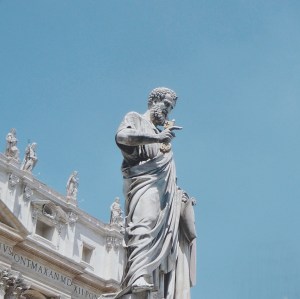 Jesus never promises that the disciple will have easy and prosperous lives. Jesus demands the opposite. After being chosen, the twelve disciples are sent to preach that the Kingdom is at hand, and yet they will not go like any royal emissaries with their military escort. No! They will travel as simple men going on foot and carrying minimal provision. They will rely on the generosity of their hosts, and the worst part is that they are going to face rejection.
Naturally, humans as they are, they are growing fear. Yet, Jesus tells them that this mission is just “on the job training,” because they are going to undergo something even deadlier in the future. True enough, after the Pentecost, they will preach that Jesus is Lord, and they are facing severe rejection, terrible persecution, and even gruesome death. As Jesus teaches them, “the disciples are no greater than their master.” If Jesus, their master, is rejected, insulted, and condemned to death, the disciples will share the same path. Peter is crucified upside down, James, brother of John, is beheaded, and James son of Alpheus, is stoned to death.
Jesus understands their human and natural fear, but Jesus tells them that they shall not fear. Why? The answer of Jesus is simple. Why should we fear dying if we will perish anyway? The choices are whether we die as a witness to Christ or die running from Christ?
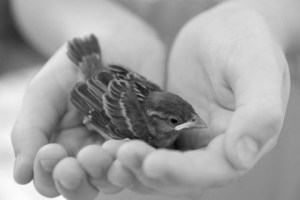
Furthermore, Jesus reveals the real reason why we should not be afraid: we have God, who is a loving and caring Father. Jesus gives a lucid yet simple explanation: how God treats a little sparrow. Sparrow is a kind of vertebrates that is practically worthless in the eyes of merchants, but for God, this little bird is His creatures, and when He created something, He has a good plan for it, and He sees to it that this plan will unfold providentially. In the word of Christian Philosopher Peter Kreeft, even God loves mosquitos. If God cares and loves the sparrow, would He not care and love for us? Again, Jesus points out a lovely truth: God knows better than we know ourselves, even He counts our hairs!
When a sparrow falls and dies, it is part of God’s perfect plan, and so when the disciples are experiencing rejections, trials, and even death, it is also part of God’s providence. Yes, often, our sufferings can be absurd. Why do we have to lose someone we love? Why do we suffer from incurable sickness? We do not understand, but even these terrible things in life are also parts of God’s providence.
We may not see it now, but perhaps we may see it at a later time, or perhaps, we never discover the reasons because of our too narrow minds. Yet, in God’s eyes, it is totally making sense. The gruesome death of martyrs, for example, is unthinkable. Still, Tertullian, a Christian apologist in 3rd century, saw it in a deeper perspective and wrote, “We spring up in greater numbers the more we are mown down by you: the blood of the Christians is the seed of Christianity.”
Jesus does not call us to enjoy a prosperous life but to be His witnesses. Though things may turn against us, Jesus tells us not to fear and worry because, in the end, all will work according to His beautiful plan because He loves us.
Valentinus Bayuhadi Ruseno, OP
 Yesus tidak pernah berjanji bahwa murid-murid-Nya akan memiliki kehidupan yang mudah dan makmur. Yesus menuntut yang sebaliknya. Setelah dipilih, kedua belas murid diutus untuk mewartakan bahwa Kerajaan Allah sudah dekat, namun mereka tidak akan pergi seperti utusan kerajaan duniawi dengan pengawalan voorijder. Tidak! Mereka akan pergi sebagai orang sederhana yang berjalan kaki dan membawa persediaan ala kadarnya. Mereka akan mengandalkan kemurahan hati tuan rumah mereka, dan bagian terburuknya adalah mereka akan menghadapi penolakan.
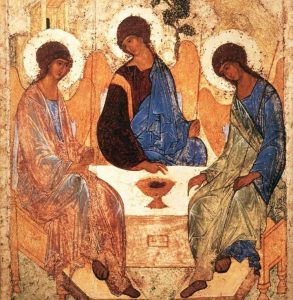 We are re-entering the ordinary season of the Church, and one of the greatest feasts within the ordinary time is the solemnity of the Most Holy Trinity. The Church has placed the celebration of the great feast on Sunday after the Pentecost. The reason may not be that obvious, but if we look at the bigger picture, it is nothing but a natural procession of truth. In Easter, we are celebrating the resurrection of Jesus that cements the divinity of Christ. On the Pentecost, we witness the divinity of the Holy Spirit being affirmed [see last Sunday’s reflection]. Now, we are rejoicing for the Three divine persons in God.
 Kita memasuki kembali masa biasa Gereja, dan salah satu perayaan terbesar dalam masa biasa adalah kesungguhan Tritunggal Mahakudus. Gereja telah menempatkan perayaan besar ini pada hari Minggu setelah Pentekosta. Alasannya mungkin tidak begitu jelas bagi kita, tetapi jika kita melihat gambaran yang lebih besar, itu sebenarnya adalah prosesi kebenaran yang wajar. Di Paskah, kita merayakan kebangkitan Yesus yang mengukuhkan keilahian Kristus, dan pada hari Pentekosta, kita menyaksikan keilahian Roh Kudus ditegaskan [lihat refleksi hari Minggu lalu]. Sekarang, kami bersukacita karena Tiga pribadi Ilahi di dalam Tuhan.
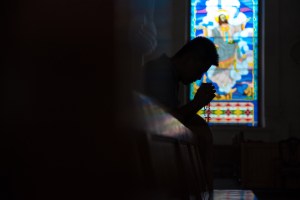 We are aware that prayer is a fundamental part of Jesus’ life. He prays on a regular basis, and especially when He is preparing to embrace decisive events, like Baptism on the Jordan [Luke 3:21], the election of the twelve apostles [Luke 6:12], transfiguration [Luke 9:28], and the Passion [Matt 26:36–44]. However, we seldom hear what Jesus says in His prayers. In the Synoptic Gospels [Matthew, Mark, and Luke], we are fortunate enough to hear Jesus’ compact and emotional prayer in the Garden of Gethsemane before He enters into His Passion. However, John the evangelist makes sure that we are going to discover what Jesus prays, and it is substantially longer than we ever heard before.
 We have closed our churches for public service for weeks. We shifted to livestreaming masses, and we are learning to adjust and to give priority to our health and life, we realize our hearts remain troubled. We long to see Jesus in the Most Blessed Sacrament, we desire to receive Him in the Eucharist, we want to serve Him in the churches, and we miss the sacrament of confession. We are unsure when it is going to end and be back to normal.
 Kita telah menutup gereja-gereja kita untuk pelayanan publik untuk beberapa minggu sekarang. Kita beralih ke misa livestreaming, dan kita belajar untuk menyesuaikan diri dan mengutamakan kesehatan dan kehidupan kita. Tetapi, kita menyadari bahwa hati kita tetap gelisah. Kita ingin melihat Yesus dalam Sakramen Mahakudus, kita berhasrat untuk menerima-Nya dalam Ekaristi, kita ingin melayani-Nya di paroki dan komunitas, dan kita kehilangan sakramen pengakuan dosa. Kita tidak yakin kapan akan berakhir dan kembali normal.
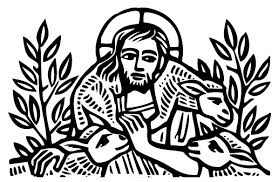 Hari ini adalah hari Minggu Paskah keempat dan secara tradisional juga disebut sebagai Minggu Gembala yang Baik. Bacaan Injil berbicara tentang Yesus yang memperkenalkan diri-Nya sebagai pintu gerbang domba dan juga Gembala yang Baik. Mazmur tanggapan diambil dari mazmur 23 yang menyatakan bahwa “Tuhanlah gembalaku.” St. Petrus dalam Suratnya mengatakan bahwa kita adalah domba-Nya yang hilang, tetapi sekarang telah kembali kepada Yesus sang Gembala [lih. 1 Pet 2:25].
 Today, we are celebrating the Palm Sunday of the Lord’s Passion. In many countries, today is a big celebration where people excitedly throng the Church. I remember when I was still studying in the Philippines, the faithful would pack almost all the 11 masses in our Church, Santo Domingo Church. It was a festive celebration as many people were carrying palm branches of a coconut tree.
 Hari ini, kita merayakan Minggu Palma. Di banyak negara, hari ini adalah perayaan besar dan umat dengan penuh semangat memenuhi Gereja. Saya ingat waktu masih kecil saya selalu paling semangat ikut perarakan romo yang memasuki Gereja dan kami mengikutinya dengan membawa daun palma kami masing-masing.
