

The Epiphany of the Lord [January 6, 2019] Matthew 2:1-12
 The third question Archbishop Socrates Villegas asked me during my ordination was “Are you afraid enough? Just like the first two questions, this one is also counterintuitive. One of my favorite phrases in the Bible is “Do not be afraid!” In many occasions in the Scriptures, this statement does not simply convey encouragement, but also a life-changing mission. When Abram was getting old and he was childless, he doubted to enter the convent with the Lord who promised him descendants like the stars in heaven, God said, “do not fear!” (Gen 15) Then, Abraham became the father of all nations. When God called Jeremiah to prophesy to Judah, he found an excuse in his young age, but God said, “do not be afraid!” (Jer 1:8) Then, Jeremiah became one of the greatest prophets of Israel. When Joseph felt betrayed and yet in his mercy, planned to divorce Mary in secret, the angel said to him, “Joseph, son of David, do not be afraid to take Mary your wife into your home.” (Mat 1:20) Then, Joseph became the foster father of the Son of God. When Mary received the Good News from the angel Gabriel, she did not understand what was happening, Gabriel said to her, “Do not be afraid, Mary, for you have found favor with God.” (Luk. 1:30) Then, she became the Mother of God.
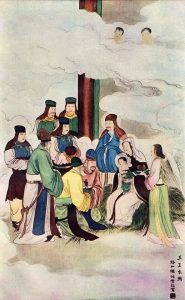
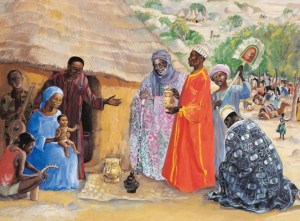
We need in the Church, the people who are not afraid to follow God’s call to love and to serve. We need priests who do not fear to proclaim the Gospel despite hardship, trials, and even threats to their lives. We need religious men and women who do not fret to serve the poor, the marginalized and the forgotten. We need the clergymen who dare to say no to the comfort of life, to fight off laziness, and to serve and to be served. We need lay men and women who are courageous in making their daily sacrifice for their families and in witnessing to Jesus Christ. We can learn also from the three Magi who traveled a thousand miles from the east, braved all dangers including the bandits and violent weathers, and challenged the power-hungry Herod, just to see the baby Jesus.
However, to have no fear does not mean recklessness. In the same Bible, we discover also that there is one fear that is needed and in fact, holy. This is the fear of the Lord (Job 28:28; Psalm 110:10). It is not the fear that flows from the fearsome and vengeful image of God. We are afraid because God will punish us and throw us to hell! No, it is a wrong image. We fear the Lord because we are afraid to offend someone who loves, someone who has loved us tremendously. We should be afraid that we lose God because of our sinful attachments. We must fear that we are separate from God who is the source of our life. The priests should be afraid to celebrate the Eucharist unworthily. The lay men and women must be afraid to approach the Eucharist and other sacraments in vain. The clergymen should be afraid to steal the money of the Church. The men of God must fear to deny the spiritual needs of the people. Again, the three Magi are our good model. They dared many challenges and defied Herod the great, but before the baby Jesus, they prostrated themselves and gave homage. It is the holy fear of God.
Deacon Valentinus Bayuhadi Ruseno, OP
 Pertanyaan ketiga yang diajukan Uskup Agung Socrates Villegas kepada saya saat saya ditahbiskan adalah, “Apakah kamu takut? Sama seperti dua pertanyaan sebelumnya, pertanyaan ini juga berlawanan dengan intuisi dasar. Salah satu ungkapan favorit saya dalam Alkitab adalah “Jangan takut!” Dalam banyak kesempatan dalam Kitab Suci, pernyataan ini tidak hanya menyampaikan dorongan semangat, tetapi juga sebuah misi yang mengubah hidup. Ketika Abram menjadi tua dan tidak memiliki anak, dia ragu dengan janji Tuhan yang menjanjikan keturunan seperti bintang-bintang di langit, Allah berkata, “Jangan takut!” (Kej 15) Akhirnya, Abraham menjadi bapak dari bangsa-bangsa. Ketika Allah memanggil Yeremia untuk bernubuat kepada Yehuda, ia ragu dan beralasan bahwa usianya yang masih muda, tetapi Tuhan berkata, “Jangan takut!” (Yer 1:8) Lalu, Yeremia menjadi salah satu nabi terbesar Israel. Ketika Yusuf merasa dikhianati saat dia mengetahui Maria mengandung diluar nikah, namun dalam belas kasihannya, ia berencana untuk menceraikan Maria secara rahasia, malaikat pun berkata kepadanya, “Yusuf, anak Daud, jangan takut untuk mengambil Maria sebagai istrimu.” (Mat 1:20) Kemudian, Yusuf menjadi ayah angkat Putra Allah. Ketika Maria menerima Kabar Baik dari malaikat Gabriel, dia tidak mengerti apa yang sedang terjadi, Gabriel pun berkata kepadanya, “Jangan takut, Maria sebab engkau beroleh kasih karunia di hadapan Allah.” (Luk. 1:30) Lalu, dia menjadi Bunda Allah.
 Today’s Gospel is truly beautiful. We have two protagonists. They are women, and they are both pregnant. Who are they? Mary and Elizabeth. Yet, why is the story beautiful? It is just natural for women to get pregnant. Unless we need to go closer to the stories and place ourselves in the shoes of Mary and Elisabeth, we can never see the true beauty of their story.
 Injil hari ini benar-benar indah. Kita memiliki dua protagonis. Mereka adalah wanita, dan mereka berdua sedang hamil. Siapa mereka? Maria dan Elizabeth. Namun, mengapa cerita mereka indah? Tentunya, wajar bagi wanita untuk hamil. Hanya dengan melihat lebih dekat kisah mereka berdua, kita baru bisa melihat keindahan sejati dari kisah mereka.
 I have been in the Dominican formation for more than 12 years, and if I add four years of my minor seminary formation in Indonesia, it stretches to 16 years! It is insanely long that it occupies a more than half of my life. If we believe that everything has a purpose, I can ask myself, “what is the point of this extremely lengthy formation?” Why should I stay through thick and thin of formation life, through hours of assiduous study, through various programs, through daily rigor of prayer life?
 Saya telah berada di formasi Ordo Dominikan di Filipina selama lebih dari 12 tahun, dan jika saya menambahkan empat tahun formasi seminari kecil saya di Indonesia, totalnya sampai 16 tahun! Ini sangat panjang karena lebih dari separuh hidup saya berada di formasi. Jika kita percaya bahwa semuanya memiliki tujuan, saya bertanya pada diri sendiri, “apa tujuan dari formasi yang sangat panjang ini?” Mengapa saya harus tetap berada dalam kehidupan formasi dengan suka dan dukanya? Mengapa saya harus menghabiskan banyak waktu dalam belajar? Mengapa saya harus bertekun dalam doa?

 Several years ago, I gave a talk on the introduction to Christology to a group of young Filipino professionals who wished to deepen their spirituality. The first question I asked them as we commenced the short course was, “Who do you say that Jesus is?” The answers were varied. Some gave a dogmatic formula like Jesus is God, one quoted the Bible saying Jesus is the Word made flesh, one expressed boldly that Jesus is Savior and Lord, and the rest shared personal convictions like Jesus is their closest friend, or Jesus is their Shepherd. All these answers were right, but nobody claimed that Jesus is the Christ. Considering that our subject was Christology, we missed the basic Jesus’ title, in Greek, “Christos,” in Hebrew, “Messiah,” and translated into English, the Anointed One. Fortunately, around two thousand years ago, Simon Peter was able to spell the title when Jesus Himself asked the question.
 Beberapa tahun yang lalu, saya memberikan ceramah pengantar Kristologi bagi sekelompok profesional muda Filipina yang ingin memperdalam spiritualitas mereka. Pertanyaan pertama yang saya tanyakan kepada mereka adalah, “Menurut kamu, siapakah Yesus itu?” Jawabannya beragam. Beberapa memberikan formula dogmatis seperti Yesus adalah Allah, ada yang mengutip Alkitab dan mengatakan Yesus adalah Firman yang menjadi daging, seseorang menyatakan dengan berani bahwa Yesus adalah Juruselamat dan Tuhan, dan sisanya berbagi keyakinan pribadi seperti Yesus adalah sahabat terdekat mereka, atau Yesus adalah Gembala mereka. Semua jawaban ini benar, tetapi tidak ada yang mengklaim bahwa Yesus adalah Kristus. Mempertimbangkan bahwa ceramah kami adalah Kristologi, kami sepertinya lupa akan identitas dasar Yesus, dalam bahasa Yunani, “Christos,” dalam bahasa Ibrani, “Mesias,” yang berarti “Yang Diurapi”. Untungnya, sekitar dua ribu tahun yang lalu, Simon Petrus mampu mengucapkan identitas dasar ini ketika Yesus Sendiri menanyakan pertanyaan ini.
 In Medio Ecclesiae