The Magi

The Epiphany of the Lord [January 7, 2018] Matthew 2:1-12

“Then they opened their treasures and offered him gifts of gold, frankincense, and myrrh. (Mat 2:11)”

magi shadowBalthazar, Melchior, and Gaspar, as the tradition called them, were neither Jews nor baptized Christians. In Greek ancient manuscripts of the Gospel, the word used to describe them is ‘magos’, meaning ‘someone with magical power’ or ‘magicians’, and practicing magic is detestable in the eyes of the Jews (2 Chro 33:6).  Even the Catholic Church herself prohibits our engagement with any kind of magic (CCC 2116). Yet, we cannot be sure what kind of magic they craft, but one thing is certain that these Magi read the sign of times and follow the star. Because of this, they are called as one of those ancient astrologers, star-readers who predict the human behaviors and the future.

Surprisingly, today’s Gospel presents these three Magi as our protagonists. Why should these practitioners of magic turn to be the good guys here? If we examine closely the story of the Gospel, we discover that these Magi stand in contrast with Herod together with his chief priests and scribes. Unlike the Magi who are reading the star to find the new-born king, Herod and his religious associates are examining the Scriptures to locate the Messiah. Indeed, the Scriptures, as the Word of God, is the lawful means to seek Jesus. Unfortunately, despite its valid method, Herod’s intention is to annihilate Jesus, his threat to his throne. Herod embodies those people who use the Scriptures to achieve his own agenda, to confuse the people and to destroy God. Meanwhile the Magi, despite their illegitimate method, sincerely seek Jesus, the true King, and indeed, God leads them to Jesus.

The encounter with Jesus brings real transformation. The Magi offer Jesus gold, frankincense, and myrrh. Traditionally, the three gifts are symbols of kingship, priesthood and suffering of Jesus, but further studies suggest that the three gifts are the usual items used for practicing magic in the ancient time. Thus, when the Magi offer the three gifts, this symbolizes their giving-up of their old profession. When they see the true King, they have found the true meaning of life, the fullness of happiness. They realize that their former profession, powerful it might be, is not true. Their journey has come to a conclusion, and it is the time for them to decide whether to stay in their old way or to embrace Christ fully. And, they made the right choice.

The story of the Magi reminds me of the story of Bartolo Longo. Growing up in the troubled time of Italy and the Church, young Bartolo loses faith in Papacy, and entered a satanic group. He goes all the way and he becomes the satanic priest. Yet, despite the power and wealth he gains from the devil, he continues to be restless. Deep inside, he longs for the true peace. Driven by his desire for truth, and helped by his friend and a Dominican priest, he returns to the faith that he has abandoned. He becomes an ardent devotee of our Lady and zealous promoter of the rosary. He initiates the restoration of a dilapidated church in Pompey, and places the image of Our Lady of the Rosary. Through his effort, now the church has become a revered pilgrim site in Italy. His holiness is acknowledged by the Church, and he is beatified in 1980 by John Paul II.

Like the Magi and Bartolo Longo, are we ready to recognize Christ as our true happiness? Are we willing to look for Jesus in our lives’ journey? And, when the moment comes, are we willing to give up our former lives and to embrace Jesus fully?

Br. Valentinus Bayuhadi Ruseno , OP


Majus

Hari Raya Penampakan Tuhan [7 Januari 2018] Matius 2:1-12

“Merekapun membuka tempat harta bendanya dan mempersembahkan persembahan kepada-Nya, yaitu emas, kemenyan dan mur (Mat 2:11)”

three magiMenurut tradisi, nama tiga orang Majus adalah Balthazar, Melchior, dan Gaspar. Dalam bahasa Yunani, kata yang digunakan untuk Majus adalah ‘magos’, yang berarti ‘seseorang dengan kekuatan magis atau sihir’, dan mempraktekkan ilmu magis adalah sebuah kesalahan besar di mata orang-orang Yahudi (2 Taw 33: 6). Bahkan Gereja Katolik sendiri melarang kita memiliki kontak dengan praktek magis atau sihir apa pun (Katekismus 2116). Namun, kita tidak bisa memastikan bentuk magis apa yang digunakan oleh orang Majus ini, tapi satu hal yang pasti bahwa mereka membaca tanda zaman dan mengikuti bintang. Karena itu, mereka bias disebut sebagai astrolog kuno, pembaca bintang yang memprediksi perilaku manusia dan masa depan.

Anehnya, Injil hari ini mempersembahkan ketiga orang Majus ini sebagai protagonis. Mengapa para praktisi magis ini bisa menjadi orang baik di sini? Jika kita memeriksa dengan seksama kisah Injil, kita menemukan bahwa orang-orang Majus ini dikontraskan dengan Herodes bersama dengan imam-imam kepala dan ahli-ahli Tauratnya. Berbeda dengan orang Majus yang membaca bintang untuk menemukan raja yang baru lahir, Herodes dan para pembantunya meneliti Kitab Suci untuk menemukan Mesias. Memang, Kitab Suci, sebagai Firman Allah, adalah cara yang benar untuk mencari Yesus. Sayangnya, meski memiliki metode yang benar, maksud Herodes adalah untuk memusnahkan Yesus, yang merupakan ancaman terhadap takhtanya. Herodes menjadi lambang bagi orang-orang yang menggunakan Kitab Suci untuk mencapai agendanya sendiri, untuk membingungkan orang-orang dan untuk menghancurkan Tuhan. Sementara orang Majus, terlepas dari metode yang tidak benar, dengan tulus mencari Yesus dan sungguh, Tuhan membawa mereka kepada Yesus.

Pertemuan dengan Yesus membawa transformasi yang nyata. Orang Majus menawarkan Yesus emas, kemenyan, dan mur. Secara tradisional, ketiga hadiah itu adalah simbol kerajaan, imamat dan penderitaan Yesus, namun penelitian lebih lanjut menunjukkan bahwa ketiga hadiah itu adalah barang yang biasanya digunakan untuk mempraktekkan sihir di zaman kuno. Jadi, ketika orang Majus menawarkan tiga hadiah, ini melambangkan penyerahan profesi lama mereka. Ketika mereka melihat Raja sejati, mereka telah menemukan arti sebenarnya dari kehidupan dan kebahagiaan. Mereka menyadari bahwa profesi lama mereka walaupun memberi mereka kekuatan, tidaklah benar. Perjalanan mereka telah sampai pada puncaknya, dan inilah saatnya bagi mereka untuk memutuskan apakah akan bertahan dengan cara lama atau untuk menerima Kristus sepenuhnya. Dan, mereka membuat pilihan yang tepat.

Kisah orang Majus mengingatkan saya akan kisah Bartolo Longo. Tumbuh dalam masa sulit di Italia dan Gereja, Bartolo muda kehilangan kepercayaan pada Paus, dan memasuki sebuah kelompok pemuja setan, sampai pada akhirnya, dia menjadi imam dari kelompok tersebut. Namun, terlepas dari kekuatan dan kekayaan yang ia dapatkan dari setan, ia terus resah. Jauh di lubuk hatinya, ia merindukan kedamaian sejati. Didorong oleh keinginannya untuk mendapatkan kebenaran, dan dibantu oleh seorang imam Dominikan, dia kembali ke iman yang telah ditinggalkannya. Dia menjadi seorang yang mencintai Bunda Maria dan promotor rosario yang penuh semangat. Dia memulai pemulihan gereja yang rusak di kota Pompey, dan menempatkan lukisan Maria Ratu Rosario di sana. Melalui usahanya, kini gereja tersebut telah menjadi situs peziarahan yang dihormati di Italia. Kekudusannya diakui oleh Gereja, dan dia dibeatifikasi pada tahun 1980 oleh Yohanes Paulus II.

Seperti orang Majus dan Bartolo Longo, apakah kita siap untuk mengenali Kristus sebagai kebahagiaan sejati kita? Apakah kita bersedia untuk mencari Yesus dalam perjalanan hidup kita? Dan, ketika saatnya tiba, apakah kita rela melepaskan hidup kita yang lama dan untuk merangkul Yesus sepenuhnya?

Frater Valentinus Bayuhadi Ruseno, OP

Why still Going to the Church on January 1?

Solemnity of Mary, Mother of God [January 1, 2018] Luke 2:16-21

mother of godSome of us may wonder why the Church places the celebration of the solemnity of Mary, the Mother of God on January 1, or on the New Year. One may guess that the Church wants us to attend mass on the first day of the year, so as to start the year right. For those who wish to have a long holidays, it might be pretty a kill joy, but for some of us who wish to be blessed for the entire year, it is a nice thought. Yet, surely there is something deeper than that.

Mary as the Mother of God is the most ancient and foundational among the other Marian dogmas (there are four Marian dogmas). As early as second century AD, Christians in Egypt have prayed to Mary, and called her as the holy mother of God. The prayer is known as “Sub Tuum Praesidium” or “We fly to your patronage”, a prayer that is still being prayed daily by us, the Dominicans. At the council of Ephesus in 431, in effort to defend the humanity of Jesus, the Church proclaimed Mary as the Mother of God as definitive and bonding for all Christians of all time.

For non-Catholics, to call Mary as the mother of God is pretty idolatrous. If God has a mother, Mary must be the highest goddess of all! The Catholics must fall back to polytheism as they worship Mary like the ancient Greeks offered incense to Hera, the supreme goddess of Olympus. But, for the well-informed Catholics, the title ‘Mother of God’ does not point to the divinity of Mary, and in fact, we never consider Mary as another supreme being. She is human just every one of us, but she is so blessed because the Word was made flesh through her (Luk 1:31). Thus, in simple logic, we may say that Mary is the mother of Jesus and Jesus is God, therefore, Mary is the Mother of God.

Now, any true Marian teaching always sheds us more light on Jesus and brings us closer to God. If a woman becomes a mother because the child she bears, then it is fitting to place this solemnity of the Mother of God in close proximity to the Birth of Jesus or Christmas. No wonder, the Church honors her motherhood exactly at the Octave (8th day) of Christmas, which happens to fall on January 1. This connection between Mary the mother and baby Jesus is reflected also on today’s Gospel who speaks of the birth of Jesus.

Perhaps we are just lazy to attend the Mass today, especially we have many other plans. We rather choose to be caught in the festive atmosphere of New Year. Yet, it is also the day that we reconnect with brilliant Church Fathers who defend this teaching, with many Christian martyrs who choose to die for this truth, and with countless devout Christians who honor the Mother of God. If we begin New Year with a lot of resolutions, why don’t we make honoring Mary, as Jesus honors His mother, as our resolution?

Br. Valentinus Bayuhadi Ruseno, OP

The Canaanite Woman and Mother

20th Sunday in Ordinary Time. August 20, 2017 [Matthew 15:21-28]

“Please, Lord, for even the dogs eat the scraps that fall from the table of their masters (Mat 15:27)”

canaanite woman 2Why does Jesus, the compassionate man and just God, have to “humiliate” the Canaanite woman? If we put ourselves in the context of Jesus’ time and culture, we will understand that what Jesus does is just expected of him. Jesus is dealing with a woman of gentile origin. Generally, Jews avoid contacts with the non-Jews, and a Jewish man does not engage in dialogue with a woman who is not his wife or family in public. Jesus does what every Jewish man has to do. However, in the end, Jesus praises the woman’s faith and heals her daughter. Eventually, mercy overcomes differences and love conquers all.
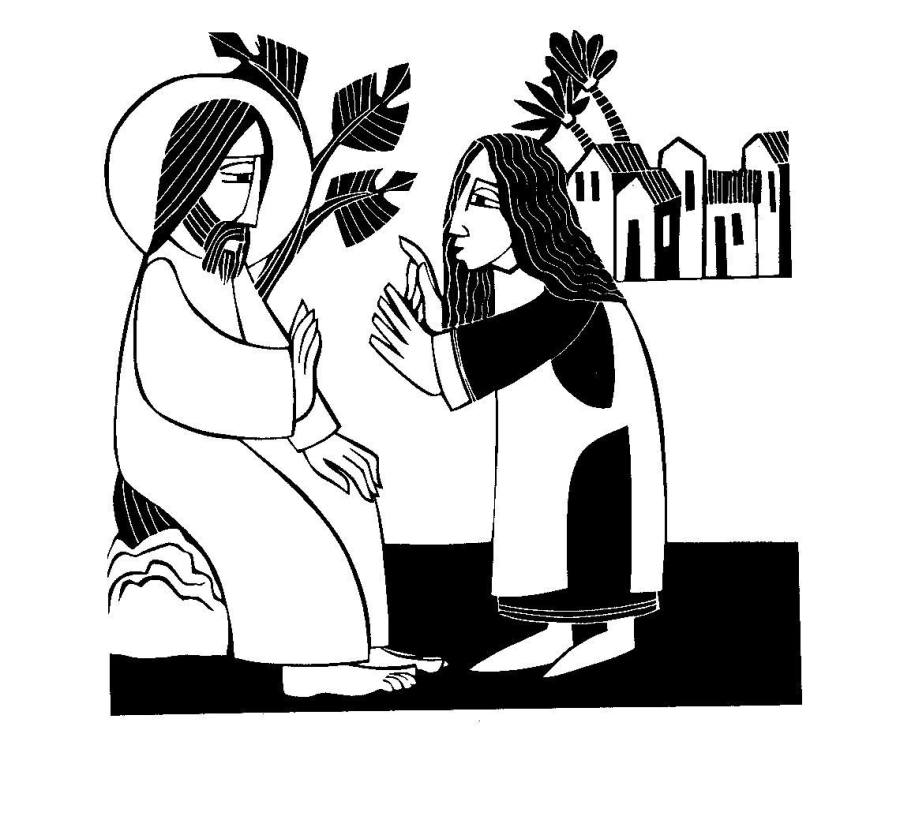
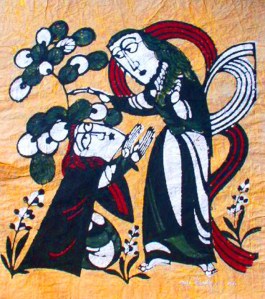
How big is this woman’s faith? If we carefully read the dialogue between Jesus and the Canaanite woman, there are three stages of humiliation. Firstly, the woman cries out loudly to Jesus, addressing him as Lord, Son of David, and asks for pity for her daughter. Jesus ignores her.  Secondly, the woman keeps crying out, and Jesus refuses her with a reason that he is sent only to the Jews. Thirdly, the woman touches the ground and worships Jesus, begging for the life of her daughter. Jesus associates her with a dog, perhaps because the relationship between the Jews and the Gentile in this region has become so sour that they call each other as dogs. Yet, despite these series of humiliation, the woman perseveres and wittily answers that even dogs receive mercy from their master. There is a progression of humiliation, yet there is also progression of humility and faith. From someone outside the group, she persistently makes her way inside to the point of ‘under the table’ of her master.

What inspires such great humility and faith? I believe that it is her far greater love. She is not just a woman and a Canaanite, she is also a mother. We know good parents, especially a mother, would do practically anything for their children. There is a natural bond between a mother and the child of her womb, a bond that empowers a woman to even sacrifice her life. Jesus allows this humiliation because He knows well the capacity of this mother to love. God allows things to get messy in our lives, because He knows well our capacity to love which can grow exponentially.

Let me end this little reflection with a story. on the day of graduation in one of the top universities in the Philippines, a young man, top of his batch, gave his valedictory remarks. He narrated a story of a young woman who was expecting a child. Yet, she was diagnosed with a dangerous illness that required aggressive treatments. The medication may cure her, but it will be too strong for the infant inside her womb.  So, she was left with a choice either to choose her life or her baby’s. Many encouraged her to let the baby die since she has a bright future, a promising career. Yet, to the surprise of all, she decided not to take the medication, and allowed her baby live. Trusting to her baby to her husband, she died after giving birth to a healthy little Babyboy. Then, with teary eyes, the young valedictorian revealed to all that he was that little baby. He is able to live, to grow, and achieve his dream because his mother loved him so much to the point of giving her own life for him.

We remember and thank our mothers who have loved and sacrificed a lot for us. And just like them, God calls us to have faith and love that make us bigger than our small lives.

Br. Valentinus Bayuhadi Ruseno, OP

Perempuan Kanaan

Minggu Biasa ke-20 [20 Agustus 2017] Matius 15: 21-28

“Benar Tuhan, namun anjing itu makan remah-remah yang jatuh dari meja tuannya.” (Mat 15:27)”

KONICA MINOLTA DIGITAL CAMERA

Mengapa Yesus, yang penuh kasih, harus “mempermalukan” perempuan Kanaan? Jika kita menempatkan diri kita dalam konteks dan budaya pada zaman Yesus, kita akan mengerti bahwa apa yang Yesus lakukan adalah sesuai dengan apa yang diharapkan. Ingat Yesus sedang berhadapan dengan perempuan yang bukan Yahudi. Umumnya, orang Yahudi pada zaman itu menghindari kontak dengan orang-orang bukan Yahudi, dan seorang pria Yahudi tidak berdialog dengan perempuan yang bukan istri atau keluarganya di ruang publik. Yesus melakukan apa yang setiap orang Yahudi harus lakukan. Namun, pada akhirnya, Yesus memuji iman sang perempuan tersebut dan menyembuhkan putrinya. Akhirnya, belas kasihan mengatasi perbedaan, dan kasih menaklukkan semuanya.

Seberapa besar iman perempuan Kanaan ini? Jika kita membaca dengan saksama dialog antara Yesus dan perempuan Kanaan, ada tiga tahap “penghinaan”. Tahap pertama: perempuan itu berseru dengan lantang kepada Yesus, memaggil-Nya sebagai Tuhan, Anak Daud, dan mohon belas kasihan bagi putrinya. Yesus mengabaikannya. Tahap kedua: perempuan itu terus berteriak-teriak, dan Yesus menolaknya dengan alasan bahwa Dia dikirim hanya kepada domba-domba yang hilang dari umat Israel. Tahap ketiga: perempuan itu bersujud dekat Yesus dan menyembah-Nya, memohon untuk kehidupan putrinya. Yesus mengumpamakan ia seperti seekor anjing, mungkin karena hubungan antara orang Yahudi dan orang bukan Yahudi di wilayah ini telah menjadi sangat buruk sehingga mereka saling memanggil sebagai binatang. Namun, terlepas dari serangkaian penghinaan ini, perempuan tersebut bertekun dan dengan pintar membalikkan keadaan dengan menjawab bahkan anjing pun mendapat belas kasihan dari tuannya. Benar, ada tahapan “penghinaan”, tetapi ada juga perkembangan kerendahan hati dan iman. Dari seseorang yang di luar kelompok, sang perempuan perlahan-lahan mendekati Yesus. Dari seseorang yang di luar pikiran Yesus, iapun berada di hati-Nya.

Apa yang mengilhami kerendahan hati dan imannya yang begitu besar? Saya percaya bahwa itu adalah kasih. Ingat bahwa dia bukan hanya perempuan Kanaan, dia juga seorang ibu. Kita tahu orang tua yang baik, terutama seorang ibu, akan melakukan segala hal untuk anak mereka. Ada ikatan mendalam antara sang ibu dengan anak buah rahimnya, ikatan yang memberdayakan perempuan bahkan untuk mengorbankan hidupnya. Yesus membiarkan “penghinaan” ini karena Dia mengetahui dengan baik kemampuan sang ibu untuk mencintai. Tuhan terkadang membiarkan segala sesuatunya menjadi sulit dalam hidup kita, karena Dia tahu dengan baik kemampuan kita untuk mengasihi dapat berkembang secara luar biasa.

Pada sebuah acara wisuda di salah satu universitas terkemuka di Filipina, seorang pemuda, yang adalah mahasiswa teladan, menyampaikan pidato sambutannya. Dia menceritakan sebuah kisah tentang seorang perempuan muda yang sedang hamil. Namun, beberapa bulan sebelum melahirkan, dia didiagnosa menderita penyakit berbahaya. Obat-obatan bisa menyembuhkannya, tapi akan terlalu berbahaya bagi bayi di dalam rahimnya. Jadi, dia harus memilih: hidupnya atau bayinya. Banyak yang mendorongnya untuk membiarkan bayinya meninggal karena ia memiliki masa depan yang cerah dan karir yang menjanjikan. Namun, akhirnya dia memutuskan untuk menyelamatkan bayinya. Mempercayai bayinya kepada sang suami, diapun meninggal setelah melahirkan bayi laki-laki mungil yang sehat. Kemudian, mengakhiri pidotanya, dengan mata berkaca-kaca, sang pemuda mengungkapkan kepada semua yang hadir bahwa dia adalah sang bayi kecil tersebut. Dia hidup, tumbuh, dan mencapai mimpinya karena ibunya yang sangat mencintainya dan tidak takut untuk memberi hidupnya untuknya.

Mari kita mengingat dan berterima kasih ibu kita yang telah mencintai dan berkorban bagi kita. Dan sama seperti mereka, Tuhan memanggil kita untuk memiliki iman dan cinta kasih yang membuat kita jauh lebih besar dari diri kita yang kecil.

Frater Valentinus Bayuhadi Ruseno, OP

Ocean

 19th Sunday in Ordinary Time. August 13, 2017 [Matthew 14:22-33]

 “O you of little faith, why did you doubt?”  (Mat 14:31)

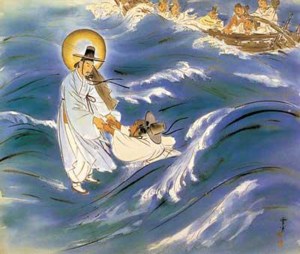
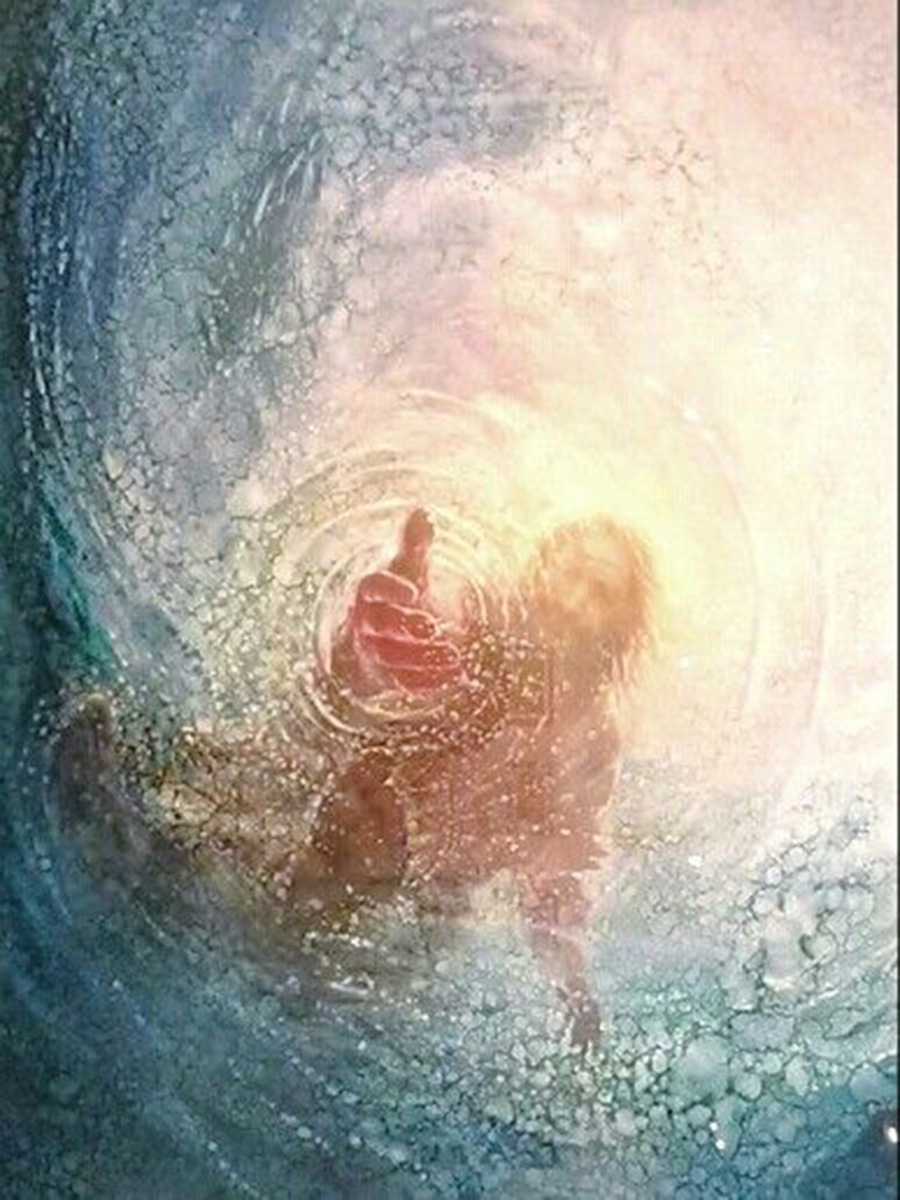
jesus rescues peter - korea Ocean is a gift to humanity. For many of us, ocean means a great variety of seafood, a place to spend our vacation. When we imagine a vast sea with beautiful beach, we are ready to enjoy swimming, snorkeling or diving. However, for millions of fishermen and seafarers, sea simply means life as they depend their lives and their families on the generosity of the sea, the resources it offers, and the works it generates. Unfortunately, the sea is not always merciful. The sea is home to powerful storms and with its giant waves that can even engulf the biggest of ships. With the effects of global warming, massive sea pollution and destructive ways of fishing, it is getting hard to get a good catch. Novelist Ernest Hemingway in his book “The Old Man and the Sea” narrates a life of fisherman who after risking his life to catch a giant fish, brings home nothing but a fishbone as his catch was consumed by other fishes. Majority of fishermen who continue struggling with lingering debt and difficulty to get fuel for their boats, become poorer by the day. These make fishermen and seafarers a perilous profession.
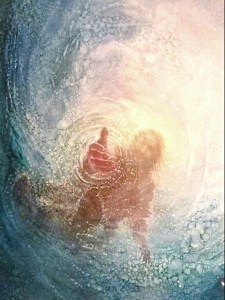
The Sea of Galilee is not a sea at all, but technically a lake. Certainly, it is a lot safer than the open sea, but the Gospels constantly tell us that the lake can be deadly sometimes even to seasoned fishermen like Peter and other apostles. Like Peter and the apostles, Filipino Dominican missionaries to Babuyan group of islands at the northern tip of the Philippines know well what it means to be at the mercy of the ocean. To go to their mission stations, they have to cross a sea strait by a small boat for around 4 to 8 hours. It might be a tiny strait, but it is a wild and dangerous one because it connects to two great seas, the Pacific Ocean on the east and South China Sea or West Philippine Sea on the west. When the sea is rough and the boat is hit and tossed by the giant waves, it is the time when our missionaries and all others in the boat to pray, and perhaps it is their sincerest prayer ever. When at the mercy of the ocean, we begin to realize that what matters most in life is actually life itself, and as only this life that we hold dear, everything else seems to be trivial and passing.

However, there comes the paradox. In the midst of raging ocean, holding on to fragile life, we begin to be closest to the creator of life Himself. The mighty sea washes away those things that stand between us and God. All those things that add layers upon layers to our lives are swept away. As we achieve wealth, physical beauties, educational attainments, physical beauties, possessions and honor, we tend to be full of ourselves, and become more independent from God who grants us those blessings. Like Peter, our faith becomes little, relying too much on ourselves. Then, when the storm comes and we begin to sink, we realize that all those achievements will not save us.

What are those things in our lives that stand between us and God? Are we like Peter, a man of little faith? What are the stormy sea experiences in our lives? How do you encounter God in these stormy sea experience?

 Br. Valentinus Bayuhadi Ruseno, OP


Lautan

Minggu Biasa ke-19  [13 Agustus 2017] Matius 14: 22-33

“Hai orang yang kurang percaya, mengapa engkau bimbang?” (Mat 14:31)

jesus rescues peter 2Laut adalah anugerah bagi umat manusia. Bagi banyak dari kita, laut berarti berbagai macam seafood, dan tempat untuk menikmati liburan. Bila kita membayangkan lautan luas dengan pantai yang indah, kita siap untuk berenang, snorkeling atau menyelam. Namun, ini jauh berbeda bagi jutaan nelayan dan pelaut. Laut berarti kehidupan karena mereka menggantungkan hidup mereka dan keluarga mereka pada laut, baik sumber daya yang dimiliki dan perkerjaan yang dihasilkan. Sayangnya, laut tidak selalu berarti kehidupan. Laut adalah tempat bagi badai-badai dahsyat dan gelombang-gelombang raksasa yang bahkan bisa menelan kapal-kapal terbesar yang pernah dibangun manusia. Dengan efek pemanasan global, polusi laut yang masif dan cara-cara penangkapan ikan yang merusak alam, sekarang semakin sulit bagi nelayan sederhana untuk mendapatkan tangkapan yang baik. Penulis Ernest Hemingway dalam bukunya “The Old Man and the Sea” menceritakan tentang kehidupan nelayan tua yang setelah mempertaruhkan nyawanya untuk menangkap ikan raksasa, tidak membawa pulang apapun kecuali tulang ikan karena tangkapannya dihabisi oleh ikan-ikan lain. Mayoritas para nelayan terus berjuang dengan hutang dan sulitnya mendapatkan bahan bakar untuk perahu mereka. Merekapun menjadi semakin miskin dari hari ke hari. Hal ini membuat nelayan dan pelaut adalah profesi yang berbahaya.
Danau Galilea bukanlah lautan. Tentunya, ini jauh lebih aman daripada laut terbuka, namun Injil mengatakan bahwa danau ini bisa mematikan bahkan bagi nelayan berpengalaman seperti Petrus dan rasul lainnya. Seperti Petrus dan para rasul di tengah badai, para Dominikan Filipina yang menjadi misionaris ke kepulauan Babuyan di ujung utara Filipina tahu betul apa artinya berada pada belas kasihan lautan. Untuk menuju ke tempat misi mereka, mereka harus menyeberangi selat dengan perahu sekitar 4 sampai 8 jam perjalanan. Ini mungkin sebuah selat kecil, tapi ini adalah selat yang ganas dan berbahaya karena menghubungkan Samudra Pasifik ke timur dan Laut Cina Selatan ke barat. Saat laut di selat ini dalam kondisi yang tidak baik, maka perahu-perahu dihantam dan dipermainkan oleh ombak-ombak raksasa. Inilah saat misionaris kita dan semua yang ada perahu tersebut tidak dapat melakukan apapun kecuali berdoa, dan mungkin ini adalah doanya yang paling tulus yang pernah mereka daraskan dalam hidup mereka. Ketika berada pada belas kasihan samudera, kita mulai menyadari bahwa apa yang paling penting dalam hidup adalah hidup itu sendiri, dan karena hanya hidup ini yang paling penting, segala sesuatu yang lain sepertinya sepele dan tidak banyak artinya.

Namun, di sinilah muncul sebuah paradoks. Di tengah laut yang ganas, berpegangan pada hidup yang rapuh, kita menjadi paling dekat dengan pencipta kehidupan sendiri. Laut yang dasyat menyapu bersih segala hal yang berdiri di antara kita dan Tuhan. Semua hal yang menambahkan berbagai lapisan pada kehidupan kita tersapu bersih. Seiring semakin banyaknya pencapaian kita, kekayaan, pencapaian pendidikan, keindahan fisik, berbagai barang dan kehormatan, kita cenderung semakin penuh dengan diri kita sendiri, dan menjadi lebih mandiri dari Tuhan yang memberi berkat-berkat itu. Seperti Petrus, iman kita menjadi kecil, terlalu bergantung pada diri kita sendiri. Kemudian, saat badai datang, ketika kita mulai tenggelam, kita menyadari bahwa semua pencapaian kita ini tidak akan menyelamatkan kita.

Apakah di dalam hidup kita yang berdiri di antara kita dan Tuhan? Apakah kita seperti Petrus, orang yang iman kecil? Apa pengalaman badai laut dalam hidup kita? Bagaimana kita menjumpai Tuhan dalam pengalaman laut yang penuh badai ini?

Frater Valentinus Bayuhadi Ruseno, OP

The Revelation of Love

Solemnity of the Most Holy Trinity. June 11, 2017 [John 3:16-18]

 “For God so loved the world that he gave his only Son, so that everyone who believes in him might not perish but might have eternal life (Joh 3:16)”

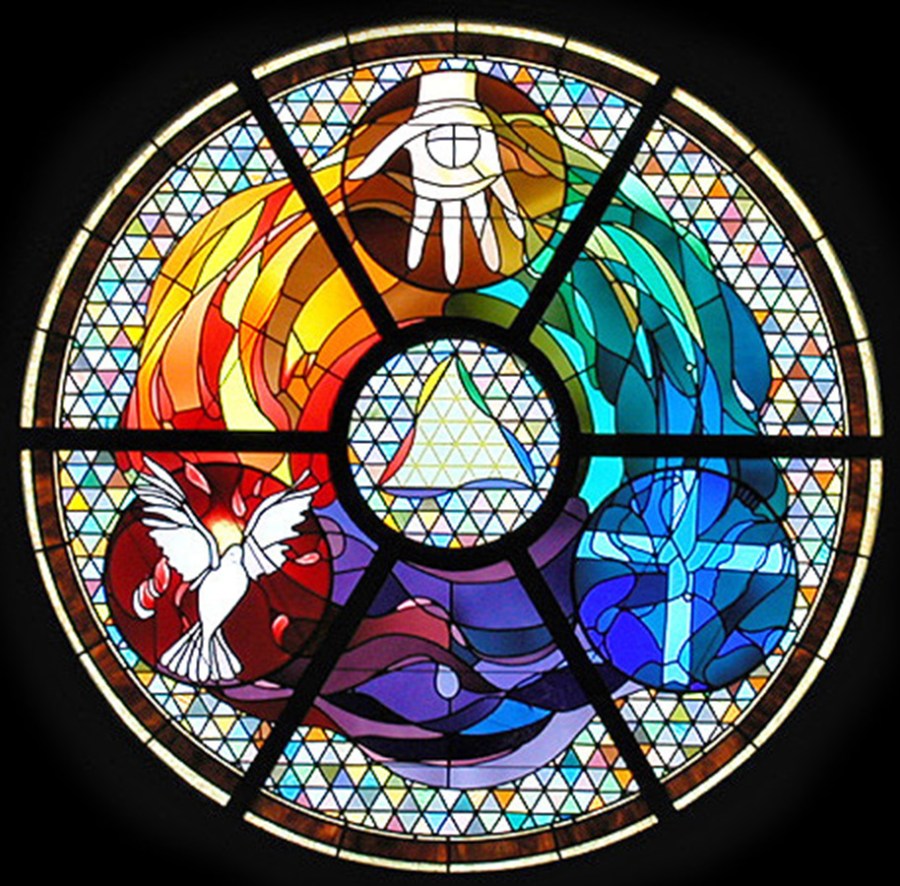
holy trinityToday, we are celebrating the Mystery of the Most Holy Trinity. This Mystery is rightly called the mystery of all the mysteries because the Holy Trinity is at the core of our Christian faith. Yet, the fundamental truth we believe is not only extremely difficult to understand, but in fact, it goes beyond our natural reasoning.  How is it possible that we believe in three distinct Divine Persons, the Father, the Son and the Holy Spirit, and yet they remain One God? Many great minds have tried to explain, but at the face of such immense truth, the best explanations would seem like a drop of water in the infinite ocean. Yet, we believe it precisely because the mystery is not coming from the human mind, but is revealed to us by God Himself.

The clearest experience of the Trinity in the Scriptures will be coming from St. Matthew. Jesus said to the disciples, “Go, therefore, and make disciples of all nations, baptizing them in the name of the Father, and of the Son, and of the Holy Spirit (Mat 28:19).” We observe that we are baptized for salvation only in “one name”. Surely this one name refers to one God himself. Yet, within this one Holy Name, there are three persons: the Father, the Son and the Holy Spirit.

St. Paul, the apostle to the Gentiles, often uttered blessings in the name of Holy Trinity. In his second letter, he greeted and blessed the Corinthians, saying “The grace of the Lord Jesus Christ and the love of God and the fellowship of the Holy Spirit be with all of you (13:13).” The same practice was also followed by St. Peter. In his first letter, he greeted the fellow Christians, “in the foreknowledge of God the Father, through sanctification by the Spirit, for obedience and sprinkling with the blood of Jesus Christ: may grace and peace be yours in abundance (1:2). It is true that the term Trinity is not in the Bible because the word was coined to facilitate our understanding, but as we have read, the Holy Scriptures revealed the truth and reality of the Holy Trinity.

If then the Holy Trinity is indeed revealed by God Himself, what is the point of having faith in the Holy Trinity then?  The answer may be discovered in today’s Gospel. The identity of God is love (see 1 Jn 4:6). The Father loves the Son totally, and the Son loves the Father radically, and the love that unites the Father and the Son is the Holy Spirit. In love, there is the beautiful dynamic of the three loves. Love is one, yet it is three. Now, it makes sense why God so loved the world and sent His only Son for our salvation. All because God is love.

If God is love and He wants to share His love and life with us, we have to get ready to enter that love. And the best way to prepare ourselves is that we need to become love itself. We need to be more loving, forgiving and generous. In short, we have to be more and more like the Trinity. As St. John of the Cross said, “In the twilight of life, God will not judge us on our earthly possessions and human successes, but on how well we have loved.”

Br. Valentinus Bayuhadi Ruseno, OP


Pewahyuan Kasih

Hari Raya Tritunggal Mahakudus. 11 Juni 2017 [Yohanes 3: 16-18]

“Karena begitu besar kasih Allah akan dunia ini, sehingga Ia telah mengaruniakan Anak-Nya yang tunggal, supaya setiap orang yang percaya kepada-Nya tidak binasa, melainkan beroleh hidup yang kekal. (Yoh 3:16)”

Holy Trinity21Hari ini, kita merayakan Misteri Tritunggal Mahakudus. Misteri ini disebut sebagai misteri dari semua misteri karena Tritunggal Mahakudus merupakan inti dari iman Kristiani kita. Namun, kebenaran mendasar yang kita percaya ini tidak hanya sangat sulit untuk dipahami, namun pada kenyataannya, melampaui penalaran alamiah kita. Bagaimana mungkin kita mempercayai tiga Pribadi Ilahi yang berbeda, Bapa, Putra dan Roh Kudus, namun tetap satu Tuhan? Banyak pemikir besar seperti St. Agustinus dan St. Thomas Aquinas telah mencoba menjelaskan, namun saat berhadapan dengan kebenaran yang begitu besar, penjelasan terbaik pun sepertinya setetes air di samudera raya. Namun, kita percaya justru karena misteri itu tidak berasal dari manusia, namun diwahyukan kepada kita oleh Tuhan sendiri.

Pernyataan yang paling jelas tentang Trinitas dalam Kitab Suci datang dari St. Matius. Yesus berkata kepada murid-murid, “Karena itu pergilah, jadikanlah semua bangsa murid-Ku dan baptislah mereka dalam nama Bapa dan Putra dan Roh Kudus (Mat 28:19).” Kita mengamati bahwa kita dibaptis untuk keselamatan hanya dalam “satu Nama”. Tentunya satu nama ini mengacu pada satu Tuhan Allah. Namun, di dalam satu Tuhan, ada tiga pribadi: Bapa, Putra dan Roh Kudus.

Santo Paulus, rasul bagi bangsa-bangsa, sering mengucapkan berkat dalam nama Tritunggal Mahakudus. Dalam suratnya yang kedua, dia memberkati jemaat di Korintus, dengan mengatakan “Kasih karunia Tuhan Yesus Kristus, dan kasih Allah, dan persekutuan Roh Kudus menyertai kamu sekalian (13:14).” Praktik yang sama juga Diikuti oleh Santo Petrus. Dalam surat pertamanya, dia menyapa sesama dan memberkati semua jemaat, …sesuai dengan rencana Allah, Bapa kita, dan yang dikuduskan oleh Roh, supaya taat kepada Yesus Kristus dan menerima percikan darah-Nya. Kiranya kasih karunia dan damai sejahtera makin melimpah atas kamu (1:2).” Memang benar bahwa istilah Trinitas tidak ada dalam Alkitab karena kata ini dibentuk untuk memudahkan pemahaman kita, namun seperti yang telah kita baca, Kitab Suci mewahyukan kebenaran dan realitas Tritunggal Mahakudus.

Jika kemudian Tritunggal Mahakudus memang diwahyukan oleh Tuhan sendiri, apa gunanya memiliki iman kepada Tritunggal Mahakudus? Jawabannya bisa ditemukan pada Injil hari ini. Identitas Allah adalah kasih (lihat 1 Yoh 4: 6). Bapa mengasihi Putra sepenuhnya, dan Putra mengasihi Bapa secara radikal, dan kasih yang mempersatukan Bapa dan Putra adalah Roh Kudus. Dalam kasih, ada dinamika indah dari tiga kasih. Kasih itu satu, tapi tiga. Sekarang, masuk akal mengapa Tuhan sangat mengasihi dunia dan mengutus Putra Tunggal-Nya untuk keselamatan kita. Semua karena Tuhan itu kasih.

Jika Tuhan itu kasih dan Dia ingin berbagi kasih-Nya dan kehidupan-Nya dengan kita, kita harus bersiap untuk memasuki kasih tersebut. Dan cara terbaik untuk mempersiapkan diri kita adalah kita perlu menjadi kasih itu sendiri. Kita harus belajar untuk lebih mengasihi, memaafkan dan bermurah hati. Singkatnya, kita harus menjadi terus seperti Trinitas. Seperti yang dikatakan oleh St. Yohanes dari Salib, “Di akhir kehidupan kita, Allah tidak akan mengadili kita berdasarkan harta duniawi dan kesuksesan manusiawi kita, namun seberapa baik kita telah mengasihi.”

Frater Valentinus Bayuhadi Ruseno, OP

Faith and the Image of God

Fifth Sunday of Easter. May 14, 2017 [John 14:1-12]

 “Do not let your hearts be troubled. You have faith in God; have faith also in me (Joh 14:1)”

 have faith 1Jesus was about to leave His disciples and go back to His Father. The disciples were confused and failed to understand. Some were afraid of losing their Messiah. Some were puzzled by the actions of Jesus. Yet, despite this confusion and fear, Jesus reminded them not be troubled and to have faith in God and in Him.

The situation of the disciples almost two thousand years ago is actually our situation also here and now. We are troubled and perplexed by many problems. There are a lot of things that come our way and we do not understand why. We do not know why so much suffering and evil are afflicting our nation. We do not understand why good people are oppressed and those who have committed evil acts seem to have a good life. We do not understand why we are losing our job or business; why we are having so much financial troubles; why we are losing our family members; why we are having health issues. We keep asking why.

Today’s Gospel reminds us not to be troubled and have faith in God and in Jesus. Yes, we profess that we have faith in God. Yet, do we truly have faith in God or we actually believe in the images of a god we simply created in our minds? Perhaps, we tend to see God as an instant troubleshooter, who will handle all our problems anytime we need Him, or as a supreme law-giver who must be obeyed at all time. Yet, in difficult times, we see God does not solve our problems instantly or we observe those myriad injustices in our world that God seems to be inactive. We become troubled because our God or our images of God do not fit the reality.

If our faith is the stubbornness of a will to cling to particular images of God, then it is not true faith, but fundamentalism. Either we will eventually lose faith in God or we will begin to force to ourselves and other people to adhere to our image of God. Through trials and difficulties in life, our old, inadequate even false images of God are challenged and we are invited to rediscover the true God once again, more alive, more liberating. We will lose our faith in God if we simply cling to these old images and refuse to open ourselves to ‘many rooms’ God prepares for us. Jesus asks us to believe in God, and not in ourselves nor in the images of God we created. True faith means knowing that God will destroy our images of Him and yet, trust that it is all for our good. It is true, often we do not understand, but as we continue to have faith, and we may discover God who is more alive and liberating. He may come to him as the God of silence, who allows us to keep asking; as the God of surprises, who touches us in the most unexpected moments; as God of the ordinary, who walks with us in our daily struggles; and much more genuine images beyond our imagination.

What are trials and challenges that we have now? What are the images of God we have in our hearts now? Do we have faith in God or in ourselves?

 Br. Valentinus Bayuhadi Ruseno, OP