

Fifth Sunday of Easter [April 29, 2018] John 15:1-8
“I am the true vine, and my Father is the vine grower. (John 15:1)”
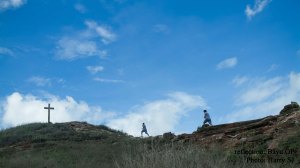 If Jesus is a carpenter, why does He speak about the vine in today’s Gospel? Does He have the competency to draw wisdom from a field that is not His expertise? We recall that Jesus grows and lives in Galilee, and in this northern region of Israel, the land is relatively fertile and agricultural industry is thriving. Some archeological findings suggest that in Nazareth, despite being a small village, the community members are engaged in small time farming, grapes press, and winemaking. A young Jesus must have been involved with this farming activities and perhaps even helped in a nearby vineyard. Thus, Jesus does not hesitate to teach wisdom using the imageries coming from the agricultural settings, like parables related to the vineyard (Mat 20:1-16), planting seeds (Mat 13:1-9), wheat and weed (Mat 13:24-30), and harvest (Mat 9:35).
In today’s Gospel, Jesus tells His disciples that He is the true vine and His Father is the vine grower. Like Jesus, the disciples are certainly familiar with grapes plantations and wine production. In fact, for the Jews, drinking wine is not mere merriment, but also an essential part of their ritual Passover meal in which they relive the experience of liberation from Egypt. Thus, the images of the vine, vine grower and vine branches are not only familiar to the disciples, but turn out to be potent means to deliver Jesus’ teaching.
The context of this teaching is Jesus’ Last Supper, and we imagine that as Jesus teaches this truth, the disciples are enjoying their meal and cup of wine. As they are drinking the wine, it is at the back of the disciples’ mind that the high-quality wine comes from superior-quality grapes, and these grapes are produced by the best vineyard with its healthy vine and hardworking vine growers. From the taste of the wine, one can assess not only the value of the wine but also the entire production, from the vineyard (viticulture) to the winemaking (vinification). Through this imagery, Jesus has assured His disciples that He and His Father have done their share in making the branches fruitful, and now it is the free choice of the disciples to bear the fruits. As branches, the only way to produce fruits is to remain united with the true vine.
The instruction of Jesus to remain in Him seems not difficult to follow. But, just hours after the Last Supper, Jesus will be arrested, and the disciples immediately forget everything that Jesus says. Judas betrays Him, Peter denies Him, and the rest run away and hide. Only a few disciples remain with Him, some women disciples, the Beloved Disciple, and His mother. The point is clear now. It is easy to remain with Jesus when things are easy and convenient, but when the things get tough, the disciples are facing an existential question whether to remain in Jesus or to abandon Him.
The question is now given to us. When our lives become desert-like and do not yield expected fruits, are we going to remain in Jesus? A friend told me how he was initially excited to serve the Church by joining an organization. Yet, after some time, he got frustrated by scandalizing attitudes of some members. He realized that the group was no different with other organizations that were plagued by gossips, intrigues, and factionalism. Naturally, I advised him to leave the group and look for a better group, like the Dominicans! Yet, he chose to remain and said to me that this difficult group provides him an opportunity to love Jesus more. Then, I realize that the mere fact that he stays, he has unexpectedly borne much fruits: patience, mercy, and understanding.
The same question now is addressed to us. Shall we remain in Christ in challenging times? Do we stay even when we do not feel the fruits? Do we remain faithful till the end?
Br. Valentinus Bayuhadi Ruseno, OP
photo by Harry Setianto, SJ
 Jika Yesus adalah seorang tukang kayu, mengapa Ia berbicara tentang pokok anggur? Apakah Dia memiliki kompetensi untuk mengajar dari bidang yang bukan keahlian-Nya? Kita ingat bahwa Yesus tumbuh dan hidup di Galilea, dan di wilayah utara Israel ini, tanahnya relatif subur dan industri agrikultur cukup berkembang. Beberapa temuan arkeologi menunjukkan bahwa di Nazaret, meskipun adalah desa kecil, penduduknya terlibat dalam pertanian skala kecil, dan juga pembuatan anggur. Sebagai penduduk Nazaret, Yesus muda sedikit banyak terlibat dengan kegiatan pertanian ini, dan mungkin pernah membantu di kebun anggur terdekat. Karena pengalaman hidup ini, Yesus tidak ragu untuk mengajarkan kebijaksanaan menggunakan citra-citra yang berasal dari dunia agrikultur, seperti perumpamaan yang berhubungan dengan kebun anggur (Mat 20: 1-16), menanam benih (Mat 13: 1-9), gandum dan lalang (Mat 13: 24-30), dan panenan (Mat 9:35).
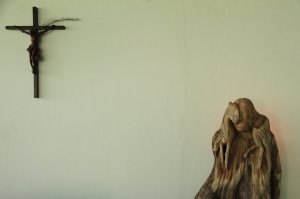
 Balthazar, Melchior, and Gaspar, as the tradition called them, were neither Jews nor baptized Christians. In Greek ancient manuscripts of the Gospel, the word used to describe them is ‘magos’, meaning ‘someone with magical power’ or ‘magicians’, and practicing magic is detestable in the eyes of the Jews (2 Chro 33:6). Even the Catholic Church herself prohibits our engagement with any kind of magic (CCC 2116). Yet, we cannot be sure what kind of magic they craft, but one thing is certain that these Magi read the sign of times and follow the star. Because of this, they are called as one of those ancient astrologers, star-readers who predict the human behaviors and the future.
 Menurut tradisi, nama tiga orang Majus adalah Balthazar, Melchior, dan Gaspar. Dalam bahasa Yunani, kata yang digunakan untuk Majus adalah ‘magos’, yang berarti ‘seseorang dengan kekuatan magis atau sihir’, dan mempraktekkan ilmu magis adalah sebuah kesalahan besar di mata orang-orang Yahudi (2 Taw 33: 6). Bahkan Gereja Katolik sendiri melarang kita memiliki kontak dengan praktek magis atau sihir apa pun (Katekismus 2116). Namun, kita tidak bisa memastikan bentuk magis apa yang digunakan oleh orang Majus ini, tapi satu hal yang pasti bahwa mereka membaca tanda zaman dan mengikuti bintang. Karena itu, mereka bias disebut sebagai astrolog kuno, pembaca bintang yang memprediksi perilaku manusia dan masa depan.
 Some of us may wonder why the Church places the celebration of the solemnity of Mary, the Mother of God on January 1, or on the New Year. One may guess that the Church wants us to attend mass on the first day of the year, so as to start the year right. For those who wish to have a long holidays, it might be pretty a kill joy, but for some of us who wish to be blessed for the entire year, it is a nice thought. Yet, surely there is something deeper than that.
 Why does Jesus, the compassionate man and just God, have to “humiliate” the Canaanite woman? If we put ourselves in the context of Jesus’ time and culture, we will understand that what Jesus does is just expected of him. Jesus is dealing with a woman of gentile origin. Generally, Jews avoid contacts with the non-Jews, and a Jewish man does not engage in dialogue with a woman who is not his wife or family in public. Jesus does what every Jewish man has to do. However, in the end, Jesus praises the woman’s faith and heals her daughter. Eventually, mercy overcomes differences and love conquers all.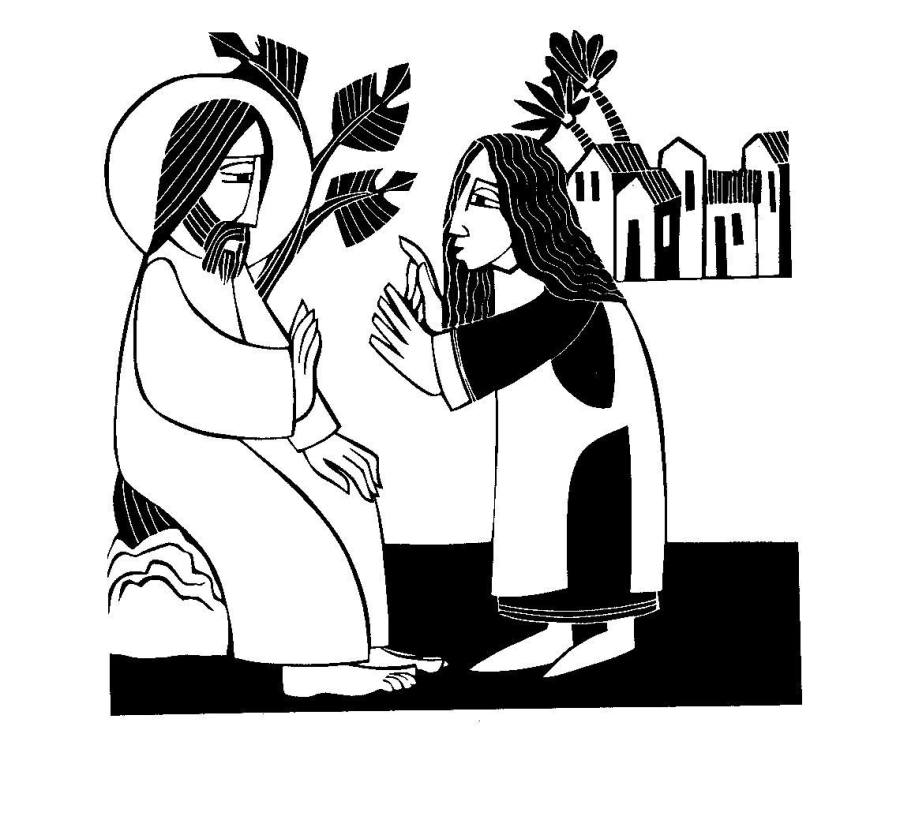
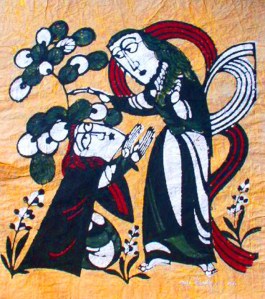
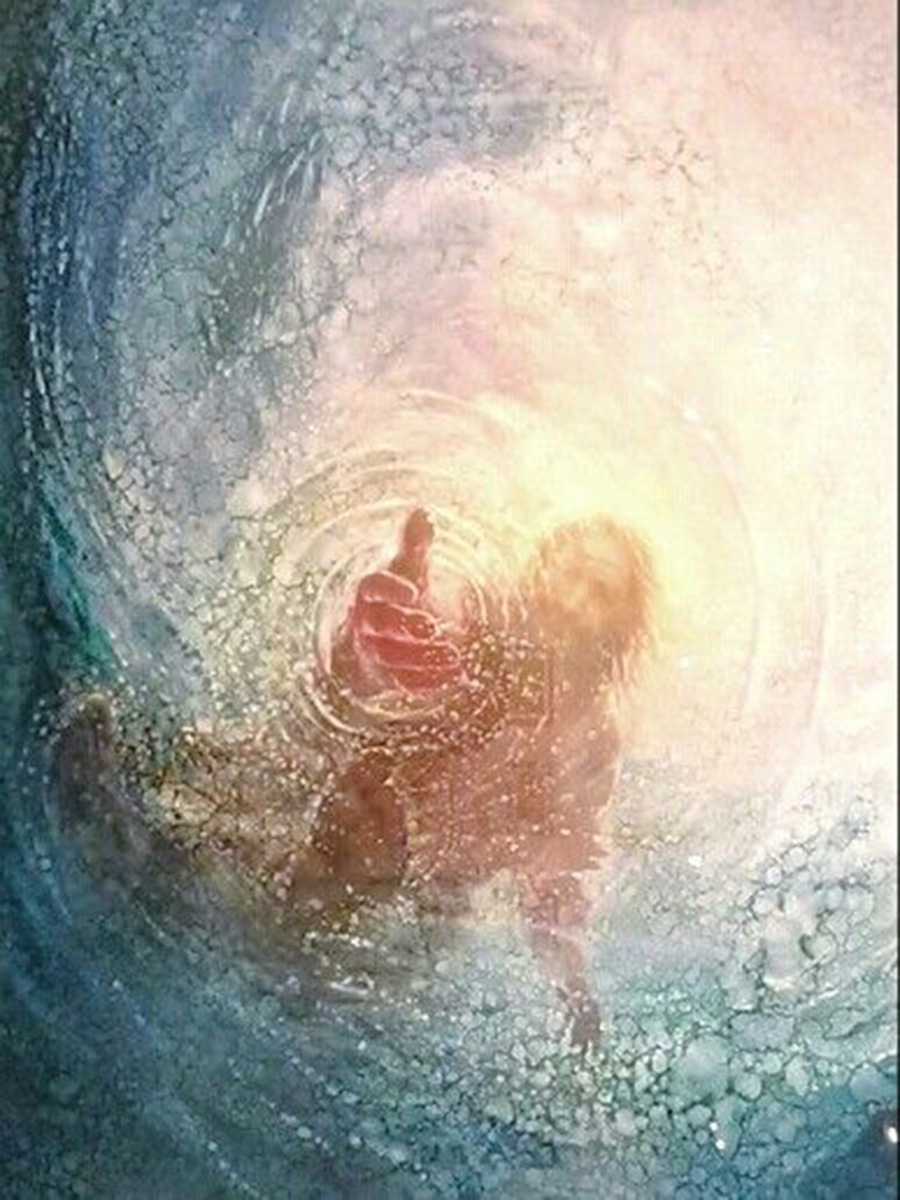
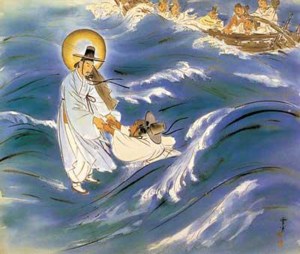 Ocean is a gift to humanity. For many of us, ocean means a great variety of seafood, a place to spend our vacation. When we imagine a vast sea with beautiful beach, we are ready to enjoy swimming, snorkeling or diving. However, for millions of fishermen and seafarers, sea simply means life as they depend their lives and their families on the generosity of the sea, the resources it offers, and the works it generates. Unfortunately, the sea is not always merciful. The sea is home to powerful storms and with its giant waves that can even engulf the biggest of ships. With the effects of global warming, massive sea pollution and destructive ways of fishing, it is getting hard to get a good catch. Novelist Ernest Hemingway in his book “The Old Man and the Sea” narrates a life of fisherman who after risking his life to catch a giant fish, brings home nothing but a fishbone as his catch was consumed by other fishes. Majority of fishermen who continue struggling with lingering debt and difficulty to get fuel for their boats, become poorer by the day. These make fishermen and seafarers a perilous profession.
