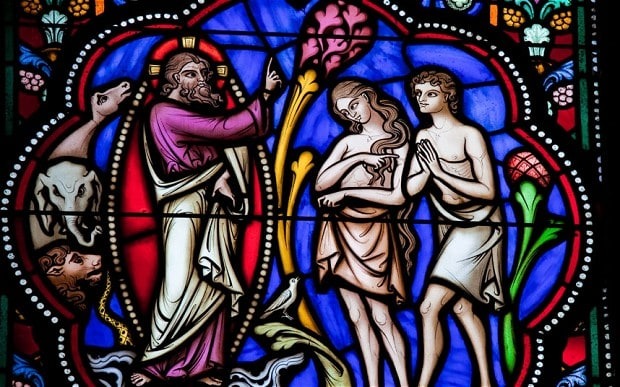
Thorn in the Flesh

14th Sunday in Ordinary Time

July 7, 2024

2 Cor 12:7-10

St. Paul in his letter to the Corinthians reveals to us that he is struggling with ‘a thorn in the flesh’ caused by the devil. Yet, what does it mean for St. Paul to have ‘a thorn’ in his flesh? And, how does St. Paul deal with this situation?

There are at least three possible answers to this thorn in the flesh. The first posibility is that the thorn refers to the spiritual assaults coming from the evil spirits. Either in the forms of physical harassment or constant inner temptations. The second possible answer may refer to his health condition, especially his eye problem. One time St. Paul complained about his difficulty to read. In his letter to the Galatians, he writes, “you know that it was because of a physical illness that I originally preached the gospel to you, and you did not show disdain or contempt because of the trial caused you by my physical condition…Indeed, I can testify to you that, if it had been possible, you would have torn out your eyes and given them to me.” (Gal 4:13-15). The third possibility is that the thorn may point to his struggles and hardship he endures as he deals with different communities. He often narrates how he was slandered, backstabbed and unfaithfullness.

Which among the three possibilites is the most probable? St. Paul may in fact deal with these three conditions in the course of his ministries, but in my personal opinion, this ‘thorn’ speaks of Paul’s struggle with Christian communities he serves. Ultimately, we are not really sure, but what is important is how Paul deals with this thorn. Firstly, Paul recognizes that God allows satan to cause this thorn. It is a good theology. A perfect God does not directly cause evil since only goodness comes from Him, but God may allow evil to take place as long as He has a sufficient reason, that is to bring out the even greater goodness. Secondly, Paul asks the thorns to be removed. Yet, his prayer is not granted because God wants that thorn to stay and He will use that for His glory.

St. Paul admits that the thorn is to keep St. Paul away from being arrogant. Paul receives a lot of spiritual gifts from the Lord, and these gifts may lead to spiritual pride as he may compare himself with less mature Christians. Thus, the thorn serves as a constant reminder that he is also struggling just like other Jesus’ disciples.

Furthermore, St. Paul realizes that God allows Paul to suffer the thorn because He supplies Paul with nececssary grace. The Lord says to Paul, “My grace is sufficient for you.” It is precisely God’s grace that sustains Paul in coping with the troublesome sitaution. St. Paul discerns that he is able to survive and even flourish through sufferings and weakness because of God’s grace. Paul cannot boast of himself, of his power, his intellegence, and his eloquence because all these things crumble before the weight of sufferings. Paul only can boast of weakness, his sufferings, his hardships, his thorn because precisely in his weakness, people can see how God’s grace works and sustains Paul.

What are our thorns in our lives? Are we angry because God does not take away our thorns? Do we relly solely on our strenght? Do we ask suffient grace to endure and flourish through sufferings?

Valentinus Bayuhadi Ruseno, OP

The Mystery of Faith

13th Sunday in Ordinary Time [B]

June 30, 2024

Mark 5:21-43

Faith is fundamental to our salvation but is also one of the most misunderstood concepts. The stories of the healing of Jairus’ daughter and the woman with haemorrhage help us better understand the meaning of faith and how we need to live our faith.

The most basic understanding of faith is a belief in God, or for us Christians, a belief in Jesus Christ. This primary sense of faith relies heavily on our intellectual acceptance of the presence of God and Jesus as His only begotten Son, our Savior. However, how about those people with no opportunity to intellectually recognize Jesus? Like for example, Jairus’ daughter was gravely ill and eventually died. She was not able to have faith in her mind that Jesus would go to save her. Yet, she was saved from death, not because of her faith, but the faith of her father. St. James reminds us also that even the demons believed and knew well that God exists, but the intellectual faith does not save them.

The second type of faith is faith of conviction. This kind of faith involves not only intellectual recognition of God but also vigorous conviction and deep trust. This kind of faith is usually expressed in solid emotions and visible bodily actions like shouting the name of Jesus or bowing down in prayers. Yet again, St. Paul reminds us that this kind of faith does not bring salvation. He writes, “If I have all faith, so as to remove mountains, but have not love, I am nothing (1 Cor 13:2).”

Finally, the third class of faith is faith working through love. This faith not only accepts God intellectually and is profoundly hopeful but also manifests itself in works of charity. Compared to the previous two, this faith is more demanding yet also saving. We can see this from Jairus’s faith. His profound love for his daughter propels him to believe in Jesus, and in turn, his faith in Jesus empowers him to seek and beg for Jesus’ miraculous healing.

The story of the woman with a haemorrhage is more interesting. She seems to have a second type of faith or the faith with conviction. She sincerely believed that she would be healed if she touched Jesus, but if we go deeper, we find her faith goes beyond convictions. When she decides to approach Jesus, she does not immediately grab Jesus’ body or feet. Instead, she carefully selects to touch the tassel of Jesus’ clock. Why? The woman is aware that she has the flow of blood, and this makes her ritually impure, and anyone she touches may be contaminated by this impurity (see Lev 15:25-30). Therefore, by not making immediate contact with Jesus, the woman shows excellent care to preserve the purity of Jesus. This simple detail can show us her love for Jesus despite her limitations. Then, Jesus recognizes the true faith of the woman, and she is made well.

Do we have the saving faith? What kind of faith do we have, and how do we grow? Do we manifest our faith in God in love for Jesus and our neighbours?

Valentinus Bayuhadi Ruseno, OP

Love of Christ urges us.

12th Sunday in Ordinary Time

June 23, 2024

2 Cor 5:14-17

The relationship between St. Paul and the Church in Corinth is complicated. St. Paul was the first missionary to preach the Gospel in Corinth and establish the Church there. Yet, after St. Paul left for another mission, some members of the Church began to disobey Paul and discredit him. In his second letter, St. Paul tried to address this issue, both with tears and joy. What is the problem? How, then, did Paul answer this issue?

Corinth was one of the major cities in ancient Greece, and its strategic location made it wealthy and a major trading hub in the Roman Empire. This situation made the city attractive to many people, including Christian missionaries and preachers. When St. Paul left the city to preach in other places, other so-called ‘apostles’ came and began to teach the Christians in Corinth. Some of them seemed to intentionally discredit Paul by saying that he was not a true apostle. They would cite some proofs like Paul preached a different Gospel, Paul was not a real Israelite, and Paul was not accepting support from the Church (a preacher or missionary was expected to receive their living from the Church). Yet, now Paul was asking for donations.

In his letter, Paul defended himself. He only preached the true Gospel (2 Cor 11:1-6). He is a true Israelite from the tribe of Benjamin and, in fact, from the Pharisees’ group. And, often, he did not receive support from the Corinthians, but instead worked as a tent maker because he did not want to become a burden to the Church (2 Cor 11:7-10). Yet, Paul further explained that the donation he sought was not for himself but for the Church in Jerusalem (2 Cor 8:9).

Paul defended further his apostolic ministry that he received from God for the building of the Church. He was facing persecution both from the Jews and the Greeks; he was beaten in the Synagogue and jailed by Roman leaders. The angry mobs targeted him. Jews opposed Paul because he preached Jesus Christ. The Greeks hated Paul because he drew many people away from the pagan temples. Paul also experienced life-threatening dangers in his journeys: robbers, unfriendly weather, and shipwrecks. Beyond that, he also worked during the days to support himself and preached during the night, and his energy was restlessly spent to deal with various concerns of the Church (see 2 Cor 11:23-29). Paul explained why he was doing all these things: ‘The love of Christ urges us (2 Cor 5:14).’

Christ’s love is enormous; it empowers Paul to do the impossible: love like Jesus. Paul is not the only one who receives this overwhelming love of Jesus but all of us. Jesus loves us dearly to the point of giving up His life for us so that we may become a new creation in Him (2 Cor 5:17). Now, the question is whether we will accept this divine love and make it fruitful in our lives. Are we courageous enough to love like Jesus, as exemplified by St. Paul? Are we ready to face dangers and difficulty in preaching the Gospel? Are we willing to labour day and night for the people Jesus loves?

Valentinus Bayuhadi Ruseno, OP

The Man and the Seed

11th Sunday in Ordinary Time [B]
June 16, 2024
Mark 4:26-34

There is something ‘unusual’ in Jesus’ parable. I am not a farmer, but I can sense that the parable’s man seemed clueless about what he was doing. He simply threw the seed and went away sleeping. What is really happening here? What does Jesus want to teach us through this parable?

Though man’s way can be a valid way of cultivating a plant, it is not the best way of farming. Good farmers will ensure that the seed will grow well through constant care. They would choose the best type of seeds for the season. Seeds for spring are different from those for autumn. Then, they will prepare the soil and scatter the seeds, considering the proper spacing. Enough water is also crucial for the healthy growth of the plant. Farmers also always watch for things that may destroy their harvest, like wild animals, pests, and thieves.

However, the man in the parable just sown the seed and went away. He did not act like a good farmer. What’s really happening here? To answer this, we must look closely at the text. Jesus never described the man as a farmer. Jesus said, ’a man’ (Greek: ἄνθρωπος, Anthropos). Another interesting thing is that Jesus described the man not as ‘planting the seed’ but ‘throwing the seed’ (Greek: βάλλω, ballo). From this information, we can safely conclude that the man in the parable did not intend to cultivate the seed but rather to throw it away. Yet, despite being rejected, the seed mysteriously grew and bore fruits.

Then, the kingdom of God is a rejected seed that has survived and even produced a large harvest. This kingdom of God may refer to Jesus, the King of the Kingdom, who was rejected by the elders and crucified by the Romans and yet rose from the dead and became the source of salvation for those who believe. The kingdom of God may also point to the Church as the body of Christ that was initially persecuted severely, and both her leaders and her members were tortured and martyred. Yet, eventually, the Church grows exponentially into the most significant human community in the world.

The parable also speaks to us, especially when facing suffering and our faith is challenged. For some people, just being the disciples of Christ, we must endure hatred, discrimination, violence, and even death threats. For others, being part of the Catholic Church, our faith is questioned and ridiculed. However, the spiritual danger also threatens those practicing their faith in peace. We may take our faith for granted when things are safe and easy. We go to the Church just because everyone is going to the Church or because we feel good about it. Our understanding of our faith becomes very shallow. Another danger is that we become arrogant and self-righteous, looking down on other Christians and thus failing to love them. We turn to be ‘the man’ in the parable who rejected the seed.

For those who are like ’a rejected seed’, we have faith that God works in mysterious ways to bring us growth in suffering. Yet, at the same time, as we grow in faith, we must be careful not to become like ‘the man’ who throws a rejected seed.

Rome
Valentinus Bayuhadi Ruseno, OP

Adam and Us

10th Sunday in Ordinary Time [B]

June 9, 2024

Genesis 3:9-15

The story begins with a question from the Lord to Adam, “Where are you?” Yet, this is a strange question. Wasn’t God aware of where Adam was? But He is God, and He is supposed to know everything! Does it demonstrate ‘ignorance of God,’ or is there something deeper in the question?

Firstly, we must recognize that the language of the early chapters of Genesis is much different from the rest of the Bible. The Church recognizes that “the account of the fall in Genesis 3 uses figurative language but affirms a primeval event, a deed that took place at the beginning of the history of man (CCC 390).” Scholars agree that the sacred author used an ‘anthropomorphic language,’ that is, God is described to act and behave like a human person. Thus, God is painted as one who strolled around the garden and suddenly noticed the absence of Adam and Eve.

Moving beyond ‘anthropomorphic language,’ God’s question to Adam is not about geographical location. God certainly knew well where Adam was. Nothing can hide from Him. Yet, the question remains true because God was not asking for a geographical position but rather a personal relationship. “Where are you in relation to me? Are you with me or against me? Are you on my side or the serpent’s side?”

Adam answered, “I was afraid.”  The original relationship between God and men was based on love and true honor. Yet, after sin, fear dominates. Adam no longer saw God as a loving father but a vengeful judge. Thus, he ran away and hid himself because he was fully aware of the judgment that awaited him. He was naked before the Lord, and he realized without God, he was nothing.

God then asked, “Did you eat from the tree?” Surely, God knew Adam had trespassed His law, but He phrased the fact in a rhetorical question as God solicited Adam’s confession. Unfortunately, instead of confessing and asking for forgiveness, Adam blamed the woman. Yet, on closer look, Adam was not exactly blaming the woman, “The woman you gave me, she gave me the fruit.” Indirectly, Adam blamed God! Adam deserves nothing but a miserable death, but did He die there and then? No! God rather pointed out to Adam that his refusal of God’s love had led him to hardship and suffering.

What would have happened if Adam had owned his sin and asked God’s mercy? Perhaps Adam and his descendants would have lived in a better world. Yet, Adam was too arrogant to beg forgiveness, and he and his descendants must walk through the valley of tears till the arrival of Jesus Christ.

Surely, it is pointless to blame Adam for our conditions, but we can always learn from this primordial story. Sin is what separates us from God and distorts our loving relationship into a nightmare. Either we see ourselves as fearful slaves or rebellious renegades. Yet, often, like Adam, our father, we are too arrogant to confess and blame others, situations, or, finally, God. Yet, on the other side of the story, we learn who our God is. He was not a vengeful god who would instantly obliterate Adam, but rather a loving father who patiently educates his rebellious son. He was not a cruel lord who would punish but a merciful God who wanted his stray children to return to Him through the arrival of His Son.

Rome

Valentinus Bayuhadi Ruseno, OP

Holy Trinity and Baptism

The Solemnity of the Holy Trinity

May 26, 2024

Matthew 28:16-20

As we celebrate the mystery of the Holy Trinity, the Church invites us to meditate on our Baptism. We are baptized in the formula given by Jesus Himself. Jesus instructed His disciples, “Go therefore and make disciples of all nations, baptizing them in the name of the Father and of the Son and of the Holy Spirit (Mat 28:19).” Yet, what does it mean to be baptized with this Trinitarian formula?

Baptism claims us for God. We are baptized ‘in’ the name of the Father, and of the Son, and of the Holy Spirit. In New Testament Greek, the preposition ‘in’ is ‘εἰς’ (read: eis), and this points to a movement from one place to another or from an old condition to a new one. Thus, Baptism allows us to enter a new place, state, and status.

In Baptism, we are no longer outside of God, but now we are inside of God. We no longer belong to the world but now to God. We are no longer under the influence of Satan, but now we are animated by God’s grace. The grace of Baptism recreates us from the fallen children of Adam into God’s holy children. The same grace transforms us into redeemed members of Jesus’ body. And finally, this grace also sanctifies us and makes us become the temple of the Holy Spirit.

Since Baptism leads us to communion with the Holy Trinity and heaven is nothing but permanent union with God, Baptism is necessary for our salvation. No wonder St. Peter teaches with authority that Baptism saves us (1 Pet 3:21). However, we must remember that the grace we receive in Baptism must be properly received and manifested in our lives.

This union with God is not only something spiritual and invisible but concrete and visible. In this world, we believe that the family of God, the Body of Christ, and the Temple of the Holy Spirit have a visible manifestation: the Church. Baptism is also a gateway to our membership in the Church. Therefore, we demonstrate our belonging to the holy Trinity when we manifest our belonging to our local Church, parishes, and the universal Church. We express our spiritual union with the Holy Trinity when we celebrate the liturgy of the Eucharist worthily.

Thus, we cannot say we are in unity with the Holy Trinity, but we never attend mass because of laziness or receive the holy Communion unworthily.

We reveal our love for the holy Trinity when we love our fellow Christians and even those who do not believe yet in the Trinity. That is why St. John says, “If anyone says, ‘I love God,’ and hates his brother, he is a liar; for he who does not love his brother whom he has seen, cannot love God whom he has not seen (1 Jn 4:20).” We display our communion with the Holy Trinity when we separate ourselves with the devil and his works. We cannot say that we are children of God, but we live in sins, we steal from others, we are involved in esoteric practices, and we believe in superstitions.

The sacrament of Baptism does not stop with the pouring of water but manifests in our daily lives. Our belief in the Trinity does not simply mean intellectual acceptance of God’s presence but also transforms our lives and the way we live in the world.

Rome

Valentinus Bayuhadi Ruseno, OP

When is the Birthday of the Church?

Pentecost [B]

May 19, 2024

John 20:19-23

The solemnity of the Pentecost is usually called the birthday of the Church. But is this really true, or is it just a popular myth?

If we try to go into the official teaching of the Church, we will discover a passage from the Catechism of the Catholic Church, especially paragraph 766. Here, I quote, “The Church is born primarily of Christ’s total self-giving for our salvation, anticipated in the institution of the Eucharist and fulfilled on the cross. “The origin and growth of the Church are symbolized by the blood and water which flowed from the open side of the crucified Jesus.” “For it was from the side of Christ as he slept the sleep of death upon the cross that there came forth the ‘wondrous sacrament of the whole Church.’ ” As Eve was formed from the sleeping Adam’s side, so the Church was born from the pierced heart of Christ hanging dead on the cross.”

In short, the Church’s birthday is on Good Friday. The Church recognizes herself as the new Eve, born from the heart of Christ to be His bride. Consequently, calling the feast of Pentecost the birthday of the Church seems to be false. Yet, the truth is more profound than it seems.

Suppose we carefully observe the liturgy of the Pentecost, especially in the preface of Pentecost (a prayer said by the priest just before the Eucharist prayer). We will discover an interesting piece of information. I quote, “[We] give you thanks, Lord, holy Father… you bestowed the Holy Spirit today on those you made your adopted children uniting them to Your Only Begotten Son. This same Spirit, as the Church came to birth, opened to all people the knowledge of God…” In short, the liturgy of Pentecost is also celebrating the Church’s birthday.

So, how do we make sense of these seemingly conflicting pieces of information? Why does the official teaching of the Church seem to contradict the liturgy? To understand this, we need to see the birth of the Church not as one single instantaneous happening but rather as a process of giving birth. As the baby’s head is the first to come out, and then the rest of the body, we can see the ‘head of the Church’ came to being first under the cross of Christ and then the rest of ‘the body’ in the Pentecost. John, the beloved apostle, and Mary, the mother of Jesus, represented the head. While in the Pentecost, under the influence of the Holy Spirit, Peter, and other disciples began to proclaim God’s great things to all nations.

Another way to see this truth is that the Church was indeed born twice, first from Christ and second from the Holy Spirit. Following St. Paul, the Church is the body of the Church (Eph 1:22; CCC 792), and the Church also is the temple of the Holy Spirit (1 Cor 6:16, CCC 797). As the body of Christ, we are an organic unity between us and Christ, the source of our salvation. As the temple of the Holy Spirit, we are united to the Holy Spirit, the source of our holiness and our reason to sanctify others.

Happy birthday to the Catholic Church!

Rome

Valentinus Bayuhadi Ruseno, OP

Where is Heaven?

The Ascension of Our Lord

May 9, 2024

Mk 16:15-20

The Church is celebrating the Ascension of our Lord, Jesus Christ. After around forty days since His resurrection, Jesus went up into heaven before the eyes of His disciples. Through Ascension, Jesus wanted to show His disciples that the heavens were real, and He was there. Yet, where is heaven? What is heaven?

In the Old Testament, the word heavens in Hebrew is ‘שָׁמַיִם (samayim), and this term primarily refers to the sky, atmosphere, or realm above the earth. Yet, the Bible points out that ‘שָׁמַיִם (samayim) is also the dwelling place of the Lord and His angels. God is often described as ‘going down from heavens’ (Gen 11:5, 19:24), or angels of God moved up to and down from heavens (Gen 28:12). Heavens are also generally restricted to God and His angels, while humans belong to the earth. After death, men were buried and ‘moving down’ to the realm of the dead, the Gehenna (with Elijah as an extremely rare exception, 2 Kg 2:11).

Now, with the advance of science, technology, and theology, we recognize that God does not literally stay in the sky, atmosphere, or outer space. So, where are the heaven? Is it in another universe? Is it in another dimension? Is it in a realm without time and space? With all honesty, we have very little knowledge about heaven’s whereabouts. Yet, this does not change the basic truth: Heaven is the dwelling place of God and His angels. Then, does Jesus’ ascension make any difference?

Jesus’ ascension now bridges the heaven and earth. He is the way to the Father (John 14:6), and as the Good Shepherd (John 10:14), He leads His flock to a green heavenly pasture. Jesus’ ascension creates a significant difference between the heavens of the Old Testament and those of the New Testament. When Isaiah had a vision of the heavens, he saw God and His angels singing ‘holy, holy, holy!’ (Isa 6:1-3). Then, a hundred years later, apostle John saw the same vision of God and His angels singing ‘holy, holy, holy!’ Yet, there is one big difference. In that heaven, John discovered Jesus, the lamb of God, surrounded by holy people!  Heaven is now filled with people. Jesus fulfilled His promise to go to heaven to prepare dwelling places for us (John 14:2-3).

Lastly, what does it feel like to live in the heavens? Again, as long as we are alive here on earth, we may not fully understand the reality of heaven. The Bible often speaks of heaven metaphorically, like a wedding feast (Isa 25:6; Rev 19:9), a new world, a new promised land, and Jerusalem (Isa 66:17-19; Eze 40; Rev 21).  It is where we find perfect happiness because we are in perfect unity with God and His saints (CCC 1024). However, we are not that far from experiencing heaven. Christ, who was able to go up to heaven, has the same power to go down again to the earth, albeit in a different manner. Unlike His first coming in a lowly place in Bethlehem, now He comes down with His heavenly glory in the Eucharist.

Every time we celebrate the holy mass and receive Jesus worthily in the Eucharist, we are experiencing heaven on earth.

Rome

Valentinus Bayuhadi Ruseno, OP

God’s Word Prunes Us

5th Sunday of Easter [B]

April 28, 2024

John 15:1-8

Jesus is the vine, and we are His branches. He then declares that unfruitful branches will be cut, and healthy ones shall be ‘pruned.’ In fact, Jesus says, “You are already pruned because of the word that I spoke to you (John 15:3).” What does it mean? How does His word prune us? What is Jesus’ purpose?

If we have the opportunity to visit a vineyard, we will see how the vinedressers work. Among the things that they do is to cut the unhealthy and dead branches and prune the healthy ones. Pruning itself may include removing dead or unhealthy parts of the plant so that the vine may supply its nutrients to healthy branches. But also, the vinedressers would trim and slim down some overgrown branches since these branches typically don’t yield good grapes and suck up nutrients from their neighbour branches. All are done for one purpose: to produce a good quality grape.

Then, how does Jesus’ word prune us, the branches? Firstly, we recognize that we are creatures of language. The language we listen to and learn form who we are. Children who used to hear violent words tend to grow to be violent persons. Children who are fed with discouraging words tend to have low self-esteem. Yet, children who are never told words of proper corrections and discipline may become weak characters who always blame others. Children need to hear both encouraging and loving words as well as words of constructive corrections. Good words will make them grow confident, and proper discipline will make them avoid failures and dangers in the future.

It is the same with the Word of God. Listening to God’s word in the Bible, we discover many affirming words and heart-warming stories. Yet, the same Bible contains words, instructions, and stories that are strong and even demanding. The Gospel has lovely stories like those of Jesus, who blessed children and embraced sinners. Yet, the same Bible narrates Jesus, who said, “repent from our sins and believe in the Gospel.” Jesus, who opens the heavens for all of us, is also the same Jesus who teaches the reality of hell.   

Listening to the holy Scriptures every Sunday in the Eucharist, or even every day in our personal reading, allows God’s word to prune us. If we also do our parts to meditate on the words and internalize them, we are growing in holiness. In times of trials, God’s words strengthen us to hope. When in doubt, God’s words give clarity of faith. When we do wrong, God’s words correct us and invite us to repentance. When in fear, God’s words encourage us to love more and do good works. This is spiritual fruitfulness.

Another exciting thing also is that John used the word ‘καθαίρω’ (kathairo, I clean). This word can mean the act of pruning in the context of a vineyard, but the same word is used to describe Jesus’ act in healing the leper (see Mark 1:40-41). God’s words do not only prune our characters but also directly heal and purify our souls. The Church teaches us that we receive indulgences when we read the Bible for at least 30 minutes in a prayerful way. Have you read God’s words today?

Rome

Valentinus Bayuhadi Ruseno, OP

Vocation and Profession

4th Sunday of Easter [B]

April 21, 2024

John 10:11-18

Profession and vocation look similar and can even be interchanged. A woman, feeling a calling to heal others, chooses to pursue a career as a doctor. After years of training, she begins to work at a hospital or clinic, serve her patients, and earn a living. In this example, there is no significant difference between a profession and a vocation. But, looking deeper, the two are fundamentally different. However, what are the differences? How does this affect our faith and lives?

Simply put, professions are what we do, and vocations are who we are. The former is about ‘doing,’, and the latter is about ‘being.’ We do professions for a living, whereas vocations are our lives. The professions remain as long as we work or are employed, but when we are no longer working, we lose that profession or change to another. However, vocations define who we are. We do not lose our vocations when we stop working; in fact, our vocation gives identity to our actions. Some vocations only stop when we die, but some go into eternity.

Jesus, the Good Shepherd, is the best example we have. Jesus distinguishes Himself from ‘the hired men’ who do the same stuff as the shepherd but for profit. Thus, they will prioritize themselves, run, and abandon the flock when dangers come. Jesus’ vocation is shepherd; consequently, the sheep are an integral part of Jesus’ identity. Without sheep, a shepherd cannot be a shepherd. Yet, it is not enough to accept one’s vocation; we must live fully our vocations fully. Like Jesus, it is not enough to be any shepherd; Jesus chooses to be the ‘good’ shepherd, one who sacrifices his life for the salvation of his sheep.

There are different types of vocations in the Catholic Church. Firstly, our vocation is to be Christians. Then, we have those called to married lives, as husbands and wives, to families, fathers, and mothers. Some are also called to become religious women and men, as well as ordained ministers. These are vocations because they tell us about our identity, mission, and life. As a father, one does not simply do the fatherly stuff; in everything he does, he does it as a father. The same goes for other vocations.

One day, a parishioner came and told me that she had just had a miscarriage. She was distraught. Losing her baby daughter was extremely painful, and without a child, she believed that she had failed to be a mother. Then, I told her that she did not fail, and once she was a mother, she was always a mother. Even though she lost her daughter on earth, she still had her in the afterlife. The Catholic faith teaches that she must keep loving and caring for her daughter, albeit in different ways, spiritually. Her vocation as a mother is everlasting.

We all have our vocations, but it is not enough to accept them. Like Jesus, the good shepherd, we must choose to live our vocations fully.

Valentinus Bayuhadi Ruseno, OP