Yesus dan Sang Perempuan

Minggu Prapaskah Kelima. 13 Maret 2016 [Yohanes 8: 1-11]

Jawab sang perempuan, ‘Tidak ada, Tuhan.’”
jesus and woman caught in adultery 5Dalam masa Yesus, perempuan tidak memiliki posisi yang sama dengan lelaki. Mereka bahkan dianggap sebagai barang kepemilikan kaum adam. Kecuali beberapa tokoh perempuan dalam Alkitab seperti Deborah dan Judith, perempuan Yahudi masa lalu harus hidup di bawah dominasi patriarki. Alkitab juga tidak banyak menjabarkan kisah perempuan korban kekerasan dan pelecehan, tapi kita bisa berasumsi bahwa dengan mentalitas patriarki ini, kekerasan dan eksploitasi berlangsung di berbagai tempat.

Injil kita hari ini jarang dilihat sebagai kisah seorang perempuan yang dieksploitasi oleh beberapa kelompok laki-laki Yahudi yang adalah pemuka agama, tapi hal ini benar-benar terjadi. Kitab Imamat telah mengatur bahwa baik laki-laki dan perempuan yang berzinah harus dihukum mati (Im 20:10), tetapi orang-orang Farisi hanya membawa paksa sang perempuan. Tujuan mereka sangat jelas: untuk menjebak Yesus, dan selebihnya adalah sarana untuk mencapai tujuan ini, termasuk jika mereka harus menggunakan dan merajam sang perempuan. Di sinilah terletak alasan mendasar mengapa banyak perempuan selalu menjadi korban pelanggaran dan kekerasan: objektifikasi dan depersonalisasi perempuan. Perempuan yang berzina ini telah kehilangan kepribadian dan menjadi sekedar alat bagi orang-orang Farisi dalam mencapai tujuan mereka. Saya percaya motif ini jugalah yang memgaruhi kaum lelaki dari berbagai generasi. Para laki-laki yang tak berhati menjadikan perempuan sebagai objek kepuasan seksual, tenaga kerja yang murah, atau sebuah langkah menuju kesuksesan.

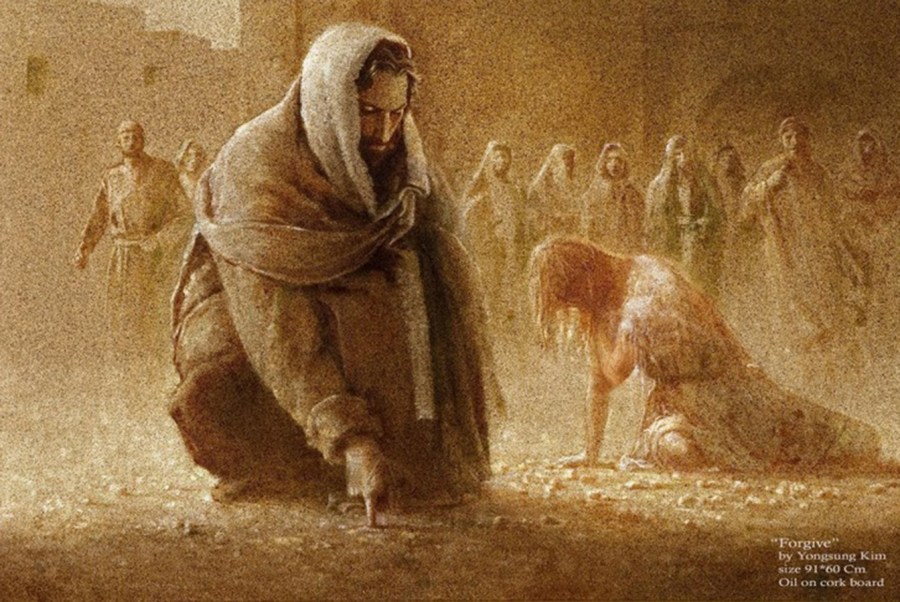
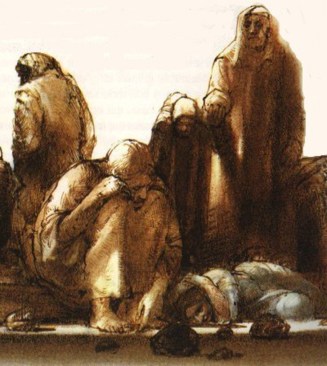
Yesus harus menghentikan hal ini. Tidak hanya Dia menyelamatkan sang perempuan yang adalah korban, tapi ia harus menantang mentalitas korup dan dominasi kasar kaum adam ini. Dia kemudian menulis di tanah. Apa yang Ia tulis telah menjadi subyek perdebatan dan diskusi selama berabad-abad, dan tak seorang pun benar-benar tahu apa yang Yesus tulis. Namun, dugaan saya adalah Yesus menulis, Di mana lelaki yang berzinah? Kok hanya sang perempuan? Yesus membaca niat jahat para Farisi yang tidak hanya ditujukan kepada-Nya tetapi juga kepada sang perempuan. Mereka merencanakan kematian bagi Yesus dan sang perempuan, dan Hukum Yahudi mengatakan bahwa pembunuh dan mereka yang merencanakan pembunuhan harus dihukum mati (Im 21:14). Tentunya, pembunuhan adalah perbuatan yang jauh lebih jahat dari perzinahan. Ketika Yesus berkata,Barangsiapa di antara kamu tidak berdosa, hendaklah ia yang pertama melemparkan batu kepada perempuan itu,” Yesus paham benar motivasi jahat mereka untuk membunuh-Nya dan sang perempuan. Ahli-ahli Taurat dan orang-orang Farisi juga patut dihukum mati dan mereka harusnya melempar batu kepada diri mereka sendiri. Kalah dalam pertempuran, mereka pun meninggalkan Yesus dan sang perempuan.

Namun, cerita tidak berakhir di sana. Yesus memiliki satu misi lagi. Setelah dijadikan sekedar objek dan kehilangan harga dirinya oleh dosa dan para lelaki kejam itu, Yesus memulihkan martabatnya dengan memberikan suara kembali kepadanya. Yesus tidak mengungkap nama sang perempuan, tapi Yesus memungkinkan dia untuk berbicara bagi dirinya sendiri. Dia menjawab Yesus, “Tidak ada, Tuhan.” Sungguh, tidak ada lagi laki-laki yang akan membuatnya sebagai obyek belaka dan tidak ada lagi yang akan menurunkan derajatnya. Dia adalah putri perempuan dari Allah dan dia akan tetap sebagai demikian.

Kita hidup dua ribu tahun setelah Yesus, namun banyak perempuan masih menjadi korban objektifikasi dan depersonalisasi. Seperti Yesus berjuang untuk sang perempuan, kita akan juga berjuang bagi para perempuan di sekitar kita. Jika Yesus mampu mengekspos eksploitasi perempuan pada zaman-Nya, kita akan juga mengekspos berbagai bentuk pelanggaran di sekitar kita. Jika Yesus memulihkan martabat sang perempuan, kita juga akan menghormati martabat para perempuan di sekitar kita.

Frater Valentinus Bayuhadi Ruseno, OP

Mercy of the Father

Fourth Sunday of Lent. March 6, 2016 [Luke 15:1-3, 11-32]

“His father caught sight of him, and was filled with compassion (Luk 15:20).”


prodigal son 2The Parable of the Prodigal Son is one of the most moving stories of Jesus and has been regarded as the all-time favorite. The parable is so beautiful that it moved one of the earliest heretics, Marcion of Sinope, to single out the Gospel of Luke as the only valid Gospel. Why does the parable gain such honor among Jesus’ parables? I guess one of the reasons is the unexpected twist of event appears in the parable. Like when we watch movies in the cinema, flat and predicted plot of movies will cause boredom, but movies with sudden and unforeseen twists often create breath-taking excitement. The twist of the parable is that the Mercy of God that goes beyond any human expectation and limitations.

The lost son would simply expect that he would be treated as one of his father’s servants after sinning so greatly. The elder son, meanwhile, expected the same thing would happen to the bad boy. But, the father did not subscribe to their human expectation. He did sudden yet amazing turn: he accepted both as who they really are, his sons. God’s mercy surpasses all our human limitations and logic, because we are all his children.

The story of Rudolf Höss may illustrate how unimaginable God’s Mercy is. Rudolf Höss was a commandant of the Auschwitz concentration camp and he was practically responsible for the extermination of 2.5 million prisoners, mostly Jews, but also Christians like St. Maximillian Kolbe, and Edith Stain. At the end of the war, he was arrested, tried and received capital punishment for his crime against humanity. He was then imprisoned in Wadowice (the birthplace of St. John Paul II) and he would be executed at the very place he used to rule, Auschwitz. Höss was in great fear not only because of his imminent death penalty but also of cruel torture from prison guards. To his surprise, he was treated mercifully by the guards, notwithstanding the fact that their wives and children were also victims of Nazi’s cruelty. Their mercy moved him to tears and conversion. Höss was a baptized Catholic, but left his faith in his adulthood. He eventually asked for a priest for confession. It was truly difficult to find one, until they discovered Fr. Wladyslaw Lohn, a Jesuit who was the chaplain of the sisters of Our Lady of Mercy at the Shrine of Divine Mercy, Krakaw. Höss made his confession and received the underserved forgiveness. A day before he died, he was able to receive the Holy Communion, kneeling and in tears.

Sometimes, we are like the lost son that we have turned away from God and our lives have been so messed up, that we are losing hope of God’s mercy. Sometimes, we become the elder son who has lived a righteous and good life, but we forget how it is to be merciful to others. Thus, this is not coincidence that Pope Francis chose Luke 6:36 as the motto of the Jubilee of Mercy: ‘Merciful like the Father’. The jubilee of Mercy is both time for us to ask mercy as well as to give mercy. The lost son is in need of mercy and the elder son needs to be merciful. Are we humble enough to ask mercy and forgiveness from God and others? Are we ready to be merciful like the Father?

Br. Valentinus Bayuhadi Ruseno, OP

Go Down from the Mount!

Second Sunday of Lent. February 21, 2016 [Luke 9:28-36]

“He took Peter, John, and James and went up the mountain to pray (Luk 9:28).”

transfiguration 2 For St. Luke, Jesus is a man of prayer. Luke fondly wrote in his Gospel that Jesus would pray before the decisive events in His life and mission. Jesus prayed the whole night before he chose His disciples (Luk 6:12). One of the reasons why Jesus cleansed the Temple of Jerusalem was that He was well aware of the main function of the holy Temple: House of Prayer (Luk 19:46). He reminded his disciples to pray especially in facing trials and tribulations (Luk 21:36). Before He was embracing His passion and death, He prayed at the garden (Luk 22:44). Finally, enduring a brutal torture, He saved His last breath even to pray for those who have crucified Him (Luk 23:34).

Another important event wherein Jesus spent time in prayer was the Transfiguration. Two evangelists, Matthew and Luke, placed the story of Transfiguration into their gospels, but only Luke who told the purpose of why Jesus and His three disciples went up to the Mount. It was to pray. For Luke, the Transfiguration is a prayer event. Indeed, reflecting today’s Gospel in the context of prayer will bring us a deeper understanding on our relationship with God.

Firstly, Jesus invited the disciples to climb the Mount and pray. Our desire to meet Him and to pray is actually God’s initiative. If we are able to pray, it is because God calls us and enables us to communicate with Him. Our Liturgy of the Hour prayer begins with a verse ‘O God, come to my assistance (Ps 51:15).’ It is a humble acceptance that without His grace and aid, we are not able to pray. We, Catholics, open our prayer with the sign of the cross and mentioning, “In the name of the Father, the Son and the Holy Spirit (Mat 28:19).” This was born out of conviction that apart from the Holy Trinity, our human words will be futile. St. Paul said it best when he wrote to the Romans, “the Spirit too comes to the aid of our weakness; for we do not know how to pray as we ought, but the Spirit itself intercedes with inexpressible groanings (Rom 8:26).”

Secondly, the Transfiguration teaches us that sometimes, our prayers give sense of delight and contentment, but this is not the most important. We are like the three disciples who were filled with awe in the presence of transfigured Jesus. It is the moment when we feel peace before the Blessed Sacrament. We are enjoying the recitation of the Holy Rosary. We are inspired by a good homily and feel nourished by the Holy Communion in the Eucharist. Sometimes, I attended Worship Service loaded with upbeat songs and electrifying preaching. Truly, the feeling was ecstatic and liberating, especially for persons with messed up lives.

Surely, like the disciples, we want to enjoy the delight for eternity. Yet, our good Lord did not want us to be rooted there. He asked the disciples to go down and face the world. If we rather stay and refuse to go down, then our prayers are no longer genuine and sincere. They become an addiction that helps us escape from the realities. If this happens, Karl Marx’ adage, ‘Religion is the opium to the society’ turns to be a reality.

St. Pope John Paul II reminded us that the Transfiguration would lead eventually Jesus and his disciples to that passion in Jerusalem. Prayer should then empower us to face life with courage and humility, and not to give us a venue to run away from life. The Eucharist, as the summit of all Christian worship, does not end by saying ‘Stay and enjoy some more!’ The last phrase in the Mass is always missionary in spirit, like ‘Go and preach the Gospel’. We are to share the fruits of prayers to others. If we truly find Christ in our prayer, then together with Christ, we shall go down from the Mount and bravely walk to our Jerusalem.

 Br. Valentinus Bayuhadi Ruseno, OP

Turun Gunung

Minggu Prapaskah Kedua. 21 Februari 2016 [Lukas 9: 28-36]

“Yesus membawa Petrus, Yohanes dan Yakobus, lalu naik ke atas gunung untuk berdoa. (Luk 9:28).”


transfigurationBagi St. Lukas, Yesus adalah seorang doa. Lukas menulis dalam Injilnya bahwa Yesus berdoa sebelum menghadapi peristiwa-peristiwa penting di dalam hidup dan misi-Nya. Yesus berdoa sepanjang malam sebelum ia memilih murid-murid-Nya (Luk 6:12). Salah satu alasan mengapa Yesus membersihkan Bait Allah Yerusalem dari berbagai malapraktik adalah bahwa Dia sangat menyadari fungsi utama dari Bait Allah ini: Rumah Doa (Luk 19:46). Dia mengingatkan para murid-Nya untuk berdoa terutama saat menghadapi cobaan dan penderitaan (Luk 21:36). Sebelum Ia menghadapi sengsara dan wafat-Nya, Dia berdoa di taman (Luk 22:44). Akhirnya, saat Ia berada di kayu salib, Dia menyimpan nafas terakhirnya bahkan untuk berdoa bagi mereka yang telah menyalibkan-Nya (Luk 23:34).

Peristiwa penting lainnya dimana Yesus menghabiskan waktu dalam doa adalah Transfigurasi. Dua penginjil, Matius dan Lukas, menulis kisah Transfigurasi dalam Injil mereka, tapi hanya itu Lukas yang mengatakan tujuan mengapa Yesus dan ketiga murid-Nya naik ke Gunung. Yakni untuk berdoa. Bagi Lukas, Transfigurasi adalah sebuah momen doa. Sungguh, merenungkan Injil hari ini dalam konteks doa akan membawa kita pada pemahaman yang lebih dalam tentang hubungan kita dengan Tuhan.

Pertama, Yesus mengajak para murid untuk mendaki Gunung dan berdoa. Hasrat kita untuk bertemu dengan-Nya dan berdoa sebenarnya adalah inisiatif Allah. Jika kita mampu berdoa, itu karena Tuhan memanggil kita dan memungkinkan kita untuk berkomunikasi dengan-Nya. Liturgi Brevir selalu dimulai dengan ayat Ya Allah, bersegeralah membuka mulutku (Mzm 51:15).” Ini adalah keyakinan bahwa tanpa rahmat dan bantuan-Nya, kita tidak dapat berdoa. Kita, umat Katolik, membuka doa kita dengan tanda salib dan menyebutkan, Dalam nama Bapa, dan Putra dan Roh Kudus.” Hal ini lahir dari keyakinan bahwa terpisah dari Allah Tritunggal, kata-kata manusiawi kita akan sia-sia di dalam doa. St. Paulus menyatakan hal ini dengan sangat baik ketika ia menulis kepada jemaat di Roma, Roh Allah datang menolong kita kalau kita lemah. Sebab kita tidak tahu bagaimana seharusnya kita berdoa; Roh itu sendiri menghadap Allah untuk memohonkan bagi kita dengan kerinduan yang sangat dalam sehingga tidak dapat diucapkan. (Rom 8:26).”

Kedua, Transfigurasi mengajarkan kita bahwa kadang, doa-doa kita memberikan kenikmatan dan kepuasan, tapi ini bukan yang paling penting. Kita seperti tiga murid yang sangat takjub di hadapan Yesus yang berubah wujud. Ini adalah saat ketika kita merasakan kedamaian di hadapan Sakramen Mahakudus. Kita menikmati doa Rosario. Kita terinspirasi oleh homili dan merasa diperkuat oleh Komuni Kudus dalam Ekaristi. Kadang, saya menghadiri worship service sarat dengan lagu-lagu pujian dan khotbah menggebu-gebu. Sesungguhnya, hal ini memberi perasaan sangat gembira dan membebaskan apalagi bagi mereka yang memiliki banyak permasalahan dalam hidup.

Tentunya, seperti para murid, kita ingin menikmati kegembiraan dalam doa ini lebih lama lagi dan membangun ‘kemah’. Namun, Tuhan tidak ingin kita tinggal lama di sana. Dia meminta para murid untuk turun dan menghadapi dunia. Jika kita memilih tinggal dan menolak untuk turun, doa-doa kita tidak lagi tulus. Mereka menjadi candu yang membantu kita melarikan diri dari realitas hidup. Jika ini terjadi, perkataan Karl Marx bahwa ‘Agama adalah opium bagi masyarakat’ sungguh menjadi kenyataan.

St. Paus Yohanes Paulus II mengingatkan kita bahwa Transfigurasi akan bawa akhirnya Yesus dan murid-muridnya pada sengsara dan wafat-Nya di Yerusalem. Doa sungguhnya harus memberdayakan kita untuk menghadapi hidup dengan keberanian dan kerendahan hati, dan tidak memberi kita tempat untuk melarikan diri dari kehidupan. Ekaristi, sebagai puncak dari semua ibadah Kristiani, tidak berakhir dengan mengatakan Tetap tinggal dan jangan pulang! Ungkapan terakhir dalam Misa selalu dalam semangat misionaris, seperti Pergilah, kita diutus!”. Kita diutus untuk berbagi buah dari doa-doa kita kepada sesama. Jika kita benar-benar menemukan Kristus dalam doa kita, bersama dengan Kristus, kita akan turun Gunung dan berjalan menghadapi Yerusalem kita.

 Frater Valentinus Bayuhadi Ruseno, OP
The Word of God in the Desert

First Sunday of Lent. February 14, 2016 [Luke 4:1-13]

“Filled with the Holy Spirit, Jesus returned from the Jordan and was led by the Spirit into the desert (Luk 4:1).”

jesus temptationToday’s Gospel shows us that the Holy Spirit led Jesus to the desert. Yes, the Holy Spirit will not spare us from the desert! The desert experience can be anything that spells dryness and emptiness in our lives and souls. Out of nowhere, a seminarian enters into a desert as he is feeling unexplainable meaninglessness in his chosen vocation. A mother begins to experience exhaustion in fulfilling her difficult mission to rear her children. Through her journals, it was revealed that even holy person like Mother Teresa of Calcutta went through ’the eclipse of God’ when she did not sense the presence of God for almost 10 years in her life.

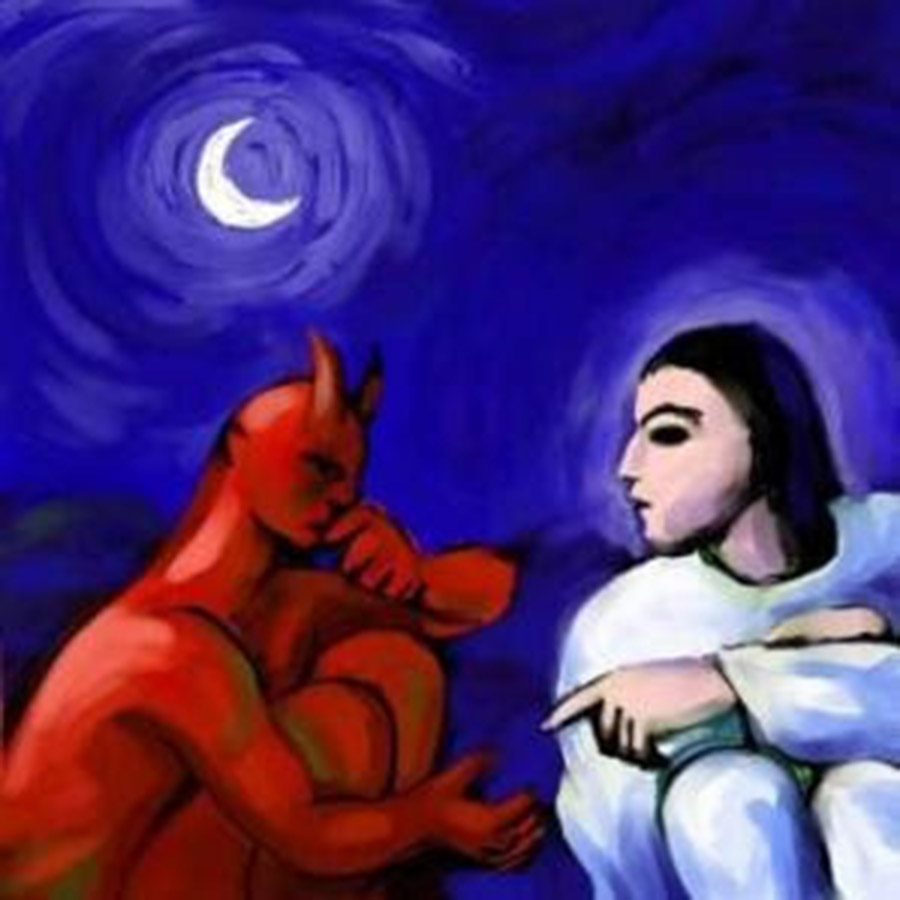
The Gospel reminds us as well that in the desert, Jesus was tempted by the devil. Walking through the desert experiences, the devil knows well that our defense is at its lowest and surely he will take his change to make us fall from our commitment. The seminarian starts seeing another way of life as more attractive and a solution to his emptiness. Now, not only dryness, he is also facing a crisis. Tired of spending time with her children, the mother starts thinking to shift her focus on something else like her career, hobbies, or friends. The devil is an extremely smart creature. He will manipulate our basic desires and longings. He offers us little compromises that eventually destroy all together our commitment. The seminarian begins not attending prayers, a student is becoming lazy in study and a husband starts spending more time outside his own house and family.

How then do we counter this situation? Jesus gave the answer: the Word of God. In the desert, Jesus was firmly rooted in the Word of His Father, and resisted the temptations. In the midst of life’s dryness and challenges, we shall turn ourselves into the Word of God. Doubtless, we can do our own bible reading and study. This very reflection and other reflections are an invitation to go deeper into the Word of God. Or, praying the rosary is one effective way to meditate the life of Jesus and to refuse temptation. But, the only place that the Word of God is in the most powerful and unique form is at the Eucharist. In the Eucharist, the Word of God is lavishly shared to us through the biblical readings and expanded through the homily. Most importantly, the Word of God finally is made flesh and we partake of it at the Holy Communion.

When the devil tempted hungry Jesus to change the stone into bread, Jesus resisted by pointing that we truly live because of the real Bread, the Word made flesh, the Eucharist. When the evil one attempted to allure the Son of God to exhibit His power at the temple of Jerusalem, Jesus outsmarted him by showing him that the Temple is the home of the Word, and not place of showoff. When the prince of darkness asked Jesus to worship him in exchange for the world’s glory and richness, Jesus confronted him with the truth that only God and His Word in the Eucharist worthy of all worship.

The Holy Spirit will indeed lead us into the desert, but it is not to destroy us, but to allow us to find how we truly are, persons rooted in the Word of God, in the Eucharist.

Br. Valentinus Bayuhadi Ruseno, OP

Sabda Allah di Padang Gurun

Minggu pertama Prapaskah. 14 Februari 2016 [Lukas 4:1-13]

“Yesus, yang penuh dengan Roh Kudus, kembali dari sungai Yordan, lalu dibawa oleh Roh Kudus ke padang gurun (Luk 4:1).”

jesus temptation 2Injil hari ini menulis tentang Roh Kudus yang membawa Yesus ke padang gurun. Ya, Roh Kudus akan membawa kita ke padang gurun juga! Gurun bisa diartikan sebagai kekeringan dan kekosongan dalam hidup dan jiwa kita. Seorang frater tiba-tiba masuk ke pengalaman gurun dan ia merasa kehilangan makna dan semangat di dalam panggilannya. Seorang ibu mulai mengalami kelelahan dalam mengemban misi yang sulit untuk membesarkan anak-anak nya. Melalui tulisan-tulisannya, terungkap bahwa bahkan orang kudus seperti Bunda Teresa dari Kalkuta pun harus melalui ‘Allah yang diam’ ketika dia tidak merasakan kehadiran Allah selama hampir 10 tahun dalam hidupnya.

Injil mengingatkan kita juga bahwa di padang gurun, Yesus dicobai oleh iblis. Berjalan melalui pengalaman padang gurun, iblis tahu benar bahwa pertahanan kita berada pada titik terendah dan pasti dia akan mengambil kesempatan untuk membuat kita jatuh dari komitmen kita. Sang frater mulai melihat bahwa hidup di luar lebih menarik dan solusi untuk kekosongan hidupnya. Lalu, tidak hanya kehampaan, sang frater juga menghadapi krisis. Lelah menghabiskan waktu dengan anak-anaknya sang ibu mulai berpikir untuk mengalihkan fokusnya pada sesuatu yang lain seperti karir, hobi, atau teman-temannya. Iblis adalah makhluk yang sangat cerdas. Dia akan memanipulasi keinginan dan kerinduaan yang paling mendasar kita. Dia menawarkan kita kompromi-kompromi kecil yang akhirnya menghancurkan komitmen kita. Sang frater yang mulai tidak menghadiri doa dengan komunitas, seorang siswa menjadi malas belajar, dan seorang suami mulai menghabiskan lebih banyak waktu di luar rumah dan keluarganya sendiri.

Lalu bagaimana kita menghadapi situasi ini? Yesus memberikan jawabannya: Sabda Tuhan. Di gurun, Yesus berpegang teguh kepada Sabda Bapa-Nya, dan menolak godaan. Di tengah kekeringan hidup dan berbagai tantangan, kita hendaknya kita berpegang pada Sabda Tuhan. Tak diragukan lagi, kita dapat membaca Alkitab dan melakukan Bible Study secara mandiri. Dengan membaca dan merenungkan refleksi ini dan refleksi-refleksi lainnya adalah undangan untuk masuk lebih dalam ke dalam Sabda Allah. Atau, doa rosario adalah salah satu cara yang efektif untuk merenungkan kehidupan Yesus dan menolak godaan Setan. Tapi, satu-satunya tempat dimana Sabda Tuhan berada dalam bentuk yang paling kuat dan unik adalah di Ekaristi. Dalam Ekaristi, Sabda Allah dibagikan kepada kita melalui pembacaan Alkitab dan diperdalam melalui homili. Dan, yang paling penting, Sabda Allah akhirnya menjadi ‘daging’ di Ekaristi dan kita menyantap-Nya dalam Komuni Kudus.

Ketika iblis mengoda Yesus yang lapar untuk mengubah batu menjadi roti, Yesus menolak karena Ia tahu manusia hanya hidup karena roti yang nyata, Sabda yang menjadi daging, Ekaristi. Ketika si jahat berusaha untuk memikat Anak Allah menunjukkan kuasa-Nya di Bait Allah di Yerusalem, Yesus menolak dengan menunjukkan kepadanya bahwa Bait Allah sesungguhnya adalah Bait Sabda, dan bukan tempat pertunjukan. Ketika pangeran kegelapan meminta Yesus untuk menyembah Dia dan menawarkan semua kemuliaan dan kekayaan dunia, Yesus menghadapinya dengan kebenaran bahwa hanya Tuhan dan Sabda-Nya dalam Ekaristi layak mendapat semua sembah sujud kita.

Roh Kudus memang akan membawa kita ke padang gurun, mengalami kekeringan, lapar dan digoda oleh iblis, tetapi semua ini tidak untuk menghancurkan kita, tetapi memungkinkan kita untuk menemukan siapa kita sesungguhnya, yakni manusia yang berpedoman pada Sabda Tuhan, dalam Ekaristi.

Frater Valentinus Bayuhadi Ruseno, OP