

3rd Sunday in Ordinary Time [B]
January 24, 2021
Mark 1:14-20
 We once again listen to the story of the calling of the first disciples: Simon and Andrew, as well as James and John, the sons of Zebedee. Jesus called them, and He would make them ‘the fishers of men.’ Yet, from countless possibilities of professions and occupations, why did they have to be ‘the fishers of men’? Why not merely Jesus’ promotion team? Why not Jesus’ soldiers?
The answer is not far from who the first disciples were. They were fishermen of Galilee. Yet, this time, they were no longer catching fish but gathering people for Christ. While they left almost everything behind and followed Jesus, they brought their lives, characters, experiences, and skills with them. They remained fishermen, but this time Jesus transformed the object of their catch: men and women.
The second reason why they were called ‘fishers of men’ is even more profound. It speaks of the fulfillment of the Old Testament’s prophesy. The great prophet Jeremiah who lived around 500 years before Christ, once said, “For I will bring them back to their land that I gave to their ancestors. I am now sending for many fishermen, says the Lord, and they shall catch them… [Jer 16:15-16].” The historical context of this prophecy is critical. After Salomon’s reign, the kingdom of Israel was divided into two smaller kingdoms. The northern kingdom was the coalition of 10 tribes, and the southern kingdom was the tribe, Judah and Benjamin. In 721 SM, the northern kingdom was destroyed by the Assyrian empire, and the ten tribes were deported to foreign lands. Then in 587 SM, the southern kingdom was demolished by the Babylonian empire, and the inhabitants were brought to the Babylonian lands. Jeremiah prophesied that God would bring back the scattered Israelites by sending ‘fishermen.’
By calling His first disciples as ‘fishers of men,’ Jesus was fulfilling Jeremiah’s prophecy. Jesus was gathering back the lost tribes of Israelites to Himself as the new Israel. This is why Jesus called and chose twelve apostles. The twelve apostles shall serve as the leaders of the new twelve tribes of Israel.
The identity and mission as ‘fishers of men’ are primarily for the apostles, yet every baptized Christians are sharing in this identity. We are fishers of men and women for Christ. Some of us may be called to get a quantity gain, like a priest who baptized thousands of people. Some of us may be invited to have a quantity yield, like parents who raise and educate their children as mature and responsible Catholics. Some of us stand in between these two kinds of catches, like zealous catechists, courageous lay missionaries, faithful religious sisters who take care of schools or orphanages, or indefatigable community leaders.
Surely to be a fisherman is not a stress-free job. Sometimes, we are facing storms and dangers. Sometimes, we are getting nothing after our best effort. Occasionally, we get in a disagreement with our fellow fishermen. However, the Gospel reminds us that we are not fishermen because we are good, but because Jesus calls us and makes us His fishermen. We draw our purpose and strength from Jesus because we are participating in Jesus’ mission to gather people to Himself. We are working together with apostles to fulfill God’s promise of the New Israel. We are the fishers of men.
Valentinus Bayuhadi Ruseno, OP
photocredit: paolo-nicolello
 Kita mendengarkan kisah panggilan murid-murid pertama: Simon dan Andreas, juga Yakobus dan Yohanes, anak-anak Zebedeus. Yesus memanggil mereka dan Dia akan menjadikan mereka ‘penjala manusia’. Namun, dari berbagai profesi dan pekerjaan yang tak terhitung jumlahnya, mengapa mereka harus menjadi ‘penjala manusia’? Mengapa tidak jadi tim promosi Yesus? Mengapa bukan tentara Yesus?
 Yohanes Pembaptis menyebut Yesus sebagai ‘Anak Domba Allah.’ Jika kita menghadiri perayaan Ekaristi, kita akan selalu mendengar ungkapan ini. Tepat sebelum komuni, imam akan memegang roti dan anggur yang telah dikonsekrir, dan memperlihatkan kepada kita semua, lalu berkata, “Lihatlah Anak Domba Allah, Lihatlah Dia yang menghapus dosa dunia. Berbahagialah kita yang diundang ke perjamuan-Nya!”
 John the Baptist identified Jesus as the ‘Lamb of God.’ If we are attending the celebration of the Eucharist, we cannot miss hearing this phrase. Just before the communion, the priest will hold the consecrated bread and wine, and present them to the faithful, then saying, “Behold the Lamb of God, Behold Him who takes away the sin of the world. Happy are those invited to the supper of the Lamb!”
 Baptism of the Lord is one of the defining moments in the life of Jesus. The synoptic gospels [Matthew, Mark, and Luke] writes this event, though with their own perspective and emphasis. We are in the liturgical year B, and thus, we are listening from the Gospel of Mark. Mark’s version is noticeably the shortest, but it does not mean it does not deliver a powerful message. The Baptism of Jesus in the River Jordan is a turning point in Jesus’ life. After this Jesus will be in the desert for 40 days, tempted by the devil, but he will prevail. Then, from this, Jesus will begin His public ministry and unreservedly move toward Jerusalem, to Cross, Death, and Resurrection.
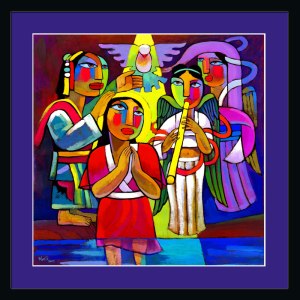 Baptisan Tuhan adalah salah satu momen yang menentukan dalam hidup Yesus. Injil sinoptik [Matius, Markus dan Lukas] menulis peristiwa ini, meskipun dengan perspektif dan penekanan yang berbeda. Karena kita berada di tahun liturgi B, kita mendengarkan dari Injil Markus. Versi Markus memang terlihat paling pendek, tetapi bukan berarti tidak menyampaikan pesan yang mendalam. Pembaptisan Yesus di sungai Yordan adalah titik balik dalam kehidupan Yesus. Setelah ini Yesus akan berada di padang gurun selama 40 hari dan dicobai oleh iblis. Kemudian, dari sini, Yesus akan memulai pelayanan publik-Nya, dan bergerak menuju Yerusalem, menuju Salib, Kematian dan Kebangkitan.
 To be the subject of a king is a foreign experience for many of us. I was born in Indonesia, and our country is a republic, and we espouse democracy to elect our leader. Some of us are citizens of kingdoms like Great Britain, Belgium, Thailand, and Japan, but the kings or queens here are serving under the constitution. When we speak of absolute monarchs, we are reminded of the powerful ancient kingdoms like Assyrian, Babylonian, and Persian empires. Here, the king’s words are the highest law, and disobedient to the king’s wish is acts of treason. Surprisingly, we still have some existing absolute monarchs in our time, like Brunei, Saudi Arabia, and the Vatican!
 Menjadi abdi seorang raja adalah pengalaman asing bagi banyak dari kita. Saya lahir di Indonesia, dan negara kita adalah republik dan kita menjunjung demokrasi sebagai cara untuk memilih pemimpin kita. Mungkin kita pernah ke negara kerajaan seperti Inggris, Belgia, Thailand, dan Jepang, tetapi raja atau ratu di sini juga berdasarkan konstitusi atau undang-undang dasar. Ketika kita berbicara tentang monarki absolut, kita diingatkan tentang kerajaan kuno yang kuat seperti kerajaan Asyur, Babel, dan Persia. Di sini perkataan raja adalah hukum tertinggi, dan tidak mematuhi keinginan raja adalah tindakan pengkhianatan. Sebenarnya, kita masih memiliki beberapa monarki absolut yang ada di zaman kita, seperti Kerajaan Brunei, Arab Saudi dan Vatikan!
 The original meaning of talent is not God’s given ability, but a unit of weight and value, normally gold and silver. More importantly, talent is a huge amount of money. One talent is equal to around six thousand denarii. If one denarius is the wage of ordinary daily labor, one talent means six thousand days of works or approximately seventeen to twenty years of work.
 Sejatinya talenta bukanlah bakat atau kemampuan yang diberikan Tuhan, tetapi sebuah unit bobot dan nilai, biasanya dari emas dan perak. Mudahnya, talenta adalah jumlah uang yang sangat besar. Satu talenta setara dengan sekitar enam ribu dinar. Jika satu dinar adalah upah kerja satu hari, satu talenta berarti enam ribu hari kerja atau sekitar tujuh belas hingga dua puluh tahun kerja.
 In Medio Ecclesiae