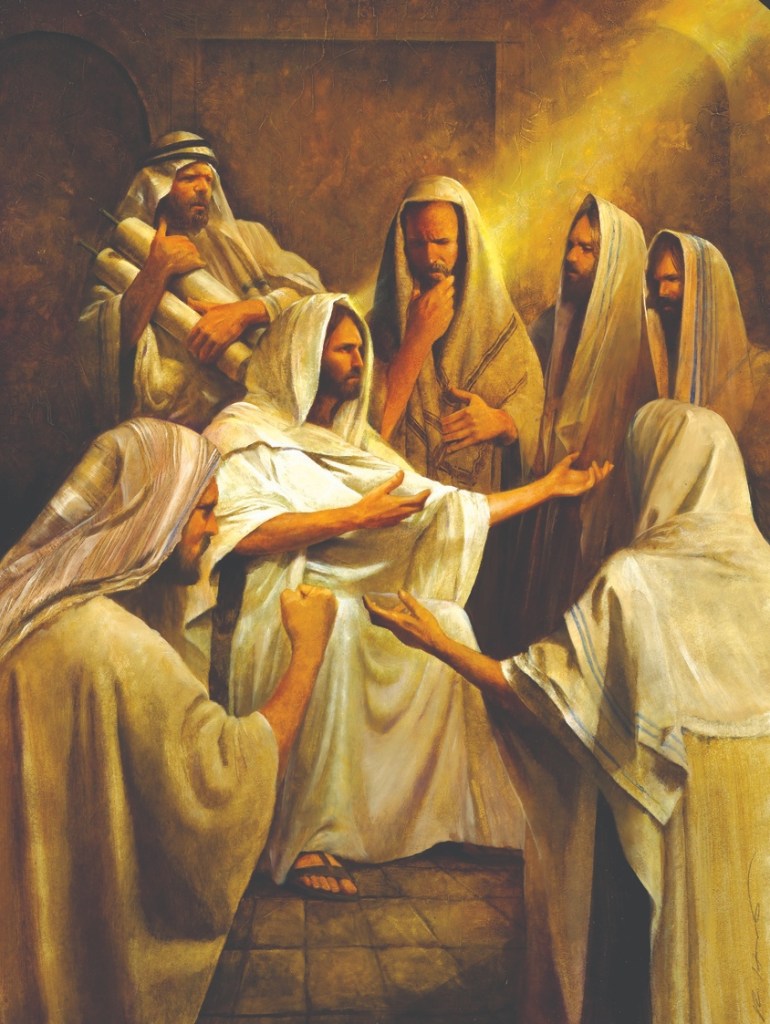
The Solemnity of Our Lord Jesus Christ, King of the Universe [A]
November 22, 2020
Matthew 25:31-46
To be the subject of a king is a foreign experience for many of us. I was born in Indonesia, and our country is a republic, and we espouse democracy to elect our leader. Some of us are citizens of kingdoms like Great Britain, Belgium, Thailand, and Japan, but the kings or queens here are serving under the constitution. When we speak of absolute monarchs, we are reminded of the powerful ancient kingdoms like Assyrian, Babylonian, and Persian empires. Here, the king’s words are the highest law, and disobedient to the king’s wish is acts of treason. Surprisingly, we still have some existing absolute monarchs in our time, like Brunei, Saudi Arabia, and the Vatican!
Today we are celebrating the solemnity of Jesus Christ, the King of the Universe. Yet, it is a bit difficult to imagine Christ as a king. He never wears a crown except for thorns. He never sat on the throne except for the cross. And, He never possessed an army except for a bunch of coward disciples. Is Jesus truly a king? The answer is an absolute yes. Jesus, as the king, is one of the dominant topics in the Gospels. Angel Gabriel announces to Mary, “the Lord God will give to him [Jesus] the throne of his ancestor David. He will reign over the house of Jacob forever, and of his kingdom there will be no end. [Luk 1:32-33]” One of the criminals crucified with Jesus cries, “Jesus, remember me when you come into your kingdom. [Luk 23:42]” And throughout His public ministry, Jesus is tirelessly proclaiming and building the kingdom of God.
In today’s Gospel, Jesus reveals that he is not just an ordinary king, not just a king among many kings. He is the king of kings, and only He can bring people to eternal life and everlasting damnation. We are reminded that since Jesus is the king of the universe, we are all His subjects. However, whether we are good subjects or bad ones, we still have to choose. Like with other kingdoms, we still need to at least two basic things: acknowledging Jesus as our king and being His loyal servant.
The good news is that He does not require us, His subjects, to wage war against other countries or pay taxes! He is the king of mercy, and thus, His order is: do the Works of Mercy. In the Catholic tradition, there are seven corporal works of mercy. These are: to feed the hungry, give water to the thirsty, clothe the naked, shelter the homeless, visit the sick, visit the imprisoned, and bury the dead. The seven corporal works of mercy are not complete with the seven spiritual works of mercy. These are: to instruct the ignorant, counsel the doubtful, admonish the sinners, bear patiently those who wrong us, forgive offenses, comfort the afflicted, and pray for the living and the dead.
Doing these are not always easy, but it is necessary because it proves our loyalty to the great king. Negligence to do works of mercy brings a serious consequence: to be expelled from the kingdom. The choice is ours, and the time is now.
Valentinus Bayuhadi Ruseno, OP
photocredit: robert nyman

Menjadi abdi seorang raja adalah pengalaman asing bagi banyak dari kita. Saya lahir di Indonesia, dan negara kita adalah republik dan kita menjunjung demokrasi sebagai cara untuk memilih pemimpin kita. Mungkin kita pernah ke negara kerajaan seperti Inggris, Belgia, Thailand, dan Jepang, tetapi raja atau ratu di sini juga berdasarkan konstitusi atau undang-undang dasar. Ketika kita berbicara tentang monarki absolut, kita diingatkan tentang kerajaan kuno yang kuat seperti kerajaan Asyur, Babel, dan Persia. Di sini perkataan raja adalah hukum tertinggi, dan tidak mematuhi keinginan raja adalah tindakan pengkhianatan. Sebenarnya, kita masih memiliki beberapa monarki absolut yang ada di zaman kita, seperti Kerajaan Brunei, Arab Saudi dan Vatikan!
The original meaning of talent is not God’s given ability, but a unit of weight and value, normally gold and silver. More importantly, talent is a huge amount of money. One talent is equal to around six thousand denarii. If one denarius is the wage of ordinary daily labor, one talent means six thousand days of works or approximately seventeen to twenty years of work.
Sejatinya talenta bukanlah bakat atau kemampuan yang diberikan Tuhan, tetapi sebuah unit bobot dan nilai, biasanya dari emas dan perak. Mudahnya, talenta adalah jumlah uang yang sangat besar. Satu talenta setara dengan sekitar enam ribu dinar. Jika satu dinar adalah upah kerja satu hari, satu talenta berarti enam ribu hari kerja atau sekitar tujuh belas hingga dua puluh tahun kerja.
A wedding ceremony is one of the most beautiful events in many cultures and societies. This includes the Jewish community in the first century AD Palestine. For the Hebrew people living in the time of Jesus, the wedding ceremony has two stages. The first one is the exchange of vows or betrothal. The couple is officially married, and they are recognized as husband and wife in the eyes of the Jewish community. Yet, they are going to wait for around one year before they are living together. The husband will prepare for the house as well as the reception celebration that may last for seven days.
Upacara pernikahan adalah salah satu acara terindah di banyak budaya dan masyarakat. Ini termasuk di masyarakat Yahudi di Palestina abad pertama Masehi. Bagi orang Ibrani yang hidup pada zaman Yesus tersebut, upacara pernikahan memiliki dua tahap. Yang pertama adalah pertukaran janji. Pasangan tersebut sudah menikah secara resmi, dan mereka diakui sebagai suami dan istri di mata komunitas Yahudi. Namun, mereka akan menunggu sekitar satu tahun sebelum mereka bisa hidup bersama. Sang suami akan mempersiapkan rumah mereka serta perayaan pesta nikah yang mungkin berlangsung selama 7 hari lamanya.
Today the Church is celebrating the Solemnity of all saints. This is one of the ancient feasts in the Church that commemorates and honors all holy people who had gone before us and received their eternal reward, God Himself. We may recognize some of them, like St. Ignatius, St. Dominic de Guzman, St. Francis of Assisi, and St. Catharine of Siena, but this is only a tiny fraction of the entire heavenly host. There are countless we are not aware of. The good news is that all of them are praying for us, and who knows, some of our departed beloved have been parts of this holy communion.
Hari ini Gereja merayakan hari raya semua orang kudus. Ini adalah salah satu pesta kuno di Gereja yang memperingati dan menghormati semua orang yang telah berpulang dan menerima pahala kekal mereka, Tuhan Sendiri. Kita mungkin mengenali beberapa dari mereka, seperti St. Dominikus de Guzman, St. Fransiskus dari Assisi, dan St. Catharine dari Siena, dan St. Ignatius, tetapi ini hanya sebagian kecil dari seluruh penghuni surgawi. Kabar baiknya adalah bahwa mereka semua berdoa untuk kita, dan siapa tahu, beberapa dari orang-orang yang kita kasihi yang telah meninggal telah menjadi bagian dari persekutuan kudus ini.
The question is, “what is the greatest law?” Once again, the historical and religious context is important. When Jesus and the Pharisees discuss the Law, they are speaking about particular Law. It is neither criminal law nor international law. It is the Law of Moses, the Torah, which points to Moses’s five books. According to the tradition of the Rabbis, the Torah contains 613 specific laws. Thus, the Pharisee is questioning Jesus on the most important among 613 commandments.
Pertanyaannya adalah “Apakah Hukum yang terutama?” Sekali lagi, untuk mengerti pertanyaan ini konteks historis dan religius sangat penting. Ketika Yesus dan ahli Hukum Taurat membahas tentang Hukum yang terutama, mereka berbicara tentang Hukum Taurat yang paling utama. Hukum Taurat sendiri menunjuk pada lima kitab Musa [Kejadian, Keluaran, Imamat, Bilangan, dan Ulangan] dan sangat banyak peraturan ada di sana. Menurut tradisi para rabi, Taurat berisi 613 hukum. Jadi, orang Farisi sedang menguji Yesus tentang yang paling penting di antara 613 perintah.