

16th Sunday in Ordinary Time [A]
July 19, 2020
Matthew 13:24-43
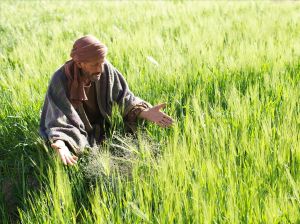 The parable of the wheat and weed is one of a kind. If we survey the details, we are supposed to raise our eyebrows. Firstly, if you become a person who will destroy your opponent’s field of wheat, you know that there are several other effective ways to accomplish that. We can simply set a small fire on the wheat, and the entire field will eventually turn to be an inferno. But, the enemy chose unorthodox tactic: to sow seeds of weed during the planting period. While the weed may disturb the growth of the wheat, they will not sufficiently damage and stop the harvest. So, what is the purpose? What is surprising is that the decision of the field’s owner. When he was notified about the presence of the weed, he immediately knew the culprit, and instead to act promptly and protect their wheat, he decided to allow the weeds to thrive among his wheat.
As expected, the disciples were puzzled by the parable, and when the disciples asked the meaning of this parable, they found another mind-blogging answer. The owner of the field is God Himself and He allowed the children of the evil one to grow among the children of God both in the world and in the Church. Yes, God allows that! He allows His children will not have a smooth journey and growth in the world. God allows His children to be harassed, bullied, and even persecuted by the evil one. God allows His children to experience trials and difficult moments. The question is why?
We may take the cue from St. Paul. He once magnificently wrote, “We know that all things work together for good for those who love God, who are called according to his purpose [Rom 8:28].” God allows bad things to happen because these are for our good! What kind of goodness why we may ask? From our human perspective, perhaps it is nothing but absurd, but from His vantage point, things fall into its proper places.
Jesus invites us to call God as Father, and letter to the Hebrews reminds us, “for the Lord disciplines those whom he loves, and chastises every child whom he accepts [Heb 12:6].” Trials and difficulties are God’s pedagogy toward whom He loves. As parents, we know care and discipline have to work hand in hand. We are well aware that true discipline is also a way of loving. If we want our children to succeed in their lives, we need to teach them to delay their gratification. We allow them to experience pain and difficulty first before we give them a reward. My parents used to ask me to study and finish their homework first before I could enjoy watching television. It resulted not only in good grades, but also my acquired habit not to run from problems, but to endure it.
I do believe that it is also the same as our Father in heaven. He loves us by allowing us to endure the pain in this world so that we may truly appreciate the spiritual gifts. Allow me to end this reflection, by quoting St. Paul, “We also boast in our sufferings, knowing that suffering produces endurance, and endurance produces character [as children of God], and character produces hope, and hope does not disappoint us..” [Rom 5:3-5]
Valentinus Bayuhadi Ruseno, OP
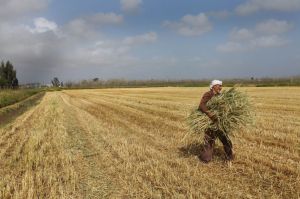 Perumpamaan tentang gandum dan ilalang adalah sangat unik. Jika kita meneliti detailnya, kita seharusnya terkejut. Pertama, jika kita menjadi orang yang akan menghancurkan ladang gandum lawan kita, kita tahu bahwa ada beberapa cara lain yang lebih efektif untuk mencapainya. Kita cukup membakar beberapa gandum, dan seluruh ladang pada akhirnya akan berubah menjadi api raksasa. Tetapi, musuh ini memilih taktik yang tidak lazim: menabur benih ilalang selama masa tanam. Sementara ilalang dapat mengganggu pertumbuhan gandum, mereka tidak akan cukup merusak dan menggagalkan panen. Jadi, apa tujuannya? Yang mengejutkan adalah keputusan pemilik ladang. Ketika dia diberitahu tentang keberadaan ilalang, dia segera tahu pelakunya, dan bukannya bertindak cepat untuk melindungi gandumnya, dia memutuskan untuk membiarkan ilalang tumbuh subur di antara gandumnya.
 Dalam Injil hari ini, kita mengamati reaksi para murid setelah Yesus berbicara perumpamaan-Nya yang pertama. Mereka bingung dan heran! Mengapa? Karena Yesus tiba-tiba mengubah metode pengajaran-Nya. Dalam bab-bab sebelumnya, Yesus mengajar mereka dengan jelas, seperti dalam khotbah di Bukit [Mat 5-7], dan ajaran-Nya sangat mudah dimengerti walaupun kadang sulit untuk dilaksanakan. Namun, Yesus membuat perubahan tak terduga yang membuat banyak orang dan termasuk murid-Nya tak paham dengan mengunakan perumpamaan. Apa yang sebenarnya terjadi?
 From the previous two Sundays, we learn that Jesus lays down the cost of following Him, how to become His disciples. And they are extremely tough. One has to follow Jesus wherever He goes. One must love Jesus above anyone else. One must be ready to suffer persecutions and hardships, carry his cross, and give up his life for Jesus. It is Jesus or nothing at all. However, following Jesus is not all about hardship and sacrifice. Today we hear that to walking with Him, we receive certain “perks” that others cannot even dare to offer.
 Dari dua hari Minggu sebelumnya, Yesus menunjukkan apa yang harus kita serahkan untuk menjadi murid-Nya. Dan hal-hal yang harus kita lepaskan demi Yesus sanggatlah sulit. Kita harus mengikuti Yesus ke mana pun Dia pergi. Kita harus mengasihi Yesus lebih dari yang lain bahkan orang tua kita. Kita harus siap untuk menderita, menanggung kesulitan, memikul salib, dan menyerahkan hidup bagi Yesus. Pilihannya adalah Yesus atau tidak sama sekali. Namun, mengikuti Yesus tidak semua tentang kesulitan dan pengorbanan. Hari ini kita mendengarkan bahwa menjadi murid-Nya, kita menerima “hal-hal baik” yang hanya Yesus bisa berikan.
 Dalam banyak budaya seperti di Indonesia, Filipina dan Cina, menghormati orang tua kita adalah hal yang sangat penting. Di Indonesia, untuk mendidik nilai ini, cerita rakyat “Malin Kudang” diajarkan bahkan di sekolah dasar. Intinya, Malin tidak hanya gagal menghormati orang tuanya, tetapi juga sengaja mengabaikan ibunya yang sudah tua. Karena itu, dia dikutuk menjadi batu. Adalah sesuatu yang tidak termaafkan untuk tidak menghormati seseorang yang telah memberikan hidup kita dan mendidik kita untuk hidup.
 Jesus never promises that the disciple will have easy and prosperous lives. Jesus demands the opposite. After being chosen, the twelve disciples are sent to preach that the Kingdom is at hand, and yet they will not go like any royal emissaries with their military escort. No! They will travel as simple men going on foot and carrying minimal provision. They will rely on the generosity of their hosts, and the worst part is that they are going to face rejection.
 Yesus tidak pernah berjanji bahwa murid-murid-Nya akan memiliki kehidupan yang mudah dan makmur. Yesus menuntut yang sebaliknya. Setelah dipilih, kedua belas murid diutus untuk mewartakan bahwa Kerajaan Allah sudah dekat, namun mereka tidak akan pergi seperti utusan kerajaan duniawi dengan pengawalan voorijder. Tidak! Mereka akan pergi sebagai orang sederhana yang berjalan kaki dan membawa persediaan ala kadarnya. Mereka akan mengandalkan kemurahan hati tuan rumah mereka, dan bagian terburuknya adalah mereka akan menghadapi penolakan.
 In Medio Ecclesiae