

29th Sunday in Ordinary Time. October 22, 2017 [Matthew 22:15-22]
“…repay to Caesar what belongs to Caesar and to God what belongs to God.” (Mat 22:21)
 “In this world nothing can be said to be certain, except death and taxes.” Benjamin Franklin once said. Indeed, tax is an unpleasant and unavoidable fact in our lives as ordinary citizen. A portion of our hard-earned wage is suddenly taken away from us, and only God knows where it goes. In modern society, almost all we have, we gain, and we use are taxed. The practice of taxing people goes back to first known organized human societies. The basic idea is that tax will provide a common resource for the improvement of the community, like building roads, free education and quality health care. Yet, the ideal is often met with abuses. In olden time, the kings and chieftains taxed people so they could build their grand palaces and feed their wives. Unfortunately, the situation does not change much in our time.
In the time of Jesus, taxation is a burning issue. Ordinary Jews like Jesus himself are taxed heavily by the Roman colonizers, and for those who are not able to pay, they are dealt with severity. Their properties are confiscated, they are put to jail and even face capital punishment. Not only that the Jews need to pay tax to the Romans, but they need also to pay the religious tax to support the Temple. These leave simple Jewish farmers or laborers with almost nothing, and the poor become even poorer. Both Jesus and the Pharisees are also victims of this unjust system.
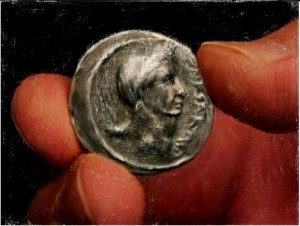
Any Jew would abhor paying tax to the Romans and lament his obligation to support the Temple, but majority of the Jews will prefer to abide with the rules and pay the tax because they do not want to court problems. The Pharisees and other pious Jews detest using the Roman coins because there is engraved the image of Caesar as god. The entire system is simply idolatrous for them. Yet, even many Pharisees pay their share as to maintain peace and order. The usual impression of this Gospel episode is that wise Jesus outwits a team of Pharisees and Herodians, who plan to trap Him with a tricky yet politically charged question. Yet, going deeper, there are so much at stake. Though the question is directly addressed to Jesus, the same question is applicable to all Jews who are forced to pay tax to the Romans. Thus, condemning Jesus as idolatrous means they also condemn the majority of fellow Jews for paying tax.
Jesus’ answer is not a categorical yes or no, rather he formulates it in such a way that does not only save Him from the trap, but saves everyone who are forced to pay tax from the idolatry charge. Ordinary Jews are working extremely hard for their lives and families, and it is simply a merciless act to condemn them as idol worshipers simply because they need to pay tax and avoid severe punishment. Jesus’ answer removes this guilt from poor Jews struggling to feed their family as the same time enables them to be holy in the sight of the Lord. From here, to give what belongs to God does not simply mean to pay the religious tax or to offer sacrifices in the Temple, but it is primarily to help others getting closer to God. What belongs to God? It is His people.
In our own time and situation, we may pay our taxes to the governments and live as good and law-abiding citizen, but do we give what belongs to God? Do we, like the Pharisees, place unnecessary burdens on others’ shoulders? Do we ridicule other who are not able to go the Church because they need to feed their family? Do feel holy simply because we are active in the Church and donate a big amount of money? What have we done to bring people closer to God?
Br. Valentinus Bayuhadi Ruseno, OP
 Benjamin Franklin pernah berkata, “Di dunia ini tidak ada yang pasti, kecuali kematian dan pajak.” Sungguh, pajak adalah fakta yang tidak menyenangkan dan juga tidak dapat dihindari dalam hidup kita sebagai warga negara. Sebagian dari penghasilan yang diperoleh dari jerih payah kita tiba-tiba diambil, dan hanya Tuhan yang tahu ke mana itu pergi. Praktek perpajakan sebenarnya sudah terjadi sejak komunitas manusia pertama di bumi. Ide dasarnya adalah bahwa pajak akan menyediakan sumber daya yang untuk kemajuan bersama, seperti membangun jalan, pendidikan dan perawatan kesehatan berkualitas. Namun, hal ini sering disalahgunakan. Di zaman dulu, para raja dan kepala suku menarik pajak agar mereka bisa membangun istana megah mereka dari pada membangun rakyatnya. Sayangnya, situasi tersebut tidak banyak berubah di zaman sekarang. Para pejabat korup menarik pajak hanya untuk membangun “istana” mereka yang megah, dan bukannya membangun rakyat.
 Jesus is already in Jerusalem. The confrontations between Jesus and the Jewish authorities have turned bitter, and Jesus is approaching His final days on earth. With this context, the parable may be understood easily. The invited guests stand for some elite Israelites who refuse Jesus, and thus, reject God Himself. The burning of their towns and cities may point to the invasion of the Roman Empire and the destruction of Jerusalem in 70 AD. The commoners who are later invited represent the people from all nations who accept Christ. Yet, some people who are already at the Wedding banquet do not wear the expected wedding garment. This proper dress decorum is a basic sign that the guests are honoring the host, and also becomes the symbol of our faith, our good works and our holy lives. For those who fail to honor the King through their garment are thrown out from the banquet.
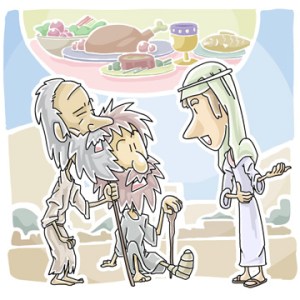 Yesus sudah berada di Yerusalem. Konfrontasi antara Yesus dan pemimpin bangsa Yahudi semakin memanas. Yesus pun mendekati hari-hari terakhir-Nya. Dengan konteks ini, perumpamaan hari ini tidak terlalu sulit untuk kita pahami. Tamu yang diundang mewakili elit Israel yang menolak Yesus, dan dengan demikian, menolak Allah sendiri. Pembakaran kota mungkin mengarah pada invasi Kekaisaran Romawi dan penghancuran Yerusalem pada tahun 70 Masehi. Orang-orang biasa yang kemudian diundang dan datang, mewakili orang-orang dari semua bangsa yang menerima Kristus. Namun, beberapa orang yang sudah ada di pesta pernikahan tidak memakai baju pernikahan yang diharapkan. Pakaian yang tepat menjadi pertanda bahwa para tamu menghormati sang tuan rumah, dan juga ini menjadi simbol iman, perbuatan baik dan kehidupan kudus kita. Bagi mereka yang gagal menghormati Raja melalui pakaian mereka akan diusir dari perjamuan.
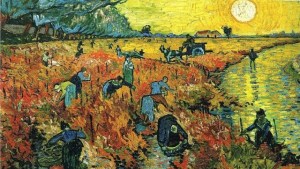 The image of a vineyard is close to Israelites’ hearts because this springs from their prophetic tradition. Isaiah uses this metaphor to describe Israel and God (see Isa 5:1-8). Consistent with this great prophet, Jesus crafts His parable of the vineyard to describe the relation between God and His people. God is the just and generous vineyard owner, and we are His workers. Now, it is up to us to work hard for the Lord in His vineyard and receive abundant harvest, or be lazy, and expelled from the vineyard.
 Kebun anggur merupakan citra yang dekat dengan hati orang Israel. Nabi Yesaya menggunakan metafora ini untuk menggambarkan relasi Israel dan Allah mereka (lihat Yesaya 5: 1-8). Konsisten dengan nabi agung ini, Yesus menceritakan perumpamaan tentang kebun anggur versi-Nya sendiri untuk menggambarkan hubungan antara Allah dan umat-Nya. Tuhan adalah pemilik kebun anggur yang adil dan juga murah hati, dan kita adalah para pekerja-Nya. Sekarang, terserah kepada kita untuk bekerja keras untuk Tuhan di kebun anggur-Nya dan menerima panen berlimpah, atau bermalas-malasan, dan akhirnya diusir dari kebun anggur.
 The road to hell is paved with good intentions. This old proverb attributed to St. Bernard of Clairvaux may sound rather morbid and threatening, but the truth remains. If we have only good intentions, marvelous plans, or great designs, but we never lift a finger to begin the first step, nothing will happen. We want to focus on our study, yet we are distracted by Facebook’s status and newsfeeds, our online chatting, or endless videos in YouTube, we will not make any progress. We wish to accomplish a lot of works, but our attentions and energy are consumed by so many other concerns. Then, our wish stays a wish.
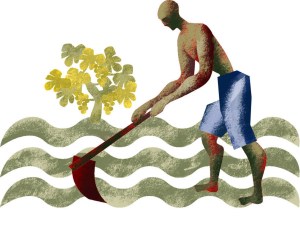 St. Bernardus dari Clarivaux pernah berpendapat bahwa Jalan menuju neraka dibuat dengan niat baik. Ucapannya mungkin terdengar agak mengerikan, tapi dia berbicara sebuah kebenaran. Jika kita hanya memiliki niat baik atau rencana yang luar, tapi kita tidak pernah bergerak untuk memulai langkah pertama, tidak akan terjadi apa-apa. Kita ingin fokus pada pendidikan kita, namun kita terus terganggu oleh status di Facebook, Online chat, atau menonton ribuan video di YouTube, maka kita tidak akan membuat kemajuan. Kita ingin menyelesaikan banyak pekerjaan di tempat kerja, tapi perhatian dan energi kita terkonsumsi oleh begitu banyak hal-hal lain. Maka, niat baik kita tetaplah sebuah niat.
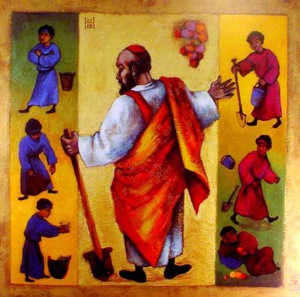
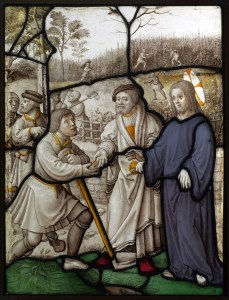 Jesus is the storyteller genius. The parable he shares to us today does not only surprise us with its unexpected ending, but it also creates a sense of puzzlement and wonder. We expect that the workers who labored the whole day would get the better wage compared to those who came late. Yet, it did not happen. All got the same wage regardless of their working hours. The vineyard owner was right to explain that he did not violate the agreement with his laborers, but deep inside us, there is something quite off. If we were militant enough, we would stage a rally to protest the vineyard owner’s decision.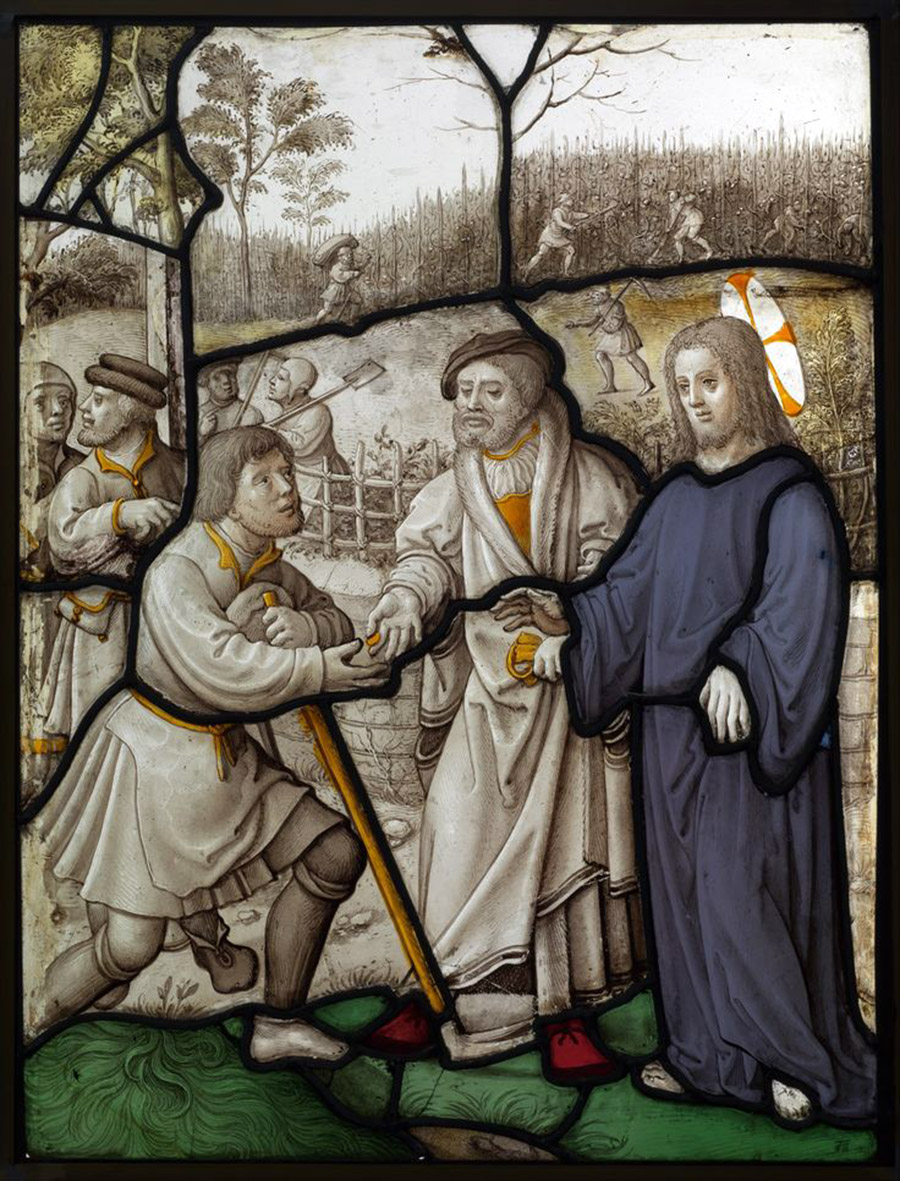
 Yesus adalah seorang pencerita yang luar biasa. Perumpamaan Yesus hari ini tidak hanya mengejutkan kita dengan akhir yang tak terduga, tapi juga membuat kita bertanya-tanya. Kita berharap para pekerja yang bekerja sepanjang hari akan mendapatkan upah yang lebih baik dibandingkan dengan mereka yang terlambat datang. Namun, itu tidak terjadi. Semua mendapat upah yang sama. Pemilik kebun anggur menjelaskan bahwa dia tidak melanggar kesepakatan dengan para pekerja, tapi di dalam lubuk hati kita, kita merasa ada sesuatu yang salah.
 In Medio Ecclesiae