Minggu di Biasa ke-6 [11 Februari 2018] Markus 1: 40-45
“Ia mengulurkan tangan-Nya, menjamah orang itu dan berkata kepadanya, ‘Aku mau, jadilah engkau tahir. (Mrk 1:41)”

Salah satu karunia terbesar yang dimiliki manusia adalah sebuah sentuhan. Kita diciptakan sebagai makhluk bertubuh, dan ilmu biologi mengajarkan bahwa hampir semua permukaan tubuh kita dipenuhi oleh sistem saraf untuk menerima stimulan eksternal melalui kontak sentuh, seperti kehangatan dan rasa sakit. Ini adalah langkah pertama dalam mekanisme kelangsungan hidup kita karena ini membantu kita untuk mengidentifikasi bahaya atau ancaman yang mendekat. Namun, ini juga adalah langkah pertama dalam pertumbuhan autentik kita sebagai manusia. Seorang bayi akan merasa dicintai saat dipeluk oleh orang tuanya. Seorang balita yang belajar berjalan akan merasakan bimbingan dan keamanan saat ayahnya memegang tangannya. Bahkan orang dewasa pun butuh kenyamanan dan kehangatan dari keluarganya.
Di dalam Kitab Suci, jika ada satu hal yang menghancurkan karunia sentuhan ini, ini adalah kusta. Kusta atau yang juga dikenal sebagai penyakit Hansen disebabkan oleh Mycobacterium leprae yang menyebabkan kerusakan kulit dan saraf di sekitar tubuh. Cedera terbesar yang ditimbulkan penyakit ini adalah seseorang kehilangan kemampuan untuk merasakan stimulan eksternal seperti rasa sakit. Sebagai konsekuensinya, penderita kusta secara berangsur-angsur kehilangan anggota tubuhnya seperti jari, rambut, hidung, lengan, dan kakinya karena luka berulang yang tidak terdeteksi atau luka yang tidak diobati.
Namun, yang paling menyedihkan mengenai penyakit ini adalah stigma yang diterima orang kusta dari komunitas mereka. Pada zaman Yesus, orang kusta diusir dari komunitas mereka karena orang takut untuk tertular penyakit ini. Bahkan, orang menganggap kusta sebagai hukuman Tuhan (lihat 2 Taw 26:20). Karena itu, penderita kusta tidak hanya sakit secara biologis tapi secara ritual adalah najis, artinya dia tidak dapat beribadah dan menyembah Tuhan karena dia dilarang masuk ke rumah ibadat atau ke Bait Allah (lihat Im 13). Dia harus seru “najis, najis!” untuk mengingatkan orang-orang di dekatnya tidak menyentuhnya, jika tidak, orang tersebut mungkin menjadi najis juga. Seseorang dengan kusta tidak hanya kehilangan karunia sentuhan dari tubuhnya, tapi juga dari komunitasnya dan Tuhannya. Tak heran, kusta adalah penyakit yang paling ditakuti masyarakat Israel kuno.
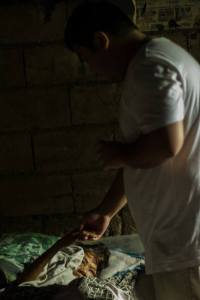
Dengan latar belakang ini, kita dapat sepenuhnya menghargai apa yang Yesus lakukan terhadap orang kusta. Dia mengulurkan tangan-Nya dan menyentuhnya. Yesus tidak hanya menghadapi risiko tertular penyakit ini, namun Yesus bisa menjadi najis. Namun, Yesus bersikukuh karena Dia tahu bahwa karunia sentuhan adalah apa yang paling dibutuhkan manusia. Sungguh, sentuhan Yesus membawa penyembuhan dan mengembalikan karunia sentuhan yang hilang. Penderita kusta itu sekali lagi bisa merasakan kebaikan hidup, bisa masuk kembali ke komunitasnya, dan bisa menyembah Tuhannya.
Saat kita memanggil Yesus sebagai juru penyelamat, ini berarti bahwa dengan mengorbankan diri-Nya, Yesus membangun kembali hubungan yang hilang antara kita dan diri kita sendiri, antara kita dan sesama kita, dan di antara kita dan Allah. Bagaimana Yesus melakukannya? Dengan karunia sentuhan. Allah kita adalah roh, tapi Allah kita tidaklah abstrak. Dia menjadi daging sehingga kita bisa merasakan kasih-Nya secara total, yakni sentuhan-Nya. Sebagai murid-murid-Nya, kita dipanggil untuk berpartisipasi dalam kasih nyata Allah ini dengan memperluas sentuhan Allah ini kepada sesama. Apakah kita berani menyentuh orang-orang yang menderita kusta modern, seperti kemiskinan? Apakah kita rela memulihkan hubungan yang telah rusak dalam hidup kita? Apakah kita mau menyentuh orang-orang yang juah dari Gereja dan membawa mereka kembali kepada Tuhan? Apakah kita berani menjadi sarana kasih dan sentuhan Allah dalam hidup kita?
Frater Valentinus Bayuhadi Ruseno, OP