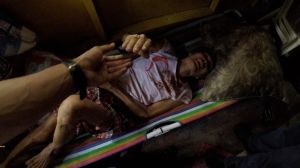
Minggu Ketiga Belas pada Masa Biasa [1 Juli 2018] Markus 5: 21-43
“Hai anak-Ku, imanmu telah menyelamatkan engkau. Pergilah dengan selamat dan sembuhlah dari penyakitmu.” (Mrk 5:34)
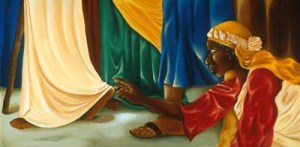 Injil hari ini tampaknya tidak berbeda dengan kisah-kisah mukjizat penyembuhan Yesus, tetapi jika kita membaca dengan seksama, kisah penyembuhan perempuan dengan pendarahan ini sebenarnya luar biasa. Kita tidak tahu dengan pasti pendarahan apa yang dideritanya, tetapi fakta bahwa ia menderita kondisi ini selama 12 tahun, menghabiskan banyak untuk pengobatan dan kondisinya semakin memburuk, ini berarti sangat serius. Pada zaman itu, tabib sangat jarang, dan berobat perlu mengeluarkan banyak uang. Perempuan ini mungkin berasal dari keluarga kaya, tetapi dia jatuh miskin karena kondisinya tersebut. Perempuan ini mulai kehilangan hidupnya dan menghadapi keputusasaan. Saya saat ini ditugaskan sebagai asisten imam di salah satu rumah sakit di Metro Manila, dan tugas saya adalah melakukan kunjungan pastoral ke pasien-pasien yang dirawat di rumah sakit tersebut. Tidak jarang saya menjumpai pasien yang menderita kondisi kesehatan yang menguras semua sumber daya mereka, dan tampaknya situasi mereka tidak menjadi lebih baik. Saya menyadari kisah perempuan dengan pendarahan ini bukan hanya kisahnya yang terjadi di masa lalu, tetapi juga kisah umat manusia di zaman ini.
Kita tidak boleh lupa bahwa protagonis kita juga seorang perempuan. Menjadi seorang perempuan di zaman Yesus berarti menjadi warga kelas dua dalam masyarakat patriarkal Yahudi dan sering kali, mereka dianggap hanya sebagai barang milik suami atau kepala keluarga. Sementara pria bekerja di luar dan bersosialisasi, kaum perempuan tinggal di rumah, dan berfungsi sebagai pengurus rumah tangga dan pengasuh anak. Biasanya, mereka tidak diperbolehkan berkomunikasi dengan orang asing apalagi laki-laki, kecuali di bawah pengawasan suami atau ayah mereka. Ini bukan waktu yang mudah bagi perempuan untuk hidup. Sang perempuan juga mengalami pendarahan, ini berarti dia menjadi najis di Hukum Taurat, dan siapa pun yang menyentuh dia akan menjadi najis juga (Im 15:19).
Perempuan dengan pendarahan memiliki iman pada Yesus dan ingin disembuhkan, namun untuk melakukan itu, dia harus menantang norma-norma budaya yang mengikatnya. Dia mengambil resiko yang besar. Bagaimana jika dia tidak disembuhkan? Bagaimana jika ia membuat Yesus dan murid-murid-Nya menjadi najis? Bagaimana jika dia dicap sebagai perempuan yang tak tahu malu oleh masyarakat? Rasa malu menahannya, tetapi iman mendorongnya. Ia pun mengambil langkah “win-win solution“. Dia mencoba untuk mencapai jubah Yesus, dan dia memastikan bahwa dia tidak akan membuat kontak dengan Yesus. Mukjizat terjadi. Dia disembuhkan, tetapi sayangnya, Yesus menemukannya. Dengan gemetar dan ketakutan, dia jatuh di hadapan Yesus dan mengaku. Dia takut bukan hanya karena dia “mengambil” kekuatan dari Yesus, tetapi karena dia telah melanggar norma-norma budaya Yahudi. Namun, tanggapan Yesus mengejutkan murid-muridnya dan semua yang menyaksikan peristiwa itu. Alih-alih menghukumnya karena perilaku yang tidak pantas, Yesus memuji imannya, “Hai anak-Ku, imanmu telah menyelamatkanmu.”
Ini adalah imannya yang membuatnya menjadi protagonis yang proaktif dari cerita mukjizat ini. Dia menolak untuk menyerah pada keputusasaan dan membuat jalannya menuju ke Yesus. Kita melihat sebagian besar tindakan dalam cerita ini dilakukan oleh sang perempuan, dan Yesus ada di sana untuk meneguhkannya. Benar, Yesus menyebut dia “anak” karena Yesus mengakui dia juga sebagai keturunan Abraham, bapa iman yang besar. Kisah perempuan dengan pendarahan adalah perjalanan iman seorang perempuan yang terkurung dalam berbagai kondisi yang melemahkannya. Itu adalah iman yang tumbuh bahkan di tengah-tengah situasi tanpa harapan dari penyakit, krisis keuangan, dan masa depan yang tidak pasti. Ini adalah iman yang tumbuh di tengah keterbatasan manusia, dan melampaui batas-batas budaya. Itu adalah iman yang menggerakkan gunung. Ini adalah imam sang perempuan, dan ini adalah iman yang juga kita miliki.
Frater Valentinus Bayuhadi Ruseno, OP
 Today we are celebrating the birth of John the Baptist. Two figures emerge as the protagonists of our today’s Gospel, Elizabeth, and Zachariah. Luke describes the couple as “righteous in the eyes of God, observing all the commandments and ordinances of the Lord blamelessly. (Luk 1:6)”. But, they have no child. The possibility to have a child is close to zero as Elizabeth is perceived to be barren and Zachariah is already old. In ancient Jewish society, children are considered to be a blessing of the Lord and a source of honor, and barrenness is a curse and shame.
 Hari ini kita merayakan kelahiran Yohanes Pembaptis. Ada dua tokoh protagonis pada Injil kita hari ini, Elizabeth, dan Zakharia. Santo Lukas mendeskripsikan pasangan itu sebagai “orang benar di hadapan Allah dan hidup menurut segala perintah dan ketetapan Tuhan dengan tidak bercacat.” (Luk 1: 6) ”. Tapi, mereka tidak memiliki anak. Kemungkinan memiliki anak juga mendekati nol karena Elizabeth adalah mandul dan Zakharia sudah tua. Dalam masyarakat Yahudi kuno, anak dianggap sebagai berkat Tuhan dan sumber kehormatan, dan kemandulan adalah kutukan dan rasa malu.
 We often take for granted that we are created as a bodily creature. Our body is integral to our humanity and created by God as something good; we receive our body as a gift. We freely receive our body from our parents, and our parents from their parents and this goes on till we discover God as the source of this gift. Because our body is a gift from God, we are called to honor our body as we honor the Giver of the gift Himself.
 Tubuh kita adalah bagian integral dari kemanusiaan kita dan diciptakan oleh Tuhan sebagai sesuatu yang baik. Tubuh kita adalah sebuah karunia. Dengan cuma-cuma, kita menerima tubuh kita dari orang tua kita, dan orang tua kita dari orang tua mereka dan ini berlangsung terus sampai kita menemukan Tuhan sebagai sumber dari karunia ini. Karena tubuh kita adalah karunia dari Tuhan, kita dipanggil untuk menghormati tubuh kita sebagaimana kita menghormati Sang pemberi karunia.