Holiness and Mercy

2nd Sunday of Easter – Divine Mercy [B]

April 7, 2024

John 20:19-31

The second Sunday of Easter is also known as the Divine Mercy Sunday. Though the title is relatively recent (St. John Paul II established this celebration on April 30, 2000), the truth about divine mercy is essential part of God’s characteristics revealed in the Bible.  How do we understand divine mercy and how do we practice mercy to others?

Mercy is related to the word ‘rahamim,’ which is rooted in the word ‘Rahim’ meaning ‘womb.’ Thus, ‘rahamim’ implies a mother’s natural feelings and attitude toward her children. Our good mothers keep accepting and loving us as their children, despite our stubbornness and pains we gave them. Some mothers even will not hesitate to sacrifice themselves for their children’s lives.

Another perspective to understand mercy is its indispensable connection with justice. Justice is ‘to give someone’s due,’ while mercy is to give someone that is not his due (in positive way). Good fathers generally exemplify this point. A father is a figure of justice in the family. He imposes discipline to his children, and sometimes inflict punishments if his children fail to behave properly. Yet, a good father know that justice he establishes is also an act of mercy. Aside from the fact that father’s discipline tend to be more gentle, his tough education is actually a form of tough love that shapes his children’s characters. Failure to perform justice might result in his children’s bad attitudes, and bad personality is never good for our children’s future. Thus, justice in wider perspective is mercy.

Going deeper into the divine mercy in the Bible, we also discover the intimate connection between mercy and holiness. In Sinai, God instructed the newly established Israel to be holy as God is holy (see Lev 11:44-45; 19:2; 20:26). How to be holy like God? In Sinai, God gave His laws for Israel. These laws were to form Israel as God’s nation, and by observing these laws, they separated themselves from other nations. Therefore, to be holy, to be separated from others and for God, the Israel had to obey God-given laws.

However, in the Gospel of Luke, Jesus taught, “Be merciful as your Father is merciful (Luk 6:36).” Jesus deliberately translated holiness into mercy. In Luke 6, Jesus taught beatitudes and chartered new laws just like God had done in Sinai. However, Jesus’ laws are not to make His disciples ‘exclusively separated’ from other people, but rather to touch other with acts of mercy. Holiness definitely is separation from sins and for God, but being holy is also being merciful. Holiness is to allow others to experience the divine mercy in their lives. And as our neighbours are touched by mercy, they may come closer to God.

How do you experience divine mercy in our lives? How do we express mercy to others? Do we do justice as the foundation of our mercy? Do our acts of mercy lead us closer to God?

Rome

Valentinus Bayuhadi Ruseno, OP

Kekudusan dan Kerahiman

Minggu ke-2 Paskah – Kerahiman Ilahi [B]

7 April 2024

Yohanes 20:19-31

Hari Minggu kedua Paskah juga dikenal sebagai Hari Minggu Kerahiman Ilahi. Meskipun perayaan ini relatif baru (Paus Yohanes Paulus II menetapkan perayaan ini pada tanggal 30 April 2000), kebenaran tentang kerahiman (belas kasih) ilahi adalah bagian penting dari karakteristik Allah yang diwahyukan dalam Alkitab.  Bagaimana kita memahami kerahiman ilahi?

Kerahiman dalam bahasa Ibrani berkaitan dengan kata ‘rahamim’, yang berakar dari kata ‘Rahim’ yang berarti ‘kandungan’. Dengan demikian, ‘rahamim’ menyiratkan perasaan dan sikap alamiah seorang ibu terhadap anak-anaknya. Ibu yang baik tetap menerima dan mencintai anak-anaknya, terlepas dari sikap keras kepala dan rasa sakit yang mereka berikan kepada sang ibu. Beberapa ibu bahkan tidak akan ragu untuk mengorbankan diri mereka sendiri demi kehidupan anak-anak mereka.

Perspektif lain untuk memahami belas kasih adalah hubungannya yang tak terpisahkan dengan keadilan. Definisi sederhana keadilan adalah ‘memberikan seseorang apa yang menjadi haknya’, sedangkan kerahiman adalah memberikan sesuatu yang bukan haknya (secara positif). Ayah yang baik umumnya mencontohkan hal ini. Seorang bapa adalah figur keadilan dalam keluarga. Ia menerapkan disiplin kepada anak-anaknya, dan terkadang memberikan hukuman jika anak-anaknya tidak berperilaku baik. Namun, seorang ayah yang baik tahu bahwa keadilan yang ia tegakkan juga merupakan sebuah tindakan kerahiman. Selain karena disiplin yang diterapkan bapa cenderung lebih lembut, pendidikan yang tegas sebenarnya merupakan bentuk kerahiman yang membentuk karakter anak-anaknya. Kegagalan dalam menegakkan keadilan dapat berakibat pada karakter buruk anak-anaknya, dan kepribadian yang buruk tidak akan baik untuk masa depan anak. Dengan demikian, keadilan dalam perspektif yang lebih luas adalah kerahiman.

Mendalami belas kasih ilahi dalam Alkitab, kita juga menemukan hubungan yang erat antara belas kasih dan kekudusan. Di Sinai, Allah memerintahkan bangsa Israel yang baru saja dibentuk untuk menjadi kudus sebagaimana Allah itu kudus (lihat Im. 11:44-45; 19:2; 20:26). Bagaimana menjadi kudus seperti Allah? Di Sinai, Allah memberikan hukum-hukum-Nya untuk Israel. Hukum-hukum ini membentuk Israel sebagai bangsa Allah, dan dengan menaati hukum-hukum ini, mereka memisahkan diri mereka dari bangsa-bangsa lain. Oleh karena itu, untuk menjadi kudus, terpisah dari yang lain dan untuk Tuhan, bangsa Israel harus menaati hukum-hukum yang diberikan Tuhan.

Namun, dalam Injil Lukas, Yesus mengajarkan, “Hendaklah kamu berbelaskasihan seperti Bapamu berbelaskasihan (Luk 6:36).” Yesus dengan sengaja menerjemahkan kekudusan menjadi belas kasihan. Dalam Lukas 6, Yesus mengajarkan sabda bahagia dan membuat hukum baru seperti yang dilakukan Tuhan di Sinai. Namun, hukum-hukum Yesus bukan untuk membuat para murid-Nya ‘terpisah secara eksklusif’ dari orang lain, melainkan untuk menyentuh orang lain dengan tindakan belas kasih. Kekudusan tentu saja adalah pemisahan diri dari dosa dan untuk Tuhan, tetapi menjadi kudus juga berarti berbelas kasih. Kekudusan adalah memungkinkan sesama untuk mengalami belas kasihan ilahi melalui kita. Dan ketika sesama kita tersentuh oleh belas kasihan, mereka dapat menjadi lebih dekat dengan Allah.

Bagaimana kita mengalami kerahiman ilahi dalam hidup kita? Bagaimana kita mengungkapkan belas kasih kepada orang lain? Apakah kita melakukan keadilan sebagai dasar belas kasih kita? Apakah tindakan belas kasihan kita membawa kita lebih dekat kepada Allah?

Roma

Valentinus Bayuhadi Ruseno, OP

The Empty Tomb 

Easter Vigil – Easter Sunday [B]

March 31, 2024

Mark 16:1-7

Jesus is either everything or nothing at all. Why? Because He made an extraordinary claim that He is divine. C.S. Lewis responded to this claim with three possible answers, ‘Lunatic, Liar or Lord.’ Either Jesus was a delusional man believing that He was God, or Jesus was an evil man who wanted to deceive the world for His profit, or He is the Lord because what He claimed is true. If Jesus’ claim is true, then He deserves all our worship, our love and adoration. Yet, if Jesus’ claim is false, then He is just nobody who happened to be a lunatic or liar. Then, what is the evidence of His claim?

The answer is the resurrection of Jesus. And what is the proof of His resurrection? The empty tomb! Yes, this is the first evidence we have. If we read the four gospels, we will find a resurrection story with slight variations, but all agree with the reality of the empty tomb. If I were Jesus, I would have chosen a more dramatic and visible way of resurrection. I would have even appeared to Pilate and the chief priests to make a bold statement. Yet, Jesus chose to show an empty tomb and later appeared to the women. But, these women? These women were the same women who stood near the cross of Jesus, and they went back early in the morning to anoint the body of Jesus to give a proper burial to Jesus. These women exhibited their faithfulness and love to Jesus. 

The evidence for Jesus’ resurrection has been discussed extensively by many scholars, and I would not have enough time to cover it here. Jesus did not appear to Pilate or Annas and Caiaphas because they had decided to reject Jesus as a lunatic or liar. Thus, Jesus’ resurrection is nothing but useless. They even spread lies that the body was stolen. One scholar said, ‘For disbelievers, no proofs are ever sufficient.’

However, we are here, just like the women who visited the tomb early in the morning. We are here because we believe in Jesus, and we love Him. Jesus’ choice for an empty tomb, rather than a grandeur showoff of His resurrection, invites us to enter the empty tomb and make decisions for ourselves. Pope Francis once said that Jesus did not need to remove the stone to go out from the tomb, but for us to enter the tomb. Do we still love Jesus even when we only see emptiness? Are we still faithful even if we did not find the Lord?

Yes, we believe in Jesus, and yes, we love Him. Yet, faith, hope and love are not static, but rather something that grows. God allows us to experience crosses and even empty tombs because, through these events, we may grow in our faith and love. We must not forget that when we carry a cross, we may be like Simon of Cyrene, who carried the cross of Jesus. We must not forget that Jesus was few steps away from the empty tomb, waiting to bless us.

Celebration of Easter is not just a annual ritual, with different fancies symbols, but an invitation for us to renew and deepen our faith and love for God. Afterall, Jesus is everything to us. Blessed Easter!

Valentinus Bayuhadi Ruseno, OP

Makam Kosong 

Malam Paskah – Minggu Paskah [B]

31 Maret 2024 

Markus 16:1-7 

Yesus adalah segalanya atau tidak sama sekali. Mengapa? Karena Dia membuat klaim yang luar biasa bahwa Dia adalah Allah. C.S. Lewis, seorang pujangga dari Inggris, menanggapi klaim ini dengan tiga kemungkinan jawaban, ‘Orang Gila, Pembohong, atau Tuhan’. Entah Yesus adalah orang gila yang percaya bahwa Dia adalah Tuhan, atau Yesus adalah orang jahat yang ingin menipuc dunia demi keuntungannya, atau Dia adalah sungguh Tuhan karena apa yang diklaimnya adalah benar. Jika klaim Yesus benar, maka Dia layak mendapatkan semua penyembahan, cinta dan pemujaan kita. Namun, jika klaim Yesus itu salah, maka Dia bukan siapa-siapa yang kebetulan adalah orang gila atau pembohong. Lalu, apa bukti dari klaim-Nya? 

Jawabannya adalah kebangkitan Yesus dari kematian. Namun, apa bukti dari kebangkitan Yesus? Ya, kubur yang kosong! Ya, ini adalah bukti pertama yang kita miliki. Jika kita membaca keempat Injil, kita akan menemukan kisah kebangkitan dengan sedikit variasi, tetapi semuanya setuju dengan kenyataan tentang kubur yang kosong. Jika saya adalah Yesus, saya akan memilih cara kebangkitan yang lebih dramatis dan terlihat. Saya bahkan akan menampakkan diri kepada Pilatus dan para imam kepala untuk membuktikan kebangkitan. Namun, Yesus memilih untuk menunjukkan kubur yang kosong dan kemudian menampakkan diri kepada para wanita. Tetapi, mengapa wanita-wanita ini? Perempuan-perempuan ini adalah perempuan-perempuan yang sama yang berdiri di dekat salib Yesus, dan mereka kembali pagi-pagi sekali untuk meminyaki tubuh Yesus untuk memberikan penguburan yang layak bagi Yesus. Para perempuan ini menunjukkan kesetiaan dan kasih mereka kepada Yesus.

Bukti-bukti kebangkitan Yesus telah dibahas secara ekstensif oleh banyak ahli, dan saya tidak memiliki cukup waktu untuk membahasnya di sini. Yesus tidak menampakkan diri kepada Pilatus atau Hanas dan Kayafas karena mereka telah memutuskan untuk menolak Yesus sebagai orang gila atau pembohong. Dengan demikian, kebangkitan Yesus tidak ada gunanya. Mereka bahkan menyebarkan kebohongan bahwa jenazahNya dicuri. Seorang ahli pernah berkata, “Bagi orang yang tidak percaya, sebanyak apapun bukti tidak akan pernah cukup.” Namun, kita ada di sini, sama seperti para wanita yang mengunjungi kubur di pagi hari. Kita berada di sini karena kita percaya kepada Yesus, dan kita mengasihi-Nya. 

Pilihan Yesus untuk memilih kubur yang kosong, daripada memamerkan kemegahan kebangkitan-Nya, mengundang kita untuk masuk ke dalam kubur yang kosong itu dan mengambil keputusan untuk diri kita sendiri. Paus Fransiskus pernah berkata bahwa Yesus tidak perlu memindahkan batu untuk keluar dari kubur, tetapi agar kita bisa masuk ke dalam kubur. Apakah kita masih mengasihi Yesus bahkan ketika kita hanya melihat kekosongan? Apakah kita masih setia meskipun kita tidak menemukan Tuhan? Ya, kita percaya kepada Yesus, dan kita mengasihi Dia. Namun, iman, pengharapan dan kasih bukanlah sesuatu yang statis, melainkan sesuatu yang bertumbuh. Allah mengizinkan kita untuk mengalami salib dan bahkan kubur yang kosong karena melalui peristiwa-peristiwa ini, kita dapat bertumbuh dalam iman dan kasih. Kita tidak boleh lupa bahwa ketika kita memikul salib, kita dapat menjadi seperti Simon dari Kirene, yang memikul salib Yesus. Kita tidak boleh lupa bahwa Yesus hanya beberapa langkah lagi dari kubur yang kosong, menunggu untuk memberkati kita.

Perayaan Paskah bukan hanya sebuah ritual tahunan, tetapi sebuah undangan bagi kita untuk memasuki misteri makam kosong, dan memperbaharui dan memperdalam iman dan cinta kita kepada Tuhan. Bagaimanapun juga, Yesus adalah segalanya bagi kita. Selamat Paskah!

 Valentinus Bayuhadi Ruseno, OP

The Holy Spirit and the Gift of Tongue

Pentecost [A]
May 28, 2023
John 20:19-23 [Acts 2:1-11]

The day of Pentecost is also called the day of the outpouring of the Holy Spirit upon the Church that Christ has just established. As the Holy Spirit came down to each disciple in the form of tongue like fire, the disciples began to speak different languages as to proclaim God’s great deeds. Many people call this miraculous ability to speak different languages in the day of Pentecost as ‘the gift of tongue’. But, did the disciples truly receive the gift of tongue? What is the gift of tongue all about? And, what did exactly happen to the disciples?

Firstly, why does it call as the gift of tongue? Luke, the author of the Acts of the Apostles, described what happened to the disciples. after they had received the Holy Spirit, they began to speak other languages (Greek: ἕτεραι γλῶσσαι – eterai glossai). The word ‘glossa’ in Greek can mean both tongue (the instrument of speech) and language itself. Thus, if the disciples received the gift of tongue, it means they receive the gift of language.

Secondly, what language did the disciples speak? Contrary to some popular beliefs, the disciples did not speak some unintelligible languages or language of the ‘spirit’ or of the angels. They uttered normal human languages. But, what language did the disciples actually say? We can say that the disciples were speaking new languages. Some disciples may speak Greek, others may say in Latin, other still may speak other Mediterranean languages of that time. Yet, there is another theory. It says that the disciples remained speaking in their native language, most probably Galilean Aramaic, but those who were present heard them in their own native languages. This is properly speaking, not really gift of tongue, but the gift of hearing or the gift of translation. The Holy Spirit ‘translated’ the words of the disciples in the hearers’ ears.

The gift of the Holy Spirit in the day of Pentecost is indeed remarkable, but what is it for us? In reality, most of us do not have this kind of extraordinary gift of tongue. I have been in Rome for almost one year, and spent all the time to study Biblical languages, Hebrew and Greek. Yet, after almost a year, I am still struggling with these languages. I wish the Holy Spirit come down during the day of Pentecost and suddenly I could speak Hebrew and Greek!

While it is true that most of us do not have the gift of tongue, but it does not mean we do not possess the Holy Spirit of Pentecost. In fact, if we only focus on the gift of tongue or the gifts of the Spirit, we may miss the entire point. The Pentecost is about the Spirit that gives new birth to each disciple that they become a new person in Christ. As new creations, they now have the courage to preach ‘the mighty deeds of God’.

Pentecost means we allow the Holy Spirit enter into our lives and inspire us to share the Gospel of Jesus Christ in our own particular ways. When we teach our children to pray and bring them to the Church, it is a Pentecost. When some of us volunteer as catechists and even involve in teaching the catechumens, it is a Pentecost. When we do our best to resist the ways of the world, and follow Jesus, it is a Pentecost.

Blessed Pentecost!

Valentinus Bayuhadi Ruseno, OP

Jesus and the Holy Spirit

Sixth Sunday of Easter

May 14, 2023

John 14:15-21

Jesus makes its clear, “If you love me, you will keep my commandments (John 14:15).” Thus, when we genuine love Jesus, it is never enough to simply shout, “Jesus, I believe in You!” or say, “Yes, I love You, Lord!” To love Jesus means that we are committed to observe His laws, follow His teachings, and imitate His examples. Why is to keep Jesus’ commandment fundamental for us Christians?

To get the answer we must go back and understand the Old Testament better. For the Israelites, the Law of the Lord (Hebrew: Torah) is not only important, but also precious, identity-forming, and salvific. It is precious because God Himself crafted and gave the laws to the Israelites in Mount Sinai. It is even more precious because the Law became the fundamental sign of Israel’s covenant with the Lord. By keeping the Law, Israel gradually formed their identity as the people of God. By observing the Law, they longer worshiped other deities, but the Lord alone. By living the ten commandments, they lived no longer like other people surrounding them, who committed atrocious acts like child-sacrifice, various sexual perversions, and other immoral behaviors.

However, what makes this Law truly precious is there is salvation for those are faithful to the covenant and who devoutly keep the Law of the Lord. Because of this, the Israelites recognized that the Law is neither arbitrary nor burdensome, but the proof of God’s love for them. Therefore, to repay God’s love, there is no other better way than observing God’s Law faithfully. From this Old Testament background, we now recognize why it is fundamental to keep Jesus’ commandment as a sign of our love for Him. As the people of the Old Testament observe the Law as their way to show fidelity and love to the God, the Giver of Law, so also, we keep Jesus’ commandment as our way to express our love and faithfulness.

Yet, we admit that to keep Jesus’ Laws is much difficult that we often imagine. To control and moderate our anger is already very difficult, but Jesus instructs us to forgive those who wrong us. To love our own relatives and friends are already tough, but Jesus commands us to love those we consider enemies. To keep marriage intact is challenging, but Jesus teaches that marriage cannot be dissolved by man and couples are expected to be faithful until death.

How is possible to love Jesus if to keep His commandments seem impossible? It is indeed impossible if we rely on our own strength, but it is made possible with God’s power. That’s why after Jesus taught, “If you love me, you will keep my commandments.” Immediately, He promised to send the Holy Spirit, the Paraclete or in Greek, “Parakletos.” This exceptional word comes from two more basic Greek words, “para” means “at the side,” and “kaleo” means “to call.” Thus, “parakletos” can be understood as someone who is called to be at our side, especially in times of need. The only way, we love Jesus and keep His commandments is through the help and power of the Holy Spirit.

As we are moving closer to the day of Pentecost, the day of the Holy Spirit, we are invited to deepen our relationship with the Holy Spirit. We continue to ask His assistance and grace that enable us to do the impossible: to keep His commandments and to love Jesus.

Rome

Valentinus Bayuhadi Ruseno, OP

Mengapa Pintu Gerbang

Minggu Keempat Paskah [A]
30 April 2023
Yohanes 10:1-10

Hari ini adalah hari Minggu keempat Paskah dan tradisi Gereja Katolik menyebutnya juga sebagai Minggu Gembala yang Baik. Alasannya bisa kita temukan dalam Bacaan Injil dimana Yesus memperkenalkan diri-Nya sebagai sang Gembala yang Baik. Namun, tidak hanya sebagai Gembala yang baik, tetapi Yesus juga menyebut diri-Nya sebagai ‘Sang Pintu Gerbang’. Ketika Yesus menyatakan bahwa Dia adalah pintu gerbang bagi domba-domba, ini berarti bahwa hanya melalui Yesus, kita, domba-domba-Nya, dapat menemukan kelegaan dan keselamatan yang sejati. Namun, mengapa Yesus menyebut diri-Nya sebagai pintu gerbang? Bukankah menjadi gembala yang baik sudah cukup bagi kita? Jawabannya terletak pada kehidupan dan tugas seorang gembala pada zaman Yesus, dan salah satu tugas utama seorang gembala adalah sungguh menjadi ‘pintu gerbang.’

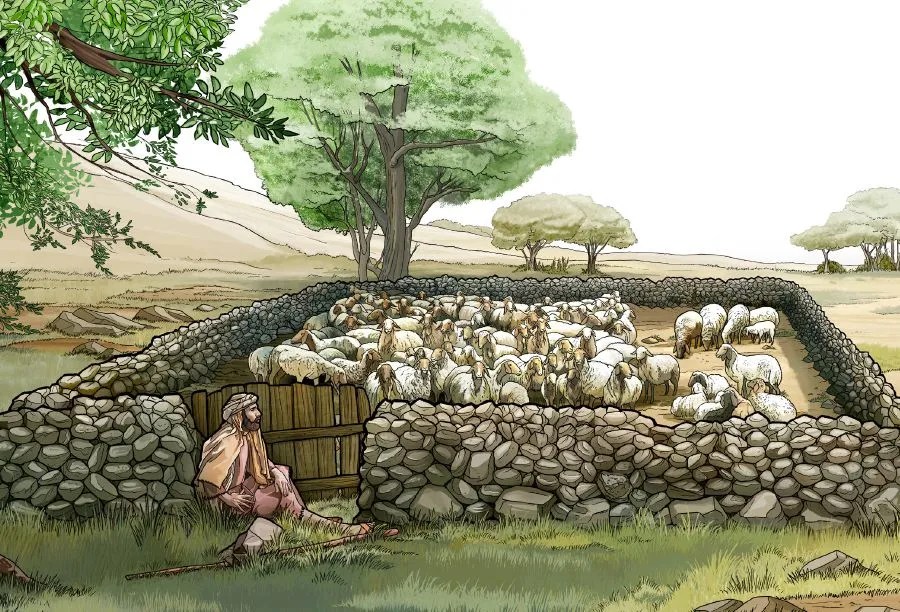
Domba pada umumnya adalah hewan yang berada di padang rumput terbuka daripada di dalam kandang tertutup. Oleh karena itu, untuk mengumpulkan dan melindungi domba-domba pada malam hari, para gembala membangun ‘kandang terbuka’ yang terbuat dari struktur tembok batu melingkar, kurang lebih setinggi 1,5 meter di padang terbuka. Ukuran struktur ini pasti akan tergantung pada banyak atau sedikitnya domba yang ada. Kemudian, umumnya kandang tersebut hanya memiliki satu jalan masuk, dan yang membuat pintu ini unik adalah sang gembala akan menempatkan dirinya di jalan masuk tersebut, dan seolah-olah berfungsi sebagai pintu gerbang. Dengan berada pada posisi tersebut, sang gembala mencegah domba-dombanya keluar dan melindungi mereka dari binatang buas yang mencoba masuk. Gembala juga harus waspada dan berjaga-jaga terhadap pencuri yang akan melompati tembok kandang dan mencelakakan domba. Sekarang, kita tahu bahwa gembala secara harfiah menjadi pintu gerbang kandang domba. Pada pagi hari, gembala akan memanggil domba-dombanya dan mereka akan mengikutinya saat mereka keluar melalui gerbang dan berjalan menuju padang rumput yang hijau.

Yesus adalah pintu gerbang. Ini berarti bahwa hanya di dalam Dia dan melalui Dia, kita menemukan keselamatan sejati dari bahaya yang datang dari yang jahat (dilambangkan sebagai ‘binatang buas’ dan ‘pencuri’). Meskipun benar bahwa hidup di dunia ini, kita terus-menerus menghadapi bahaya dalam bentuk penyakit, krisis keuangan, masalah mental dan relasi, dan bahaya fisik lainnya, satu-satunya bahaya yang dapat memiliki konsekuensi kekal adalah bahaya yang menghancurkan jiwa kita. Tidak ada makhluk lain yang bekerja tanpa henti untuk menyakiti jiwa kita kecuali iblis dan tentaranya. Menghadapi musuh-musuh rohani yang sangat berbahaya ini, kita hanya dapat mengandalkan Yesus, Gembala dan Pintu Gerbang kita.

Sekali lagi, kita perlu diingatkan bahwa kasus-kasus kerasukan dan serangan fisik dari roh jahat adalah cara-cara yang luar biasa. Cara-cara yang biasa dan lazim untuk mencelakai jiwa kita adalah melalui godaan-godaan untuk berbuat dosa. Dengan demikian, hanya di dalam Yesus dan melalui sarana yang Dia berikan kepada kita melalui Gereja-Nya, kita menemukan keamanan sejati kita dari serangan si jahat. Melalui penerimaan Ekaristi secara teratur dan saleh, kita terus merumput di ‘padang rumput hijau rohani’. Melalui sakramen rekonsiliasi, Gembala yang Baik sekali lagi membawa kita, domba-domba yang hilang, ke kandang. Melalui berbagai latihan rohani, seperti devosi, puasa dan amal, kita bertumbuh dalam kepekaan terhadap suara Gembala kita dan juga melindungi diri dari musuh-musuh rohani kita. Hanya di dalam dan melalui Yesus, pintu gerbang sejati, kita menemukan keamanan dan kedamaian yang sejati.

Roma
Valentinus Bayuhadi Ruseno, OP

Why Gate

Fourth Sunday of Easter [A]

April 30, 2023

John 10:1-10

Today is the fourth Sunday of Easter and traditionally it is also called as the Good Shepherd Sunday. This is for an obvious reason. The Gospel reading tells us about Jesus who introduces Himself as the gate of the sheepfold and the Good Shepherd. The other readings also point the image of God as the good shepherd, like the world-renown psalm 23, “the Lord is my shepherd.”

When Jesus proclaims that He is the gate of the sheep, it means that only through Jesus, we, His sheep, may find true rest and salvation. Yet, why did Jesus call himself a gate? Is not being a good shepherd already sufficient for us? The answer lies on the life and duties of a shepherd in the time of Jesus. One of the main purposes of a shepherd is precisely to become a ‘gate’ to the sheepfold.

A sheep is generally an animal who stays at the field rather than inside the stable or barn. Thus, to gather and protect the sheep during the night, the shepherds built a stone enclosure as high as 1.5 meter (around 5 feet) at the open field. The size of the enclosure would surely depend on the volume of the sheep. Then, generally it had only one passageway, and what made this passage unique is that the shepherd would station himself at the access way during the night both to prevent the sheep from going out and to protect the sheep from wild animals that tried to enter. From the point, the shepherd must be alert and vigilant for thieves who would jump over the enclosure wall and harm the shepherd. From here, we know that the shepherd is literally the gate of the sheepfold. At the morning, the shepherd would call his sheep and they would follow him to him as they were going out through the gate and marching to the green pasture.

Jesus is the gate of the sheepfold. This means that only in Him and through Him, we find true safety from the real dangers coming from the evil ones (symbolized as ‘wild animals’ and the ‘thieves’). While it is true that living in this world, we are constantly facing dangers in the forms of sickness, financial crisis, mental and relational issues, and other physical harms, the only danger that can have eternal consequence is one that destroys our souls. There are no other beings working relentlessly to harm our souls except the devil and his minions. Facing these extremely dangerous spiritual enemies, we can only rely in Jesus, our shepherd and gate.

Again, we need to be reminded that cases of demonic possessions, harassment and infestation are extraordinary ways. The ordinary and usual ways to harm our souls is through temptations to sin. Thus, only in Jesus and through the means He has given us through His Church, we find our true security from the onslaughts of the evil one. Through regular and pious reception of the Eucharist, we continue to graze in ‘spiritual green pasture’. Through the sacrament of reconciliation, the Good Shepherd once again brings us, the lost sheep, to the fold. Through various spiritual exercises, like devotions, fasting and almsgiving, we are growing in sensitivity to our Shepherd’s voice as well as the voice of our enemies. Only in and through Jesus, the gate of the sheepfold, we find our true security and peace.

Rome

Valentinus Bayuhadi Ruseno, OP

Jalan menuju Emaus, Jalan menuju Ekaristi

Minggu ke-3 Paskah [A]

23 April 2023

Lukas 24:13-35

Dua orang murid Yesus pergi ke sebuah desa bernama, Emaus. Salah satu dari mereka adalah Kleopas, dan rekan seperjalanannya yang kemungkinan adalah istrinya sendiri, Maria [lihat Yoh. 19:25]. Mengapa mereka pergi ke Emaus? Mungkin mereka takut dengan penguasa Romawi dan Yahudi yang mengejar murid-murid Yesus setelah jenazah Yesus diketahui hilang. Oleh karena itu, mereka bersembunyi di Emaus. Alasan lainnya adalah keputusasaan. Meskipun Injil tidak secara eksplisit mengatakan bahwa Emaus adalah kampung halaman Kleopas, namun ada kemungkinan besar bahwa Emaus memang tempat asal Kleopas. Harapan dan ekspektasi mereka hancur ketika Yesus, Mesias yang mereka harapkan, dikhianati dan disalibkan. Mereka tidak lagi memiliki alasan untuk tinggal di Yerusalem. Akhirnya, mereka memutuskan untuk meninggalkan murid-murid yang lain dan kembali ke rumah mereka di Emaus.

Namun, Yesus memiliki rencana khusus untuk mereka. Di tengah perjalanan, Yesus menampakkan diri, meskipun mereka tidak dapat mengenali-Nya. Yesus memulai dialog dengan menanyakan keadaan mereka. Dengan sedih, mereka mulai menceritakan kepada-Nya bagaimana mereka mengharapkan Yesus untuk menebus Israel, tetapi Dia gagal, dan wafat di kayu salib. Bahkan dalam kekecewaan mereka, Kleopas menganggap Yesus hanya sebagai seorang nabi, bukan lagi Mesias. Kemudian, Yesus menegur mereka karena kelambanan mereka untuk mempercayai apa yang telah dinubuatkan oleh para nabi dalam Perjanjian Lama tentang Mesias. Kemudian, Yesus mulai menjelaskan ‘Musa dan para nabi’ (yaitu Kitab Suci Perjanjian Lama) kepada mereka. Ini adalah bible study pertama pasca kebangkitan dan diberikan oleh Yesus sendiri!

Lukas memberikan kita detail yang menarik tentang bagaimana metode Yesus dalam melakukan bible study. “Lalu Ia menjelaskan kepada mereka apa yang tertulis tentang Diadalam seluruh Kitab Suci… [Luk 24:27].” Pusat gravitasi dari bible study ini adalah Yesus. Dia menunjukkan bagaimana Musa dan para nabi telah bernubuat tentang Dia, dan bagaimana sekarang Yesus telah menggenapi nubuat-nubuat tersebut melalui penderitaan, kematian dan kebangkitan-Nya. Dalam tradisi Gereja, metode ini disebut ‘katekese tipologis’ [lih. KGK 129). Sederhananya, tipologi adalah sebuah cara untuk melihat tokoh-tokoh, tempat-tempat, dan peristiwa-peristiwa dalam Perjanjian Lama digenapi dalam Perjanjian Baru, khususnya dalam diri Yesus Kristus. Faktanya, Gereja mula-mula juga menggunakan metode Yesus ini. Sebagai contoh, Paulus dalam suratnya, menyebut Yesus sebagai Adam yang baru atau Adam yang kedua [lih. Rm. 5:12-21; 1 Kor. 15:45-49]. Namun, Yesus lebih dari sekadar Adam yang baru. Dia juga Musa yang baru, Daud yang baru, dan banyak lagi.

Namun, Bible Study Yesus bukan hanya tentang metode yang baik. Bahkan, ini bukan tentang pendalaman ilmu Kitab Suci. Ada sesuatu yang lebih dalam. Kisah Kleopas dan rekannya tidak berakhir dengan berakhirnya Bible Study, walaupun mereka ingin Yesus tinggal lebih lama bersama mereka. Maka, Yesus tinggal bersama mereka, tetapi dengan cara yang baru dan kekal. Dia mengambil roti, memberkati, memecah-mecahkannya, dan memberikannya kepada mereka. Setiap umat Katolik yang rajin ke Gereja akan segera mengenali tindakan Yesus ini sebagai Ekaristi, dan Ekaristi adalah Yesus sendiri. Demikian juga, mata Kleopas dan rekannya terbuka, dan mereka mengenali Yesus dalam Ekaristi pertama pasca-kebangkitan ini. Jadi, tujuan akhir dari bible study Yesus adalah untuk membawa kita kepada Ekaristi.

Kisah Cleopas dan perjalanannya ke Emaus selalu menjadi inspirasi pribadi saya. Sebelum saya pergi ke Roma, saya biasa memberikan Bible Study setiap Sabtu malam. Dalam program ini, saya menjelaskan bacaan-bacaan pada hari Minggu besoknya. Kegiatan ini bukan hanya untuk mendalami Alkitab terutama melalui metode Yesus, tetapi tujuan sebenarnya adalah untuk membantu kita mengalami perjumpaan yang lebih dalam dengan Yesus dalam Ekaristi. Jika sebuah Bible Study tidak membawa kita kepada Yesus dalam Ekaristi, maka ini bukanlah Bible Study Yesus.

Roma

Valentinus Bayuhadi Ruseno, OP
The Road to Emmaus, the Road to the Eucharist

3rd Sunday of Easter [A]
April 23, 2023
Luke 24:13-35

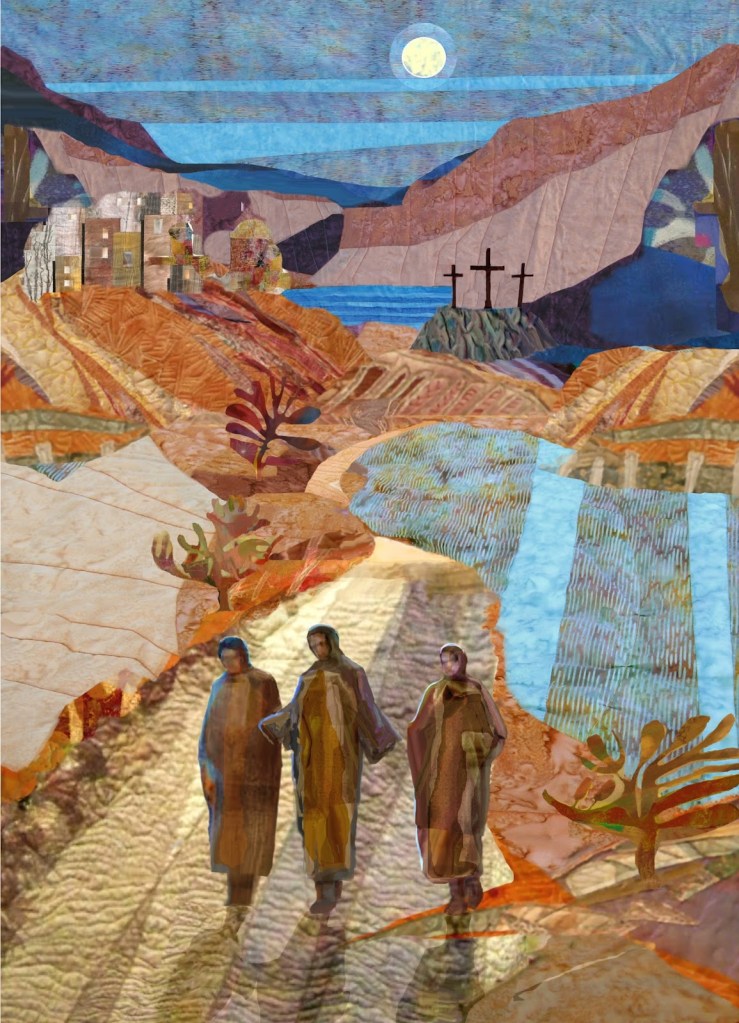
Two of Jesus’ disciples went to a village called Emmaus. One of them was Cleopas, and his traveling companion was probably his own wife, Mary [see John 19:25]. Why did they go to Emmaus? Perhaps they were afraid of the Roman and Jewish authorities who were pursuing the disciples after Jesus’ body was found missing. Therefore, they hid in Emmaus. Another reason was hopelessness. Although the Gospels do not explicitly say that Emmaus was the hometown of Cleopas, there is a high probability that Emmaus was indeed his hometown. Their hopes and expectations were shattered when Jesus, their expected Messiah, was betrayed and crucified. They no longer had any reason to stay in Jerusalem. Finally, they decided to leave the other disciples and return to their home in Emmaus.

However, Jesus had a special plan for them. On the way, Jesus appeared to them, although they could not recognize Him. Jesus started a dialog by asking them how they were doing. In sadness, they began to tell Him how they expected Jesus to redeem Israel, but He failed, and died on the cross. Even in their disappointment, Cleopas only regarded Jesus as a prophet, no longer the Messiah. Then, Jesus rebuked them for their slowness to believe what the Old Testament prophets had foretold about the Messiah. Then, Jesus began to explain ‘Moses and the prophets’ (i.e. the Old Testament Scriptures) to them. This was the first post-resurrection bible study and was given by Jesus himself!

Luke gives us interesting details on how Jesus’ method of conducting a bible study. “Then he explained to them what was written about him in all the Scriptures… [Lk 24:27].” The center of gravity of this bible study is Jesus. He shows how Moses and the prophets had prophesied about Him, and how now Jesus has fulfilled those prophecies through His suffering, death, and resurrection. In Church tradition, this method is called ‘typological catechesis’ [cf. CCC 129). Simply put, typology is a way of seeing Old Testament characters, places and events fulfilled in the New Testament, particularly in Jesus Christ. In fact, the early Church also used this method of Jesus right on. For example, Paul in his letters, referred to Jesus as the new Adam or the second Adam [cf. Romans 5:12-21; 1 Cor 15:45-49]. However, Jesus is more than just the new Adam. He is also the new Moses, the new David, and many more.

However, Jesus Bible Study is not just about good methods. In fact, it is not only about deepening the knowledge of the Scriptures. The story of Cleopas and his companion did not end with the end of the Bible Study, although they wanted Jesus to stay longer with them. So, Jesus stayed with them, but in a new and eternal way. He took bread, blessed it, broke it, and gave it to them. Any honest Catholic who regularly goes to Church will immediately recognize this act of Jesus as the Eucharist, and the Eucharist is Jesus himself. Likewise, the eyes of Cleopas and his companion were opened, and they recognized Jesus in this first post-resurrection Eucharist. So, the ultimate goal of Jesus’ bible study is to lead us to the Eucharist.

The story of Cleopas and his journey to Emmaus has always been my personal inspiration. Before I went to Rome, I used to give a Bible study every Saturday night. In this program, I explained the readings for the following Sunday. Yet, this activity is not only to go deeper into the Bible especially through the method of Jesus, but the real purpose is to help us experience a deeper encounter with Jesus in the Eucharist. If a Bible Study does not lead us to Jesus in the Eucharist, then it is not a Jesus’ Bible Study.

Rome
Valentinus Bayuhadi Ruseno, OP