Love at the Heart

Seventh Sunday in Ordinary Time [A]

February 23, 2020

Matthew 5:38-48

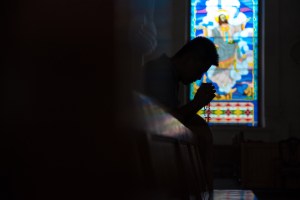
praying n persecutionAt the heart of Jesus’ teaching in the Mount is the formation of the heart. However, the heart in the Bible is not limited to our affective side or emotions. It also stands for the center of intellectual capacity and freedom. The heart is the seat of life itself, and thus, represents who the man or woman is.

Last week, Jesus told us to purify our hearts from evil thoughts and wicked desires [Mat 5:17-37]. It is not enough not to do violence to others, but it is necessary to cleanse our hearts from anger and vengeance. It is not sufficient not to commit adultery, but we are required to remove from our hearts the lustful desires. Forming the hearts is more fundamental rather than simply and blindly following the written laws and regulations. The formation of the heart is about building up good habits, and virtuous character. A virtuous person is avoiding evil, not because of fear of the external laws, but strong motivation from within.

However, in today’s Gospel, Jesus demands even something higher. The purifying of the heart is just the first step, and we need to go to another and more difficult step: to love. It is precisely tougher because love is not merely about removing impure desires in our hearts or preventing us from doing evil, but it is about actively doing good. Moreover, this love [agape] is only real and meaningful if we are doing good, not in the conditions that are favorable to us, but rather in the face of evil and sufferings.

Since its foundation around two millennia ago, Christians remain the most persecuted people. Opendoorusa.org reported that numbers of persecutions and violence against Christians are on the rise. In 2019, more than 260 million Christians [one out of nine Christians in the world] are living in the places where they experience a high level of persecution. Almost 3 thousand Christians were killed because of their faith. More than 9 thousand churches and Christian buildings like schools were attacked. In Nigeria, priests and seminarians were abducted and tortured. Some were lucky to return alive, but many were found lifeless. In China, the government made national crackdown against Christians and shut down the churches. In Indonesia, things are better for the Christians because our rights are enshrined in the constitutions. Yet, in the grassroots, we continue to feel discriminated against and fear of being targeted by the extremists and terrorists.

Our destiny as Christians are not better than our brothers and sisters who belonged to the early Church. However, as our brothers and sisters in the past, our mission remains the same: to love our enemies, to respond evil with utter generosity, and be ready to fight for justice with gentleness. Christians are accused as weak people, but this is plain wrong. The world that is built by violence and bitterness is self-destruct, and unless we dare to be true followers of Christ, we cannot stop the downward mobility towards total ruin. We thank our predecessors who refused to be controlled by violent anger despite so much evil they had to endure. The world is a much better place with whose hearts are pure. St. Tertullian believed that the blood of martyrs is the seed of Christianity, and we believe also that the love of Christians are the seed of a better world.

Valentinus Bayuhadi Ruseno, OP

Return to Our Hearts

Sixth Sunday in Ordinary Time [A]

February 16, 2020

Mat 5:17-37

heart 2Jesus is accused of unfaithful to the Law of Moses and the traditions of the elders. He no longer requires His disciples to performs ceremonial washings and many traditions of the elders [Mat 15:2]. Jesus heals people even during the Sabbath [Mark 3:1-6]. Jesus declares that all food is clean [Mark 7:19]. The worst part is when Jesus commands His disciples to drink His blood [see Lev 17:14; Mat 26:27-28]. Is Jesus breaking and changing the Law of Moses?

Today, Jesus makes a bold statement against His accusers, “Do not think that I come to abolish the Law, but to fulfill it.” The real and tough question is how Jesus completes the Law? Jesus’ answer is simple: by returning to original plans of God, or simply put, by going back to the essential. However, to go back to the essential, Jesus has to unload centuries-old unnecessary addition to the fundamental Law. Jesus has to remove tons of unessential.

Yet, the basic logic is: before we set aside the unessential, we need to know first what the essential is. For Jesus, what is essential and the original plan of God? Simply put, God wants us to share His divine life and happiness. To share this life, men and women have to give their hearts totally to God. And, Jesus understands that to give our hearts for the Lord, we need to purify our hearts. “… because from the heart comes to all evil things…[Mar 7:21]” and “Blessed are the pure in heart because they will see God [Mat 5:8].” No wonder, in today’s Gospel, to fulfill the Law, we need to purify our hearts from all negative emotions and thoughts. We must cleanse our hearts from prolonged anger, hatred, and vengeance because these things will breed violence and worse evil. We shall clean our hearts from lust because it simply leads to sexual immorality. Even Jesus hates divorce because it is the product of the hardness of our hearts.

One time, when I was still a brother, I listened to the sharing of some people who have become the victims of a child abused. Here I meet Rio [not his real name]. He told me that he was sexually abused by his father when he was around ten years. The incidents left him deeply traumatized, he grew up with some problems, and the situations brought him into despair. He event attempted to commit suicide, but fortunately, his friends came to his rescue. However, years later, when he heard that his father got a stroke, and it left him paralyzed, he decided to go home and take care of his father. I asked him what made him return and forgive his father? He said that it was challenging because of anger and hatred, but he realized that he had to forgive his father not because his father asks for it, but because he deserved peace of mind. Now, he returned to purify his broken heart with a sacrificial love towards his father.

Are we willing to remove non-essentials from our hearts? Are we willing to offer our hearts to the Lord? Are our hearts pure enough to be offered to the Lord?

Salt of Christ

Fifth Sunday in Ordinary Time [A]

February 9, 2020

Matthew 5:13-16

salt makingReading carefully, we may wonder, “Is it possible if the salt loses it, saltiness?” In everyday experience, we never experience tasteless salt. However, when we go back to the time of Jesus, we will be surprised that a salt losing its taste is a daily reality. In ancient Israel, the people would go to the Dead Sea, the saltiest body of water on earth, and gathered the “pillar of salt” formed surrounding the lake. Then, they would put inside a small bag, like a teabag”, and when it was needed for seasoning, the bag would be dipped into the water or soup. After some repeated use, the salt would lose its saltiness due to the chemical impurities. It turned to be nothing but an ordinary pebble, and shall be thrown away and trampled underfoot.

Salt is potent seasoning, but because of its small quantity, we hardly notice it. When I was still in the minor seminary, one of our Lenten observances was to eat our meals cooked without salt. The taste was totally awful. I forced myself to swallow the food, but it just made me feel terrible and feel like vomiting. I never thought that food without salt could hardly be edible.

For many of us, salt is just nothing but seasoning that we can add if lacking, or we only complain to the cooks if the menu is too salty. Yet, for some people, salt literally means life and death. From time to time, we have experienced diarrhea or a loose bowel movement. The sickness itself is easily treatable, but if left untreated, it can be deadly as it causes people to severe dehydration. One of the traditional ways to treat it is “oralit” or oral rehydration solution. It involves drinking the right quantity of water with added sugar and salt. How tiny salt saves people’s lives!

Yet, salt is seasoning and not the real menu. One cannot survive just salt alone. Too much salt in our body will lead to higher blood pressure, and high blood pressure can be fatal to many human organs. Jesus calls us “salt” because we are called to give an excellent flavor to the Bread of Life. When I was still studying in Manila, I was introduced to one of the favorite breakfasts of the Filipinos, “pan de sal.” It is Spanish for the bread of salt because a small amount of salt was added into the final phase of making the dough. The shape of the bread is simple, yet tasty, and make people crave more.

Like salt in Pan de Sal, our mission as Christians is to bring Jesus to others and to make people to long for Jesus more. It is a tough job because our lives and actions shall be right, not too salty, and not to bland. The more we draw attention to ourselves, the more people will just feel “too salty.” Yet, without making our effort, Christ will appear as rather “bland.”

Every time we go to the Mass, we receive the Body of Christ in the form of white, small, and tasteless bread, a host. Why is it flavorless? Because as we go home, we need to become the taste of this Bread of life. So, it is no longer we, but Christ who lives in us (see Gal 2:20).

Valentinus Bayuhadi Ruseno, OP


Jesus’ Ideal Parents

The feast of Presentation

February 2, 2020

Luke 2:22-40

presentation 2If we are given a chance to choose our parents, what kind of parents will be our choice? Perhaps, some will prefer billionaire parents so that we can sing like Bruno Mars, “I wanna be a billionaire… Buy all of the things I never had… I wanna be on the cover of Forbes magazine, and Smiling next to Oprah and the Queen.” Perhaps some of us want to become the children of a king. So, royal blood is flowing through our vein, and people call us as a prince, princess, or royal highness. Perhaps, we want to be born from Korean megastars, because we want to become the prettiest or the most handsome.

Yet, if we ask the same question to the Lord, what would be His choice? The choice is obvious, Joseph and Mary. But, why?  Joseph and Mary are not wealthy, and even poor. They can only afford turtle dove, the offering of the poor. Indeed, Joseph is the descendant of King David, but in reality, he is a humble carpenter from the unknown village, Nazareth. I do believe that Joseph is handsome and Mary is beautiful! From here, we can deduce that richness, fame, and physical beauty as God’s criteria for His parents. So, what is it?

If we look closer into today’s Gospel and some other verses, we may discover the best character of Joseph and Mary as a couple and parents are their love and fidelity to God. Mary and Joseph know well the Law of God, and they are faithfully observing His Law.

Today’s feast is traditionally called the Presentation. Jesus is presented and consecrated to God in the Temple. Why do Joseph and Mary offer Jesus in the Temple? Because they are aware of the Jewish Law that any firstborn shall be consecrated to the Lord because they belong to the Lord [see Exo 13:2]. The feast of Presentation is also called the feast of the Purification of Mary. She is purified not because she is sinful, but because, according to the Mosaic Law, any woman who gives birth will be ritually unclean or unfit for the worship. She has to undergo 40 days of purification period, and at the end of the period, she offers a sacrifice to the priest [Lev 12:1-8]. From the Gospel of Matthew, Joseph is described as “the righteous man.” This means that Joseph is not only well-versed in Mosaic Law, but he is faithfully observing them.

Jesus does not concern Himself with His parents’ economic condition, social status, or physical appearance. Jesus is looking for whether His parents love God, whether His parents know and observe God’s law, and whether His parents have faith in God. Why are these characteristics crucial for Jesus’ parents? Because Jesus understands the best inheritance parents can give to their children is faith, because money can only provide you with security in this life, but faith will bring us to heaven.

The primary duty of parents is not merely to provide food, shelter, and clothing, not only send their children to schools and not only bring them to the doctors when they are sick but primarily to walk with them to heaven. Like Mary and Joseph present Jesus to God, we are also offering our children to God.

Valentinus Bayuhadi Ruseno, OP

Kingdom of God

Third Sunday of Ordinary Time [A]

January 26, 2020

Matthew 4:12-17

giving lettersAfter the arrest of John the Baptist, Jesus begins His public ministry. Jesus left Nazareth, His hometown, and moved to a more crowded and bigger town, Capernaum. Crudely speaking, Jesus did urbanization. This strategic move of Jesus was to support His mission. With a dense population and with better access to neighboring towns, Jesus could minister to more people in a more efficient way.

However, Jesus’ movement from Nazareth to Capernaum is not just about practicality and preaching strategy. Jesus was fulfilling the prophecy of Isaiah. “Land of Zebulun and land of Naphtali…the people who sit in darkness have seen a great light…” For many of us, Zebulun and Naphtali do not make any sense, and we tend to skip these verses. Yet, for the first-century Jews, this prophecy is a game-changer because God will gather the lost twelve tribes of Israel, and re-establish the Kingdom of Israel.

Let us go back to the Old Testament a little bit. In 2 Samuel 7, God promised that the throne of David will last forever, however after the reign of Salomon, David’s son, the kingdom of David was divided into two. After some hundred years, these two kingdoms, one by one, were destroyed by the enemies, and the twelve tribes were scattered among the Gentiles. Among the tribes of Israel, only Judah, and Benjamin were able to return to the land of Israel, while the rest, including Zebulun and Naftali, were lost. Jewish people in the time of Jesus knew well that one of the missions of the expected Messiah is to restore the Kingdom and to gather the lost tribes of Judah.

Jesus, the Messiah, came indeed to fulfill this expectation, and no wonder if the first thing He did was to preach that the Kingdom of God is at hand. It is called the Kingdom of God because it is the Kingdom promised by God, built by God, and governed by God. It is the restored kingdom of David, and much bigger than the first David’s kingdom.

However, there is a fundamental difference between David’s kingdom and Jesus’. David’s kingdom was established to fight Israel’s enemies. His kingdom was filled with nobilities, generals, and armies. It was characterized by political rivalry, a struggle for power, and treachery. Finally, it is no different from other kingdoms in the world. All is about “game of thrones”. And like other earthly kingdoms, the kingdom of David was bound to crush as well.

The Kingdom of God basically goes in the opposite direction. It is the Kingdom built upon faith in God, service, and love for others, even to the point of sacrifice. When we were baptized, we become the members of this Kingdom, and in fact, we are transformed into the children of God, calling Him as our Father. However, despite being heirs to the Kingdom, we are not princes, lords or generals. We are servants and lovers. The higher our positions in the Kingdom, the more love and service we shall render. That is why the priests do not have wives, because they are busy serving the people! No wonder St. John of the Cross would say, “in the twilight of life, God will not judge us on our earthly possessions and human success, but rather on how much we have loved.”

Valentinus Bayuhadi Ruseno

Ignoring Jesus

Second Sunday of the Ordinary Time [A]

January 19, 2020

John 1:29-34

reading the bibleWe begin the ordinary time of the liturgical year. In the Church, we have three cycles of the liturgical year: A, B, and C. every year, we have a different set of readings. In year A, the Gospel readings are mainly from the Gospel of Matthew, meanwhile, year B is from Mark and year C is from Luke. The Gospel of John does not have its separate year, but the readings from John are scattered through the years, especially in the Easter season.

The first reading is usually taken from the Old Testament and it is thematically related to the Gospel. While the second reading is coming from the letters of the apostles like St. Peter, St. John and the letter to the Hebrews, yet the majority of the second reading comes from letters of St. Paul. The second readings have their own sequence and it is not necessarily thematically related to the Gospel. The reason behind why we have this kind of liturgical setting is that to help us, the regular mass-goers, to read the Scriptures together with the Church. If we are faithfully attending the mass every Sunday, or even every day, and attentive to the readings, we will have a good grasp of the Scriptures and especially the life and works of Jesus.

However, not all the Scriptures are there in the Mass. If we go every day to participate in the Eucharist for three years, we only listen to around 30 percent of the Bible. We still have 70 percent to complete the Bible! Thus, it is highly recommended that we take the initiative to read the Bible on our own. Three to four chapters a day, and hopefully, within a year, we are able to read the entire Bible cover to cover.

I guess one of the “great sickness” of Catholics nowadays is the ignorance of the Scriptures. When I ask some Catholics whether they have the Bible, they unanimously answer that they have a Bible, and in fact, they have a collection of Bible coming from different countries. However, when I inquire whether they read the Bible regularly, only a few would confidently reply that they do.

The task of reading the Bible is getting difficult in our time because young generations or the millennials and generation Z, despite their high education, prefer to playing electronic gadgets rather than to read books, and printed materials become an obsolete. Yes, it is easy now to install a Bible on our cellphone but to spend time to read it is another thing. With so many other competing applications in our handheld device, reading the Word of God is easily relegated to the sideline.

St. Jerome reminds us that ignorance of Scriptures is ignorance of Christ. Indeed, it is too easy to say “I love Jesus”, but in reality, we are ignoring Him because we never read or attentively listen to the Scriptures. St. Paul in the beginning of his letter to the Corinthians reminds us that we are called to saints or holy. And holiness for Paul is nothing but living in Christ, but how we can live in Christ, if we do not know Christ, worse ignore him? Reading a Bible on a daily basis can become a simple yet concrete act of loving Jesus, and in fact, the way to holiness as we become more and more like Christ.

Valentinus Bayuhadi Ruseno, OP

Why Jesus Has to be Baptized

Baptism of The Lord [A] – January 12, 2020 – Mat 3:13-17

baptism of the lord 2One question that always baffles attentive readers of the Scriptures is that why should Jesus be baptized by John the Baptist? John himself proclaimed that his baptism is a sign of repentance. Those who are baptized by John must first acknowledge their sinfulness and unworthiness, and baptism of water becomes the visible token of turning away from sins and promise of a new and better life. Yet, we all know that Jesus is sinless [Heb 4:15; 1 Pet 2:22]. Does it mean Jesus is sinful? Is John the Baptist greater than Jesus?

The Gospel of Matthew has pointed out clearly that John the Baptist is not worthy to baptize Jesus and he is in need of Jesus’ baptism. It is Jesus Himself who insists to be baptized by John. Why? Jesus told John, “to fulfill all righteousness.” These words of Jesus certainly difficult to understand, and many theologians have come up with different interpretations to understand better Jesus’ actions and words in this baptism.

 St. Augustine of Hippo, one of the greatest Fathers of the Church, told us in his sermon, “The Savior willed to be baptized not that He might Himself be cleansed, but to cleanse the water for us.” St. Augustine pointed to us that Jesus entering the water as to prepare the sacrament of baptism, and so everyone who is baptized in the name of Trinity will receive the grace of forgiveness and new life. Meanwhile Catechism of the Catholic Church notes that Jesus’ submission to John’s baptism is an act of self-emptying [CCC 1224].

However, Pope Emeritus Benedict XVI has exposed some interesting in his book, Jesus of Nazareth, that Jesus applied the word “baptism” also to His Passion, Death, and Resurrection [see Mrk 10:38; Luk 12:50]. From here, we discover that Jesus’ insistence to be baptized by John because Jesus’ baptism turns to be a symbolic act of His Cross. As Jesus needs to be baptized, so He shall pass through suffering and death as to reach resurrection and bring salvation for all. From the moment of the baptism in the Jordan, Jesus has set His foot to Calvary.

In the Scriptures, righteousness is being faithful to the Convent, and God as the most righteous fulfills His covenant by saving His people (Deut 32:4; Is 5:16; 42:6). Now, Jesus fulfills that same “righteousness” with a perfect and definitive way by His Cross and Resurrection.

So, what all these biblical and theological stuff are for us?  As we know deeper the meaning of the Baptism of the Lord, we shall also follow the footsteps of Jesus. If baptism means His way of the Cross, then all of us who have been baptized, whether as infants or adults, shall share in Jesus’ cross. We are lucky that we are living comfortably as Christians, but more many, to be Christians means discriminations, persecution, and even death. It may be shocking, but Christians remain the most persecuted people on the earth. For us who are more fortunate, we can manifest our baptism with living authentically as disciples of Christ: to be honest despite the possibility of losing earthly gains, to be loving despite many sufferings, and to be honest despite living without fame.

Valentinus Bayuhadi Ruseno, OP

Sincere Pilgrimage

The Solemnity of the Epiphany of the Lord – January 5, 2020 – Matthew 2:1-12

They were overjoyed at seeing the star (Mat 2:10

three magiThe journey of the three wise men from the East embodies the deepest human longing for a meaningful life and true happiness. Balthazar, Melchior and Gaspar, as the tradition called them, were neither Jews nor baptized Christians. In Greek ancient manuscripts of the Gospel, the word used to describe them is ‘magos’, meaning ‘someone with magical power’ or ‘magicians’, and practicing magic is detestable in the eyes of the Jews (2 Cro 33:6). Though we cannot be sure what kind of magic they crafted, but one thing is sure that they read the sign of times and followed the star. Because of this, they were instantaneously accused as one of those astrologers, star-readers who predict the human behaviors and the future, but I would argue that they were actually early astronomers instead astrologers. Like ordinary seamen who gazed the stars and hoped that they would guide them home, the magi did look at the star and believed that they would navigate their way to the true end.

They were people heatedly called the “Gentiles”; people who knew nothing about God and His mighty acts; and people who would fatefully perish because they were far from God’s Law. Yet, God always turns His eyes toward those who are sincerely looking for Him. They became one among the first persons to whom God chose to reveal Himself, and together with them were the simple shepherds. Surprisingly, these people were not learned Jews, wealthy aristocrats and definitely not King Herod the great.

The journey of the wise men is rightly considered as a pilgrimage for a very simple yet essential reason: they have God as their end. It was not a recreational picnic to reenergize oneself. It was never an educational tour to add up knowledge. Surely, it was not a business trip to make one richer. The Gospel tells us they was searching for the “newborn King of the Jews” and intending to pay homage. But, why did they have to give utmost respect to this weak baby whereas there were a lot of powerful kings around them? It was because they were aware that this King was not a typical warlord nor a power-addict politician, but a King that would answer their heart’s desire: the fullness of life and true wisdom. They indeed looked for God Himself and this made them truly wise.

Deep inside us, there is always yearning for real happiness and genuine completeness. Yet, we are often like Herod the Great who boxed himself in his own man-made palace and we seek the answer within ourselves, in richness, power and bodily pleasure. This brings us nothing but frustration and emptiness. The pilgrimage of the three wise men from the east should be ours as well. The three magi give us an authentic example by looking the answer not in ourselves but in God, and only in Him we may find our joy.

Valentinus Bayuhadi Ruseno, OP

Not a Perfect Family

Feast of the Holy Family – December 29, 2019 – Matthew 2:13-23

If we were given the choice to choose our parents, what kind of parents would we like to have? Perhaps, some of us want to have rich parents. Some of us may desire to have beautiful or genius parents. Some of us may wish to be born in a royal and politically influential family. These are our usual dreams. Yet, surprisingly, these are not the options that God made when He chose His parents. In His beautiful wisdom, God selected Mary and Joseph of Nazareth.

Joseph was a descendant of acclaimed King David, but the Davidic Kingdom was the only thing of the past in the time of Joseph. He was also a carpenter and despite hardworking, this profession just gave enough to survive. Mary was an ordinary young woman from an unknown village called Nazareth. Joseph and Mary were simple if not poor people living within the time where most Israelites were suffering from the oppression of the Roman empire. In the eyes of the world, this couple was nothing.

However, our God is the God of surprises, and He has a hobby to upset “the established world’s order.” For God, the crucial criteria to be His parents are not wealth, popularity, or noble line. God has no need of these things. So, what is the basis of His choice?

The fundamental criterium is faith in God. Joseph and Mary possessed nothing of this world, but both are the man and woman of faith, or the man and woman of God. Joseph was called as the “righteous man,” meaning he was a man who knew the Torah by heart and obeyed them faithfully. Joseph loved God and His laws. Moreover, when Gabriel appeared to Joseph and revealed the plan of God, Joseph immediately got up and followed Angel’s instruction without any question asked. Mary did basically the same thing. When Gabriel told her about God’s plan that she would be the mother of God, Mary did not understand, but she did not simply give her nod, but she accepted God’s design as her own. Joseph and Mary knew well that the moment they participated in God’s way, they had to surrender their own plans, dreams, and hopes. Their lives were practically thrown into the unknown. Yet, their faith is bigger than their fear or pride, and they believed that God’s way is always the best way. These are the kind of parents whom God chose.

Like Joseph and Mary, I do believe that the first attitude that any parents have is faith in God. Every child is a gift, yet this gift will challenge and change the parents who receive them. As a child enters the life of their parents, husband and wife shall also enter the life of sacrifice. Sometimes, I am sudden by the decision of some Catholic couples who refuse to have children. We understand that it is difficult to raise children, but our refusal to accept a gift from God might point to our lack of faith, even to our selfishness, our obsessiveness to our plans, career, and ambitions.

God does not need a perfect couple to raise His Son, He rather chooses a man and woman of faith.

Valentinus Bayuhadi Ruseno, OP

The Beauty of Christmas

Christmas Vigil – December 24, 2019 – Luke 2:1-14

nativity scene 1Today is Christmas, the day of Jesus was born in Bethlehem, and it is a traditional practice that in every Church or Christian family, there is a nativity scene. Usually, the baby Jesus was born in a kind of stable or shed, and He was placed on the wooden manger (a place where animals eat). Surely, Mary and Joseph are intently watching on the Baby, while other animals like sheep and cows become the silent witnesses of this most beautiful moment in human history. The scene will not be complete without the shepherds and the angel.

The nativity scene is indeed beautiful and always remains us of the simplicity of Christmas that we often miss.

However, if we go back to the time of Joseph and Mary, to first-century Palestine, we will discover a slightly different yet have a deeper meaning. Most probably, Joseph and Mary were not resting in a wooden stable, but inside a stone cave since this is a common feature in hill country Judea. Inside the stone cave is warm and sometimes spacious, and the shepherds use them as a safe and warm shelter for their sheep at night. The mangers provided for sheep were not made of wood, but stone. Sometimes, we see Baby Jesus half-naked on the manger, but Luke describes that Jesus was wrapped in a swaddling cloth. It is normal practice that a new-born baby will be cleansed, and then be enclosed by the cloth to keep the baby warm, protected and comfortable.

We discover that Jesus was born in a stone cave, rested on a stone manger and swaddled in cloth. These three things point to an even greater reality in the life of Christ: His death and resurrection. After the crucifixion, his body was enclosed in cloth, put inside the cave tomb, and rested on the large stone. Yet, it is also the same stone tomb where Jesus rose from death. From the very beginning of Jesus’ life here on earth, His destiny has been foretold: by His death and resurrection, He will save us.

However, there is something even more remarkable. Jesus was placed on a manger, and a manger is none other than a place for animal’s feed. From the beginning, Jesus is already presented to us as a food that will satisfy those who come to Him. Then, what “kind of food” is He? It is not a coincidence that Jesus was born in Bethlehem. The word Bethlehem comes from two Hebrew words: “Beth” meaning “house” and “Lehem” meaning “bread”; thus, Bethlehem is a house of bread. Jesus is given to us as bread, and indeed, Jesus calls Himself as the bread of life [Jn 6:35]. It is interesting also to ask why the shepherds were the first persons invited to see Jesus. One of the possible answers is that the shepherds are the first men who are aware of the birth of a lamb. The shepherds recognized that this holy Baby is a new-born lamb. Indeed, later, Jesus would be called as the Lamb of God [John 1:29]. In ancient Israel, lambs were also the main sacrificial animal in the Temple. Baby Jesus came to feed us, and He came as the bread of life and sacrifice that saves us.

While it is good to spend Christmas with vacation or festive celebration, the best way to celebrate Christmas is none other than to celebrate the Eucharist, to mediate the simplicity and humility of God who came to us as little baby, and to ponder His infinite love that He offered Himself to feed us. This is the beauty of Christmas, that God has chosen to love us to the end.

Valentinus Bayuhadi Ruseno, OP