Beyond Healing

Twenty-Third Sunday in Ordinary Time [September 9, 2018] Mark 7:31-37

“Jesus has done everything well; he even makes the deaf to hear and the mute to speak.” (Mk. 7:37)

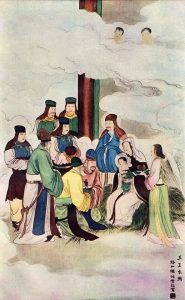
jesus heals deaf muteThe deaf man whom Jesus heals is so blessed. He is able to see Jesus, and He finds healing. Inspired by this miracle, we wish that we will also meet Jesus and He will heal our sickness and solve our problems. Thus, we come to various places where we believe Jesus will heal us. We visit pilgrimage sites, we attend prayer and worship meetings, we recite various novenas, and we become actively involved in the Church’s organizations. We believe that our faith in Jesus will save us. However, what if our prayers are not granted? What if our problems are not solved but rather grow in number? What if our sickness is not healed, but gets worse? What if we do not feel that we are saved? One time, I visited Flora [not her real name], a colon-cancer patient, and she asked me, “Brother, I have faith in God, and I faithfully serve the Church, but why am I suffering from this terrible sickness?” Surely, it was a tough question.

In today’s Gospel, Mark, the evangelist, seems to present Jesus as the traditional faith-healer. Just like other healers, Jesus touches the affected body parts of the sick person, namely his ears and tongue. Jesus also spits because, in ancient times, saliva is believed to have therapeutic effects. The act of spitting itself is also considered to drive away evil spirits, and some diseases are thought to come from these evil spirits. Then, Jesus groans to heaven and says a word, “Ephphatha!” This is like other faith-healers who utter certain formula of magic words or incantation as to affect the healing desired. What the people need is to have faith in the faith-healer, and viola, they are healed.

Inspired by this kind of model, we begin to treat Jesus as a faith-healer. We just need to have faith in Him, and the rest will be just perfect. We believe in Him, and we will be saved. That’s all! This image of Jesus is, however, distorted and even dangerous. We reduce Jesus as mere instant problem-solver and an ultimate trouble-shooter. Again, what if we do not get what we expect despite our effort to trust in Him?

Mark is inviting us to read his Gospel more profoundly.  There is something more remarkable that we, ordinary readers of the Bible, miss. In original Greek, the term for speech impediment or mute in the Gospel of Mark is “mogilalos.” This very term is also used in the book of Isaiah when the prophet prophesied, “…, and the mute tongue – “mogilalos” – sing for joy (Isa. 35:6 – our first reading)”. But, the prophecy is not only about healing the diseases, but it is about the holistic restoration of both the land and the people of God (see Isa 35:1-10). Mark does not only want to present Jesus as someone more powerful than faith-healers, but he points to us that Isaiah’s prophecy is being fulfilled. In Jesus, God has come to His people and redeemed us. Yet, what does it mean in our daily lives?

This means our faith in Jesus has to be bigger than ourselves, our personal problems and concerns. It is true that we may not have immediate healing to our sickness and solution to our problems, but our lives and our capacity to live and love are enlarged. And, as we become more loving, we begin to change also people around us. As people change, our world will become a better place.

Going back to Flora. After reflecting for a while, I answered Flora, “Well, I do not exactly know why God allows this sickness. But, as you can see, your family is doing their best to help you recover because they love you. Now, you are doing your best to get healed because you love them. See, God has made you bigger than yourself before. I believe faith is working in you.”

Br. Valentinus Bayuhadi Ruseno, OP

Tradition

Twenty Second Sunday in Ordinary Time [September 2, 2018] Mark 7:1-8, 14-15, 21-23

“You disregard God’s commandment but cling to human tradition.” (Mk. 7:8)

mano poIn today’s Gospel, Jesus seems to denounce all traditions. However, this position is rather simplistic and unattainable. The reason is that human beings are the creatures of traditions. Tradition comes from Latin word, “tradere”, meaning “to hand down”. Thus, crudely put, tradition is anything that has been handed down from our predecessors. Traditions range from something tangible like technologies and fashions, to something intangible like values, languages, sciences and many more. I remember how my mother taught me basic Christian prayers, like Our Father, Hail Mary, and the Rosary, and how my father would regularly bring us to the Church every Sunday. This is my family’s religious traditions. As an Indonesian living in the Philippines, I appreciate the “Mano Po” tradition among the Filipinos. This is a simple gesture of respect and blessing. The younger Filipinos are to hold a hand of older Filipino, and place it on their forehead.

Had Jesus renounced all the traditions, He should have stopped speaking Aramaic, refrained from teaching the people, begun removing all His Jewish clothes, and walking naked! Yet, Jesus did not do those things. Jesus respects traditions and acknowledges their importance. However, Jesus also recognizes that there are some traditions that are problematic and bring more problems rather than solutions. Immersed in the stream of traditions, Jesus invites us to discern well on what traditions that bring us true worship of God and genuine progress for human society.

Going back to the time of Jesus, the Jews are particular with ritual purity because they can only worship God when they are ritually clean. In view of this worship, they carefully avoid contamination from blood, dead body and unclean animals, or any objects that are in contact with these things. Since they are not sure whether their hands and utensils are ritually clean, especially if they come from the marketplace or the fields, they make it a habit to purify their hands and utensils to evade contamination from uncleanliness. Thus, various purification rituals develop into traditions for the Jews. The intention of these traditions is good because they assist people to worship God. However, some of the Pharisees put excessive emphasis on these traditions and make them absolute as if failure to observe these rituals means they fail to revere God. They confuse between the genuine worship that brings true honor for God, and other traditional practices that assist people in achieving this worship.

Jesus does not only invite us to discern carefully various traditions we have, but Jesus also offers us a more fundamental tradition in worshiping God. Instead of “handing down” practices or things, Jesus hands down something most important, namely His own life for God and us. Jesus gives up His Body and Blood, His total self, in the Last Supper, and this sacrifice reaches its summit at the Cross. His self-offering becomes the most pleasing worship to God, and procures the gift of salvation for all of us. Because of His Tradition, the world is no longer the same. Jesus hands over this great Tradition to His Disciples and throughout the generations, the Christians are faithfully offering this sacrifice of Jesus Christ in the Eucharist. As we partake Jesus’ self-offering, we are also empowered to hand down ourselves to others. This means we are invited to make our daily sacrifices, to persevere in doing good, and to be faithful to our commitments either as spouse, parents, priests, religious, or professionals. As we live this greatest tradition daily, we do not only make the world a better place, but to offer a pleasing worship to God.

Br. Valentinus Bayuahadi Ruseno, OP

Faith and Suffering

Twenty-First Sunday in Ordinary Time [August 26, 2018] John 6:60-69

“Master, to whom shall we go? You have the words of eternal life (Jn. 6:67).”

nazareno
photo by Harry SJ

In our today’s Gospel, Simon Peter and other disciples are facing a major crossroad: whether they will believe in Jesus’ words and they need to consume Jesus’ flesh and blood as to gain eternal life, or they will consider Jesus as insane and leave Him. They are dealing with hard and even outrageously unbelievable truth, and the easiest way is to leave Jesus. Yet, amidst doubt and lack of understanding, Peter’s faith prevails, “Master, to whom shall we go? You have the words of eternal life (Jn. 6:67).” It is faith that triumphs over the greatest doubt, a faith that we need also.


I am ending my clinical pastoral education at one of the busiest hospitals in Metro Manila. It has been a truly faith-enriching and heart-warming experience. I am blessed and privileged to minister to many patients in this hospital. One of the most memorable and perhaps faith-challenging encounter is with Christian [not his real name].

When I visited the pediatric ward, I saw a little boy, around six years old, lying on the bed. He was covered by a thin blanket and seemed in pain. Then I talked to the watcher who happened to his mother, Christina [not her real name]. She told me that the dialysis did not go well and he had a little fever. As the conversation went on, I discovered that Christian was not that young. He was actually 16 years old. I did not believe my eyes, but the mother explained that it was because his kidneys shrank to the point of disappearing, and because of this terrible condition, his growth stopped, and his body also shrank. Christian has undergone dialysis for several years, and due to recurrent infections, the hospital has been his second home. Christina herself lost his husband when he died several years ago, and stopped working to take care of Christian. The older sister of Christian had to stop schooling and worked to support the family.

Looking at Christian, and listening to Christina, I was hurt, and I was almost shedding tears. Despite my long theological formation, I cannot but question God. “Why do You allow this kind of terrible suffering to an innocent little man? Why do you allow his life and future be robbed by this illness?” My faith was shaken. Then, I was asking Christina how she was able to deal with the situation. She shared that it was really difficult, but she has accepted the condition, and she continues to struggle to the end because she loved Christian. I was also asking her what made her strong, and I cannot forget her answer. She said that she was strong when she saw little Christian’s smiles, and she felt his simple happiness.

Right there and then, through Christina, I felt God has answered my questions and doubts. It is true that terrible things happen, but God never leaves us. He was there in Christian’s simple smiles. He was there in little acts of love from Christina for her son. It is true that life is full of incomprehensive sufferings and heart-breaking moments, like the loss of loved ones, the broken relationships, the health and financial problems, and perhaps the recent revelation of sexual abuses done by many Catholic priests in the US. These can trigger our anger and disappointment towards God. We shall remain angry, confused and lost if we focus on the painful reality, but God is inviting us to see Him in simple and ordinary things that bring us comfort, strength, and joy. If Jesus calls us to have faith the size of mustard seed, it is because this kind of faith empowers us to recognize God in simple and ordinary things of our lives.

Br. Valentinus Bayuhadi Ruseno, OP

The Body of Christ in Our Lives

Twentieth Sunday in Ordinary Time [August 19, 2018] John 6:51-58

“Whoever eats my flesh and drinks my blood has eternal life…(Jn. 6:54)”

consecration 1
photo by Harry Setianto SJ

From Jesus’ time until the present, the Eucharist is one of Jesus’ most difficult teachings to understand, less to believe. People can easily agree with Jesus when He says that we need to love our neighbors as ourselves. People may have a difficult time to forgive and to love one’s enemy, but they will accept that vengeance and violence will not solve any issue. Perhaps, it is easier if we are simply to accept Jesus with our whole heart and believe that we are saved. However, Jesus does not only teach those beautiful things. Jesus goes to the very length of the Truth about our salvation. He is the Bread of Life, and this Bread of Life is His flesh and blood. Jesus does not only ask us to believe but to eat His flesh and drink His blood so that we may have eternal life.

For the Jews during that time, to eat human flesh is a total abomination and to drink blood, even the blood of an animal, is forbidden. Thus, when Jesus tells them to consume His Flesh and Blood, many Jews would think that He must be out of His mind. The people are following Jesus because they witnessed Jesus’ power in multiplying the bread, and they want to make him their leader. Yet, Jesus reminds them that they miss the mark if they simply follow Him because he feeds them with the ordinary bread. They should work for the Bread of Life that is Jesus Himself. Many of Jesus’ initial followers murmur, and eventually, they leave Him, because of this very hard teaching.

Going to our time, Eucharist remains the most difficult to understand. Are this small white tasteless bread and a drop of wine truly the Body and Blood of Christ? How can this ordinary food contain the fullness of Jesus’ divinity and humanity? Why should we bend our knee in adoration before an ordinary thing? The greatest minds ever born, from St. Paul to our contemporary scholars, have tried to explain the mystery, but none of their explanation is adequate. St. Thomas Aquinas who was able to write one of the most profound explanations of the Eucharist, eventually had to admit that this is the mystery of faith. He wrote in his hymn to the Blessed Sacrament, Tantum Ergo, “Præstet fides supplementum, Sensuum defectu (Let faith provide a supplement, for the failure of the senses).”

Indeed, the greatest faith is needed to accept the greatest mystery, because the humblest form of food brings us to the eternal life. Yet, this becomes one of the most beautiful Good News Jesus brings. The eternal life is not something we only gain afterlife, but Jesus makes this life available here and now.  If God is truly present in this small bread, then He is also present in our daily life, no matter ordinary it is. If Jesus is broken in the Eucharist, so He is embracing us in our darkest and broken moments of life. If Jesus who is the Wisdom of God, is contained in this little host, this Wisdom provides us with true meaning in our seemingly senseless lives.

What I am ending my pastoral work in the hospital, and one thing I most grateful is that I am given an opportunity to walk together with many patients, and to minister the Holy Communion to them. The Eucharist as the real presence of Christ becomes their consolation and strength. It becomes the greatest sign that God does not abandon them despite unsurmountable problems they need to face. Through the Body of Christ in the Eucharist and the Word of God in the Bible, we together journey to find meaning in the midst of painful and broken reality of sickness and death. In the Eucharist, our life is not just a bubble of intelligence in the endless stream of meaningless events, but participation in the eternal life of God.

Br. Valentinus Bayuhadi Ruseno, OP

Preaching Faith

Nineteenth Sunday in Ordinary Time [August 12, 2018] John 6:41-51

Amen, amen, I say to you, whoever believes has eternal life. I am the bread of life.  (Jn 6:47-48)

I am currently having my pastoral clinical education in one of the hospitals in the Metro Manila. Aside from visiting the patients and attending to their spiritual needs, we also have processing sessions guided by our supervisor.  During one of the sessions, our supervisor asked me, “Where is the ultimate source of your preaching?” As a member of the Order of Preachers, I was caught off guard. My initial reaction was to say our deeply revered motto, “Contemplare, at contemplata aliis tradere (to contemplate, and to share the fruits of one’s contemplation).” He pressed further and asked what is behind this contemplation. I began scrambling for answers. “Is it study? Community? Or prayer? He said that those were right answers, but there is something more basic. I admitted I am clueless. While he was smiling, he said “It is faith.”

His answer is very simple and yet makes a lot of sense. We pray because we have faith in God. We go to the Church because we have faith in the merciful God who calls us to be His chosen people. As for myself, I entered the Dominican Order because I have faith that generous God invites me to this kind of life. We preach because we trust in the loving God and we want to share this God with others.

I have spent years studying philosophy and theology at one of the top universities in the Philippines, but when I meet the patients with so much pain and problems, I realize that all my achievements, knowledge and pride are coming to naught. How am I going to help patients having troubles to settle hospital bills with astronomical amount?  How am I going to help persons in their dying moments? How am I going to help patients who are angry with God or disappointed with their lives? However, as a chaplain, I need to be there for them, and the best preaching is in fact, the most basic one. It is not preaching in the forms of theological discourse, philosophical discussion, and a long sermon or advice. To preach here is to sharing my faith and to receive their faith. I am there to be with them, to listen to their stories and struggles, to share a little humor and laughter, and to pray together with them. To pray for them is the rare moments that I pray with all my faith because I know that only my faith I can offer to them.

In our Gospel today, we read that some Jews are murmuring because they have no faith in Jesus. Yet, Jesus does not only call them to simply trust in Him, but also to literally eat Him because He is the Bread of Life. The faith in the Eucharist is indeed a tipping point. It is either the craziest of the crazy or the greatest faith that can move even a mountain. As Christians who believe in the Eucharist and receive Jesus in every Mass, we are tremendously privilege and challenged to have and express this faith. However, when we fail to appreciate this meaning and beauty of this faith, and only receive the Bread of Life in a routinely and mechanical fashion, we may lose altogether this faith.

As people who go to Church every Sunday and receive the Eucharist on a regular basis, do we truly believe in Jesus the Bread of Life? Does our faith empower us to see God in the midst of our daily struggles and challenges? Do we have faith that we can share when it matters most?

Br. Valentinus Bayuhadi Ruseno, OP

Amen

18th Sunday in Ordinary Time [August 5, 2018] John 6:24-35

“This is the work of God, that you believe in the one he sent.” (Jn. 6:29)

amen 1To say “Amen” is something usually we do in prayer. Commonly it is used to end a prayer. Our biblical prayers like Our Father and Hail Mary are usually concluded by amen. In several occasions, amen is mentioned more often. One of my duties as a hospital chaplain is to lead a prayer of healing for the sick. I always ask the family and friends who accompany the patients to pray together. Sometimes, they will say amen at the end of the prayer. However, some others will utter several amens within the prayer, and in fact, some people will say more amens than my prayer! In several occasions, amen is utilized outside the context of prayer. Preachers with a charismatic gift will invite their listeners to say amen. Surely, it is a good technique to keep the listeners awake!

Amen is a simple and yet very powerful word. Amen indicates our strong affirmation and agreement to something. It is the most concise manifesto of our faith. Amen is a biblical language, and in fact, it is a Hebrew word, that means “surely!” or “Let it be done!”. It is interesting to note that the early usage of amen in the Bible is to affirm curses and punishments (see Num 5:22; Deu 27:15). Fortunately, the Book of Psalm teaches us to use amen to affirm God’s blessings. Jesus Himself is fond of saying Amen. He uses amen to affirm the truth and power of His words (see Mat 5:18; Mat 8:5). There is a radical shift here. Unlike the usual practice to affirm God’s blessing, Jesus says amen to His own words. This is because Jesus’ words are God’s blessing per se. Thus, learning from the Biblical tradition, we say amen to affirm God’s blessings. Moreover, learning from Jesus, we say amen to express our faith in His words, and ultimately to Jesus Himself. Surprisingly, the first person in the New Testament to proclaim the great amen to Jesus is none other than His mother, Mary. Before the angel Gabriel, she says “Be it done to me according to your words,” in short, “Amen!” (see Luk 1:38)

One of the greatest amen we proclaim is when we receive the Eucharist. For hundreds of millions of Christian Catholics who receive the Holy Communion every Sunday, to say amen seems rather usual. Yet, it is supposed to be the most difficult amen we say. To believe and affirm that a little consecrated white bread is the Body of Christ containing the fullness of Jesus’ divinity and humanity is either totally insane or a sign of extraordinary faith. Yet, I do believe this is Jesus’ invitation to believe in Him in the Eucharist. Relating to this Sunday’ Gospel, Jesus says that the work of God is to believe in Jesus, the one sent by the Father (see John 6:29). Continue reading chapter 6 of this Gospel of John, we discover that to believe in Jesus means to accept that He is the Bread of Life, and those who eat this Bread will have eternal life (see John 6:51). Thus, to say faith-filled amen to the Eucharist is the fulfillment of Jesus’ words, and leading to the fullness of acceptance of Jesus as God and Savior.

As people who go to the Church every Sunday and receive the Eucharist in a regular basis, do we say our Amen in the fullness of our faith or is it just a mechanical repetition? Does our Amen enable us to recognize the daily blessing we receive? Like Mary, does our faith manifest in our daily actions, and make a difference in lives?

Br. Valentinus Bayuhadi Ruseno, OP

More than Bread

Seventeenth Sunday in Ordinary Time [July 29, 2018] John 6:1-15

Jesus said to Philip, “Where can we buy enough food for them to eat?” (Jn. 6:5)

barley loaves 4Unlike the other Gospels, the Gospel of John does not have the story of the Institution of the Eucharist on the Last Supper. However, it does not mean John the evangelist does not write anything about the Eucharist. In fact, John includes the most sublime discourse on the bread of life in his chapter 6. The chapter itself is relatively long, and the Church has distributed it into several Sunday Gospel readings (from today up to August 26). This discourse on the Bread of Life begins with the lovely story of Jesus feeding the multitude.

The story highlights Jesus’ question to Philip, “Where can we buy enough food for them to eat?” (Jn. 6:5) Philip, who seems to be familiar with the place, gives impossibility as an answer, “Two hundred denarii (or two hundred days’ wages) worth of food would not be enough…” (Jn. 6:7) Philip is just realistic, but he misses the mark. Jesus does not ask “how much,” but “where.” Perhaps, if Philip lives in the 21st century, he would direct Jesus to the nearest shopping mall! The point is that Philip would eagerly reduce the entire problem into a financial matter. Philip is not wrong because finance and economy are the backbones of our daily lives and even our survival as species, But money is not the only thing that matters. Philip will later see during the multiplication of the bread, that the “where” is pointing back to Jesus Himself. And as we will see in succeeding of chapter 6, the bread Jesus offers is not meant only for biological and economic benefits, but for eternal life.

I am currently having my clinical pastoral education at one of the hospitals in Metro Manila. One of the sacred missions entrusted to me as a chaplain is to distribute the Holy Communion to the sick. By ministering to the sick, especially through prayer and giving Holy Communion, I am reminded that the physical and biological aspects of our humanity are not the only things to be taken care of. It is true that many patients I have encountered are struggling with financial issues, like how to get the money to pay the hospital bills and expensive medicines. They have to wrestle also with their sickness that sometimes is incurable. I myself am at a loss on how to help them in these pressing concerns. However, often, the patients themselves are the ones who assure me that God will find a way, as He always does. What I do, then, is to affirm and strengthen their faith. Prayer and giving of the Holy Communion are the visible manifestations of Jesus’ real presence among us, and His presence is even more felt by the sick. Like our Gospel’s today, Jesus does not only take care of the physical aspect of our lives, but more fundamentally, He brings us to the deeper reality that our souls all long for. Paradoxically, in their hunger, they discover Jesus.

Being strong and healthy, we often forget this simple truth. Like Philip, we are more concerned with amassing wealth, attaining fame, and achieving success. Even as people serving the Church and the community, we are spending more time in organizing charity events, raising funds, and even arguing among ourselves over trivial matters. We miss the point why we are going to the Church. We miss encountering Jesus. We pray and hope that we are able to answer Jesus’ question rightly to Philip and us, “Where shall we find food for us to eat?”

Br. Valentinus Bayuhadi Ruseno, OP

Dying

Sixteenth Sunday in Ordinary Time [July 22, 2018] Mark 6:30-34

He said to them, “Come away by yourselves to a deserted place and rest a while.”  (Mrk 6:31)

mother-holding-childs-hand-who-260nw-232137526I am currently having my clinical pastoral education at one of the hospitals in Metro Manila. It has been one month since I started my pastoral visits. Since then, I have encountered people in different stages of illness. Many of them are fast recovering, some are taking more time to get cured, but some others have to face serious conditions. It is my ministry as a chaplain to accompany them in their journey of healing. I feel immense joy when I can witness their healing process, from one who is weak on the bed, to one who is standing and ready to leave the hospital.

However, the greatest privilege for me is that I am given a chance to accompany some persons in their journey of dying. It seems rather morbid because we are all afraid of death, and many still look at talking about death as taboo. Yet, in the hospital, battling death is a daily business for both the patients and the medical professionals. It is just that some are dying longer than the others. Death and dying are terrifying because they end our life, shatter our dreams, and cut our relationship with the people we love. I befriend a young man who just graduated with a lot of dreams in his heart, yet cancer robs him of his dreams as he has to struggle with painful and unforgiving chemotherapy. I also accompany a young woman who has kidney failures and has to spend a lot on her dialysis and medicine. She is not able to finish her school, to find a job, and to pursue her dreams. A young mother has to leave behind her young children in the province, move to Manila, jump from one hospital to another, just to be cured of her breast cancer. Her only wish is to be reunited with her children.

However, as I journey with them, I discover that dying is not only terrifying but also a privilege. It is true that dying can trigger many negative feelings like denial, anger, bitterness, and even depression. One can blame himself, or get angry with God. One who can only depend on the generosity of the people around him can feel helpless and even depressed. However, when the patient begins to accept his situation, dying can be transformed into a moment of grace. The dying person can now see what truly matter in life. As healthy persons, we do a lot of things; we work hard, we achieve many things. With so much in our hands, we tend to overlook what are the most essential in our lives. Dying slows us down, and gives us time to think clearly. It provides us the rare opportunity to settle the unfinished business and to do the missions God has entrusted to us. Paradoxically, the dying is the one who is truly living. As Mitch Albom writes in Tuesdays with Morrie, “The truth is, once you learn how to die, you learn how to live.”

In today’s Gospel, Jesus invites His disciples to rest. After working so hard for their mission, Jesus brings them to a deserted place. After success in their preaching, the disciples may easily be proud and be full of themselves. Yet, a genuine rest may settle them down and reorient themselves into Jesus, the source of their mission and success.

We do not have to suffer first from terminal illness as to experience dying. We can always avail the privilege of dying through moments of rest, prayer, and reflection. It is always good to reflect the words of St. John of the Cross, “in the twilight of life, God will not judge us on our earthly possessions and human successes, but on how well we have loved.”

Br. Valentinus Bayuhadi Ruseno, OP

Shake the Dust Off Your Feet

The fifteenth Sunday in Ordinary Time [July 15, 2018] Mark 6:7-13

Whatever place does not welcome you or listen to you, leave there and shake the dust off your feet in testimony against them. (Mk. 6:11)

feet and sandOur Gospel today speaks of the mission of the Twelve. They are sent to perform the threefold task: to exorcise the evil spirits, to heal the sick and to preach repentance. This threefold missionary duty reflects Jesus’ mission also in the Gospel according to Mark. To facilitate their preaching ministry, they need to travel light. No extra baggage, no extra burden. They need to travel two by two as a sign of communal and ecclesial dimension of the mission. They shall depend also their sustenance on the generosity of the people. And, when they face rejection, they shall shake the dust off their feet as a symbolic judgment against those who reject them. In ancient time, the Jews shake the dust off their feet when they reenter the Israel soil from the Gentile territories, as a sign of disowning and disapproval of the Gentiles nations.

I am presently having a clinical pastoral education in one of the hospitals in Metro Manila. The program trains me to become a good and compassionate chaplain. One of the basic tasks of a chaplain is to visit the patients, and during our visit, we are to listen to the patients and journey with them as a companion of the sick. To a certain extent, I feel that I am participating in the mission of the twelve Jesus’ disciples, especially in the ministry of healing the sick. However, unlike Jesus’ disciples, I am aware that I do not have the gift of miraculous healing. I often pray for and together with the patients, but so far there is no instantaneous healing, and patients continue to struggle with their sickness. However, the healing is not limited only to physical and biological aspects. It is holistic and includes the emotional and spiritual healing. Our doctors, nurse, and other hospital staffs have done their best to cure their patients’ illness, or at least to help them to bear their illness with dignity. I do believe that they are essentially and primarily Jesus’ co-workers in the ministry of healing. However, with so much load work they carry and limited time and energy, they have to focus on what they are trained for. The chaplains are there to fill in the gaps, to tie the loose ends, to attend to the emotional and spiritual needs.

In my several visits, I am grateful that many are welcoming my presence. However, at times, I feel also unwelcome. At this kind of moment, I am tempted to “shake the dust off my feet” as the testimony against them. After all, the disciples are instructed to do that. However, at the second thought, I try to understand why the patient is not so welcoming. Perhaps, they are in pain. Perhaps, they need rest. Perhaps, the medication affects their emotional disposition. Perhaps, they still have some serious issues that they need to deal with. With this awareness, I cannot simply judge them as “bad guy”. Trying to understand them and empathize with them, I also “shake the dust off my feet”, but this time, it is not the testimony against them, but it is to shake the “dust” of misunderstanding, rash judgment, and apathy. A chaplain is one who carries the mission of Christ to bring healing, and if I address rejection and difficulty with anger and hatred, then I just create more pain and illness.

Whether we are medical professionals or not, all of us are called to participate in this healing ministry of Jesus Christ. All of us are wounded and in pain with so many problems and issues we have in life. Thus, it is our call to bring healing to our family, to our friends, to our society, to our natural environment, and to our Church. This begins with our willingness to “shake the dust off our feet”, the dust of fear and wrong pre-judgment, the dust of rush emotional reactions in the face of challenging situations.

Br. Valentinus Bayuhadi Ruseno, OP

Lack of Faith

Fourteenth Sunday in Ordinary Time [July 8, 2018] Mark 6:1-6

He was amazed at their lack of faith.” (Mk. 6:6)

holy family carpentry shopWhen Jesus teaches in the synagogue in Nazareth, the listeners are amazed by his wisdom. Jesus speaks like a mighty prophet. However, the people soon make a background check on Jesus, and they realize Jesus’ identity and his family background.  Nazareth is a small rural town in Galilee, and everyone knows everyone in this kind of setting. The people of Nazareth know Jesus as a son of a carpenter, and himself a carpenter. They are familiar also with Jesus’ family and relatives.

It is just impossible for a carpenter, an artisan who spends most of his time doing manual labor to acquire such profound wisdom. The people of Nazareth also recognize that Jesus is a son of Mary and they know His relatives. It seems the people are aware that Jesus’ relatives are just ordinary and poor Jews. None of them seems to possess a notable personality. Jesus should stay where He belongs: an ordinary Jewish and a poor laborer. Thus, to become a charismatic preacher and an admirable rabbi is simply unthinkable. Jesus, recognizes the root cause: lack of faith.

We are living two millennia after Christ, but unfortunately, this debilitating mentality continues to exist and even thrive in our midst. It is a mentality that boxes people in their limitations and suppresses their potential to grow and improve. This is the mentality that fuels fundamentalism, racism, negative stereotypes, and other destructive ideologies that divide people. Once a loser, always a loser; once an Asian, always an Asian; once an addict, always an addict. Yet, this mentality does not only reside the big ideologies, but it also affects our personal lives: when we think we are always right, and others are always wrong; when we believe that we are holier than others; when we only trust ourselves; when we refuse to forgive others; when we cling to our pride.

Dealing with this crippling mentality, Jesus brings to the fore the reality that humans are beings with faith. With faith, that is the spiritual gift from God; we are empowered to go beyond our own cultural, mental, bodily limitations. In the Gospels, faith enable God’s power to do much more in persons’ lives, and the same faith inspires us to see God’s works in us. The paralytic is healed because of the faith of his friends who carry him to Jesus (Mark 2:1-6); the woman with hemorrhage is healed because of her faith (Mark 5:25-34); Jesus tells Jairus, the synagogue official to have faith and Jesus brings his daughter to life (Mark 5:35-43).

I am currently doing my pastoral work as a chaplain in one of the hospitals in Metro Manila. My duty is to visit the patients, to give blessing and minister the Holy Communion, but fundamentally, to be with them and listen to them. I cannot do much in term of physical cure, but I realize that sickness is not only physical. Healing includes psychological and spiritual aspects. I journey with the patients in their joy, sorrow, frustration, and hope. I accompany them as they try to resolve some issues like anger, broken relationship, and painful memories. As I walk with them, I also realize my weaknesses. Yet, despite this brokenness, people with faith have always found strength and courage to heal, to go beyond themselves and live a meaningful life.

Br. Valentinus Bayuhadi Ruseno, OP