

25th Sunday in Ordinary Time. September 18, 2016 [Luke 16:1-13]
“Make friends for yourselves with dishonest wealth, so that when it fails, you will be welcomed into eternal dwellings (Luk 16:9).”
 We were created in the image of God. Thus, our true happiness is only in God. As St. Augustine would say, “You have created us for Yourself, O God, and our hearts are restless until they rest in You.” St. Teresa of the Avilla would echo the same truth when she simply said, “God alone suffices.” But, we were also born into the real human body within a complex and concrete world. As we journey toward God, we cannot totally separate our soul from the various mundane concerns. Even the monks and nuns living in monasteries will still work hard to fulfill their daily and basic needs.
Our humanity and temporal aspects of our life are integral part of who we are. They are blessing and gift of God. We must not be enslaved by money, wealth and other material possessions. Certainly, easier said than done. Who among us are concerned with the latest version of our cellular phone? Who among us spending hours just to choose most fashionable dress? In a bigger scale, corruption, injustice and exploitation are the offshoots of this attachment to this temporal aspect of our lives. Thus, the proper and prudent thing to do is to place the gift of our body and temporal dimension of our life in the service of God and others. I do believe that in order to preach well, it is imperative for the preachers to take care of their health. As an ancient Latin proverbs goes, ‘Mens sana in corpore sano’ (healthy mind in healthy body).
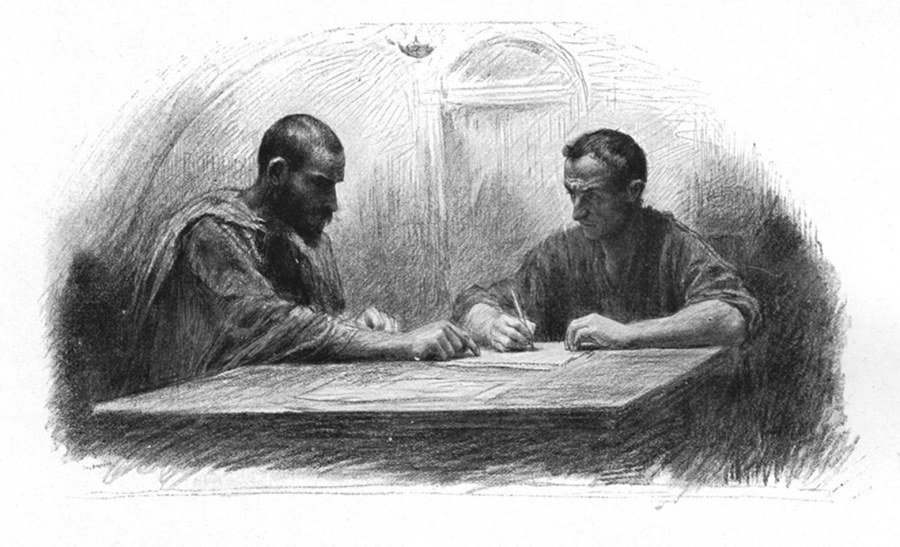
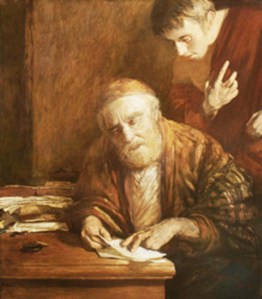
Learning from the parable of the dishonest steward, Jesus taught us to be like the steward in dealing with worldly things. In ancient Israel, for a master entrusting the business to his steward was a common practice. Some stewards would manipulate their position and raise wealth by practice of usury. They charged the borrowers of his masters’ property with high interest. Unfortunately, the steward was caught with this usurious practice as well as squandering his master’s wealth. To save his life, he chose to be smart. He met the debtors and to ask them to rewrite the debt’s notes. He decided to erase the interest that would go to him and let them pay the original amount. The borrowers would be indebted to him, and he might save himself. Like the steward, we need to know what truly matters for our happiness and salvation, as well as well aware of the place of worldly goods in the totality of our lives.
Jesus becomes a splendid example for all us. He is divine and spiritual being. He controlled the forces of nature, He overpowered the evil spirits, and He forgave sins. Though, He was divine, He did not disregard his humanity as useless. He, in fact, was humanly practical and respectful of His own Jewish culture. He observed Jewish traditions and customs, He worshipped God in the synagogues and He taught using the language that His original listeners would understand. Thus, He is truly God and truly man. Indeed, our salvation rest in this balance and unity of this spiritual and bodily aspects of our humanity.
Br. Valentinus Bayuhadi Ruseno, OP
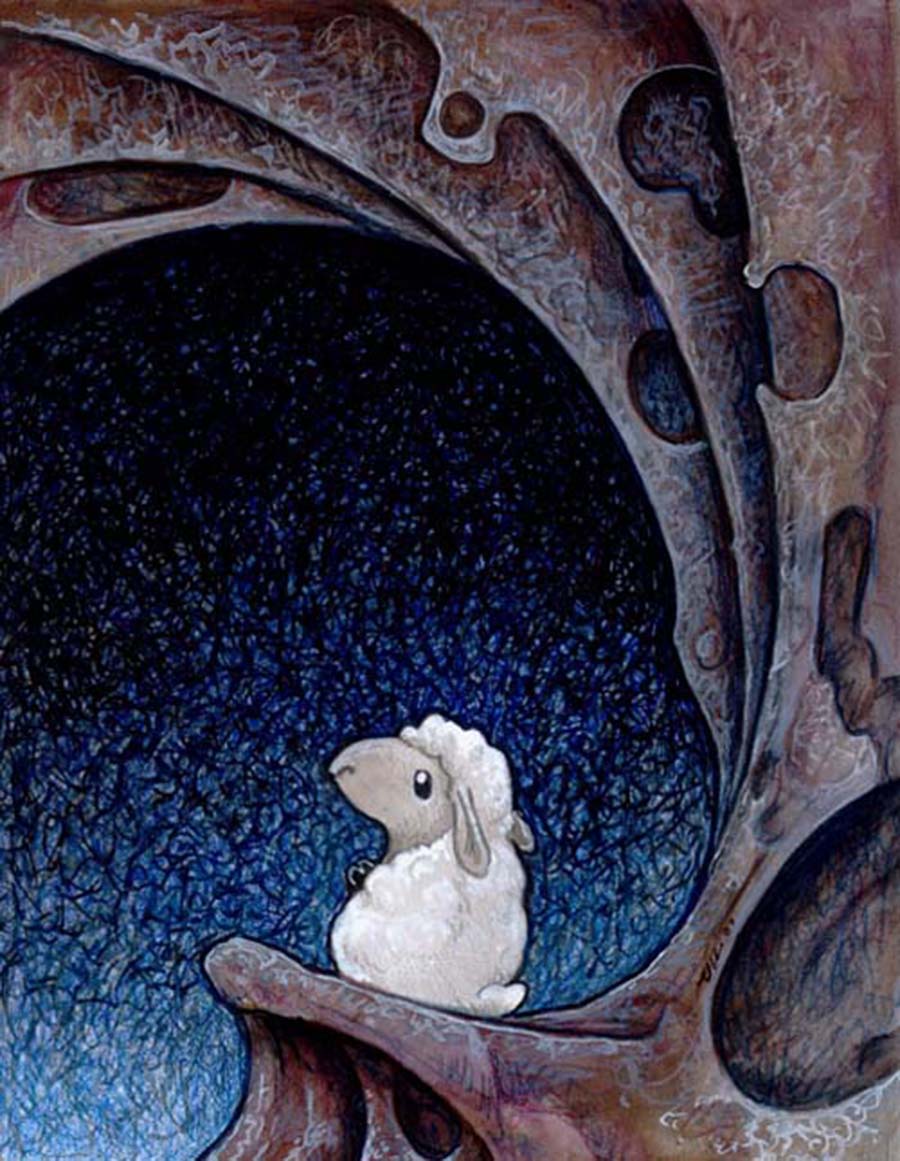
 The parable of the lost sheep subtly speaks of who we are fundamentally to Jesus. We are all His sheep and He is our shepherd. Whether we faithfully remain inside the sheepfold or go astray, we are still His sheep.
 Being a disciple is an essential character of Jesus’ followers. In our time, a disciple may mean a student of particular teachers or schools. Like Br. Bayu is a student of the University of Santo Tomas, Manila. In ancient time, especially in Eastern and Jewish tradition, being a disciple has a different understanding. A disciple would not only accept his master’s teachings, but literally follow his Master wherever he would go and stay. Disciples would not only learn on various insight, but also witness and imitate how their master lived his life. They shared their master’s meal, and they were part of their teachers’ joy and sadness. Thus, being a disciple is not only about an intellectual education, but also a holistic formation. It is fundamentally sharing the very life of the master himself.
 In the time of Jesus, Jews had their own special way of dining. Instead of sitting or standing the Jews would recline on a low table where food and wine are served. Reclining was the sign of free man in Greco-Roman culture. The slaves stood and served the guests. Aside reclining posture, their place in the dining table indicated their importance to the host. The closer they were to the host, the more significant they were to the host. Thus, persons sitting beside the host were expected to be the most important guests.
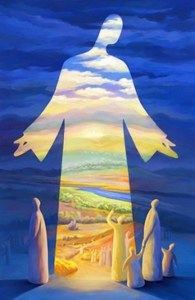 Salvation is both a gift and a choice. It is free yet it is never cheap. It is a gift because it is freely given by God and no one earns it. Yet, it is a choice because we make all the efforts to receive it and make it ours. Through His death and resurrection, Jesus has made available the grace of salvation for everyone. But, we need to participate in His work of salvation by living out the gift of faith in our daily lives.
 In the midst of all super-advanced digital gadgets and nano technologies, making fire seems rather archaic and a bit useless. Why will we set a fire and cause pollution, if we have energy-saving LED lamp in our house? However, making fire is the earliest and one of the most significant human invention. Fire revolutionized the lives of our ancestors and gave us substantial advantages over other creatures. Fire brings warm and comfort in chilling and unforgiving weathers. Fire protects us from bigger and fiercer predators. Fire provides light that shed off the darkness. Fire also is needed to forge other inventions and technologies, like various tools and weapons.
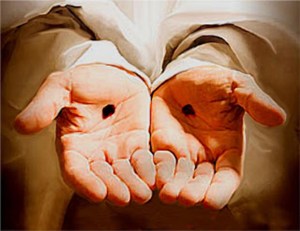 Are we ready to sell everything we have and follow Jesus? Are we prepared to give up our dreams and ambitions for the Kingdom? Are we willing to place our hearts, our treasures where no moth can destroy and no thief can steal?
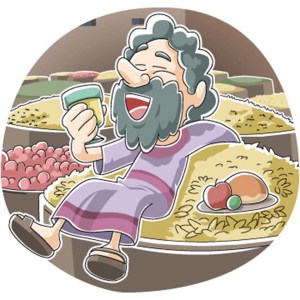 Greed is one of the most sickening sins. It can plague practically anyone, rich and poor, young and old, lay people and even the leaders of the Church. Greed as the inordinate desire for wealth or money. Greed breeds corruption, stealing, cheating and violence. Greed produces injustice and poverty. And injustice and poverty cause nothing but suffering of countless people and permanent destruction to our mother earth.
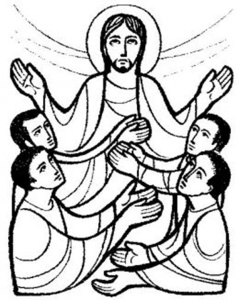 When we begin to pray, we acknowledge the presence of God. Not only that, we also recognize that we are dependent on Him. No wonder that the most basic and common prayer is a prayer of petition. We pray to ask favor from God. We beg for good health, success in career, passing examination, protection from dangers, and more. Several times, I wrote that God is not a spiritual ATM and that our prayer is an ATM card. After ‘inserting our prayer’ and ‘inputting a correct amount of request’, God will produce what we wish. But, I have realized that every morning, when I pray before the Blessed Sacrament and the image of our Lady of La Naval de Manila, my prayer is a prayer of petition. I ask God for so many things, for good breakfast, for easy quiz, sometimes for suspension of classes. Certainly, I also pray for people I love and people I promised to pray for.
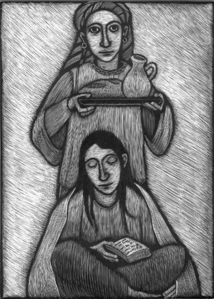 Few weeks ago, I participated in a seminar-workshop on personality recognition and development. The activity was organized by the ministry of Lectors of Santo Domingo Parish and facilitated by seasoned speaker Sr. Leticia Garcia, DC. As I expected, the test result told me that I was dominantly introvert, meaning I was silent and more reserved guy. I found strength in solitude. I shared this treats with many of the participants. Yet, not few were actually our opposite. They were extrovert, meaning they were people-oriented and action-driven. They were recharged in interaction with others. Sr. Garcia made a point that the difference must not bring us into animosity. When properly developed, our personalities shall complete each other and contribute in the service of God.
