

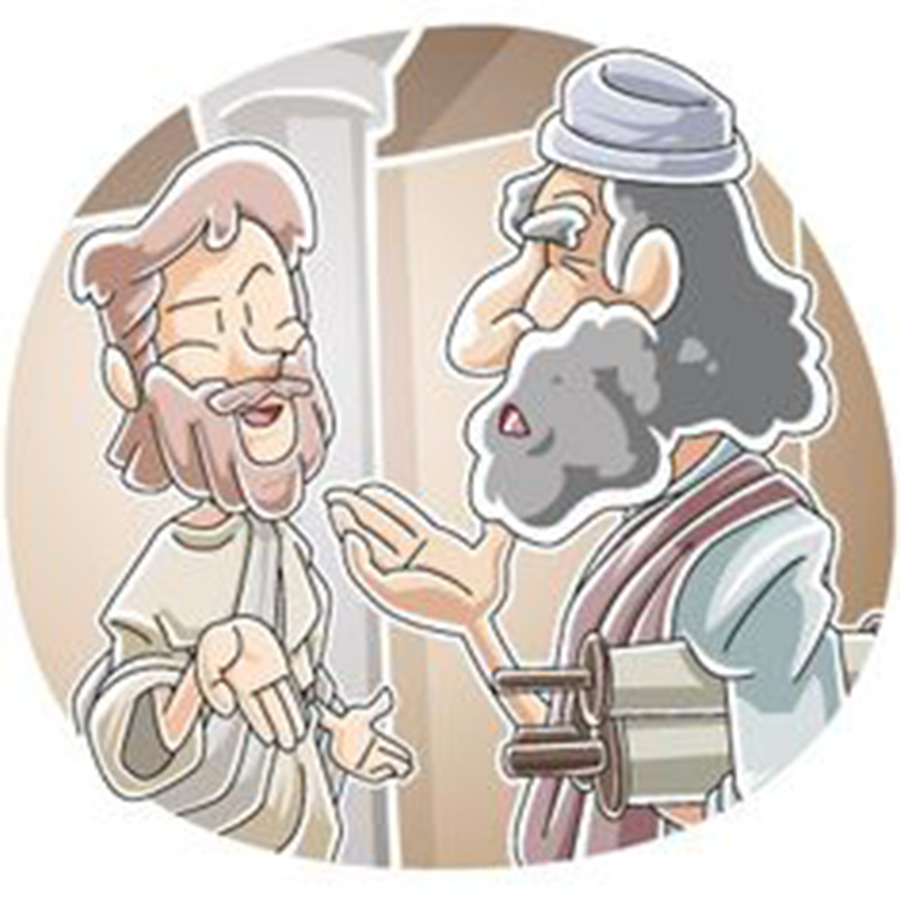
15th Sunday in Ordinary Time. July 10, 2016 [Luke 10:25-37]
“Teacher, what must I do to inherit eternal life? (Luk 10:25)”
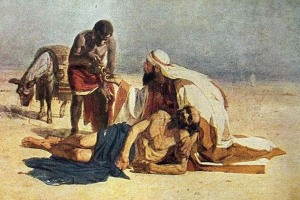 The scholars of the Law were representing the intellectual elite in Jewish society at the time of Jesus. While the rest of Jewish people were struggling to fill their stomach and living in bare necessity, this group had a rare access to good education. We may reasonably suspect that the scholars were affluent enough to read and study the Torah extensively and undisturbed. Compared to the ordinary Jews, they were experts with the details and interpretation of the Law. No wonder, they could easily develop the vice of pride.
Luke described the scholar as one who ‘stood up’ and ‘test’ Jesus. Clearly, he came out with his intellectual superiority and confronted Jesus to prove that he was far better than Him. He might think, “Son of carpenter; he knows nothing!” But, his pride brought him nothing but defeat. He attacked Jesus with the most difficult question he had in his arsenal. “Teacher, what must I do to inherit eternal life?” Yet, Jesus was aware of his intention. Jesus reminded him that the answer laid at the very heart of Torah itself, and allowed him to answer for himself. “You shall love the Lord, your God, with all your heart, with all your being, with all your strength, and with all your mind, and your neighbor as yourself (Deu 6:5).” The answer was so simple yet true that every Jew who were with Jesus, would immediately give their nod, and perhaps their little victorious smile.
Refusing to accept his defeat, the scholar made a last-ditch attempt to justify himself. He asked Jesus who is this ‘neighbor’ he had to love. With His ingenuity and wit, Jesus then presented him one of the loveliest parables ever told: the Good Samaritan. To love means to love radically. To love means to do good even to those who do not deserve our love. Yet, the genius of Jesus is not only to force the scholar to acknowledge his defeat, but He allowed the scholar to reflect on his life’s deeper purpose as a Jew.
At times, we are so confident with ourselves. We feel we know a lot. We engage in discussion and debate on various issues in the Church and society. We take sides, either on the progressive team or conservative group, and fight endlessly. We learn theology, spirituality and leadership, and we feel we are better than the rest of Church. We serve a particular ministry for so long, that we look down at newcomers in the group. Unconsciously, we become like this scholar of the Law who stands up and puts other into test. I confess also at times, I manifest this prideful attitude. When I teach, I often project myself as the all-knowing teacher and throw the hardest questions to my students. It gives a sense of pleasure when I know I am the only one who can answer the questions. Lord, have mercy on me!
Yet, Jesus reminds us today a simple yet fundamental truth: pride only brings defeat, only humility can bring us eternal life. And this humility can be best practiced in love. To borrow the words of St. Paul, “And if I have the gift of prophecy and comprehend all mysteries and all knowledge; if I have all faith so as to move mountains but do not have love, I am nothing. If I give away everything I own, and if I hand my body over so that I may boast but do not have love, I gain nothing (1 Cor 13:2-3).”
Br. Valentinus Bayuhadi Ruseno, OP

 The life of Jesus’ disciples is difficult. It is all the more difficult because we are sent to preach peace. Nothing is harder to sell than peace. In the world intoxicated with fundamental ideologies and narrow-mindedness, violence has become daily food. In Syria and Iraq, the war seems far from an end, and every day, it claims countless of innocent lives. Suicide bombings and shooting rampage insanely become common occurrences. Just recently, some unidentified individuals detonated themselves inside a busy airport in Istanbul, Turkey, killing more than 40 people and injuring countless others. Few weeks back, a heavily armed guy opened fire inside a gay bar in Orlando, US, and murdered more 50 persons. It was the worst case in the US history.
 Following Jesus is difficult. In today’s Gospel, He demands that we let go three things. The first is our concern for our enemies. It seems easy to ignore those people whom we don’t like, but in reality, they consume our attention and energy. My friend shared to me how he was bullied at his officemates, and this drained so much of his productivity and focus in work. Often, like James and John, our anger moves to seek revenge and even violence. “Lord, do you want us to call down fire from heaven to consume them (the Samaritans who rejected them)?” Yet, Jesus reminds us to leave these behind.
 What will be your answer to Jesus’ question “Who do you say that I am?” We may come up with multiple answers. He is my God, my savior, my friend or my brother. But, we seldom ask, “Do we really understand Jesus’ question? Do we get the right answer? Why is it that Peter would confess that Jesus is Christ of God in the first place?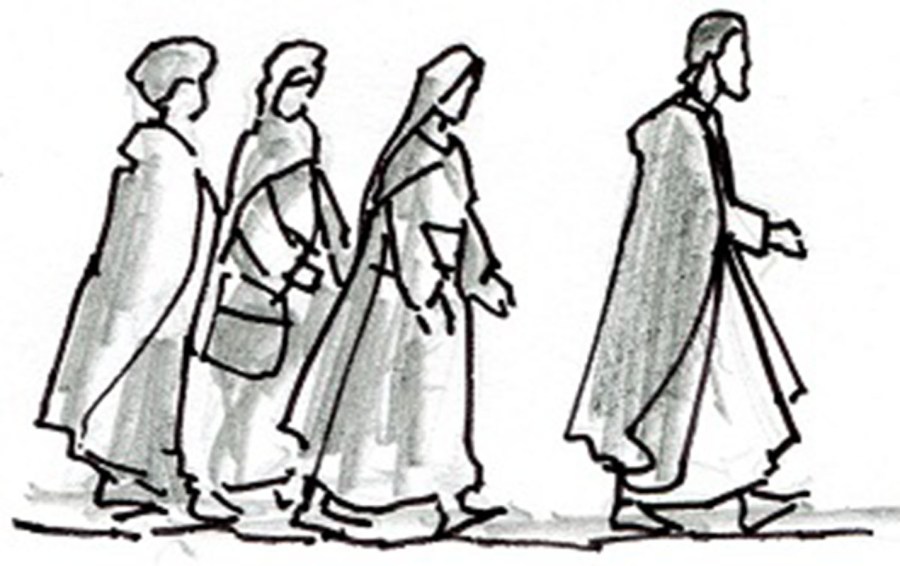
 Luke has a keen eye for the roles of woman in the life of Jesus and the Church. From the beginning of his Gospel to the end, he made sure that women have important role to play. Among the four Gospels, only Matthew and Luke wrote the infancy narrative. While Matthew had Joseph as the main character, Luke chose Mary as his protagonist. Thanks to Luke, we are able to mediate on the great stories of the Annunciation, the Visitation, and the Presentation. Due to Luke also, we may sing Mary’s Magnificat.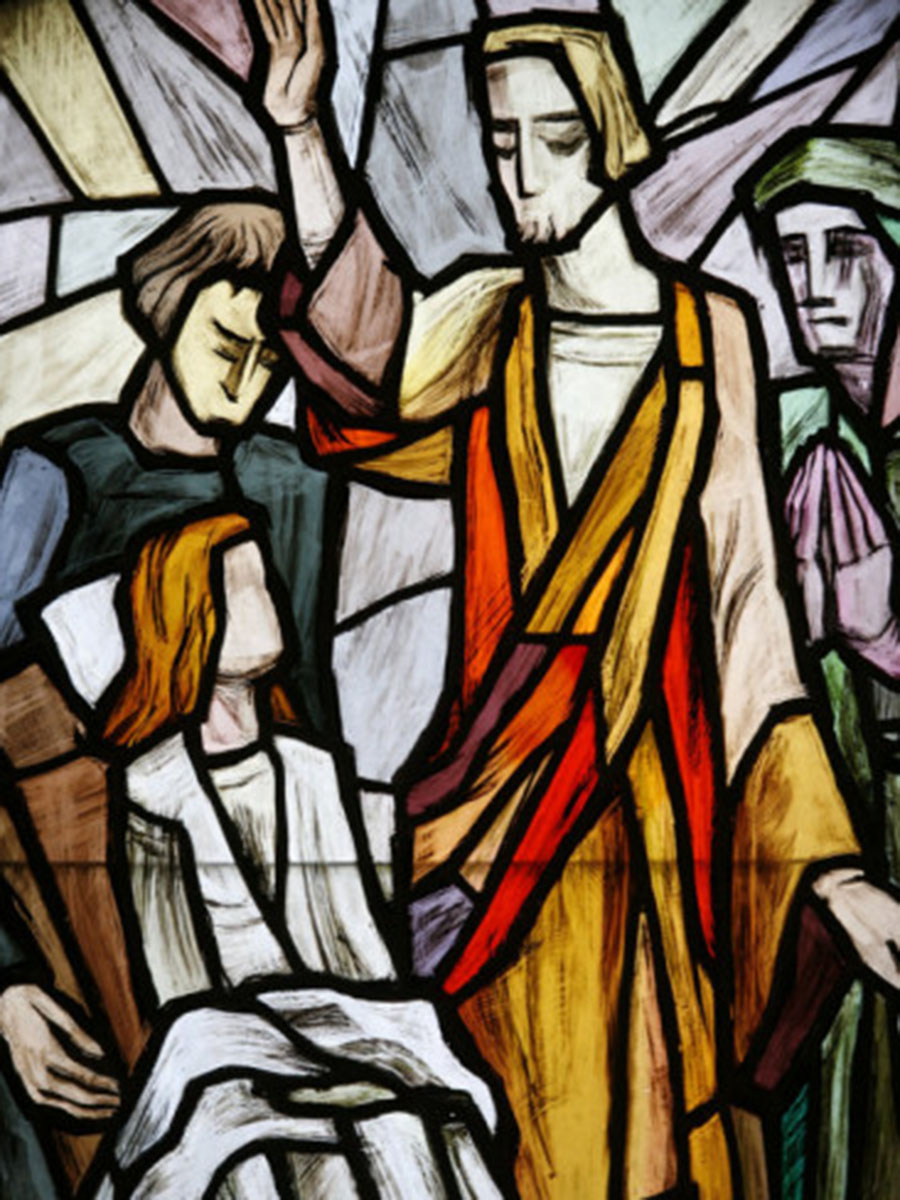
 The bible seems to contain a lot of death. Almost all the characters in the Bible tasted death. Some were lucky and enjoyed peaceful end, like Abraham, David and Joshua. Yet, a lot more endured tragic one. Abel was murdered by his own brother. Moses passed away just at the doorstep of the Promised Land. James the son of Zebedee was beheaded, and countless unnamed individuals who were victims of wars, diseases and calamities. In today’s Gospel, a young man died presumably due to illness and left his widowed mother alone. The Bible time was bad period to live.
 One of my personal ministries is to be a blood donor. If ever someone needs a blood transfusion, I do my best to donate my blood and if possible, visit the ailing person. In biology, we learn that blood is a crucial element of our body that transports nutrition and oxygen to various body parts and also fight the harmful elements inside our body. Thus, losing too much blood will bring us to critical condition even death. No wonder that blood is closely associated with life and I hope that a little blood I share, may save lives.
 Salah satu pelayanan pribadi saya adalah menjadi donor darah. Jika ada seseorang yang membutuhkan transfusi darah, saya berusaha untuk donorkan darah saya dan jika mungkin, mengunjungi orang sakit tersebut. Dalam biologi, kita belajar bahwa darah merupakan elemen penting dari tubuh kita yang membawa nutrisi dan oksigen ke berbagai bagian tubuh dan juga melawan elemen-elemen berbahaya di dalam tubuh kita. Dengan demikian, kehilangan terlalu banyak darah akan membawa kita ke kondisi kritis bahkan kematian. Tidak heran jika darah berterkaitan erat dengan kehidupan, dan saya berharap bahwa sedikit darah yang saya donorkan, bisa menyelamatkan orang lain.
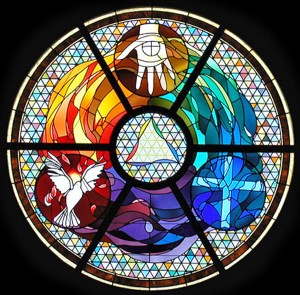 The mystery of the Holy Trinity is the most foundational yet the most difficult teaching of the Catholic Church. The greatest minds in the Church, like St. Augustine of Hippo, St. Thomas Aquinas and Karl Rahner have attempted to fathom the mystery, but their explanations hit a giant wall. One day, when St. Augustine was strolling along the beach, meditating the mystery of the Holy Trinity, the holy bishop saw a young boy digging a hole on the sand. He came close and noticed that the boy was trying to move the sea water inside that small hole. St. Augustine then told the lad that what he did was futile. Then, suddenly the little boy replied, ‘It is the same thing, when you try to put the Trinity inside your small head.’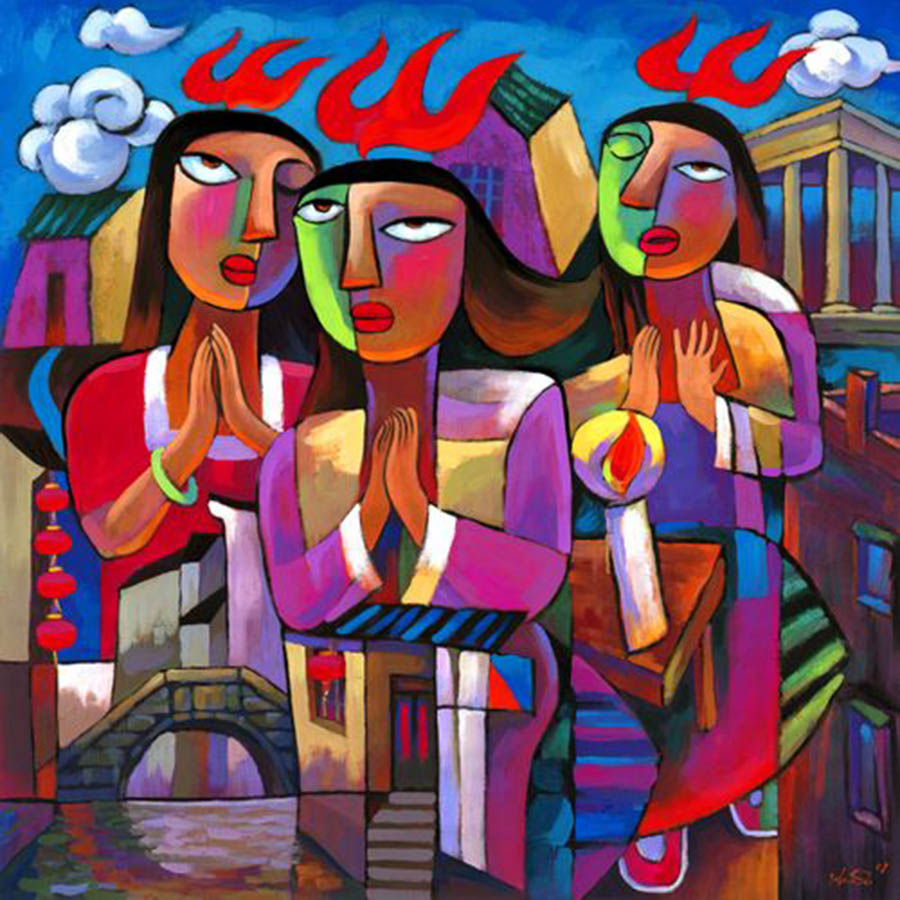
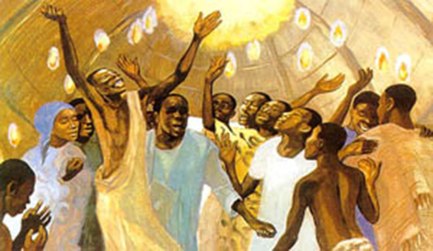 My first time to attend a Catholic Charismatic prayer meeting was around 10 years ago in Singapore. It was a gathering characterized by upbeat music and intensified prayers. As the prayer was getting intense, suddenly I witnessed some of participants began to experience kind of trance and utter unintelligible words. For a while I was dumbfounded, but soon realized that they may actually speak in tongue. This may refer to the one of the Holy Spirit’s charismatic gifts, described no less than St. Paul himself. “For one who speaks in a tongue does not speak to human beings but to God, for no one listens; he utters mysteries in spirit (1 Cor 14:2)”
