

Palm Sunday of the Lord’s Passion
April 9, 2017
Matthew 26:14—27:66
“Eli, Eli, lema sabachthani?” which means, “My God, my God, why have you forsaken me? (Mat 27:46)”
 Many theologians and ordinary Christians alike are baffled by these words of Jesus on the cross. If Jesus is God, how is it possible for Him to be separated from God? Why does the most compassionate God abandon His beloved Son? It simply does not make any sense. The Catechism of the Catholic Church tries to explain that it is a consequence of sin. Not that Jesus had committed any sin, but He endured the sin of the world on the cross. The greatest effect of sin is separation from God. Thus, carrying the heaviest burden of sin, Jesus could not but feel the chilling effect of alienation from His own Father.
However, for early Christians and Jews who listened to the last words of Jesus on the cross, they understood that Jesus was actually reciting the beginning line of Psalm 22. The tradition considers this as a psalm of lamentation. In fact, the Book of Psalms contains a lot of psalms of lament. Despite its sorrowful nature, this kind of psalm remains true to its form, which is a prayer inspired by the Holy Spirit. Reading closely Psalm 22, we discover that the psalmist tried to express his desperate situation because of the enemies’ assault. The attack was so intense and brutal that he felt that even God abandoned him. Yet, despite the feeling of abandonment, he kept lamenting to God as if He was just near. Indeed, the psalmist was frustrated and complaining, but even this, he turned it into a prayer. Though it was the only prayer he could utter, it was an authentic prayer, without any pretension and pride. This is the paradox: when the psalmist became honest with himself and sufferings, God was closest to him.
In the cross, Jesus felt an excruciating pain both on physical and emotional levels. His triumphal entrance to Jerusalem in which He was welcomed as the King, the Son of David and Prophet, was a jubilant event, yet in a matter of days, many people who had followed Him turned to be His enemies and shouted, “Crucify Him!”. All his great successes as a preacher, teacher and wonder maker, were scattered. He was about to die as a criminal, a shame to Himself and His family. In this extreme sorrow, He decided to pray. Not any prayer, but the prayer that is most fitting to a suffering faithful Jew: a Psalm of Lament. This is the paradox of the cross: He felt abandonment and frustration, but in this prayer, this was the moment Jesus was closest to His Father.
We share also this experience of the cross in our lives. We might face terrible financial situation and uncertainty in our works. We might have health conditions that drain our resources. We might fail in our marriages or friendships. We might just lose our beloved family member. We are misunderstood and accused of wrongdoings we never committed. We might be wronged unjustly. We suddenly lose the works or the ministries we have built on for years. It seems we cannot see any light at the end of the tunnel. Yet, even in the horrifying experiences of the cross, Jesus teaches us to pray. Not any prayer, but a prayer of lamentation, a sincere prayer that expresses deepest desires, angst and pains. It is true that our situations might not change at all, but as we articulate ourselves and our situations, we are helped to find meanings, consolation, and hope. This is the paradox: in the prayer of lament, as we strip our pride and pretentiousness, even when we are in the lowest pit of our lives, God is actually closest to us.
Br. Valentinus Bayuhadi Ruseno, OP

 Banyak teolog maupun umat awam kesulitan untuk memahami kata-kata Yesus di kayu salib ini. Jika Yesus adalah Tuhan, bagaimana mungkin Dia bisa terpisahkan dari Allah? Lalu, mengapa Allah yang penuh kasih bisa-bisanya meninggalkan Putra-Nya? Ini tidak masuk akal. Katekismus Gereja Katolik mencoba menjelaskan bahwa ini adalah konsekuensi dari dosa. Bukan karena Yesus telah melakukan dosa, tetapi Dia menanggung dosa dunia di kayu salib. Efek terbesar dari dosa adalah terpisahnya kita dari Allah. Dengan demikian, membawa beban terberat dari dosa, Yesus tidak bisa tidak merasakan efek mengerikan keterasingan dari Bapa-Nya sendiri.
 Today’s Gospel contains my personal favorite verse: Then, Jesus wept. It is the shortest verse in the Bible, yet it is also one of the most powerful. However, its strength does not rest on any superhuman power that can multiply bread or calm the storm, but on the humanity of Jesus.
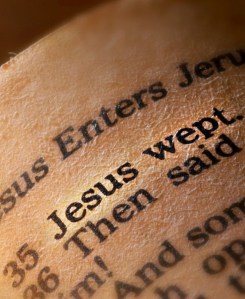 Pada Injil hari ini ada ayat favorit pribadi saya: Maka Menangislah Yesus. Ini adalah ayat terpendek dalam Alkitab, namun juga salah satu yang paling kuat. Namun, dayanya tidak terletak pada kekuatan super Yesus yang dapat memperbanyak roti atau menenangkan badai, tetapi justru pada kemanusiaan Yesus.
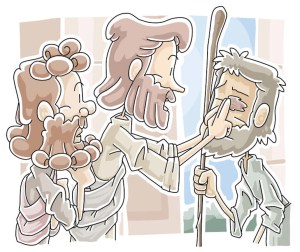 Kebutaan adalah cacat yang paling mengerikan. Kita akan kehilangan penglihatan, hidup dalam kegelapan total untuk seluruh kehidupan kita. Ketidakmampuan untuk melihat keindahan dunia dan orang-orang yang kita cintai. Dalam Perjanjian Lama, kebutaan memberikan seseorang kelemahan besar. Kita tahu cerita Ishak yang ditipu oleh Yakub, anaknya sendiri sehingga ia bisa mendapatkan berkat, dan ini semua dimulai ketika Ishak kehilangan penglihatannya. Menjadi buta juga menghambat mereka untuk memenuhi kewajiban agama. Hukum Musa mengatur bahwa orang buta tidak bisa mempersembahkan korban kepada Tuhan, bahkan hewan kurban pun tidak boleh buta (lihat Im 21-22). Orang-orang berdosa juga dikaitkan dengan kebutaan (lihat Ul 28:29). Itulah sebabnya murid-murid Yesus bertanya apakah kebutaan seseorang disebabkan oleh dosanya sendiri atau orang tuanya.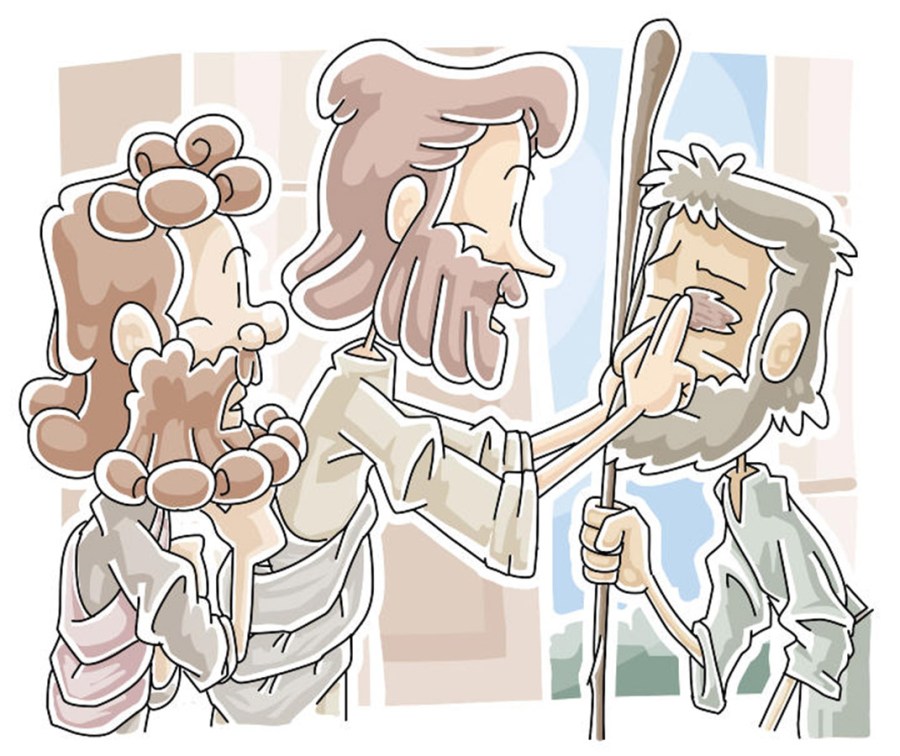
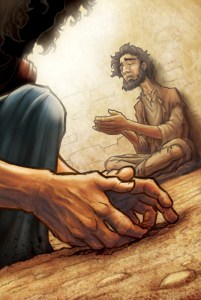 Blindness is the most dreadful disability for many of us. It is the loss of vision, living in total darkness for our entire lives. Blindness is the inability to see the beauty of the world and people who love us. In the Old Testament, blindness puts one in great disadvantages. The well-known story of Isaac who was tricked by his own son Jacob so that he might get his blessing began with Isaac losing his eyesight. Blind people are also hindered from fulfilling their religious duties. The Law of Moses dictates that the blind cannot offer sacrifice to the Lord,p; even blind animals can not be offered to the Lord! (see Lev 21-22). Blindness was associated with sinners. (see Deu 28:29). That is why Jesus’ disciples asked whether the man’s blindness was caused by his sin or his parents’ sin.
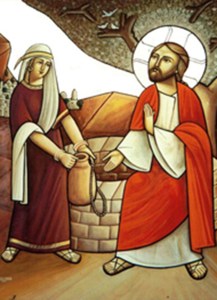 Many of us will see Jesus’ conversation with the Samaritan woman as something ordinary, a chat between a man and a woman. But, if we go back to the time of Jesus, we will discover it as unthinkable. This Samaritan woman embodied what the Jews hated most. Firstly, despite their common ancestry, the Samaritans and the Jews were excommunicating each other. Despite worshipping the same God, they condemned one another as religious heretics and they proclaimed their own religion as the true one. No wonder, sometimes, the encounter between the two turned violent and the Romans had to quell the riots.

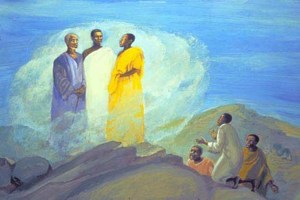 In the Bible, the mountain is the place where God meets His people. On Mount Horeb, Moses saw the burning bush and received his calling to lead Israel out of Egypt’s slavery (see Exo 3). On Mount Sinai, after the liberation of the Hebrews, Moses met the Lord and received the Law in the Mount Sinai (see Exo 19). Again on Mount Horeb, Elijah discovered the gentle presence of God (1 Kings 19:11-15).
 Dalam Alkitab, gunung adalah tempat di mana Allah bertemu umat-Nya. Musa melihat semak duri yang menyala dan menerima panggilannya untuk memimpin Israel keluar dari perbudakan Mesir di Gunung Horeb (lihat Kel 3). Setelah pembebasan, Musa bertemu dengan Tuhan dan menerima Hukum Taurat di Gunung Sinai (lihat Kel 19). Elia menemukan kehadiran Allah yang lembut di Gunung Horeb (1 Raja 19:11-15). Pemazmur juga melihat gunung sebagai tempat Tuhan bersemayam (seperti Mzm 3:5; 24:3). Bahkan, salah satu gelar Tuhan adalah El Shaddai, yang mungkin berarti Tuhan adalah gunung yang kuat (Kej 17:1).
