

13th Sunday in Ordinary Time [A]
June 28, 2026
2 Kings 4:8-11, 14-16a
In today’s first reading, the Church presents us with the story of the prophet Elisha and a woman from Shunem who recognized him as a “holy man of God.” This invites us to reflect on who Elisha was, and what it truly means to be called a holy man of God.
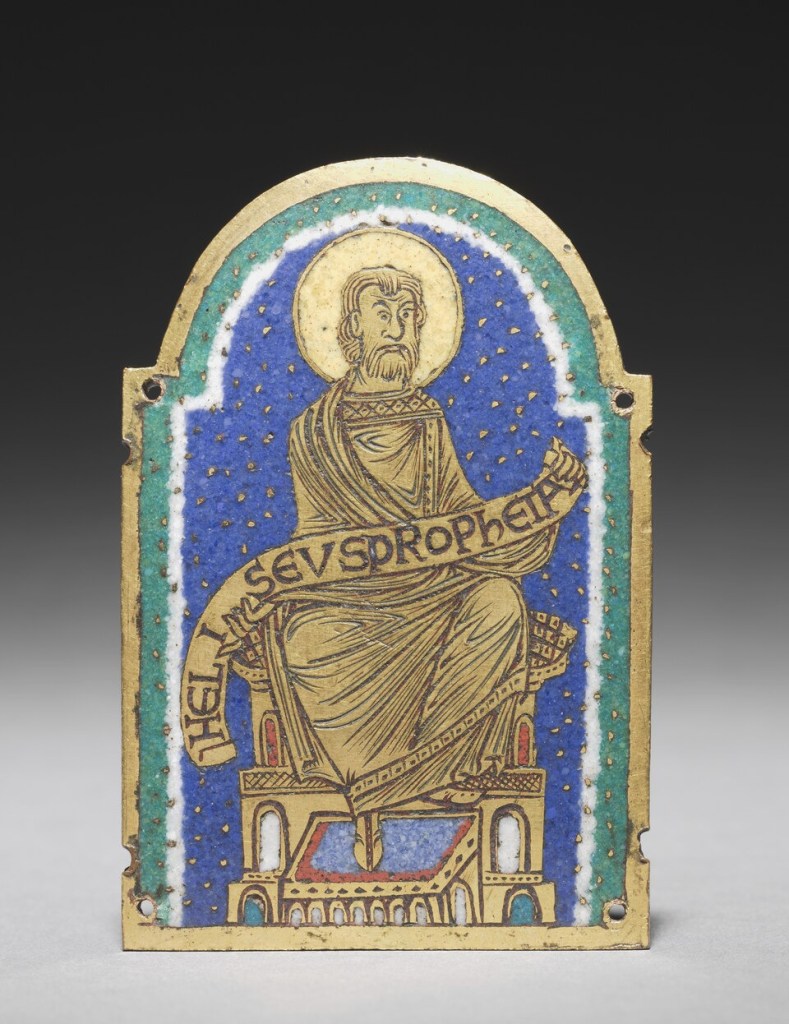
Elisha was the successor of another great prophet, Elijah. Coming from a farming family, Elisha was plowing a field with twelve yoke of oxen when Elijah called him—a detail that indicates his family’s wealth and affluence. Yet, he chose to leave everything behind to follow Elijah and become his disciple (1 Kings 19:19-21). Before Elijah ended his earthly mission and was taken into heaven by a chariot of fire, he asked Elisha what parting gift he desired. Elisha requested “a double portion of your spirit.” This wish was granted, and Elisha eventually performed even more miracles than his teacher (2 Kings 2:11-12).
Like Elijah, Elisha was a fearless prophet who spoke truth to power, criticizing kings for their evil deeds and idol worship. However, Elisha became especially famous for his numerous miracles. He purified the contaminated waters of Jericho (2 Kings 2:19-22), multiplied loaves of bread to feed hungry people (2 Kings 4:42-44), and healed Naaman, a commander of the army of Aram, from his leprosy (2 Kings 5:1-14). Even after Elisha’s death, his miraculous power continued; a dead man was restored to life the moment his body touched Elisha’s bones (2 Kings 13:20-21).
Elisha’s relationship with the Shunammite woman highlights not only his miraculous power, but also the beauty of warm hospitality and friendship. Whenever Elisha visited Shunem, this woman offered him a place to rest and eat. She recognized that he was a “holy man of God.” In return for her faith and outstanding generosity, her deepest prayers were answered: despite her husband’s old age, she conceived and bore a son just as Elisha promised.
To be a holy man of God means to be consecrated to the Lord and set apart for His unique mission. Elisha shared a profound friendship with God, and the Lord used him as an instrument of divine goodness, mercy, and judgment for Israel and the surrounding nations. The Shunammite woman recognized this spiritual reality. When she approached Elisha, she was seeking his powerful intercession before God. Crucially, she did not merely ask for a favor; she also did her part to love and please God by showing great kindness to His prophet.
This beautiful friendship between Elisha and the woman of Shunem mirrors our own relationship today with the saints—the holy men and women of God. In our daily lives, we look to the cloud of witnesses in heaven. We ask the Virgin Mary, the most blessed of all women, to pray for us and assist us in our many needs. We turn to St. Michael the Archangel for protection against evil, and we approach St. Joseph, the patron of a happy death, to comfort those who are dying. Like the Shunammite woman, we do not just beg for favors; we also offer the saints our love, our prayers of thanksgiving, and our sincere friendship.
I experienced this spiritual friendship firsthand when I was struggling to complete my doctoral dissertation. Every door seemed closed, and I felt completely stuck. In that moment of distress, I turned to Our Lady for help. At the same time, I made a personal promise to her that I would visit her shrines, preach about her intercession, and promote devotion to her. Without waiting long, the obstacles vanished, the way forward opened, and I was able to complete my studies on time. Our friendship with the holy men and women of God is a powerful gift, because it ultimately brings us closer to the heart of God Himself.
Rome
Valentinus Bayuhadi Ruseno, OP
Guide questions:
How willingly do we leave behind our own comforts and security, like Elisha did, when we feel God calling us to follow Him more closely? Do we show active hospitality and kindness to the people God sends into our lives, or do we only approach God and His saints when we need a favor? In what ways can we cultivate a deeper, more intentional friendship with the Virgin Mary and the saints so that our devotion brings us closer to the heart of Jesus?

