


15th Sunday in Ordinary Time. July 10, 2016 [Luke 10:25-37]
“Teacher, what must I do to inherit eternal life? (Luk 10:25)”
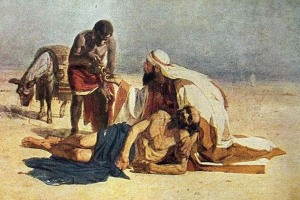 The scholars of the Law were representing the intellectual elite in Jewish society at the time of Jesus. While the rest of Jewish people were struggling to fill their stomach and living in bare necessity, this group had a rare access to good education. We may reasonably suspect that the scholars were affluent enough to read and study the Torah extensively and undisturbed. Compared to the ordinary Jews, they were experts with the details and interpretation of the Law. No wonder, they could easily develop the vice of pride.
Luke described the scholar as one who ‘stood up’ and ‘test’ Jesus. Clearly, he came out with his intellectual superiority and confronted Jesus to prove that he was far better than Him. He might think, “Son of carpenter; he knows nothing!” But, his pride brought him nothing but defeat. He attacked Jesus with the most difficult question he had in his arsenal. “Teacher, what must I do to inherit eternal life?” Yet, Jesus was aware of his intention. Jesus reminded him that the answer laid at the very heart of Torah itself, and allowed him to answer for himself. “You shall love the Lord, your God, with all your heart, with all your being, with all your strength, and with all your mind, and your neighbor as yourself (Deu 6:5).” The answer was so simple yet true that every Jew who were with Jesus, would immediately give their nod, and perhaps their little victorious smile.
Refusing to accept his defeat, the scholar made a last-ditch attempt to justify himself. He asked Jesus who is this ‘neighbor’ he had to love. With His ingenuity and wit, Jesus then presented him one of the loveliest parables ever told: the Good Samaritan. To love means to love radically. To love means to do good even to those who do not deserve our love. Yet, the genius of Jesus is not only to force the scholar to acknowledge his defeat, but He allowed the scholar to reflect on his life’s deeper purpose as a Jew.
At times, we are so confident with ourselves. We feel we know a lot. We engage in discussion and debate on various issues in the Church and society. We take sides, either on the progressive team or conservative group, and fight endlessly. We learn theology, spirituality and leadership, and we feel we are better than the rest of Church. We serve a particular ministry for so long, that we look down at newcomers in the group. Unconsciously, we become like this scholar of the Law who stands up and puts other into test. I confess also at times, I manifest this prideful attitude. When I teach, I often project myself as the all-knowing teacher and throw the hardest questions to my students. It gives a sense of pleasure when I know I am the only one who can answer the questions. Lord, have mercy on me!
Yet, Jesus reminds us today a simple yet fundamental truth: pride only brings defeat, only humility can bring us eternal life. And this humility can be best practiced in love. To borrow the words of St. Paul, “And if I have the gift of prophecy and comprehend all mysteries and all knowledge; if I have all faith so as to move mountains but do not have love, I am nothing. If I give away everything I own, and if I hand my body over so that I may boast but do not have love, I gain nothing (1 Cor 13:2-3).”
Br. Valentinus Bayuhadi Ruseno, OP

 Para ahli Taurat mewakili kelompok intelektual elit di dalam masyarakat Yahudi pada zaman Yesus. Saat sebagian besar dari bangsa Yahudi berjuang untuk mengisi perut mereka, kelompok ahli Taurat memiliki akses langka untuk mendapatkan pendidikan yang terbaik. Kita bisa menduga bahwa para ahli hukum Taurat adalah cukup kaya untuk membaca dan mempelajari Kitab Suci bangsa Yahudi tak terganggu. Dibandingkan dengan orang-orang Yahudi biasa, mereka tentunya ahli dengan berbagai rincian dan interpretasi hukum Taurat. Tidak heran, mereka bisa dengan mudah menjadi tinggi hati atau sombong.
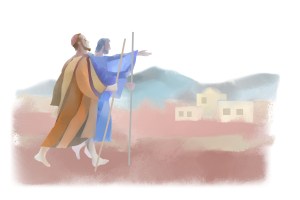 The life of Jesus’ disciples is difficult. It is all the more difficult because we are sent to preach peace. Nothing is harder to sell than peace. In the world intoxicated with fundamental ideologies and narrow-mindedness, violence has become daily food. In Syria and Iraq, the war seems far from an end, and every day, it claims countless of innocent lives. Suicide bombings and shooting rampage insanely become common occurrences. Just recently, some unidentified individuals detonated themselves inside a busy airport in Istanbul, Turkey, killing more than 40 people and injuring countless others. Few weeks back, a heavily armed guy opened fire inside a gay bar in Orlando, US, and murdered more 50 persons. It was the worst case in the US history.
 Menjadi murid Yesus adalah sulit. Dan hal ini semakin sulit karena kita diutus untuk mewartakan kedamaian. Sekarang ini, kedamaian adalah hal yang paling sulit dipromosikan. Dalam dunia yang mabuk dengan ideologi fundamentalis dan kepimikiran sempit, kekerasan telah menjadi makanan sehari-hari. Di Suriah dan Irak, perang tampaknya tak akan berakhir, dan setiap harinya, mengklaim nyawa orang-orang tak berdosa. Bom bunuh diri dan penembakan gila-gilaan menjadi kejadian umum. Baru-baru ini, beberapa orang yang tidak dikenal meledakkan diri di dalam bandara sibuk di Istanbul, Turki, menewaskan lebih dari 40 orang dan melukai banyak lainnya. Beberapa minggu yang lalu, seorang pria bersenjata melepaskan tembakan di dalam sebuah bar di Orlando, AS, dan membunuh lebih 50 orang. Ini adalah kasus terburuk dalam sejarah AS.
 Following Jesus is difficult. In today’s Gospel, He demands that we let go three things. The first is our concern for our enemies. It seems easy to ignore those people whom we don’t like, but in reality, they consume our attention and energy. My friend shared to me how he was bullied at his officemates, and this drained so much of his productivity and focus in work. Often, like James and John, our anger moves to seek revenge and even violence. “Lord, do you want us to call down fire from heaven to consume them (the Samaritans who rejected them)?” Yet, Jesus reminds us to leave these behind.
 Mengikuti Yesus itu sulit. Dalam Injil hari ini, Dia menuntut ada tiga hal penting yang harus kita berani lepaskan. Hal pertama adalah fokus kita pada musuh atau orang tidak kita sukai. Sepertinya mudah untuk mengabaikan orang-orang yang tidak kita sukai, tetapi dalam kenyataannya, mereka mengambil banyak perhatian dan energi kita. Seringkali, seperti Yakobus dan Yohanes, kemarahan kita mendorong kita untuk membalas dendam, bahkan dengan cara kekerasan. Pikiran dan emosi kita terkuras oleh kebencian dan menunggu saat pembalasan. “Tuhan, apakah Engkau mau, supaya kami menyuruh api turun dari langit untuk membinasakan mereka (orang Samaria yang menolak Yesus)?” Namun, Yesus mengingatkan kita bahwa hal ini harus kita lepas.
 What will be your answer to Jesus’ question “Who do you say that I am?” We may come up with multiple answers. He is my God, my savior, my friend or my brother. But, we seldom ask, “Do we really understand Jesus’ question? Do we get the right answer? Why is it that Peter would confess that Jesus is Christ of God in the first place?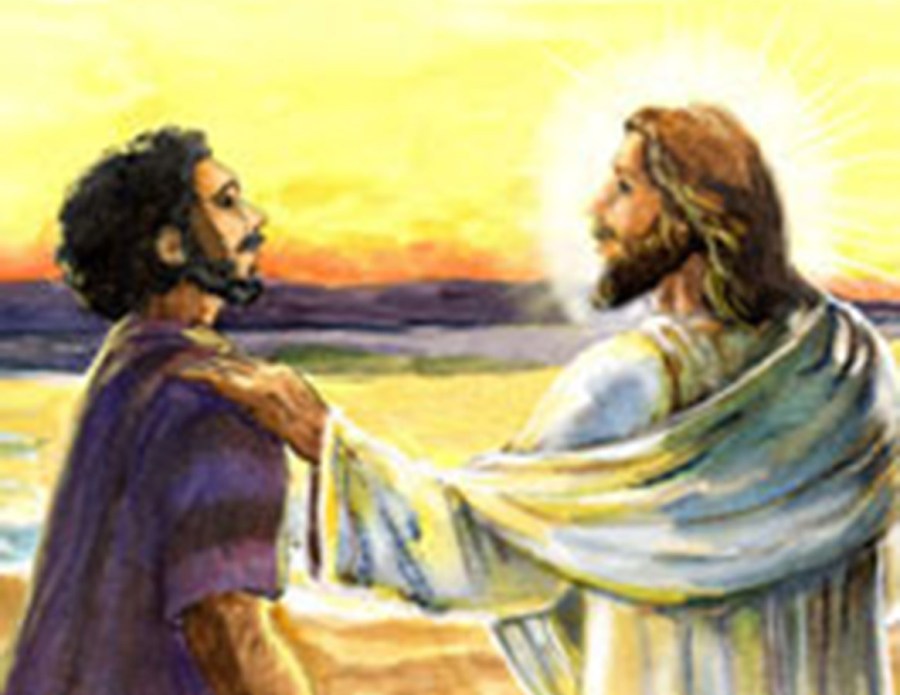
 Apa yang akan menjadi jawaban kita saat Yesus bertanya “Menurut kamu, siapakah Aku ini?” Kita mungkin menjawab: Dia adalah Tuhan, Juruselamat, sahabat atau saudara. Tapi, apakah kita sudah mengerti dengan baik pertanyaan Yesus? Apakah jawaban kita inilah yang Yesus harapkan? Mengapa jawaban Petrus adalah Kristus dan bukan jawaban lainnya?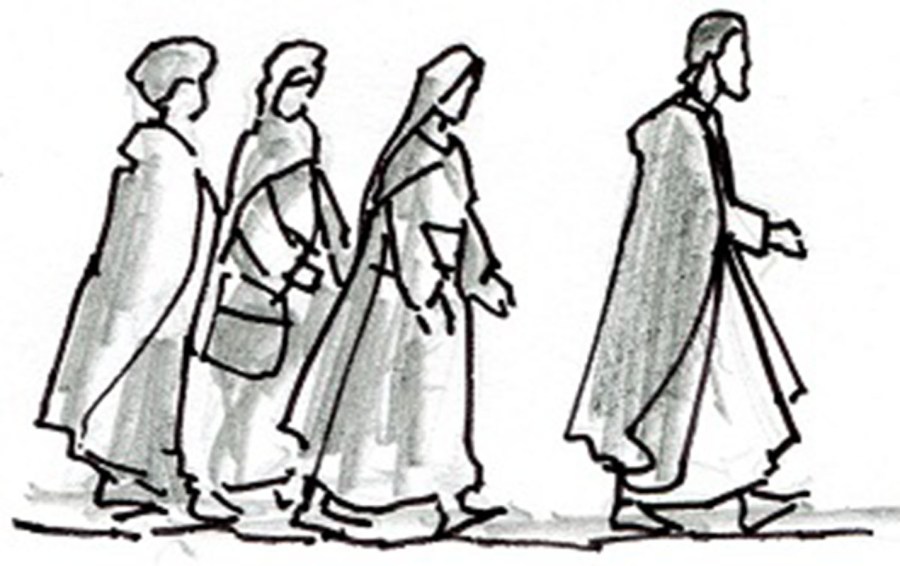
 Luke has a keen eye for the roles of woman in the life of Jesus and the Church. From the beginning of his Gospel to the end, he made sure that women have important role to play. Among the four Gospels, only Matthew and Luke wrote the infancy narrative. While Matthew had Joseph as the main character, Luke chose Mary as his protagonist. Thanks to Luke, we are able to mediate on the great stories of the Annunciation, the Visitation, and the Presentation. Due to Luke also, we may sing Mary’s Magnificat.
 n khusus bagi peran perempuan dalam kehidupan Yesus dan Gereja. Di Injilnya, ia memastikan bahwa perempuan memiliki peran penting. Di antara keempat Injil, hanya Matius dan Lukas menulis kisah kelahiran Yesus. Sementara Matius memiliki Joseph sebagai karakter utama, Lukas memilih Maria sebagai protagonisnya. Karena Lukas, kita bisa merenungkan kisah-kisah besar seperti Maria menerima Kabar Gembira, Maria mengunjungi Elizabet. Karena Lukas juga, kita bisa ikut bernyanyi Kidung Maria atau Magnificat.
 In Medio Ecclesiae