

29th Sunday in Ordinary Time [B]
October 20, 2024
Heb 4:14-16
The letter to the Hebrews calls Jesus our high priest. As Catholics, we are not foreign to the word ‘priest’ since they are our liturgy or worship leaders. Yet, the author of the letter to the Hebrews does not call Jesus just as another priest but as the high priest. Why does the author of this letter address Jesus as this title? What makes a high priest different from other priests? What is it for us?
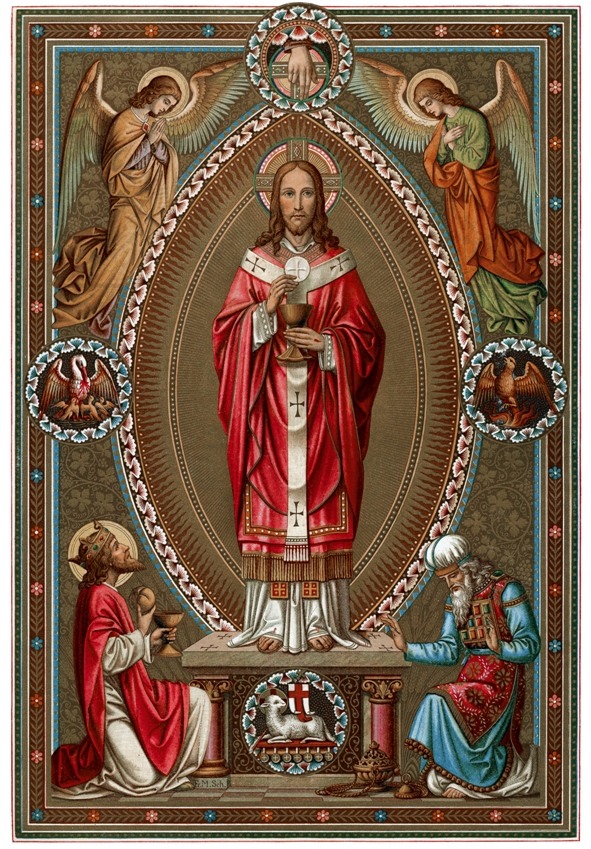
Firstly, we need to clarify the word’ priest.’ While it is true that a priest is appointed to oversee worship, he has one specific responsibility that only he can execute. In the Bible and many ancient civilizations, the most essential part of ritual worship is the sacrifice. Commonly, the sacrifice consists of offering something precious to God. In ancient agrarian societies, animals like lambs and crop yields like wheat grains may serve as sacrificial offerings. In the case of animal sacrifice, the ritual begins with the people handing the animal to the priest, and then the priest will slaughter the animal by separating the blood and the body. After this, the priest brings the animal to the altar to be burned as a symbol that God has accepted the sacrifice. In this sense, a priest serves as a mediator between God and the people.
The leader among the priests is called ‘high priest.’ The Hebrew word for high priest is כֹּהֵן גָּדוֹל, kohen gadol, literally means “great priest.” In Greek, the high priest is ἀρχιερεύς, archiereus, and it can be translated as “the first priest.” Obviously, the high priest has to lead the other priests and manage the entire worship system. Yet, his fundamental function is to be the primary mediator between God and the people. Thus, only he can officiate the most solemn worship. In the Bible, only the high priest can offer the holy sacrifice on the day of atonement (Yom Kippur) and enter the holy of holies to atone for the nation’s sins (see Lev 16).
With this biblical background, we can better understand why the author of the letter to the Hebrews calls Jesus our high priest. Jesus is the supreme mediator between God the Father and us. Moreover, Jesus is far more perfect than other high priests because He is divine. Yet, Jesus is also fully human, experiencing all sufferings and various human problems and weaknesses. Because of this, He knows precisely our struggles and failures. But, most of all, our high priest also becomes the perfect sacrifice to Father as He offers Himself on the cross. Then, when we approach Jesus in humility, we can be hopeful that Jesus will accept us because He knows us, and finally, He will bring us to the Father and may receive mercy.
Questions for reflection:
How do we look at our priests in our parish/church? Do we recognize them as people who bring us closer to God? Do we know that the Eucharist is a sacrifice of Jesus Christ and, thus, our true worship of God? What sacrifice do we bring to the Eucharist? What makes us unable to approach Jesus? Shame, fear, anger, disappointment, resentment, inadequacy?
 In Medio Ecclesiae