

Second Sunday in Ordinary Time [C]
January 18, 2026
John 1:29-34
Today, John the Baptist identifies Jesus as “the Lamb of God who takes away the sin of the world.” For us as Catholics, this title is one of the most familiar, for we proclaim it at every Mass moment before receiving Holy Communion. But do we understand what it means? Why must we make this specific acclaim before approaching the altar?
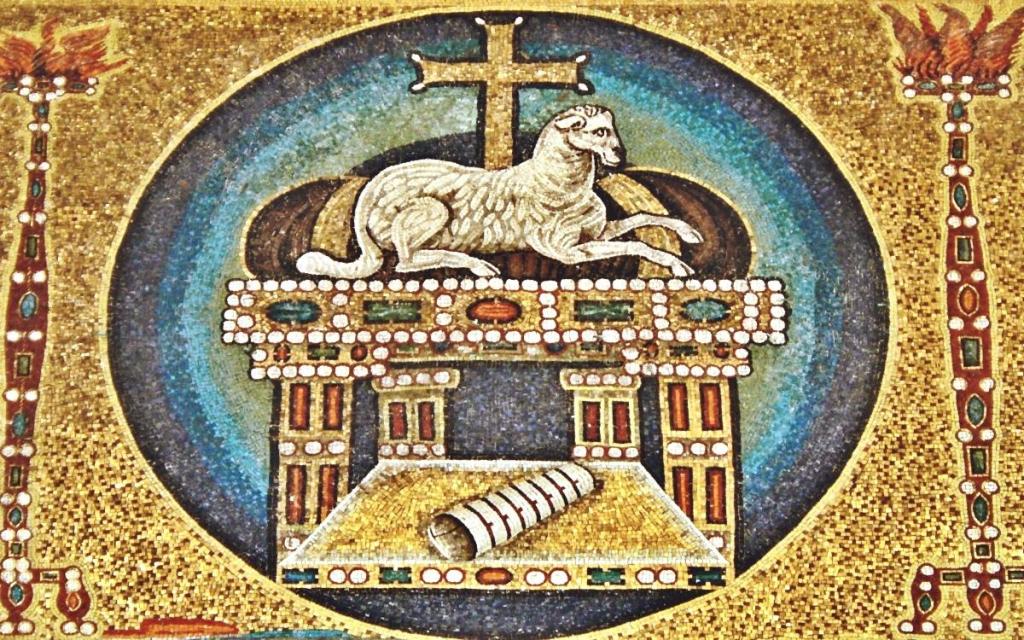
To grasp the weight of this title, we must look back to the Old Testament. The lamb was the quintessential sacrificial animal of Israel. It was a lamb that served as the sacrifice of the Passover, the instrument through which God saved Israel from death and liberated them from the slavery of Egypt. The lamb was also central to the worship of the Sanctuary: in the “Tamid,” the daily offering (Ex 29:39); the “Olah,” the burnt offering (Lev 1:10); the “Shelamim,” the peace offering (Lev 3:7); and the “Hattat,” the sin offering (Lev 4:32).
We might ask, “Why the lamb?” The reason is partly practical. Sheep were abundant in the ancient world, but unlike other livestock, the lamb offers the least resistance when faced with death. It does not fight; it does not scream. This silence inspired the prophet Isaiah to describe the Suffering Servant: “Like a lamb that is led to the slaughter, and like a sheep that before its shearers is silent, so he opened not his mouth.”
Yet, Jesus is no ordinary lamb. He is the Lamb of God. The Greek phrase ho amnos tou Theou implies not only a lamb belonging to God but a lamb provided by God. Jesus is the perfect victim, prepared not by human hands, but by the Father. He is the fulfillment of Abraham’s prophecy to Isaac: “God himself will provide the lamb.” Because He is of God, He is the only offering truly acceptable to God.
Jesus, therefore, is the Lamb of God because He is the total fulfilment of every ancient sacrifice.
- Like the Passover Lamb, He is slain and consumed so that we might be spared from eternal death.
- Like the Tamid, He is offered daily in the Eucharist.
- Like the Olah, He is given totally in obedience to the Father.
- Like the Shelamim, He is our peace (Eph 2:14).
- Like the Hattat, He becomes the offering that cleanses us of sin (2 Cor 5:21).
This is why we cry out, “Lamb of God… have mercy on us.” We are acknowledging that without His perfect sacrifice, we could not be saved from our sins. And finally, when we pray, “Grant us peace,” we confess that without Jesus—our true Peace Offering—there can be no reconciliation between us and the Father.
Rome
Valentinus Bayuhadi Ruseno, OP
Questions for reflection:
“How do we prepare ourselves to worthily receive the sacrifice of Jesus in the Eucharist? How do we participate in the Mass? Do our actions during the liturgy bring us closer to Jesus, or do they distract us? Finally, how do we offer our lives to God through our daily activities?”
 In Medio Ecclesiae