

First Sunday of Lent
February 26, 2020
Matthew 4:1-11

The first Sunday of Lent begins the story of Jesus in the desert, fasting and being tempted by the devil. St. Matthew gives us more details in the story temptations, and from Matthew, we discover the threefold temptations of Christ. Why did Satan tempt Jesus? Why three temptations?
The temptation of Jesus took place after the baptism of Jesus and right before His public ministry of Jesus. His temptation brings us back to the first temptation in the garden of Eden. As Satan engineered the fall of humanity in deceiving the first Adam, the same evil agent executed the same assault to Jesus, the new Adam.
Why three? The ancient Jewish rabbis believe that the serpent who represented the Devil tempted Adam and Eve with three things. “..when the woman saw that the tree was good for food, and that it was a delight to the eyes, and that the tree was to be desired to make one wise [Gen 3:6].” Firstly, the devil made the fruit as something good to eat. Secondly, the devil made Eve perceive that the fruit was a sight to behold. Lastly, the devil made Eve believe that the fruit is the source of wisdom. The first temptation is called the sin of the belly since it attacks our weak flesh [gluttony and sexual sins]. The second is the sin of the sight because through the eyes, we see things we do not have, and we desire to possess them [envy, possessiveness, and stealing]. Lastly, but most potent is the sin of pride. This temptation makes people think that they can dethrone God and put themselves as the new gods.
When dealing with Jesus, the devil applied the same technique. The devil offered Jesus to use His power to satisfy His hunger. The devil brought Jesus to see all the beautiful things in the world to possess. And, the devil asks Jesus to demonstrate His power to show His divinity and authority to the people. However, Jesus did not fall into the temptation, and thus, undid the first Adam’s failure.
How did Jesus counter the devil’s attack? Three things: fasting and abstinence, almsgiving, and prayer. Fasting and abstinence have been an ancient practice to moderate one’s desires. While the devil wants us to fall into the sin of the flesh and enjoy the bodily pleasures, fasting and abstinence put in check our passions. While the devil influences us to get more and possess things even at the expense of other people, almsgiving enables us to be generous and feel sufficient with what we have. While the devil tries to convince us that we can be the master of our lives, prayers remind us that there is God, and we are not Him.
This Lenten season is precisely a time for us to be aware of our human weaknesses and how the devil exploits them. Yet, we are not without hope; Jesus gives us His grace to counter this temptation and three Lenten practices [fast, abstinence, almsgiving and prayer] as our weapons.
Valentinus Bayuhadi Ruseno, OP
 At the heart of Jesus’ teaching in the Mount is the formation of the heart. However, the heart in the Bible is not limited to our affective side or emotions. It also stands for the center of intellectual capacity and freedom. The heart is the seat of life itself, and thus, represents who the man or woman is.
 Jesus is accused of unfaithful to the Law of Moses and the traditions of the elders. He no longer requires His disciples to performs ceremonial washings and many traditions of the elders [Mat 15:2]. Jesus heals people even during the Sabbath [Mark 3:1-6]. Jesus declares that all food is clean [Mark 7:19]. The worst part is when Jesus commands His disciples to drink His blood [see Lev 17:14; Mat 26:27-28]. Is Jesus breaking and changing the Law of Moses?
 Reading carefully, we may wonder, “Is it possible if the salt loses it, saltiness?” In everyday experience, we never experience tasteless salt. However, when we go back to the time of Jesus, we will be surprised that a salt losing its taste is a daily reality. In ancient Israel, the people would go to the Dead Sea, the saltiest body of water on earth, and gathered the “pillar of salt” formed surrounding the lake. Then, they would put inside a small bag, like a teabag”, and when it was needed for seasoning, the bag would be dipped into the water or soup. After some repeated use, the salt would lose its saltiness due to the chemical impurities. It turned to be nothing but an ordinary pebble, and shall be thrown away and trampled underfoot.
 If we are given a chance to choose our parents, what kind of parents will be our choice? Perhaps, some will prefer billionaire parents so that we can sing like Bruno Mars, “I wanna be a billionaire… Buy all of the things I never had… I wanna be on the cover of Forbes magazine, and Smiling next to Oprah and the Queen.” Perhaps some of us want to become the children of a king. So, royal blood is flowing through our vein, and people call us as a prince, princess, or royal highness. Perhaps, we want to be born from Korean megastars, because we want to become the prettiest or the most handsome.
 After the arrest of John the Baptist, Jesus begins His public ministry. Jesus left Nazareth, His hometown, and moved to a more crowded and bigger town, Capernaum. Crudely speaking, Jesus did urbanization. This strategic move of Jesus was to support His mission. With a dense population and with better access to neighboring towns, Jesus could minister to more people in a more efficient way.
 We begin the ordinary time of the liturgical year. In the Church, we have three cycles of the liturgical year: A, B, and C. every year, we have a different set of readings. In year A, the Gospel readings are mainly from the Gospel of Matthew, meanwhile, year B is from Mark and year C is from Luke. The Gospel of John does not have its separate year, but the readings from John are scattered through the years, especially in the Easter season.
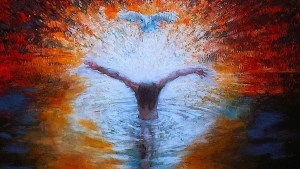 One question that always baffles attentive readers of the Scriptures is that why should Jesus be baptized by John the Baptist? John himself proclaimed that his baptism is a sign of repentance. Those who are baptized by John must first acknowledge their sinfulness and unworthiness, and baptism of water becomes the visible token of turning away from sins and promise of a new and better life. Yet, we all know that Jesus is sinless [Heb 4:15; 1 Pet 2:22]. Does it mean Jesus is sinful? Is John the Baptist greater than Jesus?
 The journey of the three wise men from the East embodies the deepest human longing for a meaningful life and true happiness. Balthazar, Melchior and Gaspar, as the tradition called them, were neither Jews nor baptized Christians. In Greek ancient manuscripts of the Gospel, the word used to describe them is ‘magos’, meaning ‘someone with magical power’ or ‘magicians’, and practicing magic is detestable in the eyes of the Jews (2 Cro 33:6). Though we cannot be sure what kind of magic they crafted, but one thing is sure that they read the sign of times and followed the star. Because of this, they were instantaneously accused as one of those astrologers, star-readers who predict the human behaviors and the future, but I would argue that they were actually early astronomers instead astrologers. Like ordinary seamen who gazed the stars and hoped that they would guide them home, the magi did look at the star and believed that they would navigate their way to the true end.
