

3rd Sunday of Lent
March 7, 2021
John 2:13-25
 We, modern readers, often misunderstand today’s Gospel. This particular Jesus’ story becomes a basis for some to refuse the church building and parish vicinities for non-religious activities, however good its intention is. I personally agree that the inside of the Church’s building is a place set aside for worship and prayer. This is the sacred ground for people to encounter God and experience heaven.
However, today’s Gospel is more complicated than it seems. We tend to assume that Jesus cleansed the Temple from the animal vendors and money traders because Jesus saw them as not originally part of the Temple, but suddenly they were not mushrooming in the Temple’s area. Yet, if we go back to the time of Jesus, animal vendors and coin traders were part of the Temple’s system. The pilgrims from different parts of Palestine and the world streamed to the Temple every day, and though bringing their animal sacrifice was possible, it was not practical. The animals certainly would add inconvenient burdens, and they might get some brushes or injuries along the way. With the wounds or damages, the animals were no longer fit for the sacrifice. Thus, to offer a solution to these weary pilgrims, vendors in Jerusalem were ready to help by providing a healthy and worthy animal sacrifice.
Money changers are also tied to the Temple. To support the upkeep of the Temple, pilgrims were to donate some money, yet the Temple did not accept the Roman coins. Temple’s authority perceived the coins were a sign of foreign oppression. They are also considered blasphemous because the coin recognized Caesar as divine. Meanwhile, the Jews were not allowed to mint their coins. As a solution, they were accepting coins from the neighboring city of Tyre. Here comes the role of the coin traders. Without animal sellers and money exchange service, the Temple of Jerusalem would not perform as it should be. We can imagine how difficult it is to produce our own wine and bread for the celebration of the Eucharist.
Ordinarily, the animal vendors and coin traders were located near but outside the Temple. Yet, the problem began when the Temple’s authorities allowed these sellers to be inside the temple area, especially around the court of the gentiles. Jesus was doing what is right. However, farthest from the inner sanctuary, the court of the gentiles is still an integral part of the Temple and remains a place of prayer, especially for those non-Jewish people who believed in the God of Israel.
Jesus wanted to protect the house of God as a house of prayer and worship and desired that the Gentiles have a place in this house of prayer. While unfortunately, the Temple of Jerusalem was destroyed in 70 AD by the Roman empire, Jesus’ vision lives on. His desire to unite the nations in prayer and worship of the true God is realized and achieved perfection in His body, the new Temple of God.
Where do we find now the Body [and Blood] of Christ? It is in the Eucharist. In the Eucharist, people from different nations and languages gather to offer worthy worship to the true God. Every time we celebrate the Eucharist, we become the living testimony of this Jesus’ vision of worship for all nations. We can worship the true God because Jesus prepares the place for us.
Valentinus Bayuhadi Ruseno, OP

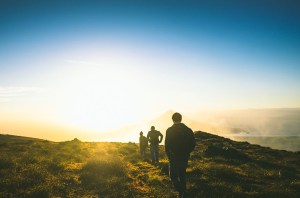 Mountain is a special place in the Bible. It is a place where God meets His people. In the Old Testament, there are many instances where mountains become a pivotal point of salvation history. After the great flood that cleansed the world, the Ark of Noah landed on Mount Ararat, and there, Noah offered sacrifice to God [see Gen 8:4]. Abraham was asked by God to offer his son Isaac on Mount Moriah. Just right before the sacrifice, the angel of God prevented Abraham and God recognized Abraham’s faith [see Gen 22]. When Moses was tending the flock of his father-in-law, Moses saw a burning bush yet was not consumed, and there, on the mount of Horeb, God called Moses to save Israelites from the Egyptians [see Exo 3]. After the liberation from Egypt, Moses and the Israelites the Law and established a covenant with God on the mount of Sinai [see Exo 24:18].
 Gunung adalah tempat khusus di dalam Kitab Suci. Ini adalah tempat dimana Tuhan bertemu dengan umat-Nya. Dalam Perjanjian Lama, ada banyak contoh di mana gunung menjadi titik penting dalam sejarah keselamatan. Setelah banjir besar yang membersihkan dunia, Bahtera nabi Nuh mendarat di Gunung Ararat dan di sana, Nuh mempersembahkan korban kepada Tuhan [lihat Kejadian 8: 4]. Abraham diminta oleh Tuhan untuk mempersembahkan putranya, Ishak, di Gunung Moria. Tepat sebelum pengorbanan, malaikat Tuhan mencegah Abraham dan Tuhan menerima iman Abraham [lihat Kejadian 22]. Ketika Musa sedang menggembalakan kawanan bapa mertuanya, Musa melihat semak bernyala tapi tidak habis terbakar, dan di sana, di gunung Horeb, Tuhan memanggil Musa untuk menyelamatkan bani Israel dari Mesir [lihat Keluaran 3].
 Why did Jesus have to stay in the wilderness for 40 days? The answer is not difficult. He was reperforming what the Israelites did when they were liberated from Egypt. The Israelites stayed for 40 years in the wilderness before they entered the promised land. Yet, there is one more thing! Mark gives us a small, however important detail: in the wilderness, Jesus was staying with the beasts. Why so? If there is one man closely connected to the beasts in the scriptures, he is no other than Adam. Jesus is the new Israel who endured the harsh conditions of the desert and the new Adam who faced the onslaught of the devil.
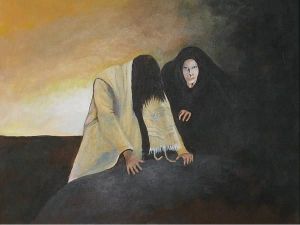 Mengapa Yesus harus tinggal di padang gurun selama 40 hari? Jawabannya tidak sulit. Dia mengulangi apa yang dilakukan orang Israel ketika mereka dibebaskan dari perbudakan Mesir. Orang Israel tinggal selama 40 tahun di padang gurun sebelum mereka memasuki tanah perjanjian. Namun, ada satu hal lagi! Markus memberi kita detail kecil namun penting: di padang gurun, Yesus tinggal bersama binatang-binatang. Kenapa demikian? Jika ada satu orang yang hidup bersama para binatang di dalam kitab suci, dia tidak lain adalah Adam. Yesus bukan hanya Israel baru yang menanggung kondisi keras padang gurun, tetapi juga Adam baru yang menghadapi serangan setan.
 Leprosy in the time of Jesus is not only physically and mentally deadly, but also spiritually incapacitating. Leprosy or currently known as the Hansen’s disease is horrifying sickness because it does not kill the person slowly, but it gradually deforms and incapacitates the person. The bacteria cause terrible damage in peripheral nervous to the point that the person is no longer feeling the sensation, especially pain. Without this sensation, the person fails to recognize and avoid bodily injuries. Losing limbs is shared among the victims with advanced stages of leprosy.
 Penyakit kusta pada zaman Yesus tidak hanya mematikan secara fisik dan mental, tetapi juga melumpuhkan secara rohani. Kusta atau yang sekarang dikenal dengan penyakit Hansen adalah penyakit yang mengerikan karena tidak hanya membunuh orangnya secara perlahan, tetapi lambat laun akan merusak wujud dan melumpuhkan orang tersebut. Bakteri kusta menyebabkan kerusakan yang parah pada jaringan saraf sehingga orang tersebut tidak lagi dapat merasakan sensasi, terutama rasa sakit. Tanpa sensasi ini, orang tersebut gagal mengenali dan menghindari cedera pada tubuh. Kehilangan anggota tubuh seperti jari adalah hal yang biasa terjadi pada penderita kusta stadium lanjut.
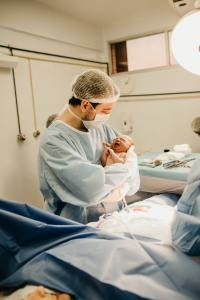 Jesus cannot be separated from His healing ministries. Some of the healings are remarkable, like the healing of a woman with the hemorrhage and Jarius’ daughter [Mark 5:321-43]. They are astonishing because these are practically impossible cases. The woman has suffered for twelve years without sign of hope, and Jarius’ daughter is as good as dead. Yet, Jesus does heal not only those with grave illness but also those with curable sickness.
 Yesus tidak dapat dipisahkan dari pelayanan penyembuhan-Nya. Beberapa kisah kesembuhan merupakan kejadian yang luar biasa seperti kesembuhan seorang wanita dengan pendarahan dan juga anak perempuan Jarius [Markus 5: 321-43]. Penyembuhan ini adalah mujizat karena kasus-kasus yang dihadapi Yesus adalah hal-hal mustahil disembuhkan pada zaman-Nya. Sang wanita telah menderita pendarahan selama dua belas tahun tanpa harapan, dan putri Jarius sebenarnya sudah meninggal. Di sisi lain, Yesus tidak hanya menyembuhkan orang yang sakit parah, tapi juga mereka yang sakitnya tergolong tidak membahayakan.
