

33rd Sunday in Ordinary Time [C]
November 16, 2025
2 Thessalonians 3:7-12
Work is an essential part of being human. We can define it as an effortful activity aimed at accomplishing a task, whether that be gathering food, building a home, or caring for another person. Yet, work is not a uniquely human endeavor. In the animal kingdom, we see remarkable industry: worker bees build, clean and protect their hives, forage for nectar, and regulate the hive’s temperature, while beavers construct complex dams that provide safe shelter and store food during winter.
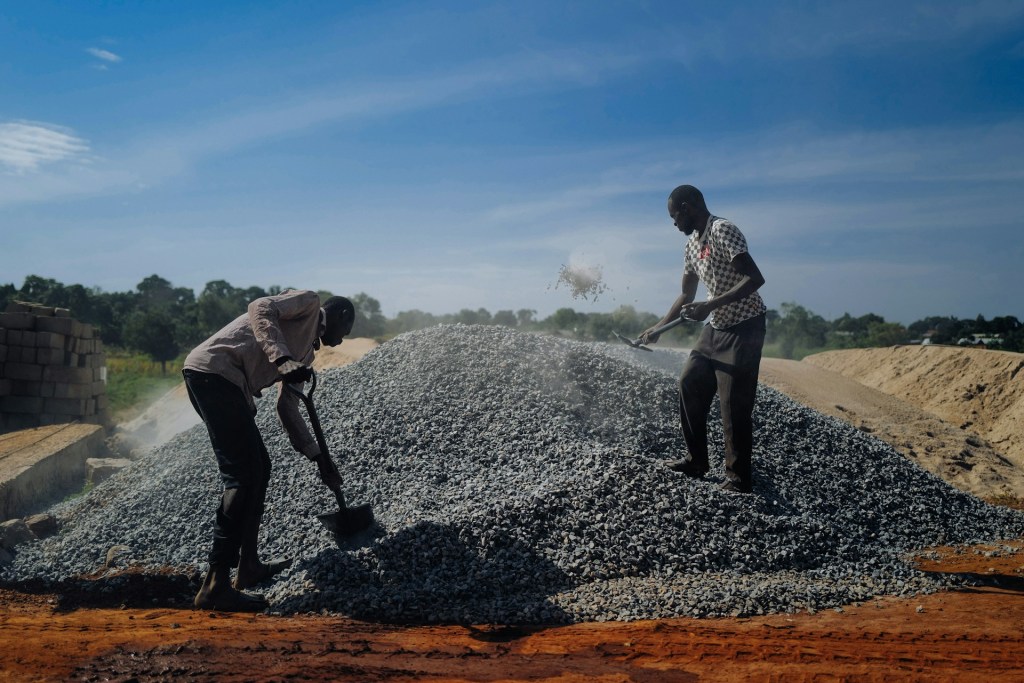
While we share this impulse for labor with the animal world, there is an essential difference. Most animals work by instinct to ensure their survival and the propagation of their species. Our purpose in work, however, transcends mere survival. We work not only to preserve our lives but to improve them and build a better world for ourselves and our children. This is possible because of the unique gift of intellect, which allows us to comprehend the mysteries of nature, build tools, and develop technologies to use nature for the common good.
This intellect is a fundamental gift from God, bestowed upon us as beings made in His image. Through it, we are empowered to participate in God’s own work of creation. In Genesis 1:28, God instructed our first parents to “subdue” the earth. This “subduing” is not a license for destruction but a call to stewardship. This is clarified in Genesis 2:15, where God placed Adam in the garden “to serve and to guard it.” It is the duty of men and women to use our God-given intellect to cultivate the world according to His will—for the benefit of all, including future generations, and as protection against human greed and exploitation.
When we work honestly and diligently, we truly become God’s co-workers in building a better world. By participating in His holy work, our own labor becomes a means of our sanctification. This is why St. Paul so sharply rebukes the Thessalonians who abandoned work and relied on others for their sustenance (2 Thes 3:10). Laziness has no place in God’s plan; in fact, it is counted among the seven deadly sins.
However, a misunderstanding of work’s purpose also poses a spiritual danger. When our work occupies the majority of our time and energy, we can begin to derive our entire identity from our profession. We risk believing that “we are what we do,” living in fear of losing our job, our competitive edge, or our ability to achieve and be successful. At times, we may even bury ourselves in work, hiding behind the title of a “successful professional” to escape other responsibilities or even to hide from our failures as a present spouse or a loving parent.
This is the profound wisdom of God’s rest on the seventh day (Gen 2:1-3). He did not rest because He was weary, but to model for us the freedom we must claim: we must not become slaves to our work. Our identity is far greater than our profession. While work gives our lives meaning, it is not our only meaning, and certainly not our ultimate one. On the day of rest, we are invited to lay aside our status, our achievements, and our successes, and to remember our primary identity as beloved sons and daughters of God.
Rome
Valentinus Bayuhadi Ruseno, OP
Questions for Reflection:
- How do I view my work and profession? Is it a vocation, a mere job, or something else?
- When I fear losing my job, what is the true source of that fear? Is it the loss of financial stability, or a deeper fear of losing my sense of purpose and identity?
- Do I truly observe a day of rest, setting aside my work to recharge and reconnect with God and my loved ones, or do I allow work to encroach upon this sacred time?
 In Medio Ecclesiae