

Fourth Sunday of Easter [B]
April 25, 2021
John 10:11-18

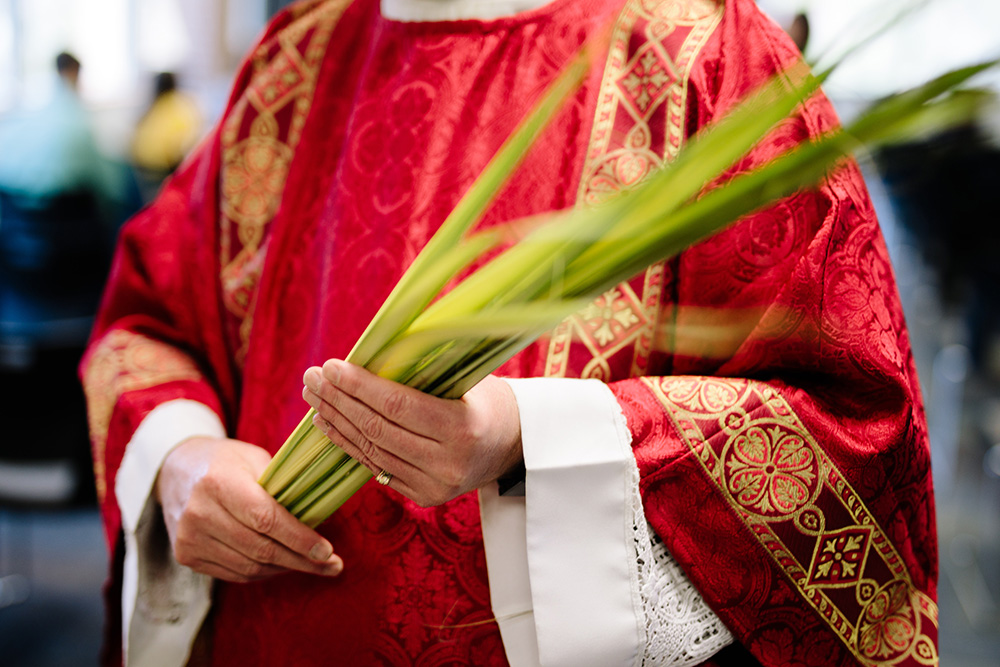
photo by Steven Lasry
Often, we associate vocation with the vocation to the priesthood or religious life, become a priest, or become a religious sister. However, Jesus, the Good Shepherd, does not only call a few sheep to follow Him, but the entire flock. Jesus invites everyone to follow Him, and thus, everyone has a vocation.
The fourth Sunday of Easter is commonly known as the Good Shepherd Sunday. The reason is that every year, the Church always chooses the Gospel from John, especially chapter 10 [year A: John 10:1-10; year B: John 10:11-18; year C: John 10:27-30]. In this chapter, Jesus introduces His identity as the Good Shepherd. This Sunday is also famously called the Vocations Sunday. In 1964, Pope Paul VI established the World Day of Prayer for Vocations on the fourth Sunday of Easter. Why ‘Vocations Sunday’? The word ‘vocation’ comes from the Latin word, ‘vocare’ that means ‘to call’. In the same Gospel, Jesus says that the shepherd ‘calls’ his sheep by name and they hear his voice [see John 10:3-4].
Generally, in the Church, we have the clergy and the laity. The clergies are those who received the sacrament of Holy Orders or ordination. Under this group are the deacons, priests, and bishops. Meanwhile, those who do not receive the ordination are the laity. Under this distinction, we have married people and those who remain single for the Lord. There is also a special category, that is people with vows. Traditionally, we have three vows or promise to God, the vow of obedience, the vow of chastity and the vow of poverty. Christians who professed vows usually belong to communities [technically called institutes of consecrated life] like the Order of Preachers, the Society of Jesus, and many others. When a laywoman professes vows, she becomes a religious sister of a specific community like Sr. Maria, OP. When a priest has vows, he is called a religious priest, like Fr. Joseph, OFM. A priest who does not profess vows and attached to a diocese is called a diocesan priest. Indeed, these categories are oversimplified and fail to do justice to many other forms of lives within the Catholic Church. The point is that the Good Shepherd is calling all of us to follow and to be with Him. It is a universal call to holiness.
Yet, what is holiness? Does it mean when a man is ordained to be a priest, he is automatically holy? Is wearing a religious habit a sign of holiness? Is constant prayer and piety manifestation of holy persons? If holiness is following and becoming one with the Good Shepherd, then to be holy is to live and act like the Good Shepherd Himself. What, then, is the main character of the Good Shepherd? Jesus tells us, “The Good Shepherd lays down His life for His sheep [John 10:15].” The Good Shepherd is ‘Good’ because His love is radical and sacrificial.
To be holy is to love radically and sacrificially, and true love is performed every day in every way possible. Holiness is when a man works hard every day for his family. Holiness is a mother who cares for her baby and ready to lose her sleep every night. St. Theresa of Avila used to say, “Know that if you are in the kitchen, God walks among the pots and pans.”
Valentinus Bayuhadi Ruseno, OP



 Traditionally, the Gospel of John is divided into two major divisions: the Book of Sign [chapter 1-12] and the Book of Glory [Chapter 13-21]. The book of Sign focuses on the public ministry of Jesus and presents the seven signs of Jesus. In John’s Gospel, Sign is a technical term for a miracle. Jesus’ signs begin with changing water into wine in Cana and reaching its culmination in raising Lazarus from the dead. Meanwhile, the book of Glory tells us how Jesus is glorified. The second part starts with Jesus and his disciples in the Upperroom and culminates in His Passion, death, and resurrection.
