


Minggu pada Pekan Biasa ke-8 (Tahun A) 26 Februari 2017 [Matius 6:24-34]
“Kamu tidak dapat mengabdi kepada Allah dan kepada Mamon (Mat 6:24)”
 Mamon dalam bahasa Aram, bahasa asli Yesus, berarti kekayaan, uang atau bahkan properti. Dan tidak ada yang dapat melayani Allah yang benar dan Mamon bersamaan. Dalam bahasa Yunani, Matius memilih kata yang lebih kuat dari “melayani” Mamon, tapi ia mengunakan untuk ‘menjadi budak’ Mamon. Seorang budak adalah seseorang yang tidak lagi memiliki kebebasan dan kehidupannya tergantung pada kemauan tuannya. Menarik untuk dicatat adalah bahwa Mamon itu bukan makhluk hidup, namun, banyak orang mau meletakkan kebebasan mereka untuk menjadi budaknya. Hal ini tidak rasional dan pada kenyataannya, tak terpikirkan, tetapi kenyataannya banyak orang yang memilih kekayaan dan melakukan hal-hal yang tidak manusiawi demi Mamon.
Bukan hal baru di banyak negara, pejabat pemerintah terlibat dalam korupsi besar-besaran, sementara warga biasa harus bekerja keras dan membayar pajak. Di Brazil, Filipina dan negara-negara lain, petani-petani kecil diusir dari rumah dan tanah mereka oleh tuan tanah yang serakah. Kita juga menghadapi Realitas suram perdagangan manusia yang terselubung namun sangat besar. Anak-anak dan perempuan diculik dan diperdagangkan sebagai komoditas, digunakan sebagai pengantar narkoba atau objek seks. Sementara yang lain menghadapi kematian karena organ tubuh mereka dijual di pasar gelap. Hutan dan pegunungan yang indah hancur karena penebangan liar dan pertambangan ilegal. Hal ini menyebabkan kehancuran ekologi, satwa terancam punah, sungai dan laut menjadi situs limbah beracun raksasa, dan tanah menjadi sangat tandus dan mati.
Penyembahan Mamon tidak hanya berlangsung di luar sana, tapi tanpa disadari, hal ini juga menjadi malapetaka di rumah dan keluarga kita sendiri. Siapa di antara kita yang kecanduan kerja dan mulai mengesampingkan tanggung jawab kita dalam keluarga dan mengabaikan kesehatan kita? Siapa di antara kita mulai berpikir bahwa memberikan uang kepada anak-anak kita sudah cukup untuk pertumbuhan mereka? Kadang-kadang, para imam dan rohaniawan terjebak dalam mentalitas yang sama. Kami melakukan pelayanan seolah-olah tidak ada hari esok. Kita mulai menyisihkan dasar-dasar seperti doa, studi, dan komunitas.
St. Thomas Aquinas menjelaskan bahwa kekayaan dan uang tidak dapat memuaskan kerinduan terdalam kita. Dia berpendapat bahwa tujuan kekayaan adalah untuk memenuhi kebutuhan duniawi kita yang fana, tetapi tidak bisa memenuhi kebutuhan spiritual dan tertinggi kita. Masalah sebenarnya terjadi ketika kita keliru dan menjadikan kekayaan sebagai pemenuhan keinginan kita yang tak terbatas. Kita membuat Mamon tuhan. Kita meninggalkan Allah yang benar dan semua masalah serius pun dating karena kita mulai menjadi seperti Mamon, tidak rasional, tidak berpikir dan tidak hidup.
Yesus memanggil kita untuk kembali ke Allah yang benar. Bentuk lain dari mamon, seperti kekayaan, uang, gadget, properti, mobil, sex, prestise, pekerjaan hanya menyeret kita ke dalam perbudakan dan kesengsaraan. Sulit memang karena kenikmatan instan yang kita terima, namun, hal ini perlu karena hanya Tuhan yang bisa membawa kita kebahagiaan sejati dan pembebasan. Kita dibebaskan dari ilusi keperkasaan kita, dari berlebihan ego-sentrisme kita. Tidak hanya kita dibebaskan, tetapi juga keluarga dan masyarakat kita, lingkungan kita dan bumi kita juga terbebaskan. Ingin membuat dunia kita menjadi tempat yang lebih baik? Lepaskanlah mamon dan biarkan Allah menjadi Allah kita!
Frater Valentinus Bayuhadi Ruseno, OP

 Love is not for the fainthearted. It is difficult to love, even those whom we are supposed to love naturally and easily. At times, we feel regret in having committed ourselves in marriage to someone who turns out to be moody, demanding and no longer attractive. Sometimes, we want to kick out our children who become too stubborn and rebellious. Sometimes, we also think that we enter the wrong Congregation or convent.

 Cinta kasih bukanlah untuk orang yang lemah hatinya. Mengasihi itu sulit, bahkan bagi mereka yang seharusnya kita cintai secara alami dan mudah. Kadang-kadang, kita menyesal telah mengikat diri dalam pernikahan dengan seseorang yang moody, banyak tuntutan dan tidak lagi menarik. Kadang-kadang, kita ingin menendang keluar anak-anak yang menjadi keras kepala dan susah diatur. Kadang-kadang, kita, kaum berjubah, juga berpikir bahwa kita telah memasuki Kongregasi atau biara yang salah.
 The word ‘Pharisee’ has a rather negative connotation for us. In the Gospels, they are the bad guys. They often argued with Jesus and Jesus challenged their way of life. Even some planned to get rid of Jesus (see Mat 12:14). In our time, the term ‘Pharisaic’ simply means hypocrite.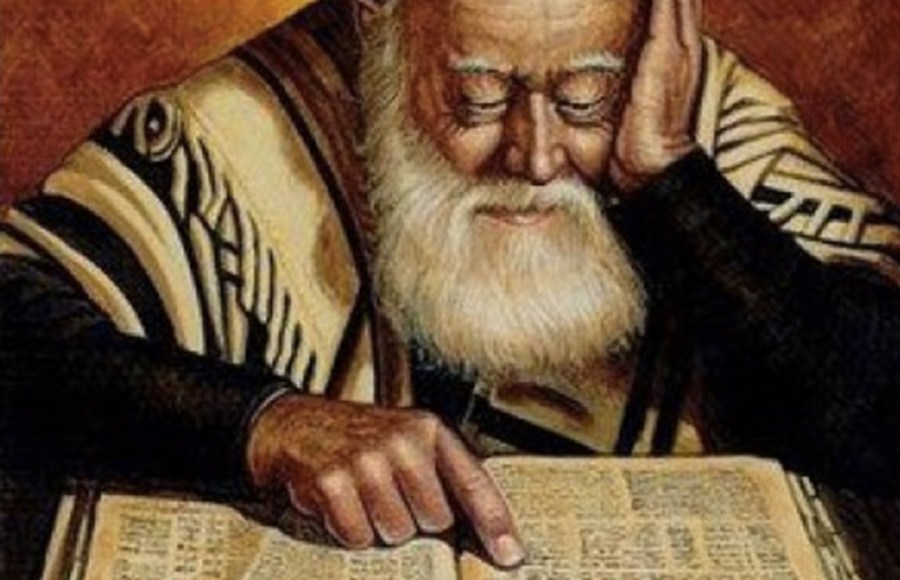
 Kata ‘Farisi’ memiliki konotasi negatif bagi kita. Dalam Injil, mereka adalah lawan-lawan Yesus. Mereka sering berdebat dengan Yesus dan Yesus mengkritik cara hidup mereka. Bahkan beberapa merencanakan untuk menyingkirkan Yesus (lihat Mat 12:14). Pada zaman sekarang, istilah ‘Farisi’ sering kali diasosiasikan dengan kemunafikan.


 Yesus mengatakan bahwa kita adalah garam dunia. Yesus tidak berkata kita ‘seperti’ garam dunia. Keduanya sangat berbeda, seperti ‘saya adalah Bayu’ jauh berbeda dengan ‘saya seperti Bayu.’ Kalimat pertama memberi hubungan esensial antara subjek dan predikat, sedangkan kalimat kedua hanya hubungan kesamaan yang sementara. Yesus pun tahu persis hal ini.
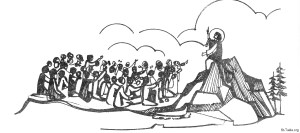 Matthew chapters 5 to 7 are well known as the Jesus’ sermons in the Mount. The section contains classic teachings and parables of Jesus like Beatitudes, the love for one’s enemy and the golden rule. Before Jesus began his sermon, He was sitting down. This gesture actually symbolizes the teaching authority of Jesus. On the Mount, Jesus was the teacher, and as a good teacher, He would expect people to listen attentively to His words. Thus, before Jesus commenced His sermon, He went up to the Mount to separate Himself from the crowd. Jesus knew that being part of the crowd was practically effortless and usually motivated selfishly: to be cured, to be fed and to be entertained. It could turn out to be very superficial, as a mass of people is drawn to one charismatic and powerful leader like Jesus, yet the moment its need is served or its leader is no longer satisfactory, it would be naturally disbanded.
 Injil Matius bab 5 sampai 7 dikenal sebagai khotbah Yesus di Bukit. Bagian ini berisi ajaran-ajaran dan perumpamaan Yesus yang sangat terkenal seperti 8 Sabda Bahagia, dan tentang mengasihi musuh kita. Sebelum Yesus memulai ajaran-Nya, Diapun duduk. Posisi ini sebenarnya melambangkan otoritas Yesus untuk mengajar. Di Bukit, Yesus adalah guru, dan sebagai guru yang baik, Dia akan mengharapkan mereka yang datang kepada-Nya untuk mendengarkan-Nya dengan penuh perhatian. Maka, sebelum Yesus memulai ajaran-Nya, Diapun naik ke bukit untuk memisahkan diri dari kerumunan. Yesus tahu bahwa menjadi bagian dari kerumunan adalah sangat mudah dan biasanya terdorong oleh motif-motif egois seperti ingin segera disembuhkan, untuk diberi makan dan dihibur. Alasannya sangat dangkal, mereka menjadi kerumunan karena tertarik dengan pemimpin karismatik seperti Yesus, namun saat kebutuhan mereka terpenuhi atau sang pemimpin tidak lagi memuaskan, kerumunan pun akan secara alami membubarkan diri.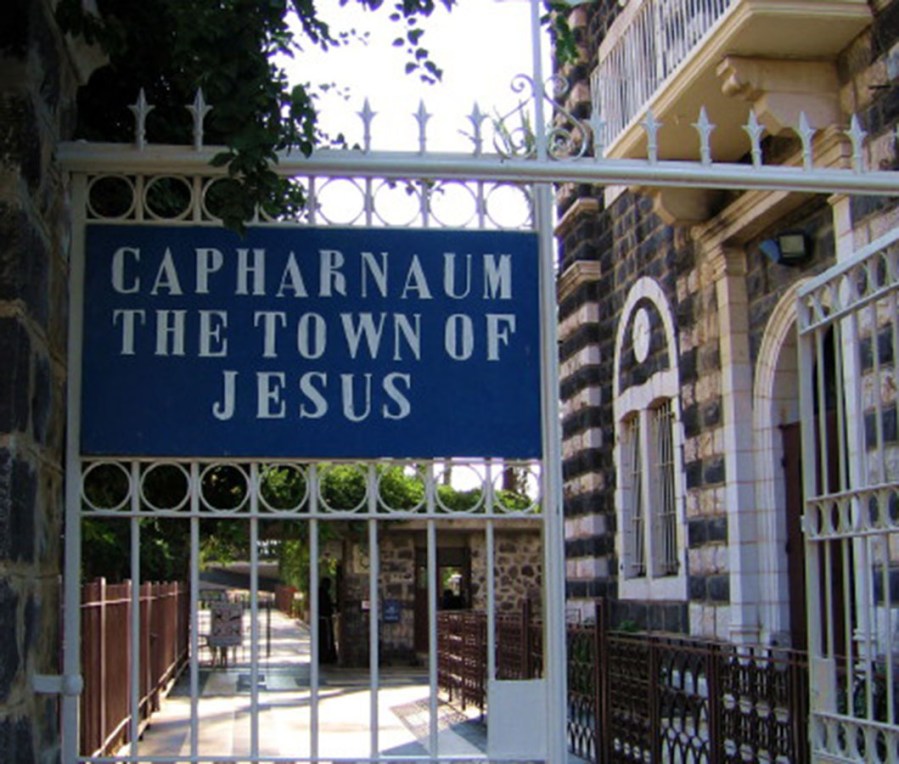
 Jesus began His public ministry by moving to another town in Galilee. From his hometown Nazareth to a bigger and more dense Capernaum. It was an ancient urbanization! Nazareth was small and scarcely populated, while Capernaum was one of the fishing centers in the Sea of Galilee. It was where people came, gathered, and interacted with each other. Had Jesus commenced His mission in Nazareth, probably, it would have taken more time to grow. Capernaum gave critical advantages for Jesus. It was easier to gather people, preach and attract followers. As a port city, it eased up Jesus mobility to other places in Galilee. And, Capernaum provided Jesus with shelter and other resources for His preaching. The reason for migrating was practical and yet decisive.
