Sang Ahli Hukum Taurat

Minggu ke-32 dalam Masa Biasa [11 November 2018] Markus 12: 38-44

[Para ahli Taurat] yang menelan rumah janda-janda, sedang mereka mengelabui mata orang dengan doa yang panjang-panjang. Mereka ini pasti akan menerima hukuman yang lebih berat (Markus 12:40)

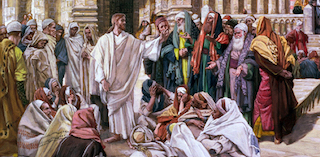
jesus n scribesPada masa Yesus hidup, para ahli Taurat adalah orang Yahudi terdidik dan menjadi ahli dalam Hukum Musa. Beberapa dari mereka berasal dari keluarga kaya, dan yang lain dibesarkan dari klan imam. Mampu mengajar dan menafsirkan Hukum, mereka menerima respek dan kehormatan dari masyarakat Yahudi. Dengan demikian, orang-orang Yahudi kebanyakan akan menyapa dengan hormat para ahli Taurat ini dan mempersiapkan bagi mereka kursi kehormatan di sinagoga dan perjamuan. Tentunya, tidak ada masalah dengan menerima salam dan duduk sebagai tamu kehormatan. Yesus sendiri sering disambut sebagai “Guru” atau “Rabi”, dan Dia menghadiri perjamuan sebagai tamu kehormatan (lihat Mar 14:3). Masalah muncul ketika beberapa ahli Taurat memiliki “hasrat narsistik”, menjadi gila hormat dan dengan sengaja mencari yang kehormatan dan semua hak-hak istimewa.

Namun, Yesus tidak hanya mengkritik mereka karena sikap narsis ini, Dia dengan serius mengecam tindakan ketidakadilan mereka, terutama karena mereka “menelan rumah para janda.” Pada zaman Yesus hidup, para janda (bahasa Ibrani “almanah”) dianggap sebagai salah satu bagian masyarakat Yahudi yang paling miskin dan lemah. Mereka adalah wanita yang tidak hanya kehilangan suaminya, tetapi juga jatuh miskin karena mereka tidak lagi  memiliki sarana penopang hidup. Mereka beruntung jika keluarga dan kerabat mereka merawat mereka, tetapi pada masa-masa sulit, mereka dibiarkan terlantar. Hukum Musa menyatakan bahwa para janda, bersama dengan anak-anak yatim dan orang asing harus dilindungi (lihat Ul. 10:18).

Karena para ahli Taurat adalah salah satu anggota masyarakat yang paling dihormati dan kaya, itu adalah pilihan logis untuk mempercayakan pelayanan kepada para janda Yahudi kepada mereka. Sayangnya, alih-alih membantu dan membela para janda, beberapa ahli Taurat menindas dan mencuri dari para janda miskin ini. Mencuri itu jahat, tetapi merampas dari orang-orang yang menaruh kepercayaan mereka pada kita adalah kejahatan yang jauh lebih besar. Namun, hal ini bukanlah yang terburuk. Setelah dengan sempurna menyembunyikan tindakan ketidakadilan mereka, beberapa ahli Taurat tanpa malu pergi ke Bait Allah dan membaca doa yang panjang. Ini adalah kemunafikan!

Ketika hari pentahbisan saya semakin dekat, beberapa frater dan teman-teman mulai memanggil saya dengan sapaan kehormatan seperti “reverend” (- yang dihormati). Harus diakui, saya tidak nyaman. Saya berharap bahwa orang-orang tetap memanggil saya sebagai frater atau “Brother”. Namun, ini telah menjadi tradisi umum bagi para awam memanggil mereka yang telah tertahbis. Saya hanya bisa berdoa dan berhasrat bahwa saya tidak akan seperti beberapa ahli Taurat “narsistik” dan gila akan pujian orang-orang dan semua kenyamanan hidup. George Weigel, seorang penulis Katolik Amerika, dalam artikel terbarunya, menelusuri akar kemarahan umat Katolik terhadap para klerus di AS. Dia menulis bahwa memang benar bahwa banyak para romo dan uskup yang baik dan kudus, tetapi umat tidak lagi tahan dengan sikap narsisisme yang diperlihatkan sejumlah oknum klerus di Amerika.

Belajar dari ahli-ahli Taurat, narsisisme adalah benih yang tertanam dalam hati mereka yang tertahbis. Jika dibiarkan benih ini tumbuh menjadi tindakan-tindakan ketidakadilan yang tersembunyi. Dan dari kejahatan ketidakadilan, kaum berjubah putih bisa hidup dalam kemunafikan. Adalah harapan saya bahwa kita terus berdoa, mendukung dan bahkan mengoreksi saudara-saudara kita yang adalah hamba Allah dan umat-Nya. Tanpa rahmat Allah, kerendahan hati dan doa serta bantuan para umat awam, para diakon, imam, dan uskup kita mungkin bisa menjadi seperti ahli Taurat yang narsis dan munafik.

Br. Valentinus Bayuhadi Ruseno, OP

Deacon

Reflection on the 31st Sunday in Ordinary Time [November 4, 2018]

Mark 12:28-31

“You shall love the Lord your God… The second is this: ‘You shall love your neighbor as yourself.’ There is no other commandment greater than these.” (Mk. 12:30-31)

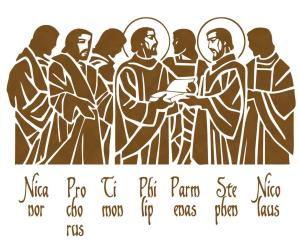
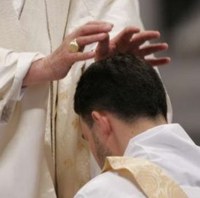
Seven Deacons (Monochrome)I am currently preparing for my ordination to the diaconate. It is a transitional stage before I become a priest of Jesus Christ. Despite the fact of being transitional, a deacon in itself is an important state in the life of the Church. Bishop Virgilio David, DD of Kalookan reminded the 15 newly-ordained Jesuit deacons in his homily last October that we shall not see a deacon as a mere stepping step toward higher states, like priests and bishops. It is the very core in the layers of concentric circles that make up the ordained ministries of the Church. The diaconate is not a lower rank but the core, without which both the offices of presbyters and bishops collapse. It is the foundation on which we build leadership in the Church. Yet, why do the deacons have to be placed at the core, and become the foundation?

Pope Benedict in his apostolic letter “Omnium in Mentem” clarified further the basic identity of a deacon. He wrote, “deacons are empowered to serve the People of God in the ministries of the liturgy, the word, and charity.” The deacons are the heart of both the ordained and non-ordained ministers of the Church because they perform and remind the most basic duties of every Church’s servants: to serve and love God and His people. The very word deacon is coming from the Greek word, “ diakoneo ” meaning to serve, and therefore, a deacon is someone who serves, a servant. Yet, it is not any service. If we go back to the first chapter of the Gospel of Mark, the first person who serves Jesus, the God-man, is Peter’s mother-in-law (Mar 1:31). She serves Jesus because He has restored her to health. It is not a service done out of fear, but gratitude and love. Thus, to serve and to love are at the very essence of being deacon.

In today’s Gospel, Jesus faces the scribe who asks Him on the first of all the commandments. In the Law of Moses, aside from the famous Ten Commandments, they have hundreds of more commandments. Jesus answers, “You shall love the Lord, your God, with all your heart, with all your soul, and with all your mind.” Jesus quotes part of the Shema or the basic Jewish Creed that every devout Jews would recite every day (see Deu 6:4-5). Yet, Jesus does not stop there. He completes the first and the greatest law with another one, “You shall love your neighbor as yourself.” It also comes from the Old Testament (see Lev 19:18). To the delight of the scribe, Jesus’ answer is an orthodox one, but there is something novel as well.

The connection between first and second turns to be a watershed. For Jesus, true love for God has to be manifested in love for others, and genuine love for others has to be oriented toward God. Thus, it is unthinkable for Jesus to order His disciples to kill for the love of God. Or, Jesus will not be pleased if His followers are busy with performing rituals, but blind to the injustices that plague their communities.

With these Jesus’ first commandments in mind, we can now see why the role of the deacons is fundamental in the Church. The deacons are those who are called and empowered to fulfill Jesus’ commandment of love. The deacons are to serve and love God and His people, both in the context of Christian worship and real life. While it is true that deacons are one of the ordained ministers in the Church, every Christian is also called to become a “deacon” in our lives, to serve God and His people out of love.  Without the heart of a deacon, who is the very core of Church’s ministry, every Christian, whether they are lay or cleric, will lose their identity and fail to accomplish the most fundamental law of Christ.

Br. Valentinus Bayuhadi Ruseno, OP

Diakon

Renungan pada Hari Minggu ke-31 dalam Masa Biasa [4 November 2018] Markus 12: 28-31

“Kamu harus mengasihi Tuhan, Tuhanmu… Yang kedua adalah ini: ‘Kamu harus mencintai sesamamu seperti dirimu sendiri.’ Tidak ada perintah lain yang lebih besar dari ini. “(Mrk. 12: 30-31)

ordination 4Hari-hari ini, saya sedang mempersiapkan tahbisan diakonat saya. Diakon sendiri adalah tahap transisi sebelum saya menjadi seorang imam. Terlepas dari kenyataan bahwa diakonat adalah masa transisi, seorang Diakon itu sendiri adalah masa hidup yang penting dalam kehidupan Gereja. Uskup Virgilio David, DD dari Kalookan, Metro Manila, mengingatkan 15 diakon Yesuit yang baru saja ditahbiskan Oktober lalu bahwa kita jangan melihat Diakon hanya sebagai langkah pertama menuju tingkat yang lebih tinggi, seperti imam dan uskup. Diakon adalah inti dalam lapisan lingkaran konsentris yang membentuk pelayanan tertahbis di Gereja. Diakon menjadi inti dari lingkaran pelayanan ini dan tanpa inti ini, para imam dan uskup akan runtuh. Ini adalah fondasi tempat kita membangun kepemimpinan di Gereja. Namun, mengapa Diakon harus ditempatkan sebagai inti dan menjadi fondasi?

Paus Benediktus XVI dalam surat apostoliknya “Omnium in Mentem” memperjelas lebih lanjut identitas dasar seorang Diakon. Dia menulis, “Diakon diberdayakan untuk melayani umat Allah dalam pelayanan liturgi, sabda, dan kasih.” Para diakon adalah hati dari semua pelayan Gereja baik yang ditahbiskan maupun yang tidak ditahbiskan karena diakon melakukan dan mengingatkan kita akan tugas paling dasar dari setiap pelayan Gereja: untuk melayani dan mengasihi Allah dan umat-Nya. Kata Diakon berasal dari kata Yunani, “diakoneo” yang berarti melayani, dan karena itu, Diakon adalah seorang pelayan. Jika kita kembali ke bab pertama Injil Markus, orang pertama yang melayani Yesus, Sang Allah yang menjadi manusia, adalah ibu mertua Petrus (Mar 1:31). Dia melayani Yesus karena dia telah dipulihkan dari sakit. Ini bukan pelayanan yang dilakukan karena takut atau kebutuhan egois semata, tetapi atas syukur dan cinta kasih. Jadi, melayani dan mengasihi berada pada inti kehidupan seorang Diakon.

Dalam Injil hari ini, Yesus bertemu dengan seorang ahli Hukum Taurat yang bertanya tentang hukum yang paling utama. Dalam Hukum Taurat Musa, selain dari Sepuluh Perintah Allah, bangsa Yahudi memiliki ratusan lebih peraturan. Yesus menjawab, “Kasihilah Tuhan, Allahmu, dengan segenap hatimu dan dengan segenap jiwamu dan dengan segenap akal budimu.” Yesus mengutip bagian dari Shema atau Kredo dasar Yahudi yang setiap orang Yahudi daraskan setiap hari (lihat Deu 6: 4-5). Namun, Yesus tidak berhenti sampai di situ saja. Dia melengkapi hukum pertama dan terbesar dengan hukum kedua, “Kasihilah sesamamu manusia seperti dirimu sendiri.” Ini juga berasal dari Perjanjian Lama (lihat Im 19:18). Sesungguhnya, jawaban Yesus pada dasarnya adalah ajaran yang ortodoks bagi orang Yahudi yang mendengar. Namun ada juga sesuatu yang baru.

Hubungan antara hukum pertama dan kedua menjadi kunci ajaran Yesus. Bagi Yesus, cinta kasih sejati kepada Tuhan harus diwujudnyatakan dalam cinta kasih kepada sesama, dan cinta sejati kepada sesama harus berorientasi kepada Tuhan. Jadi, sungguh tidak terpikirkan jika Yesus memerintahkan murid-murid-Nya untuk membunuh demi cinta akan Allah. Atau, Yesus tidak akan senang jika para pengikutnya hanya sibuk melakukan peribadatan, namun buta dengan ketidakadilan yang terjadi di dalam komunitas mereka.

Dengan mengingat hukum cinta kasih Yesus ini, kita sekarang dapat melihat mengapa peran diakon merupakan hal mendasar dalam Gereja. Diakon adalah mereka yang dipanggil dan diberdayakan untuk memenuhi hukum kasih Yesus. Diakon melayani dan mengasihi Allah dan umat-Nya, baik dalam konteks ibadah dan kehidupan sehari-hari. Meskipun benar bahwa diakon adalah salah satu pelayan yang ditahbiskan di Gereja, setiap pengikut Kristus juga dipanggil untuk menjadi “Diakon,” untuk melayani Allah dan umat-Nya berdasarkan cinta kasih. Tanpa hati seorang Diakon, yang merupakan inti dari pelayanan Gereja, setiap orang Kristiani, baik awam ataupun klerus, akan kehilangan identitas dan gagal untuk memenuhi hukum Kristus paling mendasar, hukum cinta kasih.

Frater Valentinus Bayuhadi Ruseno, OP

Lord, Have Mercy

Reflection on the 30th Sunday in Ordinary Time [October 28, 2018] Mark 10:46-52

“Jesus, son of David, have mercy on me.” (Mk. 10:47)

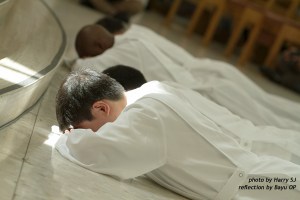
bartimaeusI made my religious vow more than eight years ago with 12 other Dominican brothers. One of the most touching moments within this rite of the religious profession was when Fr. Provincial asked us, “What do you seek?” and we all prostrated, kiss the ground, and declared, “God’s mercy and yours!” After a brief moment, Fr. Provincial asked us to stand, and we began professing our vows before him.  As I recall this defining moment in my life, I am pondering in my heart, “Why it has to be mercy?” Why do we not choose other Christian virtues? Why not fortitude, one of the cardinal virtues in the Christian tradition? Why not love, the greatest of all virtues?

However, religious profession is not an isolated case. If we observe our celebration of the Holy Eucharist, the rite is filled with our pleading for mercy. At the beginning of the Mass, after recalling our sins, we say, “Lord, have mercy” three times. In the Eucharistic prayer, we once again beg mercy that we may be coheirs of eternal life. And, before we receive the Holy Communion, we pray to the Lamb of God who takes away the sin of the world, that He may have mercy on us. Not only in the Eucharist, but an appeal for mercy is also found in the other sacraments and devotions. In the sacrament of confession, the formula of absolution begins with addressing God as the Father of Mercy. In every litany to the saints, it always commences with the plead of mercy to the Holy Trinity. Again, the question is why does it have to be mercy?

We may see the glimpse of the answer in our Gospel today. Jesus is leaving Jericho and making his final journey to Jerusalem. Then, suddenly Bartimaeus, a blind beggar, shouts to the top of his lungs, “Jesus, Son of David, have mercy on me!” He was so persistent that after being rebuked by others, he shouts even louder. Upon hearing the plea of mercy, Jesus who has set his sight on Jerusalem decides to stop. Jesus simply cannot be deaf to Bartimaeus’ appeal. He cannot just ignore mercy. Yet, this is not the only episode where Jesus changes His initial plans and listens to the request for mercy. He cleanses a leper because of mercy (Mrk 1:41). Moved by mercy, He feeds the five thousand and more people (Mrk 6:30). If there is anything that can change the mind and heart of Jesus, the mind and heart of God, it is mercy.

Pope Francis echoes his predecessors, St. Pope John Paul II, and Pope Benedict XVI, saying that the first and essential attribute of God is mercy. Indeed, God as being merciful is discovered in many places in the Bible (see Exo 34:6,7; Dt 4:31; Ps 62:12, etc.). That is why the name of God is mercy. It is our faith that proclaims that God cannot but be merciful. He is God who goes as far as to become human and die on the cross to embrace the wretched sinners like us.

However, what makes Bartimaeus unique is that he was the first in the Gospel of Mark to verbalize the plead for mercy to Jesus. Following the example of Bartimaeus, the Church has continued to become the beggar of God’s mercy. Like Bartimaeus, we verbalize our need for God’s mercy in our worship, our prayers, and our life. We ask mercy when life become tough and unforgiving. We cry “Mercy!” when we are tempted, we fail to please God, or so much harm has been done to ourselves and other people.  Every night before I close my eyes, I recite “Lord, have mercy!” several times, hoping that this will be a habit and my last words when I meet my Creator. We plead for mercy when knowing that we are not worthy of God, we are confident that God will change “His mind” and embrace us once again.

Br. Valentinus Bayuhadi Ruseno, OP

Tuhan, Kasihanilah

Renungan pada Minggu ke-30 di Masa Biasa [28 Oktober 2018] Markus 10: 46-52

“Yesus, anak Daud, kasihanilah aku.” (Markus 10:47)

bartimaeus 2Saya mengucapkan kaul lebih dari delapan tahun yang lalu bersama dengan 12 frater lainnya. Salah satu momen paling menyentuh dalam ritual profesi religius ini adalah ketika Romo Provinsial bertanya kepada kami, “Apa yang kamu cari?” Dan kami semua bersujud dan berbaring di lantai, sambil berseru, “Belas kasih Tuhan dan juga komunitas!” Setelah beberapa saat, Pastor Provinsi meminta kami untuk berdiri, dan kami mulai mengucapkan kaul kami di hadapannya. Saat saya mengingat momen yang penting ini, saya merenungkan dalam hati saya, “Mengapa harus meminta belas kasih?” Mengapa kita tidak memilih keutamaan lainnya? Mengapa tidak keadilan, yang adalah salah satu keutamaan penting dalam tradisi Kristiani? Mengapa tidak cinta kasih, yang adalah keutamaan terbesar dari semua keutamaan?

Namun, profesi religious ini bukanlah satu-satunya. Jika kita mengamati perayaan Ekaristi Kudus, ritus ini penuhi dengan permohonan belas kasihan. Pada awal Misa, setelah kita mengingat dosa-dosa kita, kita berseru, “Tuhan, kasihanilah kami” tiga kali. Dalam doa Syukur Agung, kita sekali lagi memohon belas kasihan Tuhan agar kita bisa menikmati kehidupan kekal bersama para kudus. Dan, sebelum kita menerima Komuni Kudus, kita berdoa kepada Anak Domba Allah yang menghapus dosa dunia, supaya Dia berbelas kasihan kepada kita. Tidak hanya dalam Ekaristi, tetapi permohonan belas kasih juga ditemukan dalam sakramen-sakramen lainnya. Sekali lagi, pertanyaannya adalah mengapa harus belaskasih?

Kita mungkin melihat sekilas jawaban dalam Injil kita hari ini. Yesus meninggalkan Yerikho dan melakukan perjalanan terakhirnya ke Yerusalem. Kemudian, tiba-tiba Bartimeus, seorang pengemis buta, berteriak dengan penuh daya, “Yesus, Anak Daud, kasihanilah aku!” Dia begitu gigih sehingga setelah ditegur oleh banyak orang, dia bahkan berteriak lebih keras. Setelah mendengar permohonan belas kasihan, Yesus yang telah menetapkan pandangannya ke Yerusalem memutuskan untuk berhenti. Yesus tidak bisa pura-pura tuli terhadap seruan Bartimeus. Dia tidak bisa mengabaikan belas kasihan. Namun, ini bukan satu-satunya episode di mana Yesus mengubah rencana awalnya dan mendengarkan permintaan belas kasihan. Dia membersihkan seorang penderita kusta karena belas kasihan (Mrk 1:41). Tergerak oleh belas kasihan, Dia memberi makan lima ribu orang (Mrk 6:30). Jika ada sesuatu yang dapat mengubah pikiran dan hati Yesus, pikiran dan hati Tuhan, ini adalah belas kasih.

Paus Fransiskus mengemakan para pendahulunya, Santo Paus Yohanes Paulus II, dan Paus Benediktus XVI, mengatakan bahwa karakter pertama dan esensial dari Allah adalah belas kasih. Sesungguhnya, Tuhan yang penuh belas kasihan ditemukan di banyak tempat dalam Alkitab (lihat Kel 34: 6,7; Ul. 4:31; Mz 62:12, dll.). Itulah mengapa nama Tuhan adalah belas kasih.

Namun, apa yang membuat Bartimeus unik adalah bahwa ia adalah yang pertama dalam Injil Markus yang menyatakan secara verbal permohonan belas kasihan kepada Yesus. Mengikuti contoh Bartimeus, Gereja terus menjadi pengemis belas kasihan Allah. Seperti Bartimeus yang mengikuti Yesus, mengikuti-Nya berarti bahwa kita memiliki kesadaran bahwa Allah sangat berbelas kasih kepada kita dan kita membutuhkan kemurahan Tuhan. Seperti Bartimeus, kita mengungkapkan kebutuhan kita akan belas kasih Tuhan dalam ibadah kita, doa-doa kita, dan hidup kita. Kita memohon belas kasihan saat hidup menjadi sulit dan diluar kendali kita. Kita berseru “Tuhan, kasihanilah!” Ketika kita menghadapi pencobaan, ataupun saat kita gagal. Saya juga memiliki kebiasaan bahwa setiap malam sebelum saya beristirahat, saya berdoa “Tuhan, kasihilah aku!”, mengakui kegagalan saya pada hari ini, namun yakin bahwa Tuhan tidak akan pernah meninggalkan saya. Kita memohon belas kasihan ketika mengetahui bahwa kita tidak layak, namun kita percaya bahwa Tuhan akan mengubah “pikiran-Nya” dan merangkul kita sekali lagi.

Frater Valentinus Bayuhadi Ruseno, OP

True Power

29th Sunday in the Ordinary Time [October 21, 2018] Mark 10:35-45

Whoever wishes to be first among you will be the slave of all. (Mk. 10:44)

washing feet“Power tends to corrupt, and absolute power corrupts absolutely.” This familiar adage comes from an English noble, Lord Acton in his letter to Bishop Mandell Creighton in 1887. Lord Acton observed that people who possessed absolute control over other persons were inclined to abuse their power and exploit their subjects. This happens throughout human history. Jesus and His disciples themselves witnessed these corrupt powerful leaders during their time and eventually, became victims of this corruption.

We recall how Herod the Great commissioned his army to slaughter all the babies under two years old in Bethlehem. He was having a paranoia that a baby born in this town of David would overthrow him from power someday. Herod Antipas, a son of Herod the Great, ordered the beheading of John the Baptist. This was done just to pacify the anger of his whimsical yet anti-critic wife. A Jewish historian, Josephus, narrated how Pilate, the Roman procurator, ruled Judea with iron and bloody hand. He commanded the crucifixion more than two thousand Jews during his brief stint in Jerusalem. With absolute power in their hands, human lives become so cheap. The only thing that matters is how they remain in power.

Ironically, despite witnessing those horrible events, James and John, as well as the rest of the disciples remain obsessed with power. James and John wish that they sit at the right and left hands of Jesus when His kingdom comes. The throne is the symbol of power. We are familiar with box-office hit “Game of Thrones.” This TV series is about people who are struggling to sit on the Iron Throne of the Seven Kingdom. And just any game, the different characters use various strategies, including deceit and deceptions to capture this throne. Friends and foes are the ones and the same. Enemies turn to be friends, and allies kill each other. If they cannot be on that throne, at least, they can be next to that seat of power.

Why do we want power so much?  It is because, with power, we are in control. When we are in charge, we have this sense of independence and pride. When autonomy is within our grasp, we cannot but feel good about ourselves. The opposite is also true. When we lose control, we feel terrible. Powerlessness is just awful. Thus, the more power we have, the better we feel. However, this is a mere illusion. No matter how powerful we are, we cannot control everything. The mere fact that we are not able to control the desire to possess power is proof how powerless we are.

Knowing well the irony of power, Jesus gives us a solution: be the servant and slave of all. A slave is a person who is under control of somebody else. In a normal situation, to be slaves are dreadful. Yet, when we have power, our decision to be slaves for others can be liberating. Jesus understands that power is not to be acquired, but to be shared. Power is to empower and not to be hoarded. Yet, it is not the same with yielding to fate, powerlessness, and desperation. Pretty the opposite, to serve and empowering others, we need to exercise our power actively. Think of Mother Teresa of Calcutta. She was just a little religious sister who did nothing but dedicated her life for the poor, the abandoned and the dying. She was far from the image of a strong and powerful leader. Yet, because she became the slave of all, she was considered to be one of the most influential and admired persons in the twentieth century. Echoing the words of Her Lord, “God has not called me to be successful. He has called me to be faithful.”

Br. Valentinus Bayuhadi Ruseno, OP

Kekuatan Sejati

Minggu ke-29 di Masa Biasa [21 Oktober 2018] Markus 10: 35-45

Barangsiapa ingin menjadi yang terkemuka di antara kamu, hendaklah ia menjadi hamba untuk semuanya. (Mk. 10:44)

washing feet 2“Power tends to corrupt, and absolute power corrupts absolutely.” Pepatah ini berasal dari bangsawan Inggris, Lord Acton dalam suratnya kepada Uskup Mandell Creighton pada 1887. Lord Acton mengamati bahwa orang-orang yang memiliki kekuasaan mutlak atas orang lain cenderung menyalahgunakan kekuasaan mereka dan mengeksploitasi bawahan mereka. Ini terjadi sepanjang sejarah manusia. Yesus dan murid-murid-Nya sendiri menyaksikan para pemimpin korup ini pada zaman mereka dan akhirnya, menjadi korban kekuasaan yang korup tersebut.

Kita ingat bagaimana Herodes menugaskan pasukannya untuk membantai semua bayi di bawah dua tahun di Betlehem. Dia mengalami paranoia bahwa satu bayi yang lahir di kota Daud ini akan menggulingkannya dari kekuasaan suatu hari nanti. Herodes Antipas, putra Herodes, memerintahkan pemenggalan kepala Yohanes Pembaptis. Ini dilakukan hanya untuk menenangkan kemarahan istrinya yang juga haus kekuasaan. Sejarawan Yahudi, Josephus, menceritakan bagaimana Pilatus, wali negara Romawi, memerintah Yudea dengan tangan besi. Dia memerintahkan penyaliban lebih dari dua ribu orang Yahudi selama masa pemerintahannya di Yerusalem. Dengan kekuatan absolut di tangan mereka, hidup manusia menjadi begitu murah. Satu-satunya hal yang penting adalah bagaimana mereka tetap berkuasa.

Ironisnya, meski menyaksikan peristiwa-peristiwa mengerikan itu, Yakobus dan Yohanes, serta para murid lainnya tetap terobsesi dengan kekuasaan. Yakobus dan Yohanes berharap agar mereka duduk di tangan kanan dan kiri Yesus ketika kerajaan-Nya datang. Tahta adalah simbol kekuasaan. Kita akrab dengan hit box-office “Game of Thrones.” Serial TV ini adalah tentang orang-orang yang berjuang untuk duduk di Tahta Besi Tujuh Kerajaan. Berbagai karakter menggunakan berbagai strategi, termasuk tipu daya untuk memenangkan tahta ini. Teman dan musuh tidak bisa dibedakan. Musuh berubah menjadi teman, dan sekutu saling membunuh. Jika mereka tidak dapat berada di tahta itu, setidaknya, mereka dapat berada di sebelah kursi kekuasaan itu.

Mengapa kita sangat menginginkan kekuasaan dan kekuatan? Karena, dengan hal ini, kita memegang kendali. Ketika kita memampu mengendalikan banyak hal, kita memiliki rasa kebebasan dan kemandirian ini. Ketika otonomi ada di dalam genggaman kita, kita pun merasa senang dengan diri kita sendiri. Namun, ketika kita kehilangan kendali, kita merasa tidak nyaman. Ketidakberdayaan tidaklah menyenangkan. Dengan demikian, semakin banyak kekuatan yang kita miliki, semakin baik perasaan kita. Namun, ini hanyalah ilusi belaka. Tidak peduli seberapa kuatnya dan berkuasanya kita, kita tidak bisa mengendalikan semua hal. Fakta bahwa kita tidak dapat mengendalikan hasrat untuk memiliki kekuatan adalah bukti betapa tidak berdayanya diri kita.

Mengetahui dengan baik ironi kekuasaan, Yesus memberi kita solusi: jadilah hamba untuk semuanya. Seorang hamba adalah orang yang di bawah kendali orang lain. Dalam situasi normal, menjadi hamba itu tidak mengenakan. Namun, ketika kita memiliki kekuasaan, keputusan kita untuk menjadi hamba bagi orang lain dapat membebaskan diri kita. Yesus memahami bahwa kuasa bukan untuk diperebutkan, tetapi untuk dibagikan. Kekuatan adalah untuk memberdayakan dan bukan ditimbun. Namun, hal ini tidak sama dengan sekedar menyerah diri pada nasib, ketidakberdayaan, dan keputusasaan. Cukup sebaliknya, untuk melayani dan memberdayakan orang lain, kita perlu menggunakan kekuatan kita secara aktif. Lihatlah Bunda Teresa dari Calcutta. Dia hanyalah seorang suster yang berbadan kecil yang tidak melakukan apa pun selain mengabdikan hidupnya untuk orang miskin dan sakit. Dia jauh dari citra seorang pemimpin yang kuat, kaya dan berkuasa. Namun, karena ia menjadi hamba bagi semua, ia dinobatkan sebagai salah satu orang yang paling berpengaruh dan dikagumi di abad ke-20. Diapun berpesan pada kita semua, “Tuhan belum memanggil saya untuk menjadi sukses. Dia telah memanggil saya untuk setia.”

Frater Valentinus Bayuhadi Ruseno, OP

Tough Love

Reflection on the 28th Sunday in Ordinary Time [October 14, 2018] Mark 10:17-30

Jesus, looking at him, loved him and said to him, “You are lacking in one thing. Go…follow me.” (Mk. 10:21)

agape crossWe discover at least three instances in the Bible in which Jesus explicitly expresses that He loves someone. The first instance is that Jesus loves the young rich man who seeks the eternal life (Mrk 10:21). The second is Jesus loves Martha, Mary, and Lazarus (Jn 11:5). The third is Jesus’ love for His disciples, especially His beloved disciple (Jn 13:34).

In these three accounts, Jesus’ love is not simply an emotional kind of affection. It is not the love that causes an adrenalin rush, heart’s palpitation, and an explosion of imagination. It is not fickle love that comes in the morning but dies in the afternoon. The love of Jesus is a love rooted in free will and firm decision. No wonder the Greek word used to describe this love is “agape.” Neither it is “eros,” an emotional and sexual love, nor “philia,” an affection for friends. St. Thomas Aquinas succinctly yet powerfully describes “love” as willing the good of the others. When Jesus loves them, Jesus freely chooses that the good things may happen in their lives even though this means Jesus has to forgo His own goodness and benefits. It is the tough love that entails giving up oneself, sacrifice and even pain. It is the love that thrives even when life has turned sour, and feelings have become bitter.

Going back to the story of the rich young man who asks Jesus on how to inherit the eternal life, he is basically a good guy. He has done a lot of good deeds and been faithful to God and the Law of Moses. Jesus Himself gives him score nine out of ten. Only one thing is still lacking. When Jesus invites the young man to sell what he has, to give them to the poor, and follow Jesus, the man goes away sad. Why? The Evangelist gives us the answer: he has many “ ktemata ,” landed properties. This guy is not ordinarily rich, but super rich. Perhaps, the young man thinks that eternal life is something that can be added to his properties, something that is acquired by doing good and avoiding evil or something that can make him even richer. Yet, this is not eternal life, but a mere shopping in the mall.

Eternal life is a gratuitous gift from God given to those whom He loves. This young man is truly blessed because Jesus loves him. The eternal life is just a step away from this good young man. Yet, though the gift is free, it is never cheap. Jesus wants the young man to follow Him because He wishes to teach the young man how to love like Him. Jesus wants him to will the good of the others, and this begins with selling his precious properties and helping the poor. Here comes again the paradox of love: unless we give ourselves for others, we never have ourselves fully. In the words of St. Francis of Assisi, “For it is in giving that we receive, it is in pardoning that we are pardoned, and it’s in dying that we are born to eternal life.”

I have been in the formation for more than 16 years, more than half of my life. I used to get frustrated because I have done well and fulfilled the requirements, and yet the ordination never comes. However, I realize that I was thinking like the rich young man. I forget that the vocation, as well as ordination, are gifts, not reward. This perspective frees me from my pride and makes me humble and grateful. Jesus loves me, and He loves me tough .

Jesus loves us and yet, it is not an easy and pampering love. It is tough love. It is love that challenges us to grow beyond; it is love that dares us to remain in truth, it is love that propels us to love like Jesus.

Br. Valentinus Bayuhadi Ruseno, OP

.

Kasih yang Tangguh

Renungan untuk Minggu ke-28 pada Masa Biasa [14 Oktober 2018] Markus 10: 17-30

“Yesus memandang dia dan menaruh kasih kepadanya…” (Markus 10:21)

agapeKita menemukan setidaknya tiga episode dalam Alkitab di mana Yesus secara eksplisit menyatakan bahwa Dia mengasihi seseorang. Yang pertama adalah Yesus yang mengasihi Marta, Maria, dan Lazarus (Yohanes 11: 5). Yang kedua adalah kasih Yesus bagi murid-murid-Nya (Yohanes 13:34). Yang ketiga dan menjadi fokus kita hari ini adalah Yesus yang mengasihi orang muda kaya yang mencari kehidupan kekal (Mrk 10:21).

Dalam ketiga kisah ini, kasih Yesus bukan sekadar kasih sayang yang emosional. Bukan cinta yang menyebabkan meningkatnya kadar adrenalin dan jantung yang berdebar-debar. Bukan cinta yang yang datang di pagi hari tetapi lenyap di sore hari. Kasih Yesus adalah kasih yang berakar dalam kehendak bebas dan keputusan yang tegas. Kata Yunani yang digunakan untuk menggambarkan kasih ini adalah “agape.” Bukan “eros”, cinta emosional dan seksual, ataupun “philia,” kasih sayang di antara sahabat. St. Thomas Aquinas secara ringkas dan tepat menjelaskan “kasih” sebagai menghendaki yang baik bagi sesama. Ketika Yesus mengasihi mereka, Yesus dengan bebas memilih bahwa hal-hal yang baik dapat terjadi dalam kehidupan mereka meskipun ini berarti Yesus harus melupakan diri-Nya sendiri. Ini adalah cinta kasih yang kuat yang memerlukan pengorbanan diri, komitmen dan bahkan rasa sakit. Ini adalah kasih yang tumbuh subur bahkan ketika hidup semakin hambar dan pahit.

Kembali lagi ke kisah pemuda kaya yang bertanya kepada Yesus tentang bagaimana cara mewarisi kehidupan kekal, pada dasarnya dia adalah pria yang baik. Dia telah melakukan banyak perbuatan baik dan setia kepada Tuhan dan Hukum Musa. Yesus sendiri memberinya nilai sembilan. Hanya satu hal yang masih kurang. Ketika Yesus mengajak pemuda itu untuk menjual apa yang dia miliki, memberikannya kepada orang miskin, dan mengikuti Yesus, sang pemuda pun meninggalkan Yesus dengan sedih. Mengapa? Penginjil memberi kita jawaban: ia memiliki banyak “ktemata,” atau properti. Pemuda ini tidak hanya kaya, tapi super kaya. Mungkin, sang pemuda itu berpikir bahwa kehidupan kekal adalah sesuatu yang dapat ditambahkan ke dalam barang-barang koleksinya, sesuatu yang bisa diperoleh dengan melakukan hal-hal baik dan menghindari kejahatan, atau sesuatu yang dapat membuatnya semakin kaya. Namun, ini bukanlah hidup yang kekal, tetapi hanya shopping di mal.

Kehidupan kekal adalah karunia dari Tuhan yang diberikan kepada mereka yang Dia kasihi. Sang pemuda ini sejatinya sungguh diberkati karena Yesus mengasihi dia. Hidup yang kekal sudah ada dalam jangkauannya. Namun, meskipun karunia itu cuma-cuma, itu tidak berarti murahan. Yesus ingin agar pemuda itu mengikuti Dia karena Dia ingin mengajarkan pria muda itu bagaimana mengasihi. Yesus ingin dia melakukan kebaikan bagi orang lain, dan ini dimulai dengan menjual properti berharganya dan membantu orang miskin. Di sinilah terletak paradoks kasih: kecuali kita memberikan diri kita untuk sesama, kita tidak pernah akan mendapatkan diri kita yang sepenuhnya. Dalam kata-kata Santo Fransiskus dari Asisi, “Karena dalam memberi yang kita menerima, dalam mengampuni, kita diampuni, dan  dalam kematian, kita dilahirkan kembalik dalam hidup yang kekal.”

Saya telah menjalani di formasi selama lebih dari 16 tahun, lebih dari separuh hidup saya! Saya sempat frustrasi karena saya telah memenuhi berbagai persyaratan dengan baik, namun tahbisan tidak kunjung datang. Namun, saya menyadari bahwa saya sebenarnya berpikir seperti orang muda yang kaya. Saya lupa bahwa panggilan, serta tahbisan, adalah karunia, bukan hak atau upah. Perspektif ini membebaskan saya dari keangkuhan dan membuat saya rendah hati dan selalu bersyukur. Yesus mengasihi saya, dan Dia mengasihi saya dengan tegar.

Yesus mengasihi kita namun, ini bukan kasih yang mudah dan memanjakan. Ini kasih yang tangguh dan tegar. Ini adalah kasih yang menantang kita untuk tumbuh; itu adalah kasih yang menantang kita untuk tetap hidup dalam kebenaran, itu adalah kasih yang mendorong kita untuk mengasihi seperti Yesus.

Frater Valentinus Bayuhadi Ruseno, OP

Rosary and Family

Reflection on the 27th Sunday in Ordinary Time – Feast of the Holy Rosary [October 7, 2018] Mark 10:2-16

rosaryIf there is one prayer that can change the course of world history, it is the earnest recitation of the holy rosary.  In 1571, through the unceasing prayer of the rosary, a league of Christian nations called by Pope Pius V was able to stop the military advancement of the mighty Ottoman empire to western Europe in the Gulf of Patras, near Lepanto, Greece. In 1917, Our Lady appeared to three little children in Fatima, and one of her messages was to pray the rosary for the peace of the world. Through nation-wide recitation of the rosary, Austria was freed from the communist regime in 1955. In 1960, led by Catholic women marching the streets while praying the rosary, Brazil was also spared from communism.

For the Catholics in the Philippines, the recitation of the rosary has conquered the impossible. In 1646, the Dutch armada attempted to take over the Philippines from the weakened Spanish authority. With only three modified galleons, the combined Spanish and Filipino forces defended the country from Dutch warships in a series of sea battles. The eyewitness narrated how the soldiers prayed the rosary while the battle was being waged. The miracle took place. The three galleons were practically unharmed, while the enemy’s ships either were sunk or sustained heavy damages. The miracle was attributed to the intercession of Our Lady of the Rosary, La Naval de Manila. The rosary is believed to have made the People Power revolution in 1986 a peaceful event.

These are several among many historical events in which the recitation of the rosary has played a significant role in the lives of nations. However, the praying of the rosary does not only affect the nations but more meaningfully the lives of ordinary people and families.

Today’s Gospel speaks about the sanctity of marriage and family. In marriage, husband and wife promise each other something that they cannot fulfill, namely perfect happiness. We are imperfect creatures and wounded by sin, and it is just beyond our natural ability to achieve our genuine happiness. Left to our own strength, we are bound to fail or face meaninglessness. We are emotionally unstable, we want things for ourselves, and we just hurting each other. No wonder Bishop Fulton Sheen once said, “Marriage is not difficult. It is just humanly impossible.”

Jesus reminds us that man and woman are created for each other to be “one flesh,” and immediately Jesus teaches, “what God has joined together, no human being must separate.”  We often forget that the one who unites man and woman is God Himself. Marriage and family are primarily the work of God, not just human beings. God wants a true joy for us, and this can be achieved by the paradox of love. It is not by accumulating things for ourselves but giving up ourselves totally to others. Marriage becomes one way that God designs to achieve this self-giving. Husband gives himself totally to his wife, and the wife gives herself wholly to her husband. As they are losing themselves, they gain everything they cannot humanly gain, namely genuine self-growth, meaningful life, and true happiness. Thus, prayer together turns out to be an unassuming yet powerful way to remind the couples of this God’s work in their midst.

Fr. Patrick Payton once said, “A family that prays together stays together.” As the founder of Family Rosary Crusade, the prayer he means in this classic line is no other than the recitation of the rosary. At first, it sounds cliché, but on a personal note, I can say it is indeed a powerful prayer for the family. I still could remember how my parents taught me the rosary, and it was within the context of family and community prayer. I do believe that my family has survived a lot of storms because we do not forget to pray together. I also believe countless families, and communities have conquered the difficulties and challenges because they have prayed the rosary faithfully.

Br. Valentinus Bayuhadi Ruseno, OP