
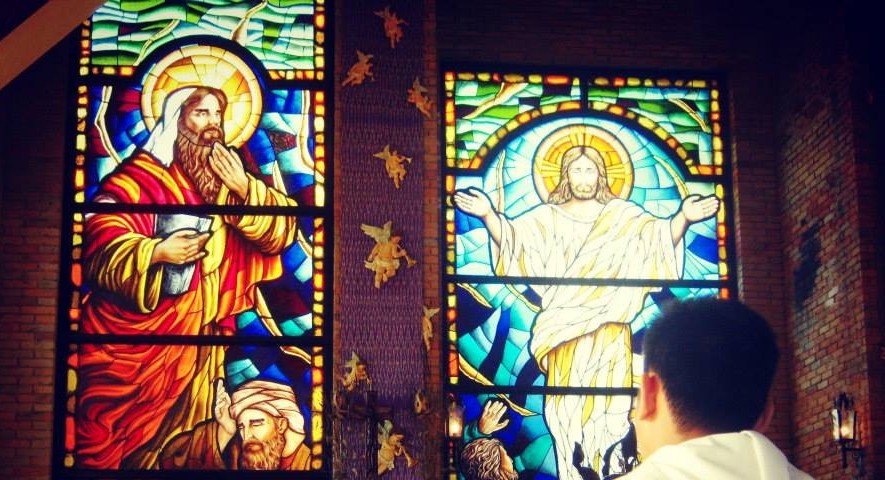

Fourth Sunday of Easter. April 17, 2016 [John 10:27-30]
“My sheep hear my voice; I know them, and they follow me (Jn 10:27).”
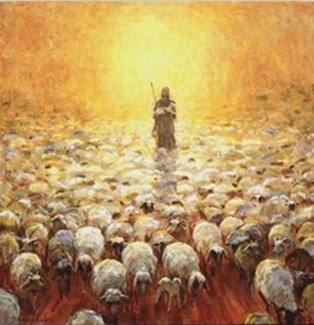 One of the loveliest images of Jesus is the Good Shepherd. It is even more beautiful when we try to bring ourselves to Palestine in the time of Jesus. Life as a shepherd is tough and tiresome. Grass was scarce and the sheep constantly wondered. Since there was not protective fence, the shepherd was bound to watch his sheep for all time, otherwise the sheep would go astray. The terrain in Judea was rough and rocky, and these forced the shepherd to exert extra energy. Not only constant, shepherd’s duty was also dangerous. Wild animals, especially wolfs, were ready to attack and devour the meek sheep. Not only wild predators, robbers and thieves were eager to pirate the sheep.
The sheep in Judea were raised primarily for wool. Thus, the shepherd shall live together with his flock for years. No wonder if he knew well each individual sheep, its characters, and even its unique physical features. He would call them by name like ‘small-feet’ or ‘large-ears’. Because of the intimate bond between the two, the sheep were so familiar with the voice of the shepherd. H.V. Morton, a bible scholar, once narrated his encounter with two shepherds who shared the same cave to shelter their flocks at night. How would they sort them out? In the morning, one shepherd stood some distance and simply voiced a peculiar sound. His sheep recognized the sound immediately, and they ran toward him, while the sheep belonged to the other shepherd remained in the cave!
Good shepherd is a symbol of providential care, sacrifice, and true love. No wonder if ancient Israelites saw God as their shepherd. Psalm 23 is one of the loveliest poems in the bible, describing God as the Good Shepherd. Remember that some great leaders of Israel were actually shepherds. Moses was tending to his father-in-law flocks when he was called by God in the burning bush (Exo 3). David also was taking care of his father’s sheep when Samuel came and anointed him king (1 Sam 16).
Jesus understood this and He took this identity upon himself. Not only any shepherd, He is the Good Shepherd. He knows us individually as unique and precious. He takes care of us constantly, and search us if we go astray. He protects us from any harm and danger. Even He is willing to give up His life just to save us.
Now, we are not merely animals just like any other sheep. We are human being, with intellect and freedom. To be the sheep of Christ takes another profound form. It means that we are also called to become a good shepherd. A priest is a good shepherd to his faithful. A husband or wife is a good shepherd to each other. Parents are good shepherds to their children. Fr. Gerard Timoner, OP, our provincial, once reminded us that ‘brother-shepherding-brother’ should be our spirit of our formation.
Being a good shepherd is never easy, just like Christ, we shall give our all to others. But, only in giving ourselves that our lives finds its meaning. John Maxwell, leadership guru, once said that the success of man is not how many people serve him, but how many people whom he serves. Meanwhile Zig Ziglar, great American inspirational speaker, reminds us that we can get everything in life we want if we help enough people get what they want. Fundamentally, we were created in the image of God, and if our God is the Good Shepherd, we are the image of the Good Shepherd. It is our purpose and mission in life to be a good shepherd and grow our sheep.
Br. Valentinus Bayuhadi Ruseno, OP
 Reading today’s Gospel in original Greek, we get to appreciate more the dialogue between Jesus and Peter. In English translation, both Jesus and Peter expressed themselves in the same word ‘love’, but in Greek, the word Jesus employed is ‘agapao’ while Peter’s is ‘phileo’. ‘Agapao’ or ‘agape’ refers to unconditional and radical love that every Christian should exemplify. This love is based on freewill and discipline, not just affections. This love empowers to love, to forgive and to have mercy even to our enemies. While ‘phileo’ or ‘philia’ is the reciprocal love of friendship. It is coming from both natural liking as well as firm decision. We make friends with whom we feel close, yet we exert also efforts to get close and understand them. As an old adage say, ‘friend in indeed is friends indeed.’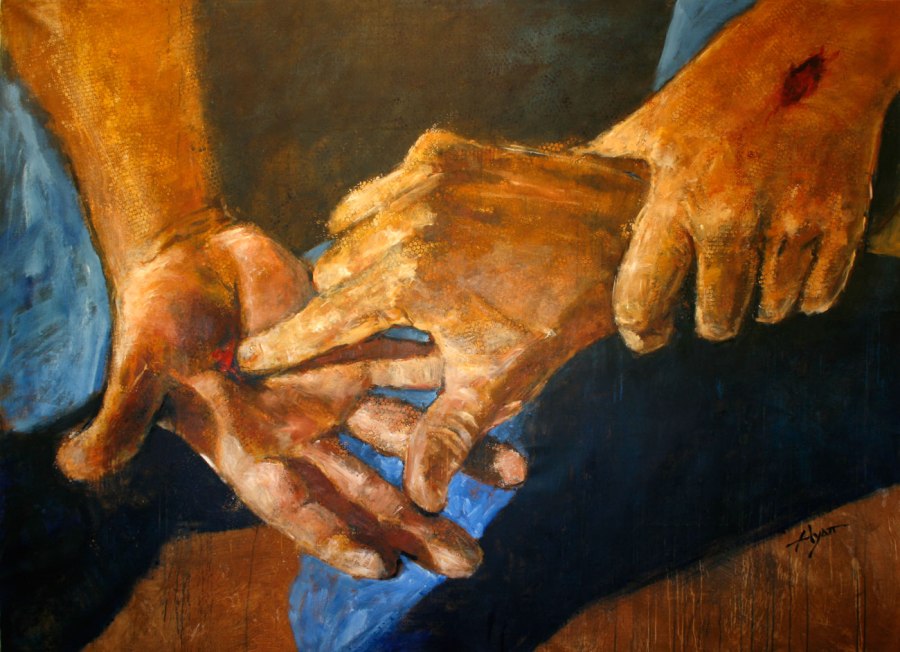
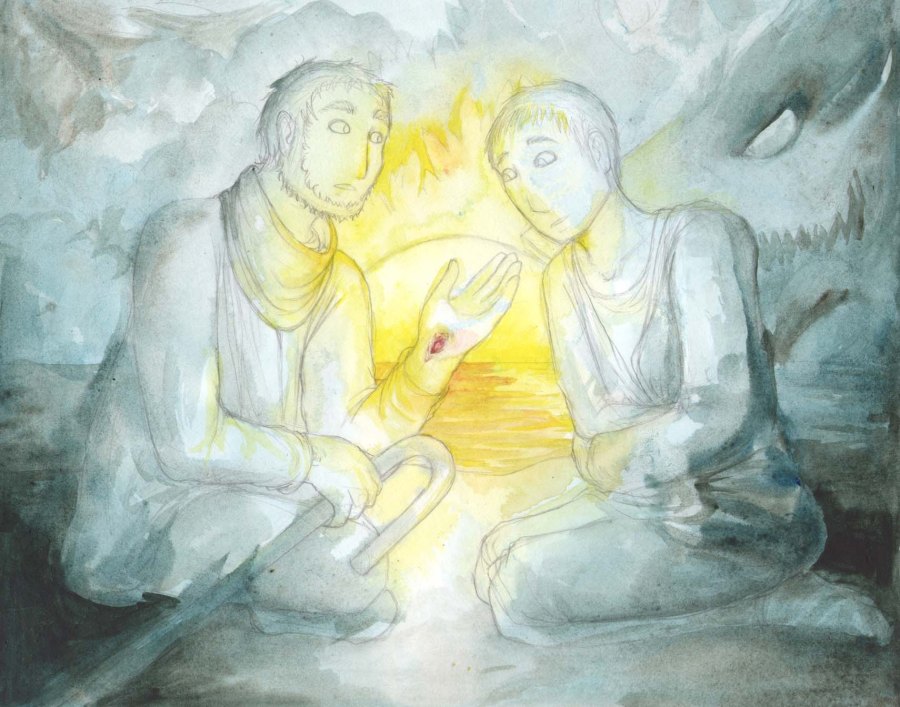
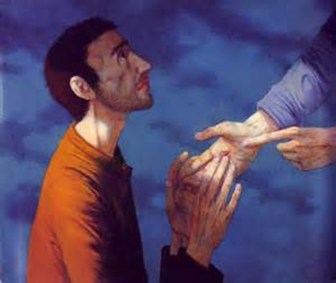 The request of Thomas was a bit strange. To recognize the risen Lord, Thomas demanded that he would be able to touch the wounds of Christ. But, why did Thomas look for the wounds of Jesus? He could have asked to see Jesus’ face, or to touch Jesus’ nose. He had been Jesus’ disciple for some years, and surely, Thomas would not have any difficulty to recognize Jesus. Why wounds?
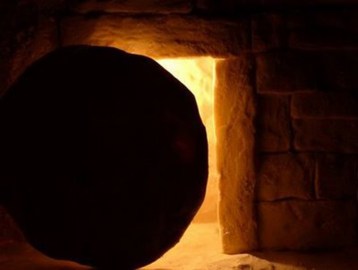 What do you see inside the empty tomb? Seeing the empty tomb, Mary Magdalene was at lost, terrified and confused. Where is Jesus? Is He moved to the other tomb? Is someone stealing His Body? Peter, the leader of the apostles, did not understand the empty tomb and went home puzzled. All things were so depressing. Jesus was betrayed, denied, tortured, crucified and now he is missing!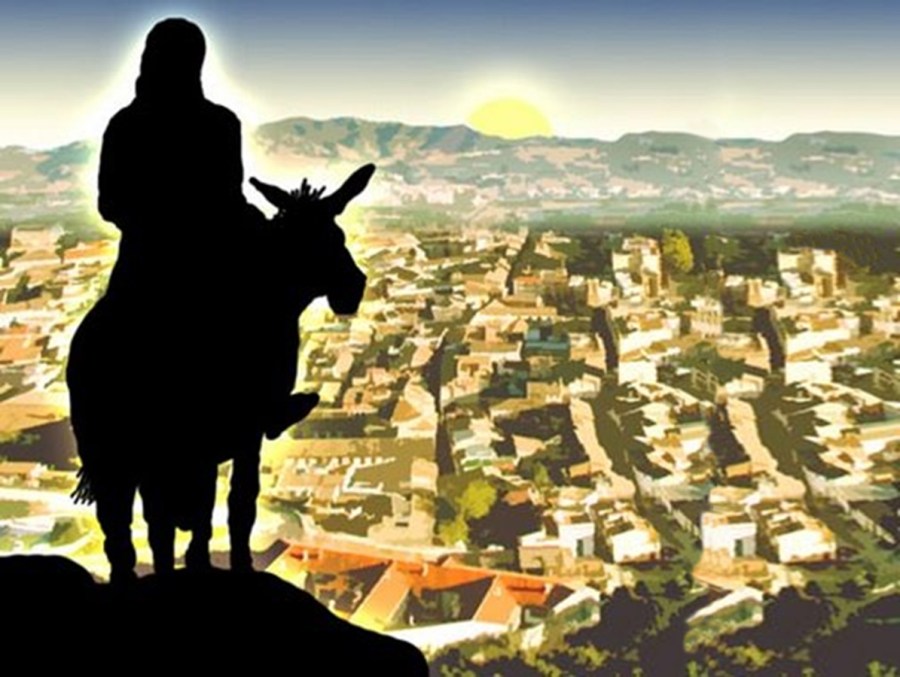
 Palm Sunday or Jesus’ entrance to Jerusalem marks the beginning of the most important drama of the Gospel, the drama of the Holy Week. The memory was so significant to the early Christians that the episode was recorded in all four Gospels (Mat 21:1-11, Mark 11:1-11, and John 12:12-19), though with some different emphases. Why was Jesus’ entrance to the ancient city Jerusalem so significant?
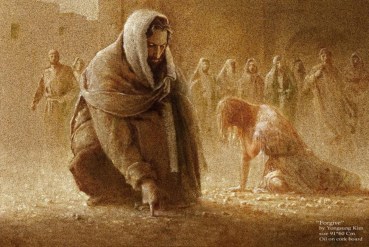 In time of Jesus, women were not standing at the same level with men. Crudely speaking, women were considered to be the property of men. Except for several outstanding female figures in the Bible like Deborah, the judge, and Judith, the warrior, the ancient Jewish women had to live under the patriarchal domination. The Bible is not loud at the stories of abused and battered women, but we can safely assume that the exploitations took place here and there.
 The Parable of the Prodigal Son is one of the most moving stories of Jesus and has been regarded as the all-time favorite. The parable is so beautiful that it moved one of the earliest heretics, Marcion of Sinope, to single out the Gospel of Luke as the only valid Gospel. Why does the parable gain such honor among Jesus’ parables? I guess one of the reasons is the unexpected twist of event appears in the parable. Like when we watch movies in the cinema, flat and predicted plot of movies will cause boredom, but movies with sudden and unforeseen twists often create breath-taking excitement. The twist of the parable is that the Mercy of God that goes beyond any human expectation and limitations.
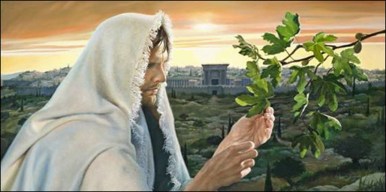 The heart of the parable of the Good Gardener is God’s Mercy. Not only He is merciful, but He is the Mercy itself. Pope Francis fittingly wrote that the name of God is Mercy. God cannot but be merciful. We are like the tree that was fruitless and useless, but God gave us a second chance. Jesus, our Holy Gardener, even exerts His utmost effort to take care of us, making sure that grace of God in constantly pour upon us.
 For St. Luke, Jesus is a man of prayer. Luke fondly wrote in his Gospel that Jesus would pray before the decisive events in His life and mission. Jesus prayed the whole night before he chose His disciples (Luk 6:12). One of the reasons why Jesus cleansed the Temple of Jerusalem was that He was well aware of the main function of the holy Temple: House of Prayer (Luk 19:46). He reminded his disciples to pray especially in facing trials and tribulations (Luk 21:36). Before He was embracing His passion and death, He prayed at the garden (Luk 22:44). Finally, enduring a brutal torture, He saved His last breath even to pray for those who have crucified Him (Luk 23:34).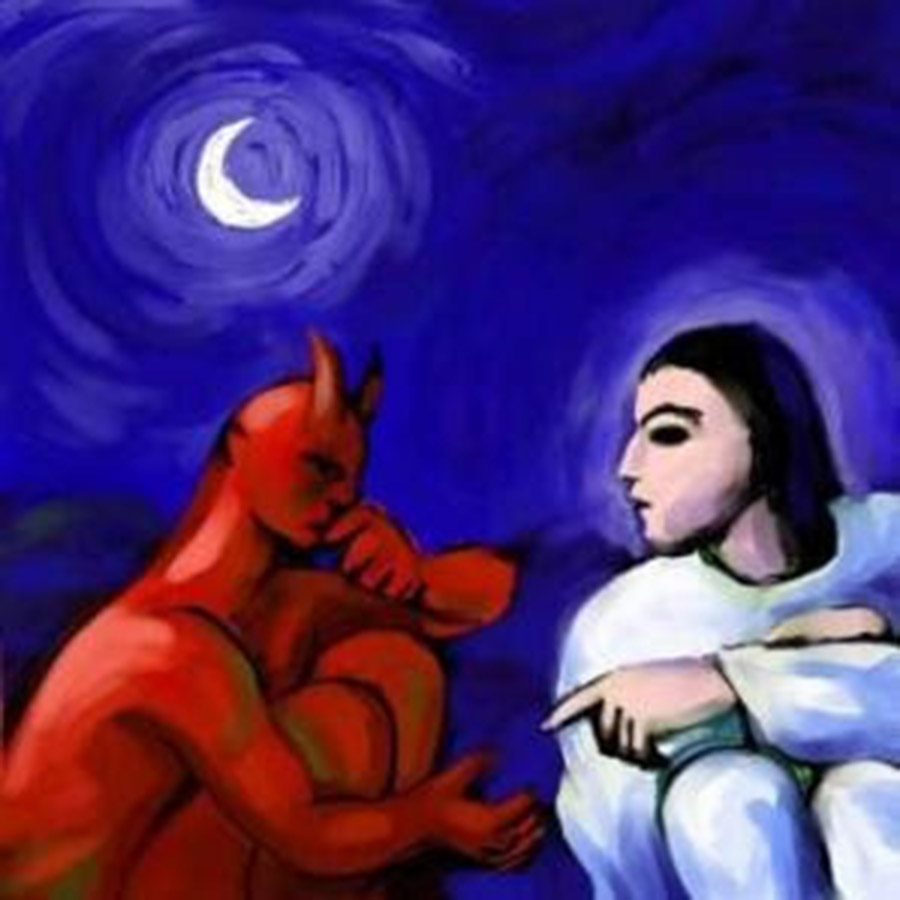
 Today’s Gospel shows us that the Holy Spirit led Jesus to the desert. Yes, the Holy Spirit will not spare us from the desert! The desert experience can be anything that spells dryness and emptiness in our lives and souls. Out of nowhere, a seminarian enters into a desert as he is feeling unexplainable meaninglessness in his chosen vocation. A mother begins to experience exhaustion in fulfilling her difficult mission to rear her children. Through her journals, it was revealed that even holy person like Mother Teresa of Calcutta went through ’the eclipse of God’ when she did not sense the presence of God for almost 10 years in her life.
