
Second Sunday of the Ordinary Time [A]
January 19, 2020
John 1:29-34
 We begin the ordinary time of the liturgical year. In the Church, we have three cycles of the liturgical year: A, B, and C. every year, we have a different set of readings. In year A, the Gospel readings are mainly from the Gospel of Matthew, meanwhile, year B is from Mark and year C is from Luke. The Gospel of John does not have its separate year, but the readings from John are scattered through the years, especially in the Easter season.
The first reading is usually taken from the Old Testament and it is thematically related to the Gospel. While the second reading is coming from the letters of the apostles like St. Peter, St. John and the letter to the Hebrews, yet the majority of the second reading comes from letters of St. Paul. The second readings have their own sequence and it is not necessarily thematically related to the Gospel. The reason behind why we have this kind of liturgical setting is that to help us, the regular mass-goers, to read the Scriptures together with the Church. If we are faithfully attending the mass every Sunday, or even every day, and attentive to the readings, we will have a good grasp of the Scriptures and especially the life and works of Jesus.
However, not all the Scriptures are there in the Mass. If we go every day to participate in the Eucharist for three years, we only listen to around 30 percent of the Bible. We still have 70 percent to complete the Bible! Thus, it is highly recommended that we take the initiative to read the Bible on our own. Three to four chapters a day, and hopefully, within a year, we are able to read the entire Bible cover to cover.
I guess one of the “great sickness” of Catholics nowadays is the ignorance of the Scriptures. When I ask some Catholics whether they have the Bible, they unanimously answer that they have a Bible, and in fact, they have a collection of Bible coming from different countries. However, when I inquire whether they read the Bible regularly, only a few would confidently reply that they do.
The task of reading the Bible is getting difficult in our time because young generations or the millennials and generation Z, despite their high education, prefer to playing electronic gadgets rather than to read books, and printed materials become an obsolete. Yes, it is easy now to install a Bible on our cellphone but to spend time to read it is another thing. With so many other competing applications in our handheld device, reading the Word of God is easily relegated to the sideline.
St. Jerome reminds us that ignorance of Scriptures is ignorance of Christ. Indeed, it is too easy to say “I love Jesus”, but in reality, we are ignoring Him because we never read or attentively listen to the Scriptures. St. Paul in the beginning of his letter to the Corinthians reminds us that we are called to saints or holy. And holiness for Paul is nothing but living in Christ, but how we can live in Christ, if we do not know Christ, worse ignore him? Reading a Bible on a daily basis can become a simple yet concrete act of loving Jesus, and in fact, the way to holiness as we become more and more like Christ.
Valentinus Bayuhadi Ruseno, OP
 Kita memulai masa biasa pada tahun liturgi ini. Di Gereja Katolik, kita memiliki tiga siklus tahun liturgi: A, B, dan C. Di setiap tahun, kita memiliki serangkaian bacaan yang berbeda. Pada tahun A, bacaan Injil terutama dari Injil Matius, sementara tahun B dari Markus dan tahun C dari Lukas. Injil Yohanes tidak memiliki tahun yang khusus, tetapi bacaan dari Yohanes tersebar di sepanjang tahun, terutama di masa Paskah.
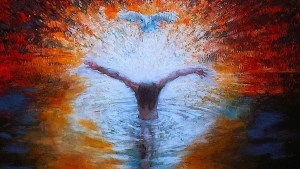 One question that always baffles attentive readers of the Scriptures is that why should Jesus be baptized by John the Baptist? John himself proclaimed that his baptism is a sign of repentance. Those who are baptized by John must first acknowledge their sinfulness and unworthiness, and baptism of water becomes the visible token of turning away from sins and promise of a new and better life. Yet, we all know that Jesus is sinless [Heb 4:15; 1 Pet 2:22]. Does it mean Jesus is sinful? Is John the Baptist greater than Jesus?
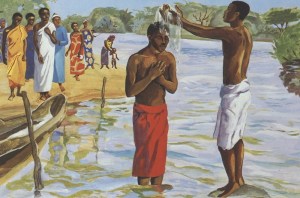 Satu pertanyaan yang selalu membingungkan para pembaca Kitab Suci adalah mengapa Yesus harus dibaptiskan oleh Yohanes Pembaptis? Yohanes sendiri menyatakan bahwa baptisannya adalah tanda pertobatan. Mereka yang dibaptiskan oleh Yohanes harus terlebih dahulu mengakui keberdosaan dan ketidaklayakan mereka, dan baptisan air menjadi tanda nyata berpaling dari dosa dan memulai kehidupan yang baru dan lebih baik. Namun, kita semua tahu bahwa Yesus tidak berdosa [lih. Ibr 4:15; 1 Pet 2:22]. Apakah ini berarti Yesus berdosa? Apakah Yohanes Pembaptis lebih besar dari Yesus?
 Often we take for granted the name Jesus Christ, without realizing the meaning behind it. The word “Christ” is neither part of the personal name of Jesus nor the family name of Jesus. Jesus earns the name Christ not because of His foster father, Joseph, otherwise, we also call him Joseph Christ and his wife, Mary Christ.
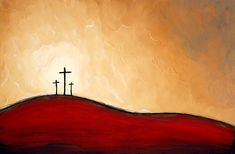 Seringkali kita menerima begitu saja nama Yesus Kristus, tanpa menyadari makna mendalam di baliknya. Kata “Kristus” bukan bagian dari nama pribadi Yesus atau nama keluarga Yesus. Yesus mendapat nama Kristus bukan karena ayah angkatnya, Yusuf, tetapi senyatanya “Kristus” adalah sebuah gelar yang sangat penting bagi umat Yahudi dan Kristiani pada abad pertama masehi.
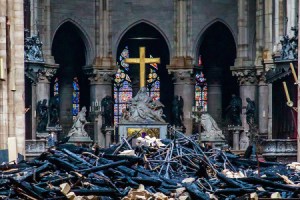 During the reign of Herod the Great, the Temple of Jerusalem was refurbished, adorned by gold and other precious metals, and expanded, and thus making it the crown jewel of the Jewish nation. However, the Temple was not merely a magnificent building, but primarily the center of Jewish religious worship and religion. Every morning and evening, sacrifices were offered, and every year, Jewish men from all over the world made their pilgrimage, and paid their homage the Lord God. It was the place where God chose to stay, the place where the Israelites meet their God, and the house of God.
 Dalam Injil hari ini, orang-orang Saduki berusaha untuk menguji Yesus. Saduki adalah faksi religius dalam agama Yahudi pada zaman Yesus, tetapi tidak seperti orang-orang Farisi yang populer, kaum Saduki hanya memegang Taurat sebagai satu-satunya sumber yang sah dari ajaran dan praktik keagamaan Yahudi, dan menolak tulisan para nabi, dan tradisi selanjutnya. Salah satu doktrin utama mereka adalah bahwa mereka tidak percaya pada kebangkitan badan. Meskipun, Yesus dan orang-orang Farisi selalu berdebat, Yesus dan orang Farisi berbagi kepercayaan dasar yang sama tentang kebangkitan tubuh. Dengan demikian, untuk menyangkal kepercayaan ini, orang Saduki menggunakan Hukum Taurat untuk membuat malu Yesus. Dalam Hukum Taurat, ada praktik untuk mengamankan garis keturunan dan warisan seorang pria yang tidak memiliki keturunan. Sebagai solusi, saudara-saudara lelaki yang meninggal akan menikahi jandanya dan diharapkan memperoleh keturunan bagi sang saudara yang telah meninggal. Kemudian, para Saduki mengajukan kesimpulan seolah-olah kebangkitan badan tidak masuk akal. “Dalam hari kebangkitan, siapakah yang menjadi suami istri ini?”
