
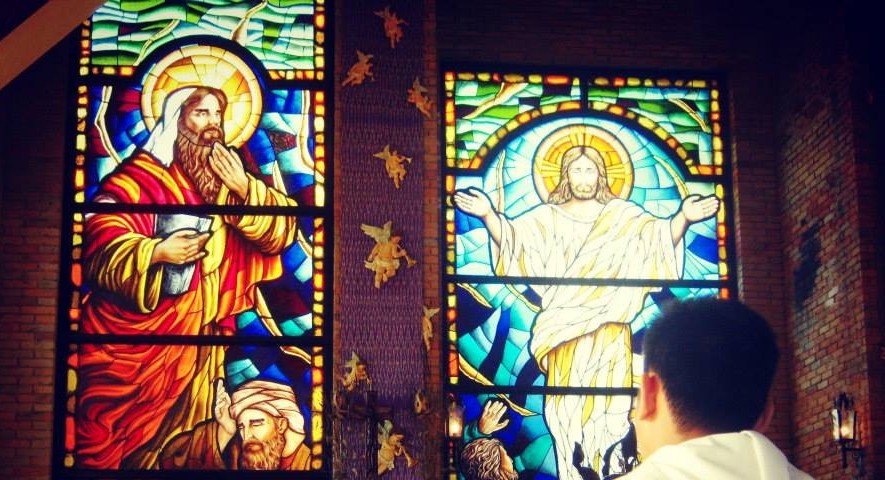
The Solemnity of the Body and Blood of Christ [June 23, 2019] Luke 9:11-17
 Today the Church is celebrating the solemnity of the Body and Blood of Jesus Christ. In many countries like Indonesia, today is the best time for the children who are already prepared to receive their first Holy Communion. I still recall the day I partook of the sacred host and the holy wine. Many of us were around 10 years old, old enough to recognize the presence of Christ in the Eucharist and we were dressed in white. I was wearing long-sleeved white shirt with a tie and black pants. When the priest dipped the white bread into the chalice of wine and said, “the body and blood of Christ”, I said “Amen.” It was my first time to savor the sweetness of wine, and of course, alcoholic beverage!
At that moment, I just knew the reception of sacred host is necessary to complete the Eucharist, and I was aware I was receiving a blessing, but I never truly comprehend the profound meaning of the great mystery. For me, it was just enough that I attend the mass and consume the consecrated host. It has become a routine and tradition, from Sunday to Sunday, to from month to month, from year to year. Till we become parents and we also bring our children for their first communion. And when somebody asks us, “why do you bring your children to the first communion?”, our answer may be like, “Well, we want our kids to be like us. It is just a family tradition.” The answer is simple, but too simple that it draws more questions: why bread and wine? Why Body and Blood of Jesus? Why does it have to be eaten?
We often forget to realize that this sacred host and wine are the entire Jesus Christ Himself, with all humanity and divinity. Thus, God offers Himself to be eaten. Why eating God? The answers lie on the pages of our Old Testament. Firstly, we recall that our first parents fell because of the act of eating. Now, in the Eucharist, God uses the same act of eating to restore men and women into grace. Secondly, in the middle of the garden of Eden, there were two trees, the forbidden tree, the tree of the knowledge of good and evil, and the tree of life [Gen 2:9]. Unfortunately, our first parents chose to eat the fruits from the forbidden tree. Thus, to restore humanity to grace, now God offers us the fruits from the tree of life, the tree of the cross of Christ. Thirdly, we remember the first Passover was about the story of how God liberated Hebrew people from the slavery of Egypt. The Passover began with the slaughter of the lamb, and its blood was sprinkled on the doors of the Israelite house so that their firstborns would be saved from death. Yet, the slaughter and the sprinkling of blood were not the summit of Passover. The Hebrew people had to consume the lamb as to complete their first Passover [Exo 12:8]. Now, Jesus the Lamb of God, has been sacrificed on the cross, yet it is not the end. Like the Hebrew Passover, we need to consume the Lamb of God to complete our New Passover, the Eucharist.
There are so much themes and aspects we may ponder on the Eucharist, and particularly today, the Church reminds us that the Eucharist, especially the reception of the Holy Communion is not just our Sunday routine, a family tradition. It is of the essential plan of God for our salvation, so that we may have heaven, our Communion with God, the Holy Trinity.
Deacon Valentinus Bayuhadi Ruseno, OP
 Hari ini Gereja merayakan Hari Raya Tubuh dan Darah Yesus Kristus. Di banyak negara seperti Indonesia, hari ini adalah waktu terbaik bagi anak-anak yang sudah siap untuk menerima Komuni Suci pertama mereka. Saya masih ingat hari saya menerima hosti dan anggur suci. Banyak dari kami berusia sekitar 10 tahun, cukup dewasa untuk mengenali kehadiran Kristus dalam Ekaristi. Saya ingat bahwa saya mengenakan kemeja putih lengan panjang dengan dasi kecil dan celana hitam. Ketika pastor mencelupkan hosti putih ke dalam piala anggur, dan berkata “tubuh dan darah Kristus”, saya berkata “Amin.” Ini adalah pertama kalinya saya menikmati manisnya anggur, dan tentu saja, minuman beralkohol!
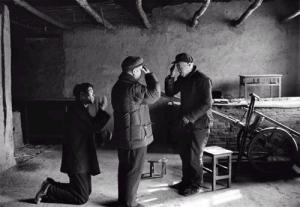 The distinctive mark of being Christian is the Holy Trinity. We share the claim of monotheism [only one God] with other prominent religions, yet our belief in one God in three divine persons enables us to stand unique among others. Doubtless, our God is one, yet the same undoubtedly, there are three persons in this one God. The Father is different from the Son and the Holy Spirit. The Son is also unique. And, the Holy Spirit maintains His personal identity. Yet, they remain always one! How is this possible?!
 Tanda khas menjadi Kristiani adalah iman kepada Tritunggal Mahakudus. Kita berbagi klaim monoteisme [hanya satu Tuhan] dengan agama-agama besar lainnya, namun kepercayaan kita pada satu Tuhan dalam tiga pribadi ilahi memungkinkan kita untuk berdiri secara unik di antara yang lain. Tidak diragukan lagi Allah kita adalah satu, namun tidak diragukan juga ada tiga persona dalam satu kodrat ilahi ini. Bapa berbeda dari Putra dan Roh Kudus. Sang Putra juga benar-benar unik. Dan, Roh Kudus menjaga identitas pribadi-Nya. Namun, mereka tetap selalu satu! Bagaimana ini mungkin?!
 The Spirit leads Jesus to the desert and Jesus remains there for forty days. The questions are: why does the Holy Spirit bring Jesus to the desert? Why does it have to be forty days? If we are familiar with the Old Testament, we recall that the journey of the Israelites in the desert lasted for forty years – the great exodus. After the great escape from the slavery of Egypt, they needed to walk through the desert before entering the Promise Land. Yet, it is not simply about the story of greatest escape in the history, but how God formed Israel as His people. In desert, God made a covenant with Israel through the mediation of Moses. In desert, God gave the Law as the basic guide for the Israelites living as His people. In the desert, God provided them with water, manna from heaven, and protected them from their enemies. However, in the desert also, the Israelites rebelled against God. They made and worship the golden calf. They complained a lot, and they wanted to kill Moses. It was a foundational story that covered almost the four Books of Moses [Exodus, Leviticus, Numbers and Deuteronomy].
 Roh membawa Yesus ke padang gurun dan Yesus tinggal di sana selama empat puluh hari. Pertanyaannya adalah: mengapa Roh Kudus membawa Yesus ke padang gurun? Mengapa harus empat puluh hari? Jika kita akrab dengan Perjanjian Lama, kita tahu bahwa bangsa Israel berjalan di padang gurun selama empat puluh tahun. Sebuah peristiwa yang disebut juga sebagai “eksodus”. Setelah keluar dari dari perbudakan Mesir, mereka harus berjalan melalui padang gurun sebelum memasuki Tanah Perjanjian. Namun, ini bukan hanya tentang kisah pelarian mereka dari Mesir, tetapi bagaimana Allah membentuk Israel sebagai umat-Nya. Di padang gurun Sinai, Allah membuat perjanjian dengan Israel melalui mediasi Musa. Di padang gurun, Allah memberikan Hukum sebagai pedoman dasar bagi Israel yang hidup sebagai umat-Nya. Di padang gurun, Tuhan memberi mereka air, manna dari surga, dan melindungi mereka dari musuh. Namun, di padang gurun juga, Israel memberontak melawan Tuhan. Mereka membuat dan menyembah anak lembu emas. Mereka banyak mengeluh dan tidak tahu berterima kasih. Itu adalah kisah mendasar yang mencakup hampir empat Kitab Musa [Keluaran, Imamat, Bilangan dan Ulangan].
 Tiga hari Minggu terakhir ini, kita telah mendengarkan serangkaian ajaran Yesus yang diberikan di Dataran [Luk 6]. Dua Minggu yang lalu, kita membaca tentang Sabda Bahagia. Ini adalah serangkaian kondisi yang menuntun kita menuju kebahagiaan dan berkat sejati. Minggu lalu kita mendapatkan beberapa langkah praktis untuk mencapai Sabda Bahagia ini. Dan hari Minggu ini, kita menemukan inti dari ajaran Yesus: ini adalah pembentukan hati manusia.
 Minggu lalu, kita mendengarkan ajaran Yesus Kristus tentang Sabda Bahagia. Ini adalah serangkaian kondisi yang menuntun seseorang menuju hidup berkat atau kebahagiaan sejati. Minggu ini, kita menemukan langkah-langkah praktis tentang cara mencapai kebahagiaan sejati ini. Minggu lalu, kita belajar bahwa Sabda Bahagia Yesus adalah kebalikan dari tatanan kebahagiaan duniawi. Bagi dunia, menjadi tamak akan kekayaan, berpengaruh, terkenal, dan kuat secara seksual adalah syarat untuk kebahagiaan. Yesus membalik tatanan ini dan mengatakan bahwa mereka yang murah hati, berbelas kasih dan murni hatinya adalah mereka yang benar-benar bahagia.
 We listen today the Beatitude, but unlike the famous Beatitude from the Gospel of Matthew, we have today from the Gospel of Luke. Unlike from Matthew who has eight sayings of blessedness, Luke has four blessedness and for four “woes”. The most striking difference is while Matthew seems to emphasize “the poor in spirit”, Luke wants us to understand poverty in a more literal sense.
