Ekaristi dan Manna

Hari Raya Tubuh dan Darah Kristus (Corpus Christi)
11 Juni 2023
Yohanes 6:51-58

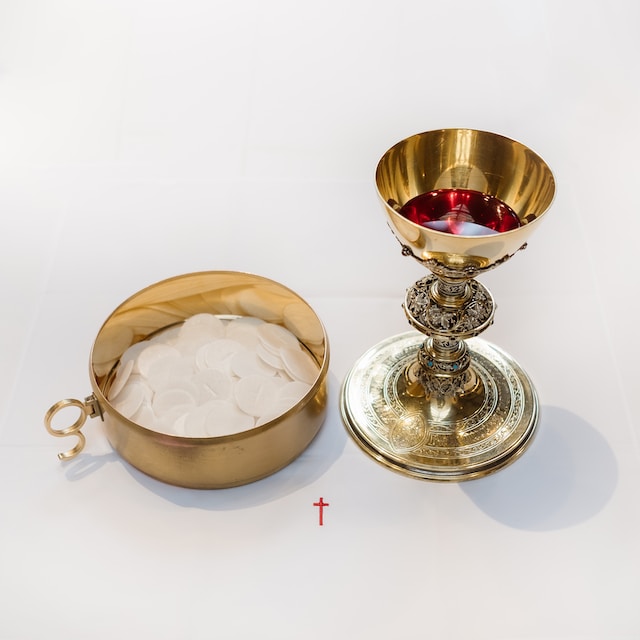
Hari ini, Gereja merayakan Hari Raya Tubuh dan Darah Kristus, atau juga disebut Hari Raya Corpus Christi (bahasa Latin yang berarti “Tubuh Kristus”). Melalui hari Minggu ini, Gereja mengundang seluruh umat beriman untuk merenungkan sekaligus merayakan salah satu misteri dan mukjizat agung iman Katolik, yaitu kehadiran Yesus Kristus yang nyata dalam setiap Ekaristi. Seperti yang kita dengar dari Injil Yohanes, Yesus benar-benar memberikan Tubuh dan Darah-Nya sebagai makanan yang nyata, dan mereka yang makan Tubuh-Nya dan minum Darah-Nya akan memiliki hidup yang kekal (Yohanes 6:51). Namun, apakah kita benar-benar memakan Tubuh dan Darah Yesus? Apakah itu berarti kita memakan daging manusia, dan dengan demikian, kita melakukan kanibalisme?

Ya, kita memang makan dan minum Tubuh dan Darah Kristus, tetapi kita tidak melakukan tindakan kanibalisme. Mengapa demikian? Cara termudah untuk menjawab tuduhan ini adalah dengan pergi ke Gereja dan mengamati liturgi Ekaristi itu sendiri. Dalam perayaan misa, tidak ada orang yang memakan daging mentah atau vampir yang menghisap darah segar. Tidak ada yang bersifat kanibal sama sekali dalam Ekaristi. Jadi, di manakah Tubuh dan Darah Kristus? Jawabannya mungkin sedikit rumit. Roti dan anggur yang dipersembahkan dan dikonsekrasikan oleh imam bukan lagi roti dan anggur biasa. Ya, apa yang terlihat tetap sama, tetapi kodratnya berubah menjadi Tubuh dan Darah Kristus yang sesungguhnya. Dalam perspektif ini, kita mengambil bagian dalam Yesus bukan dengan cara kanibal, melainkan dengan cara ekaristi.

Namun, ada hal yang lebih menarik lagi jika kita membaca perkataan Yesus dengan seksama. Ketika Yesus menjelaskan tentang realitas Tubuh dan Darah-Nya sebagai makanan yang sejati, Yesus membuat perbandingan tipologis dengan Manna yang diterima bangsa Israel di padang gurun. Apakah Manna itu? Banyak dari kita beranggapan bahwa Manna hanyalah sejenis roti biasa. Namun, jika kita membaca dengan seksama Kitab Keluaran 16, reaksi orang Israel yang melihat dan mengambil Manna itu sangat terkejut karena mereka tidak pernah melihat makanan semacam itu sebelumnya. Faktanya, kata Manna berasal dari bahasa Ibrani מָן הוּא (baca: man hu; Kel 16:15), yang secara harafiah berarti “apakah ini?” Orang Israel ragu-ragu, tetapi Musa meyakinkan mereka bahwa ini adalah roti yang datang dari surga untuk menopang mereka dalam perjalanan melalui padang gurun.

Dari perbandingan tipologis ini, Yesus ingin kita melihat Tubuh-Nya seperti Manna dalam Perjanjian Lama. Sebagaimana Manna adalah makanan sejati yang berasal dari surga, demikian juga Tubuh Yesus adalah makanan sejati yang berasal dari surga. Sebagaimana Manna adalah makanan yang menopang perjalanan bangsa Israel di padang gurun, demikian juga Tubuh Yesus adalah makanan yang menopang perjalanan kita di bumi. Sebagaimana Manna terlihat seperti roti biasa, namun pada kenyataannya merupakan sesuatu yang melampaui pemahaman bangsa Israel, demikian juga Tubuh Kristus terlihat seperti roti biasa, namun pada kenyataannya merupakan rahmat terbesar yang melampaui pemahaman kita.

Kita bersyukur kepada Tuhan yang telah memberikan Tubuh dan Darah-Nya, seluruh diri-Nya kepada kita sebagai roti kehidupan yang menyehatkan dan melestarikan kita di lembah duka ini. Ekaristi menjadi bukti kasih-Nya, bahwa Dia akan menyertai kita sampai akhir zaman.

Roma
Valentinus Bayuhadi Ruseno, OP

Eucharist and Manna

Solemnity of the Body and Blood of Christ (Corpus Christi)
June 11, 2023
John 6:51-58

Today, the Church is celebrating the solemnity of the Body and Blood of Christ, or sometimes also called the Feast of Corpus Christi (Latin for ‘the Body of Christ’). Through this Sunday, the Church invites all the faithful to reflect as well as to celebrate another great mystery and miracle of Catholic faith, that is, the real presence of Jesus Christ in every Eucharist. As we heard from the Gospel of John, Jesus truly gave His Body and Blood as real food, and those who eat His Body and drink His Blood will have eternal life (John 6:51). But, do we really eat the Body and Blood of Jesus? Does it mean we are eating human flesh, and thus, we are committing cannibalism?

Yes, We are eating and drinking the Body and Blood of Christ, but we do not commit any act of cannibalism. Why so? The easiest way to answer this accusation is simply by going to the Church and observe the liturgy of the Eucharist itself. In the celebration of the mass, neither we see people eating raw meat nor vampires sucking fresh blood. Nothing cannibalistic at all in the Eucharist. So, where are the Body and Blood of Christ? The answer may be a bit complex. The bread and the wine that are offered and consecrated by the priest are no longer ordinary bread and wine. Yes, the appearance remains the same, but the nature is transformed into the real Body and Blood of Christ. In this perspective, we partake in Jesus not in cannibalistic manner, but rather in the eucharistic manner.

However, there is even something more fascinating if we carefully read Jesus’ words. When Jesus explains about the reality of His Body and Blood as true food, Jesus makes a typological comparison to the manna that the Israelites received in the desert. What is manna? Many of us assume that Manna is just another type of bread. Yet, if we read closely the Book of Exodus 16, the reaction of the Israelites who saw and took the manna was utter surprise because they never saw that kind of food before. In fact, the word manna comes from the Hebrew words מָן הוּא (read: man hu), and it simply means “what is this?” The Israelites were hesitant, but Moses assured them that this was the bread that came from heaven to sustain them in their journey through the desert.

From this typological comparison, Jesus wants us to liken His Body like the manna of the Old Testament. As manna is a real food from heaven, and so also Jesus’ Body is a real food from heaven. As manna is a food that sustained the Israelites’ journey in desert, so also Jesus’ Body is a food that sustains us in our journey on earth. As Manna appears like ordinary bread, but in reality something that defies the understanding of sons of Israel, and so also the Body of Christ appears like ordinary bread, but in reality, it is the greatest gift that goes beyond our comprehension.

We give thanks the Lord for giving us His Body and Blood, His whole self to us as the bread of life that nourishes and sustains us in this valley of tears. The Eucharist becomes His proof of love, that He will be with us until the end of time.

Rome
Valentinus Bayuhadi Ruseno, OP

Why We Believe in the Holy Trinity

The Most Holy Trinity

June 4, 2023

John 3:16-18

On Sunday after Pentecost, the Church celebrates the mystery of all mysteries, the Most Holy Trinity. Doubtless, this truth is most challenging to understand, let alone to explain. Yet, why does the Church insist on teaching this and even celebrate the mystery? Why doesn’t the Church teach something more straightforward than the mystery of the Trinity, and perhaps, the Church could have gained more followers?

The Church cannot change the teaching of the Holy Trinity. Why? It is the truth of the Gospel! Had the Church proclaimed watered-down versions of God, the Church would be in grave error and lose its identity as the Church founded by Christ. In fact, there have been attempts to change this mystery since the beginning of the Church’s history. Some theologians proposed that God is one, but He appeared in different modes when dealing with creation. He was the Father when He created the world, the Son when He saved it, and the Holy Spirit when He sanctified it. This teaching is traditionally called modalism. The Church rejected this teaching.

Another teaching says that the Father is the only God, while Jesus (and the Holy Spirit) are not divine, and thus there is no ‘Trinity’. One of the proponents of this view is Arius of Alexandria from the fourth century AD. He said that Jesus was not divine, but a created being gifted with superpowers. In his own words about Jesus, “There was time that he was not.” At that time, it was a huge controversy, and the simplicity of his teaching attracted a lot of people. The Church declared it a false teaching, and because of that, the Church had to endure persecution. Many faithful chose death rather than renounce the mystery of the Holy Trinity.

Why don’t we go for the simpler teaching of God? Why does the Church stand for the highly complex and difficult truth of the Holy Trinity? Simple teachings may be attractive and easy to accept, but it does not mean that more complex teachings are automatically false or irrelevant. For example, addition and subtraction are foundational and simplest in mathematics, but the same mathematics also contains complex algebra and geometry. Does it mean we can easily ignore algebra and dismiss it as false because it is too complex to understand? Certainly not! The truth does not change even if we do not like it or ignore it. The truth remains, even though we try to water it down.

For the Church, the mystery of the Holy Trinity is not just any truth but the truth of all truths and the mystery of all mysteries. In fact, it is the truth that saves. Studying mathematical truths can help us in building houses and, thus, improve our lives, so researching and living the ultimate reality, the mystery of the Trinity, can bring us closer and closer to eternal life. However, the opposite is also true. If we believe and teach the wrong understandings of our God, this may lead us astray and put our souls in a precarious situation. This is why we constantly believe, teach, and live the mystery of the Holy Trinity.

Rome

Valentinus Bayuhadi Ruseno, OP

Healing of the Blind Man and Baptism

4th Sunday of Lent [A]
April 19, 2023
John 9:1-41

There are seven signs (or miracles) in the Gospel of John. Naturally, the Church has recognized these seven miracles corresponds to the seven sacraments entrusted to her. The healing of the man born blind turns out to be the sign to the sacrament of Baptism. Since the basic theme of Lenten season is baptism, the Church does not hesitate to place this reading during this holy season. But, is true that this miracles is related to baptism? And how do we know?

The story begins with Jesus and disciples saw a poor blind man. Then, His disciples start to ask Him, ‘Rabbi, who sinned, this man or his parents, that he was born blind (John 9:2)?’ Jesus’ disciples believe that his sufferings are consequences of his personal sins, or at least his parents. Yet, Jesus immediately teaches them the truth. Jesus points out that neither blind man nor his parents have sinned to cause him blindness. Although sufferings and death are indeed related to sin, but the relation is not linear, but a mystery. The man does not commit personal sins, but he bears the consequence of sin. How is it possible?

The Church recognizes this condition as the original sin. Every descendant of Adam and Eve was born into the world as ‘enemies’ of God. Since we are in the womb of our mothers, we were ‘sinners’, not because we commit any personal sins, but because we are far from God and do not have a spiritual friendship with Him. Thus, because of the original sin, we are susceptible to various sufferings as well as struggling with concupiscence (check also my reflection two weeks ago).

How does Jesus heal this blind man? Jesus spats on the ground and makes clay with the saliva, and smears the clay on his eyes. Finally, He asks the blind man to wash himself with water. Why does Jesus perform such a weird and unhygienic treatment? Jesus performs what God did in the beginning: the creation of man. When God created Adam, He molded a soil of the ground. There is a Jewish tradition that says that God used His own saliva to make soil easier to form. Jesus does the same here. He is bringing the man with blindness into healing by ‘re-creating’ him. Then, the final healing takes place when the man wash himself with water.

What happens to the healed man, takes place also in every person during the baptism. What we see in our eyes is someone is washed with water, but spiritually, God is making us a new creation. All sins, both original and personal sins, are cleansed. Our souls are transformed into the likeness of Christ and are elevated into the adopted children of God. Thus, we call God our Father, not in the metaphorical sense, but in the real one.

Lastly, towards the end of the story, Jesus asks him, ‘Do you believe in the Son of Man?’ Eventually, the man professes his faith in Jesus and worships Him. Faith is integral part of baptism; whether we believe before the baptism (like in the case of adult baptism) or after baptism (in the case of infant baptism). However, baptism is just the beginning, and our faith must also grow.

We are not sure what the man does after the healing he received, but we may believe that he becomes Jesus’s disciple and follow Him. After baptism and initial faith in Jesus, the Church encourages us to continue our journey of holiness. We grow in faith through living in Christ, works of charity, and proper reception of other sacraments.

Rome
Valentinus Bayuhadi Ruseno, OP

Apakah Yesus mengajarkan kita untuk menjadi lemah?

Minggu ke-7 dalam Waktu Biasa [A]
19 Februari 2023
Matius 5:38-48

Pada hari Minggu ini, kita akan menemukan salah satu ajaran moral Yesus yang paling kontroversial. Karena ajaran ini, kita, umat Kristiani, sering dituduh sebagai orang yang lemah, bodoh, dan tunduk pada hal-hal buruk yang terjadi dalam hidup kita. Namun pada saat yang sama, ketika kita mencoba memperjuangkan keadilan, lawan-lawan kita dengan mudah menggunakan ayat-ayat ini untuk melemahkan kita. Mereka menuduh kita tidak berbelas kasih dan tidak tahu mengampuni. Jadi, bagaimana kita memahami ajaran ini? Apakah ini berarti bahwa seorang istri harus pasrah saja dengan perlakuan kasar suaminya? Apakah itu berarti kita harus menutup mata terhadap kejahatan dan ketidakadilan di sekitar kita?

Yesus membuka pengajaran-Nya dengan mengutip Hukum Taurat Musa, “Mata ganti mata dan gigi ganti gigi (lih. Kel. 21:24).” Bagi telinga orang modern, hukum ini terdengar kejam dan primitif, tetapi tujuan sebenarnya dari hukum ini adalah untuk mencegah pembalasan yang berlebihan. Ketika seseorang mencuri seekor domba, ia harus mengembalikan seekor domba atau hal yang setara. Musuh-musuhnya tidak dapat menuntut seluruh rumahnya sebagai ganti seekor domba. Hukum ini bertujuan untuk menumbukan rasa keadilan, untuk mengekang eskalasi kekerasan yang tidak perlu.

Kemudian, Yesus mengubah hukum Musa ini dengan mengucapkan ajaran baru, “Janganlah kamu melawan orang yang berbuat jahat!” Bagi Yesus, kita harus lebih dari sekadar mencari pembalasan yang setimpal. Namun, apakah itu berarti kita harus menerima semua dengan pasrah dan pasif? Jika kita melihat lebih dalam ke dalam Perjanjian Lama, kita akan menemukan ajaran yang serupa seperti Amsal 24:29, “Janganlah engkau berkata: “Aku akan berbuat kepadanya seperti yang diperbuatnya kepadaku.” (lihat juga Yes 50:6). Dengan demikian, ajaran Yesus untuk tidak membalas kejahatan bukanlah ajaran yang unik bagi Yesus. Jadi, apakah Yesus benar-benar memperbaharui Hukum Taurat Musa?

Ajaran Yesus yang inovatif bukanlah tentang menerima kejahatan secara pasif, melainkan secara aktif menaklukkan kejahatan dengan kebaikan. Kita dapat memahami hal ini jika kita memperhatikan dengan seksama contoh yang Yesus berikan. “Dan kepada orang yang hendak mengadukan engkau karena mengingini bajumu, serahkanlah juga jubahmu (Mat 5:40).” Baju (bahasa Yunani: χιτών, chiton) biasanya merupakan kain sederhana yang dipakai untuk menutupi tubuh, sedangkan jubah (bahasa Yunani: ἱμάτιον, himation) merupakan pakaian yang lebih mahal, dan dikenakan di atas baju. Jadi, Yesus mengatakan bahwa jika seseorang meminta pakaian sederhana kita, jangan hanya memberikan pakaian yang biasa saja, tetapi juga pakaian yang lebih berharga. Tindakan ini pasti akan membingungkan banyak orang, tetapi ini juga menunjukkan ketulusan dan upaya kita untuk mengakhiri permusuhan, serta membuka kemungkinan rekonsiliasi dan bahkan persahabatan.

Tantangan yang sebenarnya adalah bagaimana menerapkan ajaran Yesus dalam kehidupan kita sehari-hari. Saya harus mengakui bahwa tidak ada resep tunggal untuk semua orang. Penerapannya tergantung pada konteks dan kebijaksanaan kita. Salah satu contoh kasus yang baik adalah Santo Yohanes Paulus II dan Ali Agca. Pada tanggal 13 Mei 1981, Ali berusaha membunuh Paus di Lapangan St. Petrus, Roma. Dia menembak beberapa kali dan melukai bapa suci. Namun mukjizat terjadi. Paus lolos dari maut, dan selamat dari upaya jahat tersebut. Ali ditangkap dan dijatuhi hukuman penjara. Apa yang dilakukan Paus Yohanes Paulus II terhadap Ali? Dia memaafkan Ali dan bahkan mengunjunginya di penjara. Tindakan ini cukup berani, karena Ali bisa saja menyerang Paus dan membunuhnya. Namun, pertemuan itu berlangsung dengan baik, dan keduanya berjabat tangan. Ya, Ali diampuni, tapi, apakah itu berarti Ali bisa langsung keluar dari penjara? Tidak sama sekali, Ali tetap menjalani hukuman penjara selama dua puluh tahun, karena itu adalah keadilan, tetapi pada saat yang sama, rekonsiliasi terjadi.

Menjadi pengikut Yesus sungguh sulit karena kita tidak hanya mencari keadilan, tetapi juga harus membawa musuh-musuh kita lebih dekat kepada Yesus. Namun, dengan rahmat Allah, hal ini bisa terjadi.

Roma
Valentinus Bayuhadi Ruseno, OP

Winning Your Enemies

7th Sunday in Ordinary Time [A]
February 19, 2023
Matthew 5:38-48

This Sunday, we encounter one of the most controversial of Jesus’ moral teachings. Because of these teachings, we, Christians, are often accused as being weak, stupid, and submissive in face of evil. Yet at the same time, when we try to fight for justice, our opponents readily utilize these verses against us. They accuse us as not being compassionate, loving and forgiving. So, how do we understand this? Does it mean that a wife simply must endure her abuse husband? Does it mean we do close our eyes to evil and injustice around us?


Jesus opens His teaching with quoting the Law of Moses, “An eye for an eye and a tooth for a tooth (see Exo 21:24).” For modern ears, this law sounds cruel and even barbaric, but the real purpose of this law is to prevent excessive retaliation. When someone stole a lamb, he shall return a lamb or its equivalent. His enemies cannot demand his entire house in place of a lamb. The law is to promote sense of justice, to curb unnecessary violence, and escalation.


Then, Jesus transforms this law of Moses by pronouncing a new teaching, “do not resist evil!” For Jesus, we must go beyond seeking an equal retribution. But, does it mean we have to helplessly become a punching bag?
If we look deeper into the Old Testament, we will discover similar teachings like Proverbs 24:29, “Do not say, “I will do to him as he has done to me.” (check also Isa 50:6). Thus, Jesus’ teaching to resist no evil is not unique to Jesus. So, does Jesus truly transform the Law of Moses then?


Jesus’ ground-breaking teaching is not on passively receiving evil, but rather actively conquering evil with goodness. We can understand this if we look carefully Jesus’ examples. “If anyone wants to go to law with you over your tunic, hand him your cloak as well (Mat 5:40).” Tunic (Greek: χιτών, chiton) is usually a simple cloth and worn to cover the body, while clock (Greek: ἱμάτιον, himation) is more expensive garment, and put over the tunic. Thus, Jesus is saying that if someone demands your simple cloth, do not only give the ordinary one, but also the more precious garment. The action will surely puzzle many people, but it also shows our sincerity and effort to end enmity, as well as open the possibility of reconciliation and even friendship.


The real challenge is how to apply Jesus’ teaching in our daily lives. I must admit there is no one-size-fits-all answer. The application depends on your context and our prudence. One good example will be St. John Paul II and Ali Agca. On May 13, 1981, he attempted to assassinate the Pope. He shot several times and wounded the holy man. Miraculously, the Pope escaped death, and survived the evil attempt. Ali was arrested and sentenced to prison. What did Pope John Paul II do to Ali? He forgave Ali and even visited him in prison. The act was daring enough, because Ali might attack the Pope, and kill him for sure. Yet, the meeting was cordial, as both shook hands. Yes, Ali was forgiven, but, does it mean Ali can immediately walk out of prison? Not at all, Ali served his imprisonment for twenty years, because it is justice, but at the same time, the reconciliation takes place.
Being followers of Jesus is truly tough because we do not only look for justice, but also we need to bring our enemies closer to Jesus. Yet, with God’s grace, this is made possible.

Rome
Valentinus Bayuhadi Ruseno, OP

Hukum Allah dan Hati yang Setia

Minggu ke-6 dalam Masa Biasa
12 Februari 2023
Matius 5:17-37

Setelah kita mendengar pengajaran Yesus tentang kunci kebahagiaan (Sabda Bahagia) dan identitas kita (sebagai Garam Dunia dan Terang Dunia), kini kita masuk ke dalam inti ajaran moral Yesus. Di sini, Yesus menegaskan bahwa Dia tidak meniadakan ‘Hukum Taurat dan kitab para nabi’ (nama tradisional dari Perjanjian Lama), tetapi menggenapinya. Ajaran-ajaran Yesus tidak bertentangan dengan Perjanjian Lama, tetapi Dia menyempurnakan dan mentransformasikannya. Namun, mengapa Yesus harus menyempurnakannya?

Alasan pertama adalah karena banyak hukum dalam Perjanjian Lama yang diberikan oleh Tuhan untuk membentuk bangsa Israel sebagai bangsa yang kudus. Di sini, kudus berarti ‘dipisahkan’ untuk Tuhan Allah saja. Bangsa Israel kuno hidup di tengah-tengah bangsa-bangsa lain yang menyembah banyak dewa-dewi, dan hidup dalam perilaku yang tidak bermoral. Tuhan Israel adalah satu-satunya Tuhan yang benar, dan Dia ingin agar bangsa Israel menyembah Dia saja dan hidup sesuai dengan kehendak-Nya. Oleh karena itu, Dia memberikan Sepuluh Perintah Allah. Mereka tidak boleh menyembah dewa-dewi lain (berhala), dan mereka tidak boleh hidup menurut kebiasaan bangsa-bangsa lain, seperti melakukan pembunuhan, perzinaan, pencurian, dan hal-hal jahat lainnya.

Namun, hukum-hukum Tuhan di Perjanjian Lama tidak hanya mengenai moralitas, tetapi juga berbagai detail dalam kehidupan liturgi (misalnya, Kitab Imamat) dan juga perilaku bermasyarakat (misalnya, Kitab Ulangan). Hukum dan peraturan Allah dalam Perjanjian Lama sangat banyak dan terperinci. Mengapa ada begitu banyak aturan? Bukankah 10 Perintah Allah saja sudah cukup untuk membentuk Israel sebagai bangsanya Allah?

Salah satu alasan mendasarnya adalah ketegaran hati. Pembentukan bangsa Israel sebagai umat Allah terbukti merupakan proses yang sulit. Ketika mereka jatuh ke dalam gaya hidup penyembahan berhala dan kembali berdosa dengan mengikuti jalan bangsa-bangsa lain, Tuhan menempatkan hukum-hukum baru yang lebih ketat. Pada saat yang sama, Allah memberikan kelonggaran-kelonggaran tertentu seperti mengizinkan perceraian (Ul. 24:1-4). Ini juga karena ketegaran hati bangsa Israel.

Yesus paham betul bahwa jika hati kita tidak dibentuk dengan benar, maka banyaknya peraturan akan sia-sia. Oleh karena itu, Yesus berkata, “Karena dari hati timbul segala macam pikiran jahat, pembunuhan, perzinaan, percabulan, pencurian, sumpah palsu, fitnah (Mat. 15:19).” Hukum dan peraturan pada umumnya adalah baik karena memandu kita untuk melakukan sesuatu dengan benar. Hukum dan peraturan juga melindungi kita dari bahaya, serta memberikan kejelasan di tengah-tengah kebingungan. Namun, tidak peduli seberapa baik hukum itu, selama hati manusia keras dan tegar, kita akan selalu menemukan cara untuk membengkokkan hukum.

Jadi, bagaimana kita dapat memiliki hati yang lembut dan mau diperbarui? Faktor pertama dan yang paling penting adalah rahmat Allah. Hanya rahmat-Nya yang dapat membuat hati kita yang keras menjadi hati yang hidup dan baru (lihat Yeh. 36:26). Inilah sebabnya mengapa kehidupan sakramental benar-benar fundamental, terutama melalui partisipasi dalam Ekaristi kudus setiap hari Minggu (bahkan lebih baik lagi, setiap hari) dan pengakuan dosa secara teratur.

Kedua, hati dibentuk oleh keutamaan, dan keutamaan tidak lain adalah kebiasaan yang baik. Memang benar bahwa membentuk kebiasaan yang baik bisa jadi sangat sulit, namun kita selalu dapat memulai dengan langkah yang sederhana namun konsisten. Daripada mengucapkan kata-kata buruk dan kasar saat kita marah, kita bisa berhenti sejenak dan memilih alternatif lain yang lebih baik, seperti mendoakan mereka yang membuat kita marah. Kita juga bisa bereksplorasi dengan kebiasaan-kebiasaan lainnya.

Terakhir, hati kita perlu dibimbing oleh rasionalitas yang benar. Adalah tindakan bijaksana untuk berusaha memahami alasan dan latar belakang di balik hukum-hukum yang kita ikuti. Mengetahui bahwa hukum (terutama Hukum Allah) ada untuk kebaikan kita, membuat kita lebih mudah untuk mengikutinya. Tuhan adalah Bapa yang sempurna dan Dia membuat Hukum-Nya agar putra-putri-Nya mencapai kedewasaan yang sejati.

“Ya Tuhan, ciptakanlah hati yang murni dan setia di dalam diriku!”

Roma
Valentinus Bayuhadi Ruseno, OP

The Laws of the Hearts

6th Sunday in Ordinary Time
February 12, 2023
Matthew 5:17-37

Having heard Jesus’ teachings on the keys to happiness (the Beatitudes) and our identities as the Salt of the Earth and the Light of the World, we are now delving into the heart of Jesus’ moral teachings. Here, Jesus makes it clear that He has come not to abolish the Law and the Prophets, but to fulfil them. Jesus’ teachings are not at odds with the Old Testament, but instead perfect and transform it. Yet, why does Jesus have to transform it?

photocredit: Levi Meir

The first reason is that many laws in the Old Testament were given by God to consecrate and separate the Israelites as a holy nation for the Lord alone. The ancient Israelites were living among the gentiles who worshiped many gods, and lived immoral conducts. The God of Israel is the only true God, and He wanted the Israelites to worship Him alone and live according to His true goodness. Thus, God gave the Ten Commandments, forbidding the worship of other gods (idols) and prohibiting behaviours such as murder, adultery, theft, and other evil practices that were common among the gentiles.

However, God’s laws do not only about morality, but also various details in liturgical life (for example, the Book of Leviticus) and also civil conducts (for example, the Book of Deuteronomy). God’s laws and regulations in the Old Testament are numerous and details. Why are so many rules?

One of the fundamental reasons is the hardness of the hearts. The formation of Israelites as the people of God was proven to be tough process. As they lapsed into previous idolatrous and sinful lifestyles, God placed new and stricter laws. At the same time, God allowed certain concessions like permitting divorce (Deu 24:1-4).

Jesus understands the true purpose behind his Father’s giving of the Law and why the Israelites were given so many laws – because of the hardness of their hearts. Jesus is well aware that without proper heart formation, an increase in rules will be ineffective. Thus, Jesus says, “For out of the heart come evil intentions, murder, adultery, fornication, theft, false witness, slander (Mat 15:19).” Laws and regulations are generally good because they guide us in doing something properly. They also protect us from harms, as well as give clarity in midst of confusion. Yet, no matter how good the laws are, as long as the hearts are hard, the men will always find a way to bend the laws.

So how can we have a renewed and humble hearts? The first and the most important factor is the grace of God. Only God’s grace can make our stony hearts into a living and new hearts (see Eze 36:26). This is why sacramental life is truly fundamental, especially through the participation of the holy Eucharist every Sunday (even better, every day) and regular confessions.

Secondly, hearts are formed by virtues, and virtue is no other than a good habit. Forming good habits can be difficult, but we can always begin with simple, consistent steps. Instead of saying bad words when we are angry, we can pause and choose another better alternative, like saying prayers. We can also explore with other habits.

Lastly, our hearts should be guided by our right reasons. It is wise to seek to understand the reasons behind the laws we follow. Knowing that laws (especially the Laws of God) are there for our goodness make us docile to follow them. God is the perfect Father and He made His Laws for the true maturity of His children.

“O Lord, create a pure and humble hearts in me!”

Rome
Valentinus Bayuhadi Ruseno, OP

Engkaulah Terang Dunia

Minggu ke-5 Waktu Biasa [A]
5 Februari 2023
Matius 5:13-16

Setelah Yesus membuka pengajaran-Nya di bukit dengan Sabda Bahagia, Ia melanjutkan dengan menjelaskan identitas murid-murid-Nya. “Engkau adalah terang dunia.” Mengapa Yesus menyebut murid-murid-Nya sebagai terang dunia? Terang adalah salah satu tema penting dalam Alkitab. Kembali ke kisah penciptaan, salah satu hal pertama yang Tuhan ciptakan adalah terang. “Jadilah terang! Dan terang itu jadi (Kejadian 1:1).” Sekali lagi, mengapa terang menjadi topik penting dalam Alkitab?

Ini ada hubungannya dengan kodrat dasar manusia itu sendiri. Manusia pada dasarnya adalah makhluk cahaya atau terang. Hidup kita bergantung pada cahaya di sekitar kita. Yang paling penting adalah cahaya matahari, tetapi juga cahaya yang berasal dari sumber-sumber lain baik yang alami maupun buatan. Kita membutuhkan cahaya untuk menavigasi dunia kita. Untuk bekerja, bergerak, membaca, menggunakan gadget adalah beberapa aktivitas yang bergantung pada cahaya. Mata kita, salah satu organ yang paling kompleks dalam tubuh kita, pada dasarnya adalah reseptor (penerima) cahaya yang baik. Cahaya tidak hanya menjadi dasar untuk navigasi dan aktivitas kita, tetapi juga sangat penting untuk pertumbuhan dan fungsi biologis kita. Cahaya matahari yang tepat membantu tubuh kita menghasilkan beberapa senyawa kimia penting, seperti vitamin D dan hormon dopamin. Beberapa penelitian menunjukkan bahwa kekurangan cahaya matahari dapat menyebabkan depresi, penurunan fungsi kognitif dan gangguan siklus bangun-tidur (ritme sirkadian).

Allah yang menciptakan kita dan juga terang, sangat mengetahui hubungan antara manusia dan terang. Oleh karena itu, Yesus menyebut kita sebagai terang dunia. Seperti halnya terang bagi tubuh kita, adalah misi kita untuk membantu orang lain di sekitar kita untuk menavigasi kehidupan mereka menuju kebahagiaan sejati (silakan cek refleksi saya minggu lalu mengenai kebahagiaan) dan bertumbuh menjadi pribadi dewasa dan kudus.

Namun, bagaimana cara kita menjadi terang dunia? Yesus memberikan jawabannya, “Demikianlah hendaknya terangmu bercahaya di depan orang, supaya mereka melihat perbuatanmu yang baik dan memuliakan Bapamu yang di sorga (Mat 5:16).” Kita diharapkan untuk melakukan perbuatan baik bagi orang lain, dan perbuatan baik dapat dilakukan dalam berbagai bentuk. Dalam tradisi Katolik, kita memiliki tujuh karya kasih jasmani dan juga rohani. Karya-karya tersebut contohnya adalah memberi makan orang yang lapar, memberi pakaian kepada orang yang telanjang, merawat orang sakit, mengajar orang lain tentang iman, mengingatkan orang lain untuk bertobat dari dosa-dosa mereka, dan mendoakan orang yang masih hidup dan yang sudah meninggal. Kita juga dapat memulai perbuatan baik kita dari rumah dan keluarga, seperti memberi makan anak-anak kita dengan makanan yang sehat, dan mengajar anak-anak kita dalam iman dan moralitas.
Namun, kita juga harus berhati-hati karena sebagai terang, godaannya adalah untuk bersinar dan menarik orang lain kepada diri kita sendiri, bukannya menuntun mereka kepada Kristus. Kita harus ingat bahwa terang kita adalah agar orang lain dapat ‘memuliakan Bapa kita yang di surga’ bukan memuliakan diri kita sendiri. Bahaya kedua adalah kita kehabisan bahan bakar. Kita merasa lelah setelah melakukan banyak pekerjaan baik. Solusinya bisa sesederhana dengan beristirahat dan tidur yang cukup, serta pola hidup yang sehat, atau mungkin kita perlu mengatur ulang prioritas hidup kita. Namun, secara rohani, kita harus ingat bahwa terang yang sejati adalah Kristus sendiri. Dia berkata, “Akulah terang dunia (Yoh 8:12).” Kita adalah terang dunia karena kita ada di dalam Kristus dan berpartisipasi dalam dan merefleksikan terang-Nya (lih. Gal 2:20). Kita tidak boleh lupa untuk menyatukan diri kita dalam terang yang sejati melalui doa-doa kita dan sakramen-sakramen kudus, terutama Ekaristi.

Roma
Valentinus Bayuhadi Ruseno, OP

You are the Light of the World

5th Sunday of Ordinary Time [A]
February 5, 2023
Matthew 5:13-16

After Jesus opened His sermons in the Mount with the Beatitudes, He proceeded with explaining the identity of His disciples. “You are the light of the world.” Why did Jesus call His disciples as the light of the world? Light is one of the important subjects in the Bible. Going back to the story of creation, one of the first things God created was light. “There will be light! And there was light (Gen..).” Yet again, why light is such essential topic in the Bible?

photocredit: Andrew Bui

It has something to do with human nature itself. Humans are basically the creatures of light. Our lives are dependent of light around us. The most important is the light of the sun, but also lights come from other sources both natural or artificial. We need light to navigate our world. working, moving, reading, using our gadgets are some activities that are dependent of light. Our eyes, are one of the most sophisticated organs in our body, are essentially good receptors of light. Not only light is basic for our navigation and activities, but it is also fundamental for our biological growth and functioning. Proper sun’s light helps in generating some essential chemicals in our body, like vitamin D and hormone dopamine. Some studies show that lack of sun light may cause depression, decrease of cognitive functions and disruption of wake-sleep cycle (circadian rhythm).

God who created us as well as the light, perfectly knew the relation between human beings and light. Thus, Jesus called us light of the world. Like light to our bodies, it is our mission to help others around us to navigate their lives into true happiness (please check my reflection last week on happiness) and grow into genuine maturity and holiness.

But, how do we become a light of the world? Jesus gave the answer, “Let your light so shine before men, that they may see your good works and give glory to your Father who is in heaven (Mat 5:16).” We are expected to do good works for others, and good works can take many different shapes. In Catholic traditions, we have seven corporeal and spiritual works of mercy. These are feeding the hungry, clothing the naked, caring for the sick, instructing others in faith, reminding others to repent from their sins, and praying for the living and dead. We can also start our good works from home and family, like feeding our children with health food, and instructing our children in faith and morality.

However, we must be careful also because being a light, the temptation is to shine and attracted others to ourselves, rather than guide them to Christ. We must be reminded that our light is so that others may ‘give glory to our Father who is in heaven’. The second danger is that we are running out of gas. We felt tired after doing a lot of good works. The solution can be as simple as taking proper rest and sleep, or maybe we need to rearrange our priorities in life. Yet, spirituality, we must remember that the true light is Christ Himself. He said, “I am the light of the world (John 8:12).” We are lights of the world because we are in Christ and participating in and reflecting His light (see Gal 2:20). We shall never forget to unite ourselves in true light through our prayers and the sacraments especially the Eucharist.

Rome
Valentinus Bayuhadi Ruseno, OP