The Healer, not the Healings

28th Sunday in Ordinary Time [C]
October 9, 2022
Luke 17:11-19

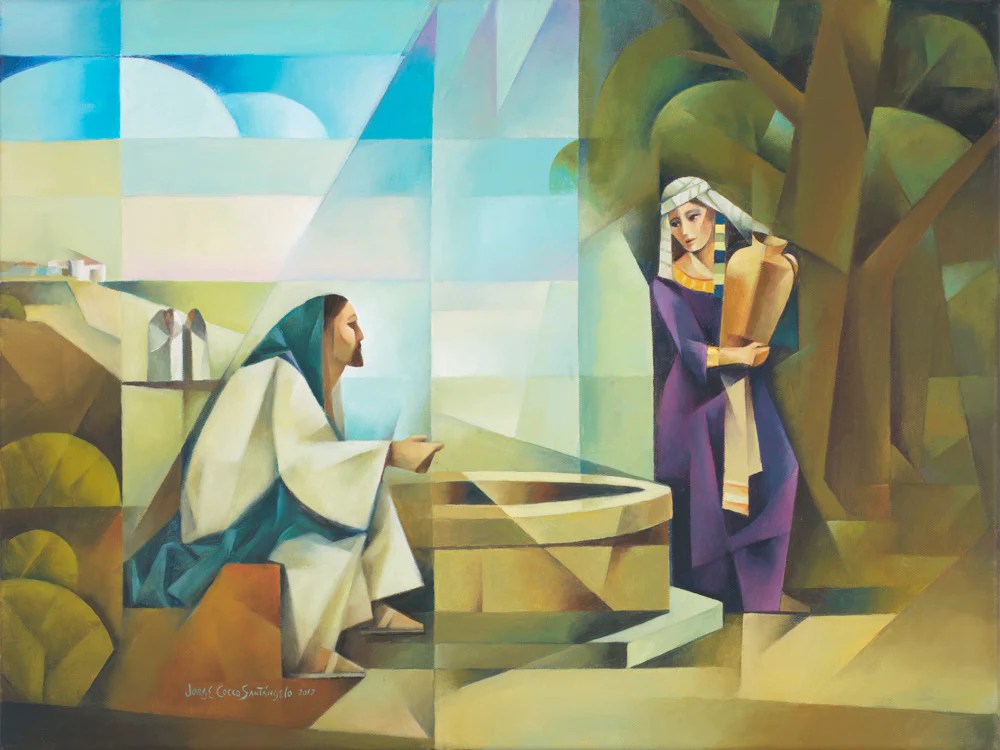
Who is this one leper that returned to Jesus to give thanks after he knew that he was healed? We never know the answer because like many other characters in the Bible, this person is nameless. The only information we had is that he was a Samaritan leper. What does it mean to be a Samaritan as well as a leper in time of Jesus? And why did he went back to Jews, while the other nine did not?

photocredit: Paul Zoe

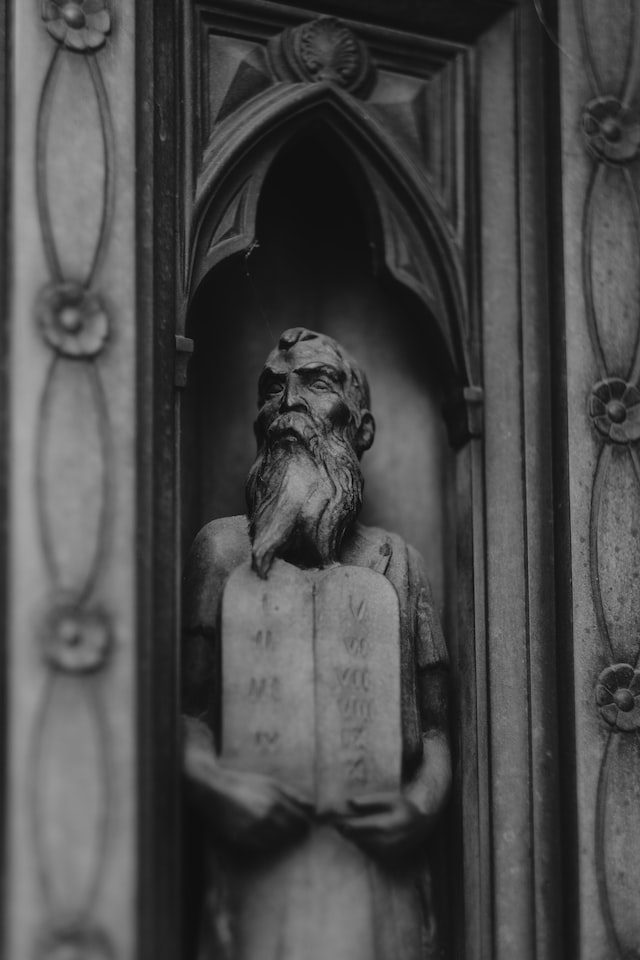
We have to remember that Jesus instructed to the lepers to go the Jewish priests. Why to a priest? According to the Law of Moses, the priest has the authority to declare someone clean from leper and allow them to return to the community [See Lev 13]. As the lepers went to see a priest, they were miraculously healed. One of them, a Samaritan, immediately returned to Jesus and as he put his face to the ground, he thanked Jesus. Why only one Samaritan? Precisely because he is a Samaritan. As a Samaritan, he has no obligation to see a Jewish priest, while the other nine, eager to be reintegrated into their families and community, sought the priest first. Yet, there is one deeper truth that we must not miss: this Samaritan bended his knees before Jesus, a Jewish man.

Simply put, Samaritans and Jews were bitter enemies. Though Samaritans and the Jews worshiped the same God of Israel, yet they truly hated each other. Each claimed to be the true Israel, while denounced the other as heretics. Despite having one God, they refused to share the common place of worship, let alone the common place to stay. Since the kingdom of David was torn into two, the Jewish and Samaritan have shared the bloody histories of enmity and violence. The Samaritan dan the Jewish have become the reflections of humanity’s dark side: how people can hate each other and do harm to others because of racial, economic, religious and ideological differences.

By healing both the Jews and the Samaritan, Jesus shows Himself not only as the Saviour of the Jews, but to those who seek Him and have faith in Him. Surely, the nine lepers have faith in Jesus. Yet, greater faith is needed for the Samaritan leper to kneel and admit that his Saviour is a Jewish man. With profound humility comes the great faith. True humility enables him to seek God first, rather than his personal needs and biases, the Healer first, rather the healings. This humility empowers him to set aside all his hatred and prejudices, and bow before Jesus, a Jewish man. While faith may have cured physical disease, humility heals the spiritual leprosy.

The Samaritan leper becomes a point of reflection for all of us. Do we come to the Church because primarily we look for the healing or solutions to our problems, or we seek God? Do we worship Jesus because we feel good and happy about it, or because we do justice to God? What is lacking in us is often not faith, but humility. The humility to see that everything is from God, the humility to put God first before our needs, the humility to make things move according to His plan, not our designs.

Roma
Valentinus Bayuhadi Ruseno, OP

Dangerous Faith

27th Sunday in Ordinary Time [C]
October 2, 2022
Luke 17:5-10

Jesus says if we have faith as big as mustard seed, we will be able to command a mulberry tree to be uprooted and be replanted in the sea. What does it really mean? When fully grown, mulberry tree is a huge plant with sturdy trunk and limbs, as well as a spreading and deep roots. To uproot is extremely difficult, if not impossible. Yet, Jesus’ words are not only uprooting the tree, but replanting it, not in other fertile soil, but at the ocean! Thus, simply put, to have faith, even a small one, enable us to do the impossible. What are the impossible things that now become possible because of faith?

photocredit: rachel macdermott

Nowadays, there is a growing trend to understand faith as an immediate problem solver. Thus, to have to faith means that we will be healed from our grave illness and our problems will be immediately solved. To have faith means we are going to pass our financial crisis. Then, the logic is that if we are still sick or struggling with the same problems, we are lacking faith, or even have no faith all together.

I remember a story of a sick man who sought help of a religious leader. The leader prophesied that the man would be healed of his illness in the following week. Yet, after one week passed, the expected healing did not come. Then, the man complained to the leader that he remained sick. The leader immediately countered, “you lack faith! Have more faith, and you will be healed!”

This kind concept of faith is incomplete and even dangerous. Faith is heavily equated with personal desire and emotional conviction. The greater the conviction we feel and exert, the greater the faith, and the greater the faith, the greater the possibility we get what we want. This is dangerous in several ways. Firstly, this kind of faith is now about us, humans, and what we desire, and not about God and His plan for us. Secondly, this kind of faith makes us proud when we get what we want, but we blame ourselves if we do not achieve it. Too much blaming either makes us depressed or abandon God altogether. Thirdly, for some irresponsible ‘religious leaders’, this kind of faith may become a tool of manipulation and means to increase richness and popularity.

Though emotional conviction is important part of faith, but true faith goes beyond that. Faith includes intellectual quest for the Truth. Faith is also commitment to do God’s will and laws. Faith also means to trust in God’s presence in times we do not emotionally encounter Him. Faith allows us to believe in God’s providence even though we are struggling with various problems.

Going back to our initial question: What are the impossible things that now become possible because of faith? Indeed, God often does miracles of healing in our lives, yet God’s plan for us is even greater: spiritual healing from sins. Truly, Jesus can calm the storms, yet His mission is “to serve, and to give his life as a ransom for many [Mar 10:45].” Yes, God can bring back dead people to life, but God’s real will is that we resurrect into eternal life.

Roma
Valentinus Bayuhadi Ruseno, OP

Lazarus and Theophilus

26th Sunday in Ordinary Time [C]
September 25, 2022
Luke 16:19-31

One of the main characters of Luke is that he tends to be ‘pro-poor’ and harsh towards the rich. This can be easily seen in the various teachings and parables of Jesus in the Gospel of Luke. One of the highlights is the parable of Lazarus and the rich man. Yes, this rich man ended up in a bad place. Now, the question is, “Why was Luke so hard on the rich? Did Luke hate people who have great wealth?”

Let’s take a closer look at today’s parable. Poor Lazarus went to restful place with Abraham, while the rich man went to the place of torment. Yes, the rich man is the villain, and there is no other place for him, but a place of punishment. Certainly, this rich man was punished not because he had enormous wealth, or that he did anything evil. Even though he had great wealth, wore extravagant purple garment, and partied every day, he didn’t lift any finger to help suffering Lazarus. He was in a place of torture because he refused to help his fellow man. The core lesson is that it is not enough to avoid doing evil to others, but we also need to do good to others.

Even more interesting is if we look at the bigger picture of Luke’s Gospel. At first, Luke dedicated his gospel to Theophilus. Who is this Theophilus? We are not entirely sure, but one interesting theory is that Theophilus was a rich man who supported Luke. At that time, production of a book required enormous resources. Papyrus and parchment alone were rare and expensive, not to mention other expenses. Luke may not have been able to fulfill his gospel writing assignment due to a lack of resources, but Theophilus then came to the rescue, so that we now have the Gospel of Luke and the Acts of the Apostles.

However, despite the tremendous help of Theophilus, the rich guy, Luke did not make his Gospel to please Theophilus. Luke did not write the parable of the rich man going to heaven, or teach, “Blessed are the materially rich, for they will become richer.” Luke still wrote what had to be written, the parable of the rich man who went to the place of fire. The question remains: Why was Luke so bold?

The first reason is that Luke did convey the authentic teaching of Jesus, and for that reason, he could not change it to please some people. However, the second reason is that Luke wanted to wisely point out that Theophilus is the opposite of the rich man in the parable. Unlike a rich man who kept his great fortune to himself and ended up losing everything, Theophilus freely and generously shared his wealth to support the writing of the gospel, and ultimately, he got the most important thing in his life, Jesus Christ.

Through these parables and other teachings of Jesus, Luke constantly reminds us of the dangers and (also function) of worldly riches. Wealth is always a means, and not an end in itself. Failure to see this can endanger our souls. However, when wealth is seen as both a blessing and a means to do good, it can help us grow in holiness. We must learn from the rich man in the parable as well as from Theophilus.

Rome
Valentinus Bayuhadi Ruseno, OP

Mariaphobia

The Solemnity of the Assumption [following the Liturgical celebration in Indonesia]
August 14, 2022
Luke 1:39-56

The Catholics are often accused of honoring Mary excessively. Some people even see us as giving Mary an adoration that is due to God alone. These allegations surely are untrue, but the roots of misunderstanding can be explored further. I discover at least three probable reasons of these ‘Mariaphobia’.

The first cause is that some people confuse the act of worship and the act of asking intercession. When we kneel and pray to Mary, we do not worship her. The word ‘praying’ here is equal to ‘asking help’. In fact, the root of English word ‘prayer’ is Latin, ‘praegare’ which simply means ‘to seek help’. What truly happens when we approach Mary is that we ask her to pray for us to God. It is the same when we ask our parents or people whom we consider close to God to pray for us. Mary is very close to His son, and we can be very confident that Jesus listens to her requests. Meanwhile, the act of worship both in the Bible and the Catholic tradition, always comes in the form of sacrificial offerings. We only offer sacrifice to God, and this takes place in the Eucharist, as we present the sacrifice of Jesus Christ to the Father in the Holy Spirit.

The second root is that some of people confuse the act of worship and the act of honoring. While honoring and worshiping are closely interconnected, they can be properly distinguished. In Catholic theology, we use the fancy Greek words ‘latria’ and ‘dulia’. Latria is act of worship proper to God, while dulia is act of honor to creatures (like the saints and angels). While latria comes in the form of sacrifice, dulia may manifest in various ways. We can honor someone by hugging them, giving them flowers, bowing our heads, and even giving honorific titles. Thus, when we are offering Mary flowers or keeping her pictures, it does not mean an act of worship, but rather act of love and honor.

The third reason is that some people confuse the relationship between God and His creatures. While it is true that God and human beings are infinitely different, but it does not mean that there is no connection between God and humans. While God is the infinite creator, and men and women are finite creatures, God loves us dearly. Like a good father who equips His children with earthly things so that they may grow and be successful, so God provides His spiritual gifts so that His children may grow in holiness. Like a good father who is proud of the achievements of his kids, so God is pleased with the spiritual growth of His children. When Mary was assumed into heaven, it is only because of God. And, when Mary is honored because she is in heaven, body and soul, the true honor belongs to God.

Mary becomes the eschatological model, or hope of what happen to us in the future when we follow Christ faithfully. Mary is faithful and loves His son, Jesus, from the beginning to the cross, and she follows Jesus in His resurrection and coming home to heave. If we are faithful to Jesus, till the end like Mary, we will receive what Mary has received.

Valentinus Bayuhadi Ruseno, OP
Building Heavenly Purse

19th Sunday in Ordinary Time [C]
August 7, 2022
Luke 12:32-48

Jesus teaches us how to build the heavenly purse and to gain eternal treasure, and it is by giving up our earthly wealth in almsgiving. There is a real connection between worldly possessions and heavenly treasure. Yet, the relation is not linear. The more generous we are with , the bigger our heavenly treasure chest, and the bigger eternal treasure we receive. The principle is simple, but the practice is often extremely tough. There are several reasons for this.

19th Sunday in Ordinary Time [C]
August 7, 2022
Luke 12:32-48

Jesus teaches us how to build the heavenly purse and to gain eternal treasure, and it is by giving up our earthly wealth in almsgiving. There is a real connection between worldly possessions and heavenly treasure. Yet, the relation is not linear. The more generous we are with , the bigger our heavenly treasure chest, and the bigger eternal treasure we receive. The principle is simple, but the practice is often extremely tough. There are several reasons for this.
photocredit: bjorn pierre

The first reason is the ‘possessive mentality’. We say, “wealth is hard earned, and why should I share it to others.” It is true that many of us work hard and often sacrifice a lot in the process. Because we earn them, we should be the one who keep and spend them. To let someone else to easily have our money or possessions just does not feel right. While it is true that we have the right to spend our hard-earned wealth the way we want it, this right is not absolute. We need to remember that eventually everything we have here including our lives and possessions are God’s gifts. Since our wealth is a gift we receive, we shall pass it forward also as gift to those who need it.

The second reason, related to the first one, is giving our possessions to others is hurting us. As we earn money and acquire things for ourselves, we begin to believe that these are mine, we possess these things. Yet, in reality, our possessions ‘possess’ us. We become attached to them, and to let them go turns to be difficult and hurting us. Our wealth gives us comfort, security and pleasures, and all that give us pleasure is potentially addictive. When we are addicted to our wealth, the harder it is to share. Yet, to overcome the addiction, the more we need to let go. Thus, the pain of giving is natural consequence of healing from greed.

The third reason is that we tend to be suspicious of others. We have this mindset that people are poor or are asking our help because they are lazy, or these persons are just going to scam us. While the idea contains certain degree of veracity, the reality is more complex. For one reason or another, some people just stumble upon terrible situations, and they need it our help. Some people were born in miserable conditions, and nothing they do can alleviate their misery. Some people just do know how to help themselves. While it is true that they are people who do not deserve our charity, but it does not mean all people who are in need are fake. Here, we need to be prudent rather than to stop helping all together.

Jesus concludes His teaching beautifully, “For where your treasure is, there your heart will be also [Luk 12:34].” If our treasure, our ambition, our goal of life is earthly possessions, our hearts, our souls, and our lives will stay on earth. When the earth passes, we will pass also with it. Yet, if our treasure, our priority, our end of life is heavenly gifts, our hearts and our souls will move also to eternal life.

Valentinus Bayuhadi Ruseno, OP

Pleorexia

18th Sunday of Ordinary Time [C]
July 31, 2022
Luke 12:13-21

Jesus is reminding us about the danger of greed. The word greed in New Testament Greek is πλεονεξία [pleorexia]. The root word is ‘pleora’ and it means ‘full’ or ‘abundant’. Certainly, there is no problem with fullness or abundance. Yet, the word ‘pleorexia’ also includes the ending ‘-xia’, and this ending signifies a problem. Like the word ‘anorexia’ that indicates eating disorder to the point of starving oneself, so ‘pleorexia’ is also a serious disorder. It is sickness in relation to abundance. Unfortunately, unlike anorexia that is recognized as illness that must be treated and healed, greed is considered a normal behaviour and sometimes, celebrated.

photocredit: Josh Apple

In our materialistic world, we are brainwashed that the purpose of life is to have more, to achieve more, and to conquer more. The more you have, the more successful you are as a modern man. Afterall, to possess a lot of money and belongings make our lives easier and pleasurable. Our societies and economics are designed to favour those who have more and can spend more. When we have money to spend, we may enjoy VIP treatments in many places from an exclusive nativity ward to an high-end burial place. To have more also means prestige and popularity. We are wearing branded yet excessively expensive cloths, and using latest gadgets. All these are to show that we are prestigious ones. As we can see, the way of the societies operate makes us believe that greed is normal and in fact, desirable treat.

Jesus reminds His disciples that one’s life is not about possessions, and He reveals the true nature of greed: it is disorder. From the parable of the foolish rich man, Jesus uncovers the disease that many of us are afflicted from. The desire to have possessions as well as be blessed with abundance are not evil in itself because as long as we live in this world, we need this earthly goods. The problem comes when we desire them excessively or seek them as the end of our lives. Why do we desire them excessively? It goes back to our own fallen ego. Like our first parents who desired to possess the forbidden fruits for themselves, we also seek earthly goods for our benefits and pleasures.

Any disorder or illness needs to be treated and healed. The first step is to recognize that we are plagued by this greed. Like any illness, if we do not see greed as problem, we simply see it as normal and refuse to treat it. The second level is to pray to God for healing. The root of greed is our fallen nature, thus, we need God’s grace to heal our wounded souls. Third step is to make a habit to thank the Lord for all the earthly blessings we receive. We recognize that all things come from God and go back to Him. When God bless us with this earthly goods, we remember that these are means for our salvation and His glory.

Valentinus Bayuhadi Ruseno, OP

Teach us to pray

17th Sunday in Ordinary Time
July 24, 2022
Luke 11:1-13

Luke tells us that the prayer ‘Our Father’ comes from Jesus’ mouth because His disciples are requesting Him to teach them to pray. Why do they ask this kind of request? As Jewish people, prayer has to their daily routine. Good Jewish man and woman would recite ‘Shema’ prayer at least twice day. During Sabbath, they would gather in the local synagogues to pray and read the Torah. For those living in Jerusalem, praying, and offering sacrifice in the Temple are their daily pious habit. Then, why are they still asking Jesus how to pray?

The first reason is that they observe that their Teacher is a prayerful person. In the Gospel of Luke, Jesus prays often and has a prayer habit. After whole-day teaching and healing, He would go to a secluded place and pray. The disciples may be curious on what Jesus’ prayer is. The second reason is that Jesus’ disciples hear that John the Baptist teaches his followers to pray. If John instructs his disciples on prayer, why not Jesus? Afterall, Jesus is greater than John the Baptist. Jesus gladly grants the desire of His disciples, and He teaches them on what to prayer [the Our Father] and how to pray [to relate God as our loving Father].

For many of us, prayer is something taken for granted. We pray everyday, and in different moments in our lives. On the top of that, we have also personal devotions like rosary, divine mercy chaplet, visiting the adoration chapel, and many others. Surely, we go to the Church every Sunday to pray and worship God. Prayer is just instinctive and natural to us.

However, if prayer and relation to God is natural to us, why do we need to ask the Lord to teach us to pray? Though prayer and reaching out to God is part of our nature, we still do not have a clue how to approach God properly. In prayers, we ask God almost everything. We request for good health, successful careers, protection from dangers, even for the right spouse. But, do we ever ask the Lord that we will be able to pray well and pleasing to God. Before we ask for anything else, our first prayer is to ask the Lord to teach us to pray according to His will.

The reason why we get disappointed, angry and even give up in praying to God is that we pray the wrong way. We may believe prayer is just another instant way to get we want, or prayer is a means to bribe God. Perhaps, we see God as a game master, and we see prayers as coupons. The many the coupons, the better the prize. Sometimes, we forget to pray to the true God, but simply to our personal idea and reflections of god.

Jesus invites His disciples to understand prayer in the right way. It is a relationship with a loving and wise Father. He knows what we need and what we want, and these things He will give according to His wisdom. God desires us to approach Him in prayer because He seeks loving and intimate union with us. He is ready to bestow the greatest gift for those who seek, the gift of the Holy Spirit, which is the gift of holiness and the gift of friendship with God.

Do we ask the Lord to teach us to pray? Do we desire what God desires? Do we knock for the gift of the Holy Spirit?

Valentinus Bayuhadi Ruseno, OP

Don’t be Distracted!

16th Sunday in Ordinary Time [C]

July 17, 2022

Luke 10:38-42

Martha and Mary of Bethany are often related to two modes of existence in the Church. Martha is the symbol of active or apostolic life, while Mary is the embodiment of the prayer and contemplative life. This tradition has very old root. It goes back to the third century AD, to theologian called Origen (see Fragments of the Gospel of Luke, 171). St. Gregory the Great in the sixth century affirmed this tradition and added the reason: “While both activities are essential to Christian living, the latter is greater than the former. For in heaven the active life terminates, while the contemplative life reaches its perfection. (Moralia, 2,6).” St. Thomas Aquinas of the middle age even gave nine reasons why contemplative life is better than active one! (see ST.II.II. q.182 a.1).

While respecting the long Catholic traditions, the text gives us a hint why Mary chose the better part. Jesus said to Martha, “Martha, Martha, you are worried and distracted by many things; there is need of only one thing. [Luk 10:41-42, NRSV]” Martha was not doing something wrong, and she was serving Jesus. In fact, she was performing her duty as a good host to Jesus. However, by doing so many things, Martha got distracted. Her attention was pull away from the very person she should give most. This is precisely the danger of active life. It distracts us from Jesus.

Meanwhile Mary was sitting at the feet of Jesus and listening to Jesus. The phrase ‘sitting at the feet of someone’ is a biblical technical term for ‘being a disciple of someone’. Like for example, Paul introduced himself as a student of Gamaliel, “At the feet of Gamaliel I was educated strictly in our ancestral law and was zealous for God… [Act 22:3].” Mary chose the better part because she dedicated herself as the true and faithful disciple. She gave her attention, her mind and heart, to Jesus and His words. One of the greatest joys of a teacher is to know the student is listening attentively and able to understand the lessens well.

From Martha and Mary, we learn a deeper meaning of discipleship. Living in this world, we are unavoidably living active lives. We are living in the world where the relation between people and technologies become more and more seamless. Modern people are more concerned with the WIFI connection rather than their mental health. With the pandemic, we discover new mode of life, like ‘WFH’. This even blurs the distinction between work zone and personal and family space. We also face the new mode of worship, ‘the online mass’. This surely hazes the distinction between the sacred and the mundane. Though the faithful start coming back to the parishes, many bring along this ‘online mass’ mentality, and even more distracted during the celebration of the Eucharist.

Certainly, we have so much homework to do. Aside from disciplining our minds and heart during the prayer time and Mass, we also instill a new culture in our lives. We can fill our day with short yet meaningful prayers: at the beginning of the day, before meals, before going to work, before and after our work, when we arrive home, when we bless our children, before we go to sleep. Pray the angelus also. Let the Lord fill in our minds and heart with His presence through the day, and let make our day holy.

Valentinus Bayuhadi Ruseno, OP

We are the Seventy

14th Sunday in Ordinary Time [C]
July 3, 2022
Luke 9:1-12, 17-20

In today’s Gospel, Jesus is sending His seventy disciples for a mission. Yes, we are reading it correctly; it is not just twelve disciples, but seventy. While we are used to the celebrated mission of the Twelve, Luke informs us about the less famous mission of the seventy. We are not sure who are these people. Perhaps, Matthias, who would replace Judas, was among them, but the rest we are almost clueless. However, for sure, these are people who have the same commitment, dedication, and passion like the big names, Peter, John, Andrew, and Matthew. These are the people who let ‘the dead’ bury their dead parents [see Luk 9:59]. These are the disciples that follow Jesus, leave everything and are willing to be dispatched into a difficult mission to preach the Kingdom, to heal the sick, and to drive out the demons.

photocredit: Jun Sahagun

We might also ask why seventy? If Twelve apostles represent the twelve tribes of Israel, what will the seventy signify? Surprisingly, when we go back to the Old Testament, seventy is also a significant figure. It is the sum number of the descendants of Jacob who migrated to Egypt [Gen. 46:27]. It was the number of the elders who were elected to help Moses in his task in leading Israel and to offer sacrifice in the wilderness [Exo 24:1]. Thus, seventy become the symbol of both Israel itself and the leaders of Israel. According to Jewish tradition, seventy is also the number of nations that came down from Noah [see Gen 11]. By choosing and commissioning His seventy disciples, Jesus sends His message to the world that He is establishing His New Israel with its leaders, and this Israel will include all people from all nation.

The story of the seventy disciples reminds us that the disciples of Jesus are not just the twelve. They are many others who have the same level of commitment like the Twelve yet somehow forgotten. While the Twelve represents the well-known figures of the Church like the pope and the bishops, the seventy bring to mind the nameless yet countless priests, religious men and women, and laity who are tirelessly building up the Body of Christs.

Some priests are popular among the laity because of their stormy preaching or funny homily, or actively engaged in social media, but they are countless priests who dedicate their lives to serve God’s people in the rural areas, in the middle of the tropical jungles, or in secluded islands. Perhaps, many of us do not even recognize the name of the priests who baptized us, who made us children of God! Surely, we possess Catholic laypeople who are influential in the society. We are proud of them because they are successful statesmen, businessmen, professionals, athletes, or entertainers that fearlessly acknowledge their Catholic before the public. Yet, the majority of the lay people are serving the Church and the societies without much noise. Perhaps, we do not recognize the names of catechists who teach us faith, or of Sunday School teachers who prepare us for the first communion. Definitely many of us are Catholic parents who dedicate our lives to raise God-fearing kids, but sometimes, misunderstood and unappreciated by our own children.

Our works and service may not be recognized in the eyes of the world, yet Jesus says, ‘do not rejoice because the spirits are subject to you, but rejoice because your names are written in heaven.’ Afterall, holiness is a quiet yet meaningful journey.

Valentinus Bayuhadi Ruseno, OP

Anger and God’s Wisdom

13th Sunday in Ordinary Time
June 26, 2022
Luke 9:51-62

Anger is integral part of human emotions. Since it is part of our humanity, anger as our emotion is God’s gift. Yet, just like other God’s gifts to us, anger serves both as a blessing or a curse. It goes back to our decision to how we will express it.

Photocredit: Miguel Bruna

In today’s Gospel, James and his brother, John were infuriated that Jesus, their beloved master, was not welcome by the Samaritans. They even claimed, “Lord, do you want us to call down fire from heaven to consume them? [Luk 9:54]” We are not sure whether James and John literally had the power to send fire from heaven, or it is just an expression that they would retaliate in a violent manner. Yet, Jesus rebuked them, and worse things were averted.

Yet, who are these Samaritans and why were Jesus’ disciples so irritated with them? The Jews and the Samaritans shared a long and yet problematic history. It begins with 10 Israelite tribes that seceded from the Kingdom of David after Solomon passed away. They formed the Northern kingdom, and later, their capital was at Samaria. While two tribes who were loyal to the David’s line, called themselves the Southern kingdom. Unfortunately, in 722 BC, the Assyrian empire came and crushed Samaria. Many of them were exiled to Assyria, and the empire brought people from other nations to settle in former Northern kingdom’s land. Thus, the interactions between the foreign immigrants and the Israelite remnants were unavoidable. Israelites from the South recognized the Samaritans as foreigners, mixed breeds, or idolators, while the Samaritan continued to believe that they are the remnants of the 10 tribes of Israel. In time of Jesus, the Samaritan would harass the Jewish pilgrims going to Jerusalem, while the Jewish people refused entry to their towns for the Samaritan.

With the long enmity and sour incident, James and John had the right to get angry, but why then did Jesus rebuke them instead? It is interesting to note that in the future encounters, Samaritans would receive Jesus and believe in Him [John 4; Act 8]. Jesus knew well that Samaritan was not a hopeless case, yet more importantly, anger-turn-violence is not the solution. Jesus recognized anger is integral to our human nature, but violence brings more anger. It is vicious cycle.

Often, we only know violence as expressions of anger. Some of our parents disciplined us using harsh words, and sometimes physical violence. A husband uses his violence to dominate his control over his wife. In the schools, sometimes, we find other students who bully us. When we are online, we read all kind of cursing, body shaming, and vulgar words and pictures. In the workplaces, people with higher positions vent their wrath to those who are in the lower position. Abortion is one of the most brutal act of parents to their unborn babies.

How then do we prevent our anger turning violence? Firstly, we need to recognize and own our anger. Do not suppress it because suppression is another kind of violence towards ourselves. Secondly, we ask what the root of our anger is. Is it justifiable? Or is it coming from our pride? Thirdly, we think for the best options to express our anger. Surely, it is not easy, especially when violent ways are deeply rooted in our characters. Yet, we can always rely on God’s grace, and start with small and simple steps.

Valentinus Bayuhadi Ruseno, OP