

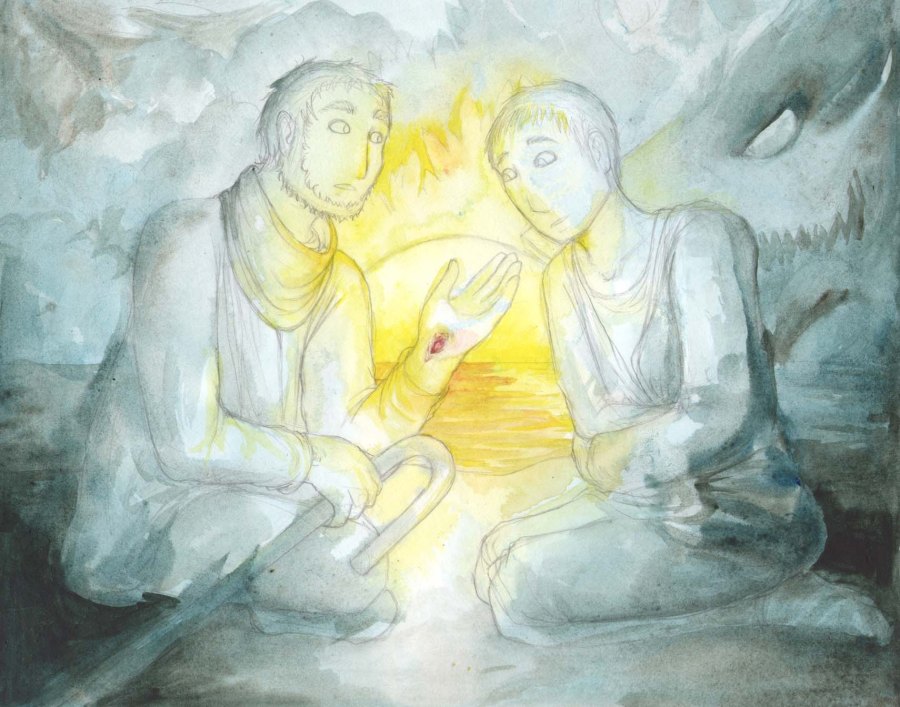
Third Sunday of Easter. John 21:1-19 [April 8, 2016]
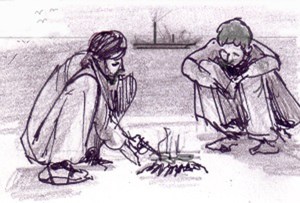 Reading today’s Gospel in original Greek, we get to appreciate more the dialogue between Jesus and Peter. In English translation, both Jesus and Peter expressed themselves in the same word ‘love’, but in Greek, the word Jesus employed is ‘agapao’ while Peter’s is ‘phileo’. ‘Agapao’ or ‘agape’ refers to unconditional and radical love that every Christian should exemplify. This love is based on freewill and discipline, not just affections. This love empowers to love, to forgive and to have mercy even to our enemies. While ‘phileo’ or ‘philia’ is the reciprocal love of friendship. It is coming from both natural liking as well as firm decision. We make friends with whom we feel close, yet we exert also efforts to get close and understand them. As an old adage say, ‘friend in indeed is friends indeed.’
Jesus asked, “Peter, do you unconditionally and radically love me?” yet Peter answered, “Lord, you know that I love you as my friend.” Jesus demanded radical love of ‘agape’ for three times, and for three times, Peter could only give Jesus the love of friendship or ‘philia’. This seems another Peter’s outright denial of Jesus. But, Pope Emeritus Benedict XVI humbly defended his predecessor that at that very moment, ‘phileo’ was his very best.
The dialogue of love between Jesus and Peter is also our dialogue with the Lord. Jesus demands from us that radical and selfless love for Him. But, it is difficult. It is hard to give time in service in the Church, when we are also struggling with our daily life and financial status. A friend told me how he has desire to serve, yet he is the ‘breadwinner’ of the family and has to work 12 hours a day. It is also difficult to love God, when our lives are in mess. How can we love God, when our marriage is falling, when our children entered rehabilitation due to drug-addiction or in jail for their juvenile delinquency? How can we love when our job or business is falling apart? How can we love God if we are betrayed and hurt by persons we love so much? We stop loving and enter into our own self-confinement.
Yet, when Peter failed to meet Jesus’ hope, Jesus was not angry. He never said, ‘You are a failure. You are a mistake.’ Rather, He gave Peter a tremendous responsibility, ‘Tend and Feed my sheep.’ Jesus knows well it is difficult to love. He himself has to die the most brutal death just to prove His love for us. Yet, He does not see us as a failure despite our shortcomings and difficulties in loving. He who has given us the ability to love, knows exactly our potential to love. Indeed, Peter who was struggling to love Jesus, finally proved his love to Jesus as he tended His sheep to the last moment of his life. Peter was crucified upside down, because he refused to abandon Jesus’ sheep in Rome.
When we fail to love God, He did not abandon us, and in fact, He gives us even more mission to love because Jesus is aware that only through this hardship, we may expand our ability to love. Love without trials and tribulations is shallow and weak kind of love. St. John reminded us that God is love (1 John 4:8). Thus, when we struggle to love through thick and thin of lives, we shall remember that it is not us who love, but God himself.
Br. Valentinus Bayuhadi Ruseno, OP

 Membaca Injil hari ini dalam bahasa Yunani, kita bisa lebih menghargai dialog antara Yesus dan Petrus. Dalam terjemahan bahasa Indonesia, baik Yesus maupun Petrus mengungkapkan diri dalam kata yang sama ‘mengasihi’, tapi dalam bahasa Yunani, kata yang Yesus gunakan adalah ‘agapao’ sementara Petrus adalah ‘phileo’. ‘Agapao’ atau ‘agape’ mengacu pada kasih tak bersyarat dan radikal. Kasih ini didasarkan pada kehendak bebas dan disiplin, bukan hanya afeksi dan emosi. ‘Agape’ memberdayakan kita untuk mengasihi, mengampuni dan berbelas kasih bahkan kepada musuh-musuh kita. Sementara ‘phileo’ atau ‘philia’ adalah kasih persahabatan yang resiprokal. Kasih ini datang dari naluri alamiah dan juga kehendak bebas. Kita bersahabat dengan siapa kita merasa dekat, namun kita juga mengerahkan upaya untuk mendekati dan memahami mereka. Sebagai pepatah tua mengatakan, ‘Friend in need is friend indeed.’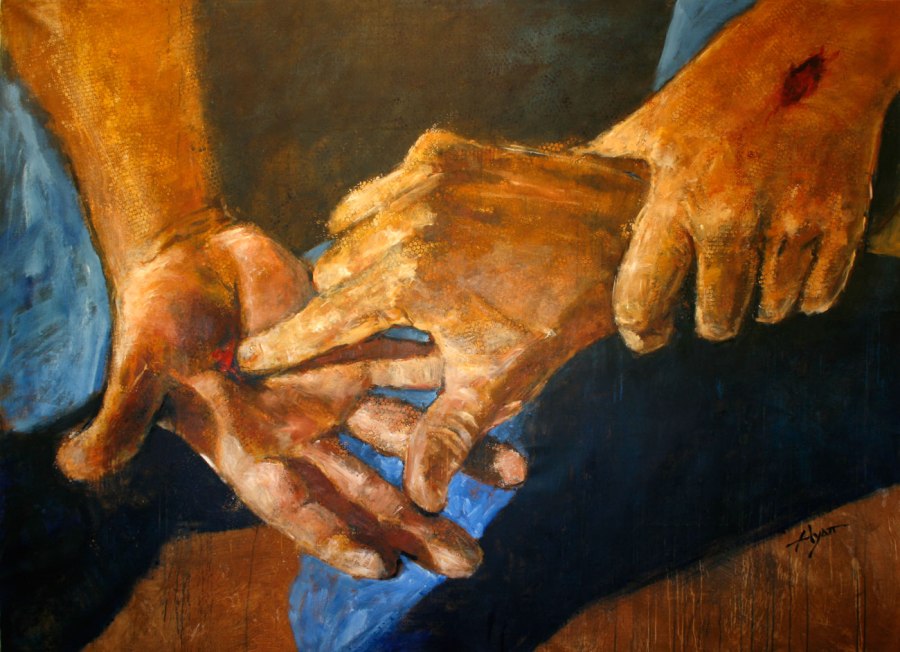
 The request of Thomas was a bit strange. To recognize the risen Lord, Thomas demanded that he would be able to touch the wounds of Christ. But, why did Thomas look for the wounds of Jesus? He could have asked to see Jesus’ face, or to touch Jesus’ nose. He had been Jesus’ disciple for some years, and surely, Thomas would not have any difficulty to recognize Jesus. Why wounds?
 Di dalam Injil hari ini, permintaan Thomas agak aneh. Untuk mengenali Tuhan yang bangkit, Thomas menuntut bahwa dia harus menyentuh bekas paku di tubuh Kristus. Tapi, mengapa Thomas mencari luka-luka Yesus? Dia bisa saja meminta untuk melihat wajah-Nya atau menyentuh hidung-Nya. Dia adalah murid Yesus yang hidup bersama Dia selama beberapa tahun, dan tentunya, Thomas tidak akan memiliki kesulitan untuk mengenali Yesus. Lalu, mengapa luka-luka Yesus?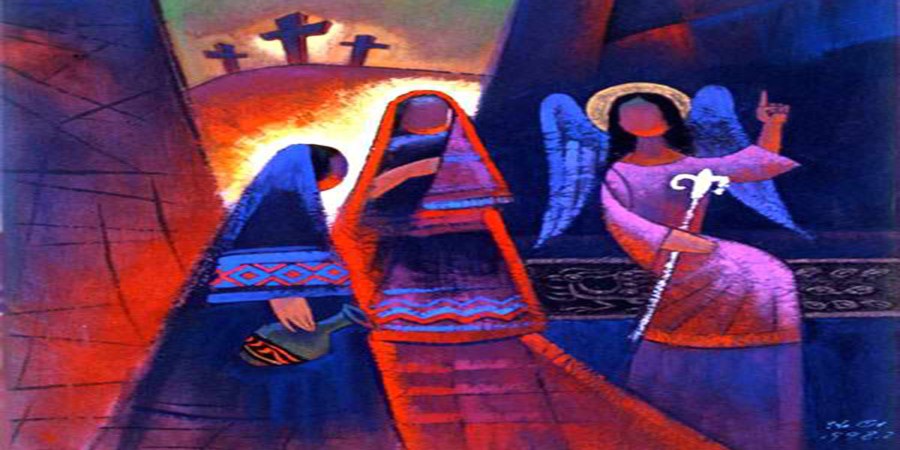
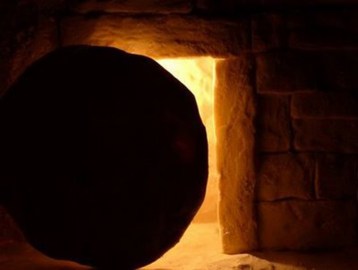 What do you see inside the empty tomb? Seeing the empty tomb, Mary Magdalene was at lost, terrified and confused. Where is Jesus? Is He moved to the other tomb? Is someone stealing His Body? Peter, the leader of the apostles, did not understand the empty tomb and went home puzzled. All things were so depressing. Jesus was betrayed, denied, tortured, crucified and now he is missing!

