

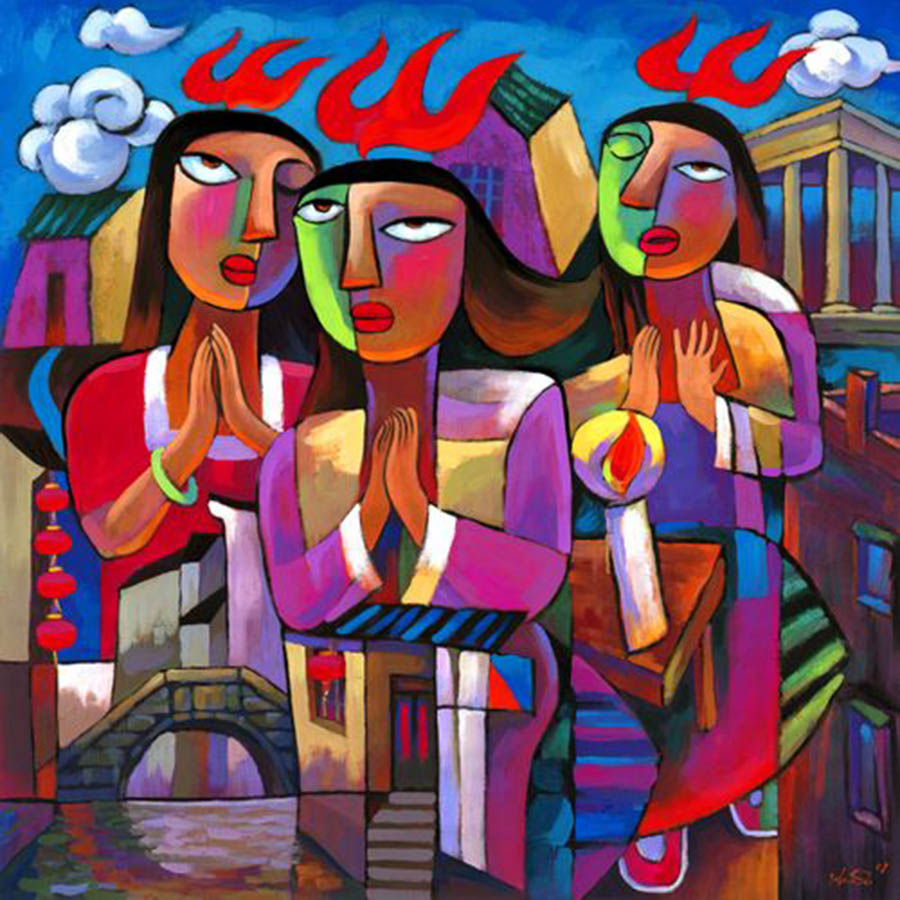
Pentecost Sunday. May 15, 2016 [John 14:15-16,23-25]
“They were all filled with the Holy Spirit and began to speak in different tongues, as the Spirit enabled them to proclaim (Acts 2:4).”
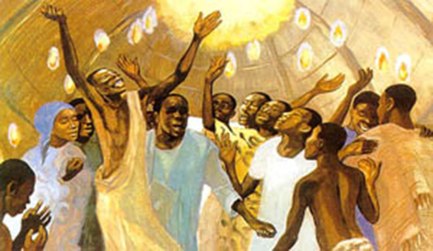 My first time to attend a Catholic Charismatic prayer meeting was around 10 years ago in Singapore. It was a gathering characterized by upbeat music and intensified prayers. As the prayer was getting intense, suddenly I witnessed some of participants began to experience kind of trance and utter unintelligible words. For a while I was dumbfounded, but soon realized that they may actually speak in tongue. This may refer to the one of the Holy Spirit’s charismatic gifts, described no less than St. Paul himself. “For one who speaks in a tongue does not speak to human beings but to God, for no one listens; he utters mysteries in spirit (1 Cor 14:2)”
All the way, I thought that this speaking of tongue phenomenon was what took place on the Pentecost Sunday. When mother Mary and the disciples gathered fifty days after Jesus’ resurrection and the Holy Spirit started to descend upon them and filled them with His power. They began to speak in different languages. Yet, I was mistaken, they did not speak in tongue. The Holy Spirit bestowed on them a different kind of gift. That was the gift of understanding and language. The Apostles did speak different tongues but this gift empowered to communicate clearly the Gospel of Jesus Christ. People from different regions like Syria, Asia Minor (present-day Turkey), Arab peninsula, North Africa, even Europe, certainly speaking in multitude of languages, were able to comprehend the apostles who were native Palestinian. The Spirit enabled them to connect.
The Pentecost and the gift of language speaks deeper reality about the Holy Spirit. He is the Spirit that unites us. He heals our brokenness and cures our tendency to be selfishly autonomous. In Pentecost, the Spirit undid the curse of the Tower of Babylon in Genesis 11. This is a symbolical story on human egocentric desire to usurp God, to be equal with God, by building a super-tall tower that can reach God with their own efforts and cunningness. Yet, human ambition and greed for power brought divisions and ruins to human race itself. Perhaps, one of the modern depictions of the Tower of Babel is the best-seller novel and most-anticipated TV series Game of Thrones. The novel smartly narrates how men’s unquenchable passion for the Iron Throne moves various characters in the novel to employ various cunning and dirty tricks to destroy their rivals. The seven Kingdoms, formerly united, divided, falls and they are at each others’ throats.
John Maxwell in his book, Everyone Communicates, Few Connects, argues that everything rises and falls on leadership, and yet, leadership is only possible with the leaders’ ability to connect with others. United States president Abraham Lincoln once also said, “If you would win a man to your cause, first convince him that you are his sincere friend.” Yet, fundamental to a genuine connecting is all about others. It means setting aside our vain ambition and untamed desire to gain all the attention to ourselves and we make others, their concerns, their struggles as ours.
The Holy Spirit comes to bring us that original connection with God and each other. It is true that often we do not get always the ‘high feeling’ of indwelling of the Spirit, just like in the charismatic prayer meetings, but it does not mean the Holy Spirit is absent. In fact, most of the time, He is working in silence and ordinary ways. He is working when we become more persevering in the sufferings of life. He is working when we are more patient in loving people who often give us problems. He gave us little joy in small realization of various blessing we receive today. I believe fruitful and meaningful reading of this reflection is His work in us.
As we celebrate the Pentecost, we pray that we may continue to open ourselves to the grace of the Holy Spirit and allow Him to make our lives ever fruitful.
Br. Valentinus Bayuhadi Ruseno, OP
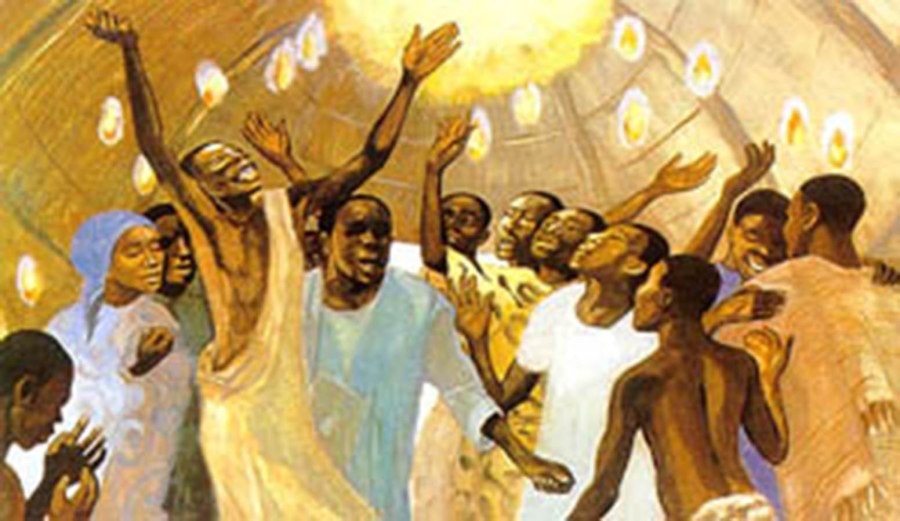
 Pertama kalinya saya menghadiri pertemuan doa Karismatik Katolik adalah sekitar 10 tahun yang lalu di Singapura. Pertemuan ini ditandai dengan musik yang upbeat dan doa yang intensif. Di tengah ibadat dan disaat doa-doa semakin intens, tiba-tiba saya menyaksikan beberapa peserta mulai mengalami sesuatu yang tidak biasa dan mengucapkan kata-kata tidak jelas. Awalnya, saya tercengang, tapi saya segera menyadari bahwa mereka sedang berbicara dalam bahasa roh. Phenomena ini merujuk pada seseorang yang dipenuhi dengan kuasa Roh Kudus dan mulai bernubuat sesuai kehendak Roh. Fenomena ini sudah ada sejak Gereja berdiri. St. Paulus sendiri menulis “Siapa yang berkata-kata dengan bahasa roh, tidak berkata-kata kepada manusia, tetapi kepada Allah. (1 Kor 14: 2)”
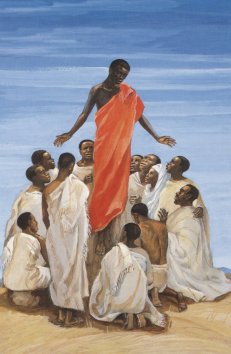


 One day, I had an opportunity to converse with one of our security personnel at our convent of Santo Domingo. I asked him if he sees God, what question would he ask of God? His answer went beyond my expectation. In Filipino, he would say, ‘Panginoon, Mahal mo ba ako?’ [Lord, do you love?] Surprised by his question, I inquired further, ‘Why that question?’ He replied in Filipino, ‘Brother, I am poor person with a lot of problems. Sometimes, I don’t really feel His presence and love.’ I realized that his question is not only single isolated case, but question of many people.
 Suatu hari, saya memiliki kesempatan untuk berbicara dengan salah satu personel keamanan di biara kami Santo Domingo. Saya bertanya jika dia melihat Tuhan saat ini, pertanyaan apa yang akan ia berikan kepada Allah? Pertanyaan di luar dugaan saya. Dalam bahasa Tagalog, ia akan mengatakan, ‘Panginoon, Mahal mo ba ako?’ [Tuhan, apakah Engkau mengasihi aku?] Terkejut dengan pertanyaannya, saya bertanya lebih lanjut, ‘Mengapa pertanyaan itu?’ Dia menjawab, ‘Frater, saya orang miskin dan hidup dengan banyak permasalahan. Kadang-kadang, saya tidak merasakan kehadiran dan cinta-Nya.’ Saya menyadari bahwa pertanyaannya adalah valid dan juga pertanyaan dari banyak orang.
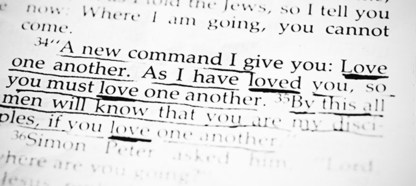 The first time God gave His commandment was on the Mount Sinai. To Moses and the Israelites, He made His covenant that He will be their God and they will be His People. And to live as a Holy People, God gave them the Law, famously called the Ten Commandment (Exo 19-20). Then, centuries after Moses, at the Upper Room, in old city Jerusalem, God gave His new commandment. This time, His Law is simpler and yet, more radical than the old one. Jesus handed to them the greatest command: Love one another as He has loved them.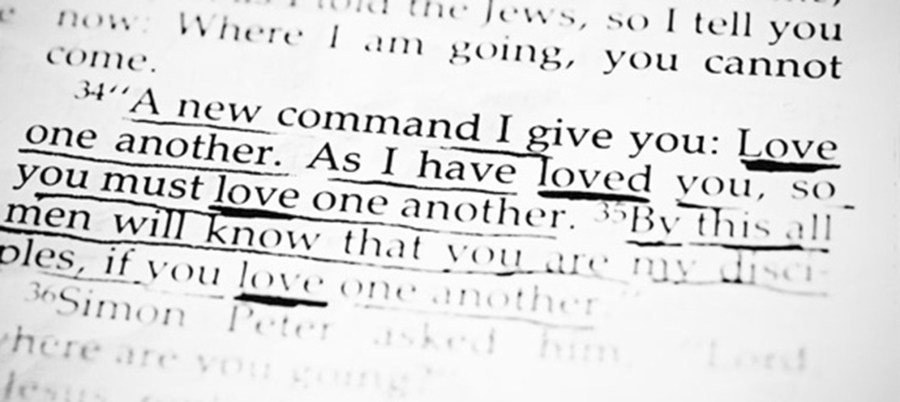
 Allah memberikan Hukum-Nya yang pertama di Gunung Sinai. Dengan Musa dan bangsa Israel, Dia membuat perjanjian bahwa Dia akan menjadi Allah mereka dan mereka akan menjadi umat-Nya. Dan agar bisa hidup sebagai Jemaat yang kudus, Allah memberi mereka hukum dan perintah. Hukum ini terkenal sebagai Sepuluh Perintah Allah (Kel 19-20). Kemudian, beberapa abad setelah Musa, di kota tua Yerusalem, Allah memberikan perintah baru-Nya. Kali ini, Hukum-Nya lebih sederhana namun jauh lebih radikal. Yesus memberikan kepada para murid-Nya perintah teragung: saling mengasihi, seperti Dia telah mengasihi mereka.
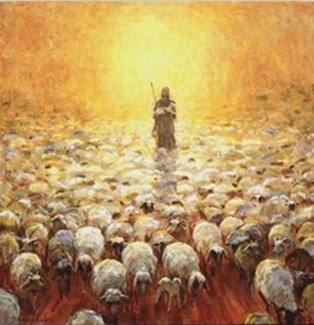 One of the loveliest images of Jesus is the Good Shepherd. It is even more beautiful when we try to bring ourselves to Palestine in the time of Jesus. Life as a shepherd is tough and tiresome. Grass was scarce and the sheep constantly wondered. Since there was not protective fence, the shepherd was bound to watch his sheep for all time, otherwise the sheep would go astray. The terrain in Judea was rough and rocky, and these forced the shepherd to exert extra energy. Not only constant, shepherd’s duty was also dangerous. Wild animals, especially wolfs, were ready to attack and devour the meek sheep. Not only wild predators, robbers and thieves were eager to pirate the sheep.
 Salah satu citra terindah Yesus adalah Gembala yang Baik. Citra ini bahkan lebih indah ketika kita mencoba untuk melihat situasi Palestina pada zaman Yesus. Hidup sebagai seorang gembala adalah sulit dan melelahkan. Rumput terbatas dan domba akan terus berkelana. Karena tidak ada pagar pembantas, gembala akan memantau domba-dombanya sepanjang waktu, jika tidak, domba akan hilang. Medan di Yudea kasar dan berbatu, dan ini memaksa gembala mengerahkan energi ekstra. Selain itu, tugas gembala juga berbahaya. Hewan liar, terutama serigala, siap untuk menyerang dan melahap domba. Tidak hanya predator liar, perampok dan pencuri juga ingin membajak domba-dombanya.
