

The Nativity of the Lord [December 25, 2017] John 1:1-18
“And the Word became flesh and made his dwelling among us, and we saw his glory, the glory as of the Father’s only Son, full of grace and truth. (Joh 1:14)”
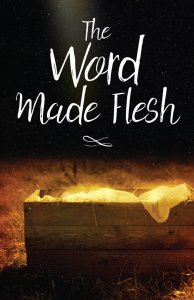 Christmas is one of the most joyous events in the Church and the world. But, what makes us happy this Christmas? Is it only about partying? Is it all about buying gifts? Is it about family gathering? Is it about fulfilling our obligation of going to the Church? Is there something more than these? Immersed in many celebrations, merriment, spending, and holidays, we often forget the main reason behind Christmas. We all know Christmas is the birthday of Jesus Christ, but what is the meaning and significance of this birth for us? Let us stop for a while and reflect on the Gospel of John.
John describes the birth of Jesus in just one line, “and the Word was made flesh and dwell among us.” It is a short yet powerful line, but demands an explanation. “…was made flesh” means that the Word becomes a totally human being. He breathes the air we breathe, feels what we feel, and works for a living just many of us. He is human like us in all respect except sin (see Heb 4:15).
Yet, this man is also fundamentally different from us, because he is the Word. Who is this Word? At the beginning of his Gospel, John the evangelist gives us an extremely brief but potent description of the Word. He was with God since the beginning, and the Word was God. With boldness, John the evangelist proclaims that this Word is God the Son, the second divine person of the Holy Trinity. He has existed with the God the Father in eternity, and only through Him, all creations come to existence. In the Annunciation, this all-powerful Word became man, and in Christmas day, He was born in Bethlehem.
It is true that Christmas accounts of Luke and Matthew are more vivid and details as compare to John. Matthew has the three Magi, and Luke has the angels and shepherds. Yet, despite its brevity, only John connects Christmas to the divine Word. Christmas reaches its deepest meaning when we are able to appreciate the Word, the God the Son, decides to be born as man. Then why does God choose to be a man, fragile, prone to pain and suffering, and mortal like us?
The only answer is love. God is love (1 Jn 4:8) and God so loves us, that He gives only Son for us. God is madly in love with us, to the point that He becomes one of us, and by becoming a man, we may feel His love in a most radical manner. We can discuss various theories of love at length, but unless we put into actions, love is meaningless. So thus, the love of God is manifested in the most concrete manner as He becomes man. We might do not understand why this kind of love, but God is like a mother who is so in love with her newly born baby, will do anything to ensure his wellbeing even to the point of sacrificing her own life. Christmas is indeed one of the happiest events because here we are able to feel and appreciate the love of God in a most radical way. It is the gift of love, and only true love that can make us truly happy.
Br. Valentinus Bayuhadi Ruseno, OP
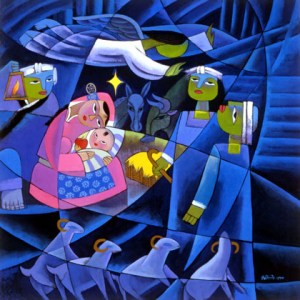 Natal adalah salah satu hari yang paling menggembirakan di dalam Gereja. Tapi, apa yang membuat kita gembira Natal ini? Apakah karena banyak pesta? Apakah karena kita menerima banyak hadiah? Apakah karena kita bisa berkumpul dengan keluarga? Terlarut dalam banyak perayaan, kegembiraan, belanja, dan liburan, kita sering melupakan alasan utama di balik Natal. Tentunya, kita semua tahu Natal adalah hari kelahiran Yesus Kristus, tapi apa arti sesungguhnya kelahiran ini bagi kita? Mari kita berhenti sejenak dan merenungkan Injil Yohanes.
 Luke has a poignant and unique way in narrating the story of the Annunciation. He deliberately places the story of Zachariah and of Mary side by side, and lets his readers see both stories in comparison. The first story speaks of a holy man who serves in the Temple. Zachariah is a symbol of the ideal Israelite who stands at the center of the holy ground. The second story speaks of an ordinary woman who lives in Nazareth, a small town far from the center. In a patriarchal society, Mary is a symbol of the poor and marginalized Israelite who is pushed to the peripheries. Angel Gabriel appears to both, and God does marvelous deeds for both. Yet, the Annunciation to Mary turns to be far more excellent. The Angel greets Mary with the title of honor, the highly favored one, while the angel does not even greet Zachariah. The Angel makes Zachariah mute because of his doubt, but he assures Mary when she is confused. The conception of John the Baptist is done through natural means, while the conception of Jesus in the womb of Mary takes place through the supernatural way. Zachariah and Elizabeth represent the outstanding God’s marvel in the Old Testament like when God opened the womb of Sarah, the wife of Abraham, and Hannah, the mother of Samuel, despite their old age and barrenness. Yet, what happens to Mary surpasses and outshines these Old Testament miracles.
 Lukas memiliki cara yang tajam dan unik dalam menulis kisah tentang Penerimaan Kabar Sukacita. Dia dengan sengaja menempatkan kisah Zakharia dan Maria secara berdampingan, dan membiarkan pembacanya melihat kedua cerita itu dalam perbandingan. Kisah pertama berbicara tentang seorang imam yang suci yang melayani di Bait Allah. Zakharia adalah simbol dari orang Israel ideal yang berdiri di pusat peribadatan bangsa Israel. Kisah kedua berbicara tentang seorang wanita sederhana yang tinggal di Nazaret, sebuah desa kecil yang jauh dari pusat pemerintahan dan keagamaan. Dalam masyarakat patriarki, Maria adalah simbol dari bangsa Israel yang miskin dan terpinggirkan dan terdorong ke pinggiran. Malaikat Gabriel menampakkan diri kepada keduanya, dan Tuhan melakukan perbuatan yang luar biasa bagi keduanya. Namun, Kabar Sukacita bagi Maria ternyata jauh lebih baik. Pertama, sang Malaikat menyapa Maria dengan gelar kehormatan, “Engkau yang dikaruniai”, sementara sang malaikat tidak menyapa Zakharia sama sekali. Kedua, sang malaikat membuat Zakharia bisu karena keraguannya, tapi dia meyakinkan Maria saat Maria bertanya-tanya. Ketiga, pembuahan Yohanes Pembaptis terjadi secara alamiah, sementara Yesus di dalam rahim Maria terjadi melalui cara yang supernatural. Zakharia dan Elizabeth mewakili karya besar Tuhan dalam Perjanjian Lama seperti ketika Tuhan membuka rahim Sarah, istri Abraham, dan Hannah, ibu Samuel, meskipun sudah tua dan mandul. Namun, apa yang terjadi pada Maria melampaui segala mukjizat Perjanjian Lama ini.
 In the Fourth Gospel, John the Baptist has an important role. It is not only to baptize, but to become a witness. He is to witness to the light, to the true Messiah, to Jesus Christ. When the priests, Levites, and Pharisees from Jerusalem, come to him , and interrogate him to clarify his identity, he makes it clear that he is not the Messiah, not even the prophet, but rather enigmatically saying “a voice that cries in the desert.” It seems it is an easy thing to do for John. Questions are thrown at him, and he simply gives straight and confident answers. Yet, looking deeper into the reality, it is actually the opposite.
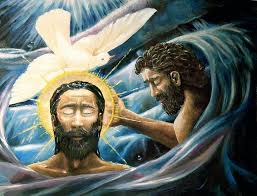 Dalam Injil Keempat, Yohanes Pembaptis memiliki peran penting: bukan hanya untuk membaptis, tapi untuk menjadi saksi. Dia bersaksi tentang sang Terang, sang Mesias sejati, Yesus Kristus. Ketika para imam dan orang-orang Farisi dari Yerusalem datang kepadanya dan menginterogasinya untuk mengklarifikasi identitasnya, dia menjelaskan bahwa dia bukanlah Mesias, bahkan bukan seorang nabi, namun dia berseru, “Akulah suara orang yang berseru-seru di padang gurun: Luruskanlah jalan Tuhan! (Yoh 1:23)” Sepertinya hal ini adalah hal mudah untuk Yohanes lakukan. Pertanyaan diajukan kepadanya, dan dia memberikan jawaban secara lugas dan percaya diri. Namun, melihat lebih dalam pada realitas zamannya, hal yang dilakukannya tidaklah semudah yang kita bayangkan.
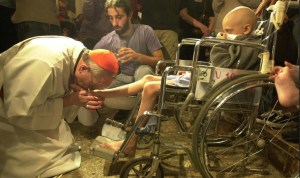 Today, we read the beginning of the Gospel according to Mark. Among the evangelists, only Mark explicitly introduces his work as the “Gospel”. The English word “Gospel” simply means the Good News, or in original Greek, “Evangelion.” Commonly, we understand a gospel as a written account of the life and words of Jesus Christ. The Church has recognized four accounts as canonical or true Gospel. We have Gospel according to Matthew, Mark, Luke, and John.
 Hari ini, kita membaca permulaan dari Injil menurut Markus. Di antara para penginjil, hanya Markus yang secara eksplisit memperkenalkan karyanya sebagai “Injil”. Kata “Injil” berarti “Kabar Baik”, atau dalam bahasa Yunani, “Evangelion”. Biasanya, kita memahami sebuah Injil sebagai karya tertulis tentang hidup dan sabda Yesus Kristus. Gereja telah menetapkan empat karya sebagai Injil kanonik. Kita memiliki Injil menurut Matius, Markus, Lukas dan Yohanes.
 The Season of Advent has begun. This season marks the beginning of the new Church’s liturgical year as well as of the four Sundays preparation for Christmas. A curious mind may ask: why the liturgical year has to be opened by the season Advent? Why not Christmas, Lenten or Easter seasons?
 Masa Adven telah dimulai. Masa ini menjadi tanda dimulainya tahun liturgi Gereja dan juga empat hari Minggu persiapan menuju Natal. Kita mungkin bertanya, “Mengapa tahun liturgi harus dibuka oleh masa Adven? Mengapa tidak Natal, Prapaskah atau Paskah?”
