Ekaristi dan Manna

Hari Raya Tubuh dan Darah Kristus (Corpus Christi)
11 Juni 2023
Yohanes 6:51-58

Hari ini, Gereja merayakan Hari Raya Tubuh dan Darah Kristus, atau juga disebut Hari Raya Corpus Christi (bahasa Latin yang berarti “Tubuh Kristus”). Melalui hari Minggu ini, Gereja mengundang seluruh umat beriman untuk merenungkan sekaligus merayakan salah satu misteri dan mukjizat agung iman Katolik, yaitu kehadiran Yesus Kristus yang nyata dalam setiap Ekaristi. Seperti yang kita dengar dari Injil Yohanes, Yesus benar-benar memberikan Tubuh dan Darah-Nya sebagai makanan yang nyata, dan mereka yang makan Tubuh-Nya dan minum Darah-Nya akan memiliki hidup yang kekal (Yohanes 6:51). Namun, apakah kita benar-benar memakan Tubuh dan Darah Yesus? Apakah itu berarti kita memakan daging manusia, dan dengan demikian, kita melakukan kanibalisme?
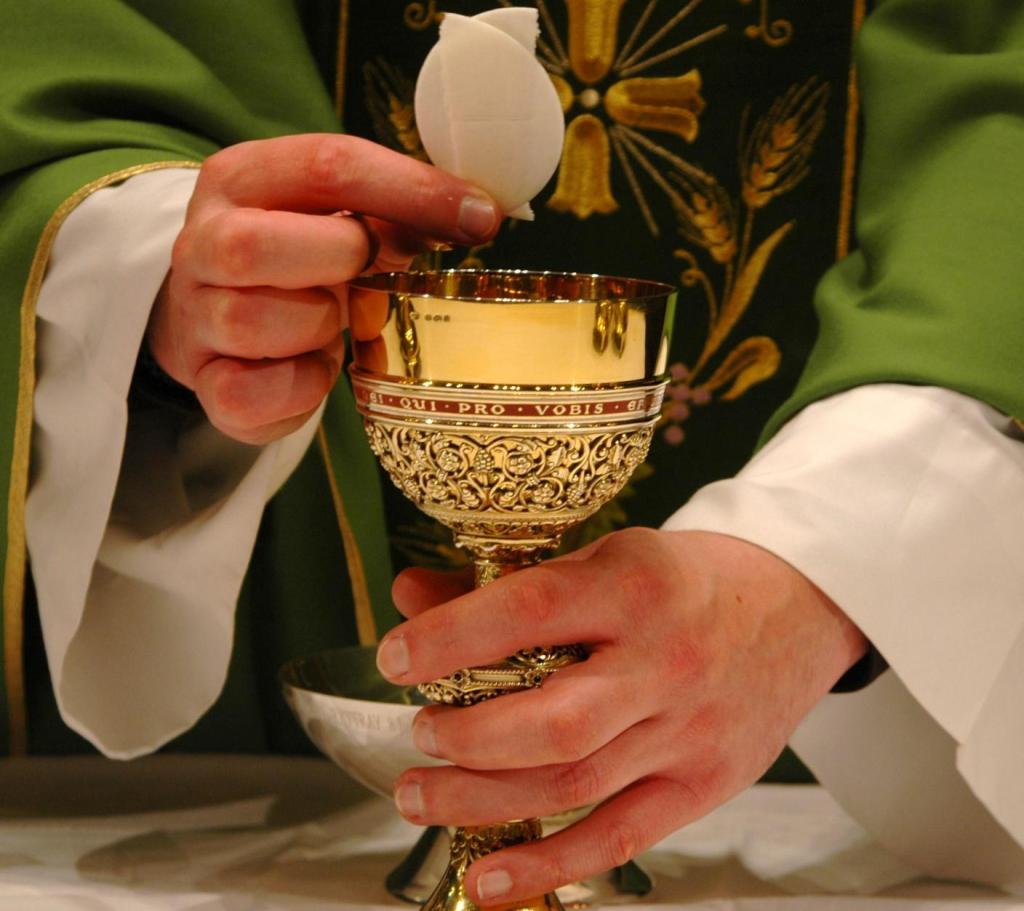
Ya, kita memang makan dan minum Tubuh dan Darah Kristus, tetapi kita tidak melakukan tindakan kanibalisme. Mengapa demikian? Cara termudah untuk menjawab tuduhan ini adalah dengan pergi ke Gereja dan mengamati liturgi Ekaristi itu sendiri. Dalam perayaan misa, tidak ada orang yang memakan daging mentah atau vampir yang menghisap darah segar. Tidak ada yang bersifat kanibal sama sekali dalam Ekaristi. Jadi, di manakah Tubuh dan Darah Kristus? Jawabannya mungkin sedikit rumit. Roti dan anggur yang dipersembahkan dan dikonsekrasikan oleh imam bukan lagi roti dan anggur biasa. Ya, apa yang terlihat tetap sama, tetapi kodratnya berubah menjadi Tubuh dan Darah Kristus yang sesungguhnya. Dalam perspektif ini, kita mengambil bagian dalam Yesus bukan dengan cara kanibal, melainkan dengan cara ekaristi.

Namun, ada hal yang lebih menarik lagi jika kita membaca perkataan Yesus dengan seksama. Ketika Yesus menjelaskan tentang realitas Tubuh dan Darah-Nya sebagai makanan yang sejati, Yesus membuat perbandingan tipologis dengan Manna yang diterima bangsa Israel di padang gurun. Apakah Manna itu? Banyak dari kita beranggapan bahwa Manna hanyalah sejenis roti biasa. Namun, jika kita membaca dengan seksama Kitab Keluaran 16, reaksi orang Israel yang melihat dan mengambil Manna itu sangat terkejut karena mereka tidak pernah melihat makanan semacam itu sebelumnya. Faktanya, kata Manna berasal dari bahasa Ibrani מָן הוּא (baca: man hu; Kel 16:15), yang secara harafiah berarti “apakah ini?” Orang Israel ragu-ragu, tetapi Musa meyakinkan mereka bahwa ini adalah roti yang datang dari surga untuk menopang mereka dalam perjalanan melalui padang gurun.

Dari perbandingan tipologis ini, Yesus ingin kita melihat Tubuh-Nya seperti Manna dalam Perjanjian Lama. Sebagaimana Manna adalah makanan sejati yang berasal dari surga, demikian juga Tubuh Yesus adalah makanan sejati yang berasal dari surga. Sebagaimana Manna adalah makanan yang menopang perjalanan bangsa Israel di padang gurun, demikian juga Tubuh Yesus adalah makanan yang menopang perjalanan kita di bumi. Sebagaimana Manna terlihat seperti roti biasa, namun pada kenyataannya merupakan sesuatu yang melampaui pemahaman bangsa Israel, demikian juga Tubuh Kristus terlihat seperti roti biasa, namun pada kenyataannya merupakan rahmat terbesar yang melampaui pemahaman kita.

Kita bersyukur kepada Tuhan yang telah memberikan Tubuh dan Darah-Nya, seluruh diri-Nya kepada kita sebagai roti kehidupan yang menyehatkan dan melestarikan kita di lembah duka ini. Ekaristi menjadi bukti kasih-Nya, bahwa Dia akan menyertai kita sampai akhir zaman.

Roma
Valentinus Bayuhadi Ruseno, OP

Eucharist and Manna

Solemnity of the Body and Blood of Christ (Corpus Christi)
June 11, 2023
John 6:51-58

Today, the Church is celebrating the solemnity of the Body and Blood of Christ, or sometimes also called the Feast of Corpus Christi (Latin for ‘the Body of Christ’). Through this Sunday, the Church invites all the faithful to reflect as well as to celebrate another great mystery and miracle of Catholic faith, that is, the real presence of Jesus Christ in every Eucharist. As we heard from the Gospel of John, Jesus truly gave His Body and Blood as real food, and those who eat His Body and drink His Blood will have eternal life (John 6:51). But, do we really eat the Body and Blood of Jesus? Does it mean we are eating human flesh, and thus, we are committing cannibalism?

Yes, We are eating and drinking the Body and Blood of Christ, but we do not commit any act of cannibalism. Why so? The easiest way to answer this accusation is simply by going to the Church and observe the liturgy of the Eucharist itself. In the celebration of the mass, neither we see people eating raw meat nor vampires sucking fresh blood. Nothing cannibalistic at all in the Eucharist. So, where are the Body and Blood of Christ? The answer may be a bit complex. The bread and the wine that are offered and consecrated by the priest are no longer ordinary bread and wine. Yes, the appearance remains the same, but the nature is transformed into the real Body and Blood of Christ. In this perspective, we partake in Jesus not in cannibalistic manner, but rather in the eucharistic manner.

However, there is even something more fascinating if we carefully read Jesus’ words. When Jesus explains about the reality of His Body and Blood as true food, Jesus makes a typological comparison to the manna that the Israelites received in the desert. What is manna? Many of us assume that Manna is just another type of bread. Yet, if we read closely the Book of Exodus 16, the reaction of the Israelites who saw and took the manna was utter surprise because they never saw that kind of food before. In fact, the word manna comes from the Hebrew words מָן הוּא (read: man hu), and it simply means “what is this?” The Israelites were hesitant, but Moses assured them that this was the bread that came from heaven to sustain them in their journey through the desert.

From this typological comparison, Jesus wants us to liken His Body like the manna of the Old Testament. As manna is a real food from heaven, and so also Jesus’ Body is a real food from heaven. As manna is a food that sustained the Israelites’ journey in desert, so also Jesus’ Body is a food that sustains us in our journey on earth. As Manna appears like ordinary bread, but in reality something that defies the understanding of sons of Israel, and so also the Body of Christ appears like ordinary bread, but in reality, it is the greatest gift that goes beyond our comprehension.

We give thanks the Lord for giving us His Body and Blood, His whole self to us as the bread of life that nourishes and sustains us in this valley of tears. The Eucharist becomes His proof of love, that He will be with us until the end of time.

Rome
Valentinus Bayuhadi Ruseno, OP

Why We Believe in the Holy Trinity

The Most Holy Trinity

June 4, 2023

John 3:16-18

On Sunday after Pentecost, the Church celebrates the mystery of all mysteries, the Most Holy Trinity. Doubtless, this truth is most challenging to understand, let alone to explain. Yet, why does the Church insist on teaching this and even celebrate the mystery? Why doesn’t the Church teach something more straightforward than the mystery of the Trinity, and perhaps, the Church could have gained more followers?

The Church cannot change the teaching of the Holy Trinity. Why? It is the truth of the Gospel! Had the Church proclaimed watered-down versions of God, the Church would be in grave error and lose its identity as the Church founded by Christ. In fact, there have been attempts to change this mystery since the beginning of the Church’s history. Some theologians proposed that God is one, but He appeared in different modes when dealing with creation. He was the Father when He created the world, the Son when He saved it, and the Holy Spirit when He sanctified it. This teaching is traditionally called modalism. The Church rejected this teaching.

Another teaching says that the Father is the only God, while Jesus (and the Holy Spirit) are not divine, and thus there is no ‘Trinity’. One of the proponents of this view is Arius of Alexandria from the fourth century AD. He said that Jesus was not divine, but a created being gifted with superpowers. In his own words about Jesus, “There was time that he was not.” At that time, it was a huge controversy, and the simplicity of his teaching attracted a lot of people. The Church declared it a false teaching, and because of that, the Church had to endure persecution. Many faithful chose death rather than renounce the mystery of the Holy Trinity.

Why don’t we go for the simpler teaching of God? Why does the Church stand for the highly complex and difficult truth of the Holy Trinity? Simple teachings may be attractive and easy to accept, but it does not mean that more complex teachings are automatically false or irrelevant. For example, addition and subtraction are foundational and simplest in mathematics, but the same mathematics also contains complex algebra and geometry. Does it mean we can easily ignore algebra and dismiss it as false because it is too complex to understand? Certainly not! The truth does not change even if we do not like it or ignore it. The truth remains, even though we try to water it down.

For the Church, the mystery of the Holy Trinity is not just any truth but the truth of all truths and the mystery of all mysteries. In fact, it is the truth that saves. Studying mathematical truths can help us in building houses and, thus, improve our lives, so researching and living the ultimate reality, the mystery of the Trinity, can bring us closer and closer to eternal life. However, the opposite is also true. If we believe and teach the wrong understandings of our God, this may lead us astray and put our souls in a precarious situation. This is why we constantly believe, teach, and live the mystery of the Holy Trinity.

Rome

Valentinus Bayuhadi Ruseno, OP

The Holy Spirit and the Gift of Tongue

Pentecost [A]
May 28, 2023
John 20:19-23 [Acts 2:1-11]

The day of Pentecost is also called the day of the outpouring of the Holy Spirit upon the Church that Christ has just established. As the Holy Spirit came down to each disciple in the form of tongue like fire, the disciples began to speak different languages as to proclaim God’s great deeds. Many people call this miraculous ability to speak different languages in the day of Pentecost as ‘the gift of tongue’. But, did the disciples truly receive the gift of tongue? What is the gift of tongue all about? And, what did exactly happen to the disciples?

Firstly, why does it call as the gift of tongue? Luke, the author of the Acts of the Apostles, described what happened to the disciples. after they had received the Holy Spirit, they began to speak other languages (Greek: ἕτεραι γλῶσσαι – eterai glossai). The word ‘glossa’ in Greek can mean both tongue (the instrument of speech) and language itself. Thus, if the disciples received the gift of tongue, it means they receive the gift of language.

Secondly, what language did the disciples speak? Contrary to some popular beliefs, the disciples did not speak some unintelligible languages or language of the ‘spirit’ or of the angels. They uttered normal human languages. But, what language did the disciples actually say? We can say that the disciples were speaking new languages. Some disciples may speak Greek, others may say in Latin, other still may speak other Mediterranean languages of that time. Yet, there is another theory. It says that the disciples remained speaking in their native language, most probably Galilean Aramaic, but those who were present heard them in their own native languages. This is properly speaking, not really gift of tongue, but the gift of hearing or the gift of translation. The Holy Spirit ‘translated’ the words of the disciples in the hearers’ ears.

The gift of the Holy Spirit in the day of Pentecost is indeed remarkable, but what is it for us? In reality, most of us do not have this kind of extraordinary gift of tongue. I have been in Rome for almost one year, and spent all the time to study Biblical languages, Hebrew and Greek. Yet, after almost a year, I am still struggling with these languages. I wish the Holy Spirit come down during the day of Pentecost and suddenly I could speak Hebrew and Greek!

While it is true that most of us do not have the gift of tongue, but it does not mean we do not possess the Holy Spirit of Pentecost. In fact, if we only focus on the gift of tongue or the gifts of the Spirit, we may miss the entire point. The Pentecost is about the Spirit that gives new birth to each disciple that they become a new person in Christ. As new creations, they now have the courage to preach ‘the mighty deeds of God’.

Pentecost means we allow the Holy Spirit enter into our lives and inspire us to share the Gospel of Jesus Christ in our own particular ways. When we teach our children to pray and bring them to the Church, it is a Pentecost. When some of us volunteer as catechists and even involve in teaching the catechumens, it is a Pentecost. When we do our best to resist the ways of the world, and follow Jesus, it is a Pentecost.

Blessed Pentecost!

Valentinus Bayuhadi Ruseno, OP

Jesus and the Holy Spirit

Sixth Sunday of Easter

May 14, 2023

John 14:15-21

Jesus makes its clear, “If you love me, you will keep my commandments (John 14:15).” Thus, when we genuine love Jesus, it is never enough to simply shout, “Jesus, I believe in You!” or say, “Yes, I love You, Lord!” To love Jesus means that we are committed to observe His laws, follow His teachings, and imitate His examples. Why is to keep Jesus’ commandment fundamental for us Christians?

To get the answer we must go back and understand the Old Testament better. For the Israelites, the Law of the Lord (Hebrew: Torah) is not only important, but also precious, identity-forming, and salvific. It is precious because God Himself crafted and gave the laws to the Israelites in Mount Sinai. It is even more precious because the Law became the fundamental sign of Israel’s covenant with the Lord. By keeping the Law, Israel gradually formed their identity as the people of God. By observing the Law, they longer worshiped other deities, but the Lord alone. By living the ten commandments, they lived no longer like other people surrounding them, who committed atrocious acts like child-sacrifice, various sexual perversions, and other immoral behaviors.

However, what makes this Law truly precious is there is salvation for those are faithful to the covenant and who devoutly keep the Law of the Lord. Because of this, the Israelites recognized that the Law is neither arbitrary nor burdensome, but the proof of God’s love for them. Therefore, to repay God’s love, there is no other better way than observing God’s Law faithfully. From this Old Testament background, we now recognize why it is fundamental to keep Jesus’ commandment as a sign of our love for Him. As the people of the Old Testament observe the Law as their way to show fidelity and love to the God, the Giver of Law, so also, we keep Jesus’ commandment as our way to express our love and faithfulness.

Yet, we admit that to keep Jesus’ Laws is much difficult that we often imagine. To control and moderate our anger is already very difficult, but Jesus instructs us to forgive those who wrong us. To love our own relatives and friends are already tough, but Jesus commands us to love those we consider enemies. To keep marriage intact is challenging, but Jesus teaches that marriage cannot be dissolved by man and couples are expected to be faithful until death.

How is possible to love Jesus if to keep His commandments seem impossible? It is indeed impossible if we rely on our own strength, but it is made possible with God’s power. That’s why after Jesus taught, “If you love me, you will keep my commandments.” Immediately, He promised to send the Holy Spirit, the Paraclete or in Greek, “Parakletos.” This exceptional word comes from two more basic Greek words, “para” means “at the side,” and “kaleo” means “to call.” Thus, “parakletos” can be understood as someone who is called to be at our side, especially in times of need. The only way, we love Jesus and keep His commandments is through the help and power of the Holy Spirit.

As we are moving closer to the day of Pentecost, the day of the Holy Spirit, we are invited to deepen our relationship with the Holy Spirit. We continue to ask His assistance and grace that enable us to do the impossible: to keep His commandments and to love Jesus.

Rome

Valentinus Bayuhadi Ruseno, OP

Mengapa Pintu Gerbang

Minggu Keempat Paskah [A]
30 April 2023
Yohanes 10:1-10

Hari ini adalah hari Minggu keempat Paskah dan tradisi Gereja Katolik menyebutnya juga sebagai Minggu Gembala yang Baik. Alasannya bisa kita temukan dalam Bacaan Injil dimana Yesus memperkenalkan diri-Nya sebagai sang Gembala yang Baik. Namun, tidak hanya sebagai Gembala yang baik, tetapi Yesus juga menyebut diri-Nya sebagai ‘Sang Pintu Gerbang’. Ketika Yesus menyatakan bahwa Dia adalah pintu gerbang bagi domba-domba, ini berarti bahwa hanya melalui Yesus, kita, domba-domba-Nya, dapat menemukan kelegaan dan keselamatan yang sejati. Namun, mengapa Yesus menyebut diri-Nya sebagai pintu gerbang? Bukankah menjadi gembala yang baik sudah cukup bagi kita? Jawabannya terletak pada kehidupan dan tugas seorang gembala pada zaman Yesus, dan salah satu tugas utama seorang gembala adalah sungguh menjadi ‘pintu gerbang.’

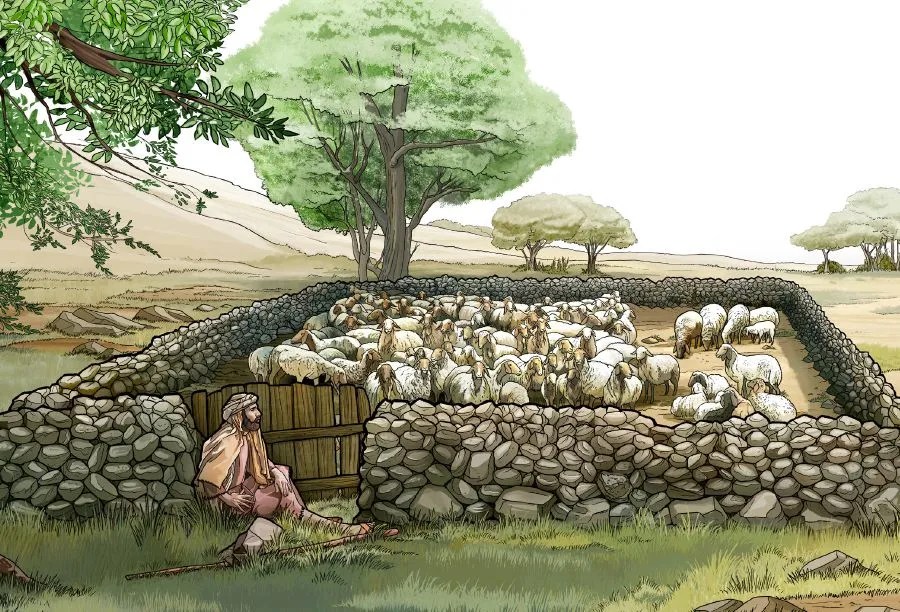
Domba pada umumnya adalah hewan yang berada di padang rumput terbuka daripada di dalam kandang tertutup. Oleh karena itu, untuk mengumpulkan dan melindungi domba-domba pada malam hari, para gembala membangun ‘kandang terbuka’ yang terbuat dari struktur tembok batu melingkar, kurang lebih setinggi 1,5 meter di padang terbuka. Ukuran struktur ini pasti akan tergantung pada banyak atau sedikitnya domba yang ada. Kemudian, umumnya kandang tersebut hanya memiliki satu jalan masuk, dan yang membuat pintu ini unik adalah sang gembala akan menempatkan dirinya di jalan masuk tersebut, dan seolah-olah berfungsi sebagai pintu gerbang. Dengan berada pada posisi tersebut, sang gembala mencegah domba-dombanya keluar dan melindungi mereka dari binatang buas yang mencoba masuk. Gembala juga harus waspada dan berjaga-jaga terhadap pencuri yang akan melompati tembok kandang dan mencelakakan domba. Sekarang, kita tahu bahwa gembala secara harfiah menjadi pintu gerbang kandang domba. Pada pagi hari, gembala akan memanggil domba-dombanya dan mereka akan mengikutinya saat mereka keluar melalui gerbang dan berjalan menuju padang rumput yang hijau.

Yesus adalah pintu gerbang. Ini berarti bahwa hanya di dalam Dia dan melalui Dia, kita menemukan keselamatan sejati dari bahaya yang datang dari yang jahat (dilambangkan sebagai ‘binatang buas’ dan ‘pencuri’). Meskipun benar bahwa hidup di dunia ini, kita terus-menerus menghadapi bahaya dalam bentuk penyakit, krisis keuangan, masalah mental dan relasi, dan bahaya fisik lainnya, satu-satunya bahaya yang dapat memiliki konsekuensi kekal adalah bahaya yang menghancurkan jiwa kita. Tidak ada makhluk lain yang bekerja tanpa henti untuk menyakiti jiwa kita kecuali iblis dan tentaranya. Menghadapi musuh-musuh rohani yang sangat berbahaya ini, kita hanya dapat mengandalkan Yesus, Gembala dan Pintu Gerbang kita.

Sekali lagi, kita perlu diingatkan bahwa kasus-kasus kerasukan dan serangan fisik dari roh jahat adalah cara-cara yang luar biasa. Cara-cara yang biasa dan lazim untuk mencelakai jiwa kita adalah melalui godaan-godaan untuk berbuat dosa. Dengan demikian, hanya di dalam Yesus dan melalui sarana yang Dia berikan kepada kita melalui Gereja-Nya, kita menemukan keamanan sejati kita dari serangan si jahat. Melalui penerimaan Ekaristi secara teratur dan saleh, kita terus merumput di ‘padang rumput hijau rohani’. Melalui sakramen rekonsiliasi, Gembala yang Baik sekali lagi membawa kita, domba-domba yang hilang, ke kandang. Melalui berbagai latihan rohani, seperti devosi, puasa dan amal, kita bertumbuh dalam kepekaan terhadap suara Gembala kita dan juga melindungi diri dari musuh-musuh rohani kita. Hanya di dalam dan melalui Yesus, pintu gerbang sejati, kita menemukan keamanan dan kedamaian yang sejati.

Roma
Valentinus Bayuhadi Ruseno, OP

Why Gate

Fourth Sunday of Easter [A]

April 30, 2023

John 10:1-10

Today is the fourth Sunday of Easter and traditionally it is also called as the Good Shepherd Sunday. This is for an obvious reason. The Gospel reading tells us about Jesus who introduces Himself as the gate of the sheepfold and the Good Shepherd. The other readings also point the image of God as the good shepherd, like the world-renown psalm 23, “the Lord is my shepherd.”

When Jesus proclaims that He is the gate of the sheep, it means that only through Jesus, we, His sheep, may find true rest and salvation. Yet, why did Jesus call himself a gate? Is not being a good shepherd already sufficient for us? The answer lies on the life and duties of a shepherd in the time of Jesus. One of the main purposes of a shepherd is precisely to become a ‘gate’ to the sheepfold.

A sheep is generally an animal who stays at the field rather than inside the stable or barn. Thus, to gather and protect the sheep during the night, the shepherds built a stone enclosure as high as 1.5 meter (around 5 feet) at the open field. The size of the enclosure would surely depend on the volume of the sheep. Then, generally it had only one passageway, and what made this passage unique is that the shepherd would station himself at the access way during the night both to prevent the sheep from going out and to protect the sheep from wild animals that tried to enter. From the point, the shepherd must be alert and vigilant for thieves who would jump over the enclosure wall and harm the shepherd. From here, we know that the shepherd is literally the gate of the sheepfold. At the morning, the shepherd would call his sheep and they would follow him to him as they were going out through the gate and marching to the green pasture.

Jesus is the gate of the sheepfold. This means that only in Him and through Him, we find true safety from the real dangers coming from the evil ones (symbolized as ‘wild animals’ and the ‘thieves’). While it is true that living in this world, we are constantly facing dangers in the forms of sickness, financial crisis, mental and relational issues, and other physical harms, the only danger that can have eternal consequence is one that destroys our souls. There are no other beings working relentlessly to harm our souls except the devil and his minions. Facing these extremely dangerous spiritual enemies, we can only rely in Jesus, our shepherd and gate.

Again, we need to be reminded that cases of demonic possessions, harassment and infestation are extraordinary ways. The ordinary and usual ways to harm our souls is through temptations to sin. Thus, only in Jesus and through the means He has given us through His Church, we find our true security from the onslaughts of the evil one. Through regular and pious reception of the Eucharist, we continue to graze in ‘spiritual green pasture’. Through the sacrament of reconciliation, the Good Shepherd once again brings us, the lost sheep, to the fold. Through various spiritual exercises, like devotions, fasting and almsgiving, we are growing in sensitivity to our Shepherd’s voice as well as the voice of our enemies. Only in and through Jesus, the gate of the sheepfold, we find our true security and peace.

Rome

Valentinus Bayuhadi Ruseno, OP

Jalan menuju Emaus, Jalan menuju Ekaristi

Minggu ke-3 Paskah [A]

23 April 2023

Lukas 24:13-35

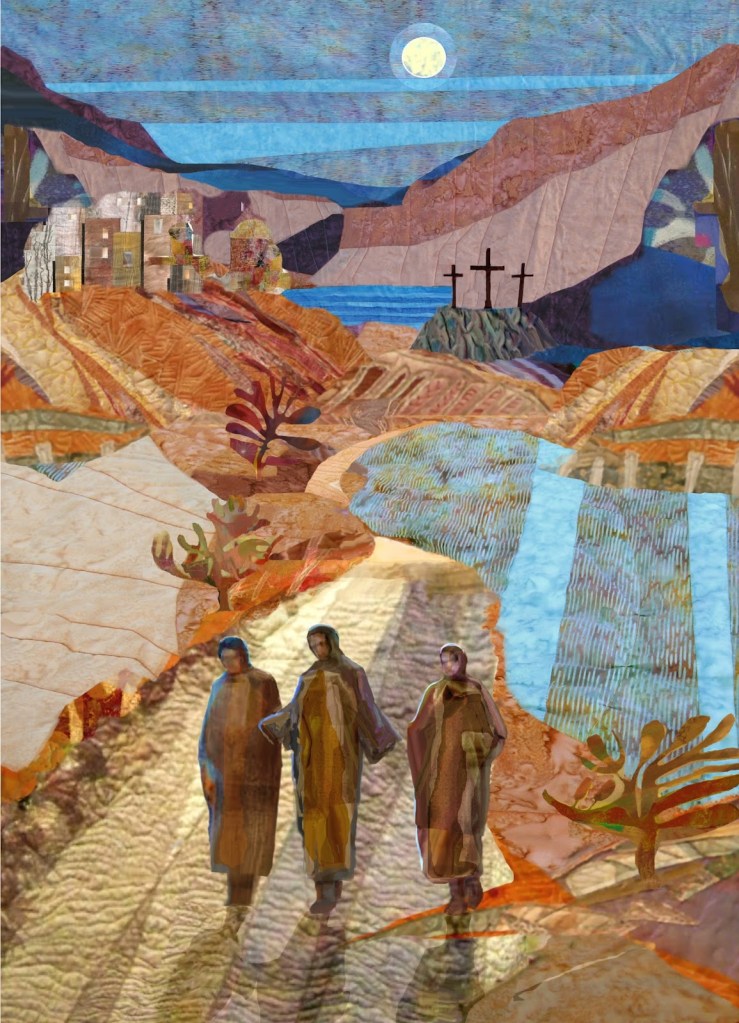
Dua orang murid Yesus pergi ke sebuah desa bernama, Emaus. Salah satu dari mereka adalah Kleopas, dan rekan seperjalanannya yang kemungkinan adalah istrinya sendiri, Maria [lihat Yoh. 19:25]. Mengapa mereka pergi ke Emaus? Mungkin mereka takut dengan penguasa Romawi dan Yahudi yang mengejar murid-murid Yesus setelah jenazah Yesus diketahui hilang. Oleh karena itu, mereka bersembunyi di Emaus. Alasan lainnya adalah keputusasaan. Meskipun Injil tidak secara eksplisit mengatakan bahwa Emaus adalah kampung halaman Kleopas, namun ada kemungkinan besar bahwa Emaus memang tempat asal Kleopas. Harapan dan ekspektasi mereka hancur ketika Yesus, Mesias yang mereka harapkan, dikhianati dan disalibkan. Mereka tidak lagi memiliki alasan untuk tinggal di Yerusalem. Akhirnya, mereka memutuskan untuk meninggalkan murid-murid yang lain dan kembali ke rumah mereka di Emaus.

Namun, Yesus memiliki rencana khusus untuk mereka. Di tengah perjalanan, Yesus menampakkan diri, meskipun mereka tidak dapat mengenali-Nya. Yesus memulai dialog dengan menanyakan keadaan mereka. Dengan sedih, mereka mulai menceritakan kepada-Nya bagaimana mereka mengharapkan Yesus untuk menebus Israel, tetapi Dia gagal, dan wafat di kayu salib. Bahkan dalam kekecewaan mereka, Kleopas menganggap Yesus hanya sebagai seorang nabi, bukan lagi Mesias. Kemudian, Yesus menegur mereka karena kelambanan mereka untuk mempercayai apa yang telah dinubuatkan oleh para nabi dalam Perjanjian Lama tentang Mesias. Kemudian, Yesus mulai menjelaskan ‘Musa dan para nabi’ (yaitu Kitab Suci Perjanjian Lama) kepada mereka. Ini adalah bible study pertama pasca kebangkitan dan diberikan oleh Yesus sendiri!

Lukas memberikan kita detail yang menarik tentang bagaimana metode Yesus dalam melakukan bible study. “Lalu Ia menjelaskan kepada mereka apa yang tertulis tentang Diadalam seluruh Kitab Suci… [Luk 24:27].” Pusat gravitasi dari bible study ini adalah Yesus. Dia menunjukkan bagaimana Musa dan para nabi telah bernubuat tentang Dia, dan bagaimana sekarang Yesus telah menggenapi nubuat-nubuat tersebut melalui penderitaan, kematian dan kebangkitan-Nya. Dalam tradisi Gereja, metode ini disebut ‘katekese tipologis’ [lih. KGK 129). Sederhananya, tipologi adalah sebuah cara untuk melihat tokoh-tokoh, tempat-tempat, dan peristiwa-peristiwa dalam Perjanjian Lama digenapi dalam Perjanjian Baru, khususnya dalam diri Yesus Kristus. Faktanya, Gereja mula-mula juga menggunakan metode Yesus ini. Sebagai contoh, Paulus dalam suratnya, menyebut Yesus sebagai Adam yang baru atau Adam yang kedua [lih. Rm. 5:12-21; 1 Kor. 15:45-49]. Namun, Yesus lebih dari sekadar Adam yang baru. Dia juga Musa yang baru, Daud yang baru, dan banyak lagi.

Namun, Bible Study Yesus bukan hanya tentang metode yang baik. Bahkan, ini bukan tentang pendalaman ilmu Kitab Suci. Ada sesuatu yang lebih dalam. Kisah Kleopas dan rekannya tidak berakhir dengan berakhirnya Bible Study, walaupun mereka ingin Yesus tinggal lebih lama bersama mereka. Maka, Yesus tinggal bersama mereka, tetapi dengan cara yang baru dan kekal. Dia mengambil roti, memberkati, memecah-mecahkannya, dan memberikannya kepada mereka. Setiap umat Katolik yang rajin ke Gereja akan segera mengenali tindakan Yesus ini sebagai Ekaristi, dan Ekaristi adalah Yesus sendiri. Demikian juga, mata Kleopas dan rekannya terbuka, dan mereka mengenali Yesus dalam Ekaristi pertama pasca-kebangkitan ini. Jadi, tujuan akhir dari bible study Yesus adalah untuk membawa kita kepada Ekaristi.

Kisah Cleopas dan perjalanannya ke Emaus selalu menjadi inspirasi pribadi saya. Sebelum saya pergi ke Roma, saya biasa memberikan Bible Study setiap Sabtu malam. Dalam program ini, saya menjelaskan bacaan-bacaan pada hari Minggu besoknya. Kegiatan ini bukan hanya untuk mendalami Alkitab terutama melalui metode Yesus, tetapi tujuan sebenarnya adalah untuk membantu kita mengalami perjumpaan yang lebih dalam dengan Yesus dalam Ekaristi. Jika sebuah Bible Study tidak membawa kita kepada Yesus dalam Ekaristi, maka ini bukanlah Bible Study Yesus.

Roma

Valentinus Bayuhadi Ruseno, OP

The Road to Emmaus, the Road to the Eucharist

3rd Sunday of Easter [A]
April 23, 2023
Luke 24:13-35

Two of Jesus’ disciples went to a village called Emmaus. One of them was Cleopas, and his traveling companion was probably his own wife, Mary [see John 19:25]. Why did they go to Emmaus? Perhaps they were afraid of the Roman and Jewish authorities who were pursuing the disciples after Jesus’ body was found missing. Therefore, they hid in Emmaus. Another reason was hopelessness. Although the Gospels do not explicitly say that Emmaus was the hometown of Cleopas, there is a high probability that Emmaus was indeed his hometown. Their hopes and expectations were shattered when Jesus, their expected Messiah, was betrayed and crucified. They no longer had any reason to stay in Jerusalem. Finally, they decided to leave the other disciples and return to their home in Emmaus.

However, Jesus had a special plan for them. On the way, Jesus appeared to them, although they could not recognize Him. Jesus started a dialog by asking them how they were doing. In sadness, they began to tell Him how they expected Jesus to redeem Israel, but He failed, and died on the cross. Even in their disappointment, Cleopas only regarded Jesus as a prophet, no longer the Messiah. Then, Jesus rebuked them for their slowness to believe what the Old Testament prophets had foretold about the Messiah. Then, Jesus began to explain ‘Moses and the prophets’ (i.e. the Old Testament Scriptures) to them. This was the first post-resurrection bible study and was given by Jesus himself!

Luke gives us interesting details on how Jesus’ method of conducting a bible study. “Then he explained to them what was written about him in all the Scriptures… [Lk 24:27].” The center of gravity of this bible study is Jesus. He shows how Moses and the prophets had prophesied about Him, and how now Jesus has fulfilled those prophecies through His suffering, death, and resurrection. In Church tradition, this method is called ‘typological catechesis’ [cf. CCC 129). Simply put, typology is a way of seeing Old Testament characters, places and events fulfilled in the New Testament, particularly in Jesus Christ. In fact, the early Church also used this method of Jesus right on. For example, Paul in his letters, referred to Jesus as the new Adam or the second Adam [cf. Romans 5:12-21; 1 Cor 15:45-49]. However, Jesus is more than just the new Adam. He is also the new Moses, the new David, and many more.

However, Jesus Bible Study is not just about good methods. In fact, it is not only about deepening the knowledge of the Scriptures. The story of Cleopas and his companion did not end with the end of the Bible Study, although they wanted Jesus to stay longer with them. So, Jesus stayed with them, but in a new and eternal way. He took bread, blessed it, broke it, and gave it to them. Any honest Catholic who regularly goes to Church will immediately recognize this act of Jesus as the Eucharist, and the Eucharist is Jesus himself. Likewise, the eyes of Cleopas and his companion were opened, and they recognized Jesus in this first post-resurrection Eucharist. So, the ultimate goal of Jesus’ bible study is to lead us to the Eucharist.

The story of Cleopas and his journey to Emmaus has always been my personal inspiration. Before I went to Rome, I used to give a Bible study every Saturday night. In this program, I explained the readings for the following Sunday. Yet, this activity is not only to go deeper into the Bible especially through the method of Jesus, but the real purpose is to help us experience a deeper encounter with Jesus in the Eucharist. If a Bible Study does not lead us to Jesus in the Eucharist, then it is not a Jesus’ Bible Study.

Rome
Valentinus Bayuhadi Ruseno, OP
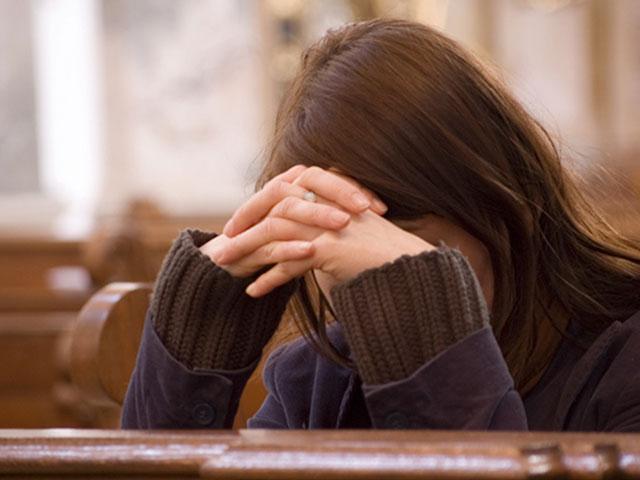
Kerahiman Ilahi dan Sakramen Pengakuan Dosa

Minggu Kedua Paskah [A]

Minggu Kerahiman Ilahi

16 April 2023

Yohanes 20:19-31

Pada 30 April 2000, Paus Yohanes Paulus II mendeklarasikan Minggu Paskah Kedua sebagai Minggu Kerahiman Ilahi. Lalu, pertanyaannya adalah “Mengapa Paus Yohanes Paulus II memilih hari Minggu Paskah kedua sebagai Hari Minggu Kerahiman Ilahi?” Jawabannya terkait dengan catatan harian St. Faustina yang menulis instruksi Yesus untuk menjadikan hari Minggu kedua Paskah sebagai Hari Raya Kerahiman Ilahi. Melalui St Faustina, Yesus tidak hanya meminta untuk merayakan Minggu Kerahiman, tetapi juga mengundang umat beriman untuk melaksanakan pengakuan dosa dan menerima komuni pada hari itu. Namun, apa yang sebenarnya membuat hari Minggu kedua Paskah ini layak disebut sebagai Minggu Kerahiman Ilahi dapat kita temukan pada Injil hari ini. Mari kita telusuri lebih jauh.

Yohanes Penginjil menceritakan dua peristiwa penampakan Kristus yang telah bangkit kepada para murid-Nya, yaitu pada hari Minggu kebangkitan dan pada hari Minggu berikutnya. Tentunya, tokoh utama penghubung dua penampakan adalah Tomas, rasul. Namun, selain kisah Tomas, ada detail khusus yang sering kita lewatkan. Yesus bangkit dari kematian untuk memberikan rahmat khusus Roh Kudus kepada Gereja-Nya, “Damai sejahtera bagimu! Seperti yang telah diutus oleh Bapa, demikianlah sekarang Aku mengutus kamu.” Dan setelah berkata demikian, Ia menghembuskan nafas-Nya atas mereka dan berkata: “Terimalah Roh Kudus! Jika kamu mengampuni dosa orang, dosanya diampuni; jika kamu tidak mengampuni dosa orang, dosanya tetap ada (Yoh 20:21-23).”

Yesus datang bukan hanya untuk membuktikan kebangkitan-Nya dan menawarkan damai kepada murid-murid-Nya yang takut. Dia juga mengutus murid-murid-Nya sebagaimana Bapa mengutus-Nya ke dunia. Ketika Dia mengutus para murid-Nya, Yesus menghembuskan Roh Kudus kepada mereka. Tindakan Yesus ini secara khusus merupakan pengulangan dari apa yang Allah lakukan ketika Allah menciptakan manusia pertama (lihat Kej. 2:7). Dengan demikian, Dia datang untuk menjadikan murid-murid-Nya sebagai ciptaan baru, dan kemudian mengutus mereka untuk sebuah misi. Apakah misi itu?

Ini adalah misi pengampunan dosa, atau misi kerahiman. Yesus secara khusus menciptakan kembali murid-murid-Nya untuk memungkinkan mereka menerima kuasa ilahi, yaitu mengampuni dosa. Kita ingat dalam Injil bahwa Yesus dituduh melakukan penghujatan ketika Dia mengampuni dosa karena orang-orang Farisi mengetahui bahwa pengampunan dosa adalah hak prerogatif Tuhan. Namun, Yesus bangkit dari kematian dan membuktikan keilahian-Nya. Dengan demikian, Dia sungguh memiliki otoritas untuk mengampuni dosa. Namun, Dia tidak berhenti sampai di situ. Dia menghendaki agar Gereja-Nya melanjutkan misi kerahiman-Nya. Dengan demikian, Dia memberikan otoritas ilahi untuk mengampuni dosa ini, kepada para murid-Nya.

Inilah dasar alkitabiah dari sakramen rekonsiliasi. Peristiwa ini juga menjawab sebuah keberatan, “mengapa kita perlu mengakui dosa-dosa kita dan meminta pengampunan kepada manusia yang juga berdosa?” Jawabannya sederhana: karena Allah menghendakinya. Memang benar bahwa manusia tidak memiliki kuasa untuk mengampuni dosa, tetapi situasinya berubah secara radikal ketika Allah membagikan otoritas ilahi ini kepada para wakil-Nya di bumi dan menugaskan mereka untuk membawa lebih banyak orang kepada Kerahiman Ilahi.

Sebenarnya, sakramen pengakuan dosa telah dipraktikkan sejak Gereja primitif. St. Yakobus mencatat dalam suratnya bahwa umat beriman mengakui dosa-dosa mereka di hadapan Gereja, dan kemudian para penatua Gereja akan membawa kesembuhan dan pengampunan melalui doa mereka (lihat Yak 5:14-16). Setelah ribuan tahun, ritus sakramen rekonsiliasi memang telah berevolusi, tetapi tetap mempertahankan struktur dasarnya, yaitu penyesalan, pengakuan dosa, dan penitensi (lihat KGK 1448). Lebih mendasar lagi, sakramen ini tetap menjadi bukti Kerahiman Allah kepada kita.

Roma

Valentinus Bayuhadi Ruseno, OP