
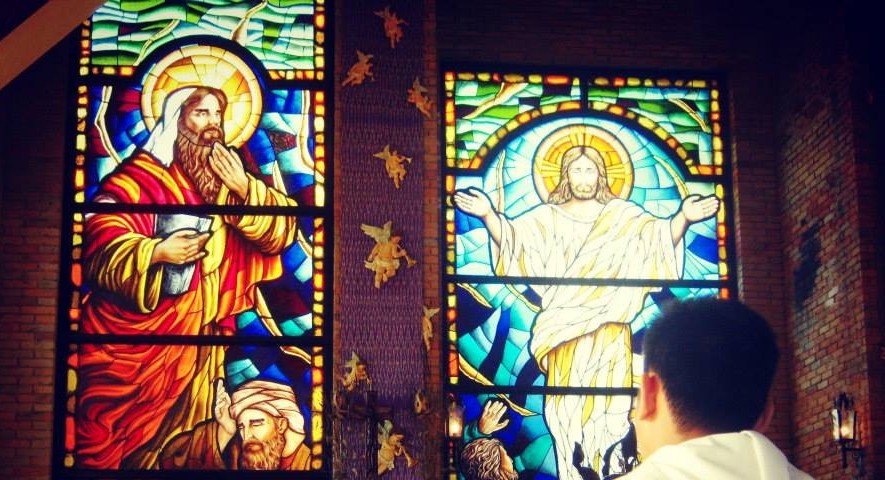
Conversion of St. Paul, the Apostle [January 25, 2019] Mark 16:15-18
 Today we are celebrating the feast of the conversion of St. Paul, the Apostle. St. Paul is one of the greatest names in our Church. Many churches are named after him, like one of the major Basilica in Rome, St. Paul outside the Wall. Not only churches but also many Christians are named after him, including our brothers in the house of formation, Bro. John Paul Sontillano, Bro. Paulus Gabriel Rambang Ngawan, and our former formator, Fr. Pablo Tiong.
Paul is an apostle and yet, he was not part of the 12 apostles. It is through a special revelation, he was called by Jesus and sent to preach the Gospel to all nations, thus, he was called also as the apostle to the nations or of the Gentiles. Indeed, he was doing his job very well, as he preached zealously, traveled tirelessly, and founded many local churches in Asia and Europe, like in Corinth, Thessaloniki, and Galatia. Thirteen of his letters addressed to these communities or to his co-workers like Timothy and Titus, have become part of the New Testament, considered inspired, and thus, the Word of God. And from his letters, the Church has shaped her teachings, doctrines, and orthodoxy, like the primacy of love in Christian living in 1 Cor 13, that love is patient, love is kind, love never fails. Or, in 1 Cor 11, we discover Paul condemns those who failed to celebrate the Eucharist worthily, rooted in the doctrine of the Real Presence of Jesus Christ in the Eucharist. Paul was so inspiring that he inspires St. Luke, the evangelist to devote half of his Acts of the Apostles, to the story and journey of St. Paul.
However, this is only half of the story. Before Paul, there was Saul. Saul was zealous Pharisee who hated Jesus and His followers so much. He went door to door just to arrest Christian, put them in jail, and persecuted them. Young Saul also consented to the murder of the first martyr, Stephen. The Acts of Apostles 9:1 described him as someone who breathes threats and murders. Saul was a dark character with much violence and anger.
However, the Good News of salvation for Saul: no matter dark, violent and broken Saul was, God, is more powerful than all these ugly things. God’s grace, mercy, and love can transform the persecutor of Christ into the vessel of grace. That is why we are celebrating the conversion of St. Paul, not only about St. Paul but the conversion. It is not about Paul’s greatness, achievement, and holiness, but it is God.
Like Paul, we all have our own darkness and brokenness, some may come from broken family, some having a broken family, some have traumatic experiences, some losing people we love in a painful way, some are victims of abuses, some struggling with sickness, with anger, with depression, with poverty or other problems. We are still wrestling with our sinful attitudes and tendencies. Yet, the Good News Paul received is also the same Good News we receive. All of these ugly things have not the last word on us. Our God is stronger than all of this ugliness of life.
As St. Paul himself says, “When sin abounds, grace abounds all the more!” (Rom 5:20)
St. Paul, the apostle, pray for us.
Deacon Valentinus Bayuhadi Ruseno, OP
 Mary who was once a bride and has passed through the tiny-gritty of a Jewish wedding can sense immediately something goes wrong. The wine is running out. In the Jewish context, wine is an essential ingredient in every joyous occasion, as it is ordained by God to “gladden men’s hearts” (Ps 104:15) The lack of it can spell a disastrous result. It is the source of shame, and even a family dispute.
 Maria yang pernah menjadi seorang pengantin dan mengerti detail pernikahan Yahudi dapat segera merasakan ada sesuatu yang tidak beres. Anggur habis! Dalam konteks Yahudi, anggur adalah unsur penting dalam setiap acara yang menggembirakan, karena anggur telah dijadikan oleh Allah untuk “membuat hati manusia gembira” (Mzm 104: 15). Kekurangan anggur dapat menyebabkan konsekuensi buruk. Itu adalah sumber rasa malu, dan bahkan pertikaian antar keluarga.
 The third question Archbishop Socrates Villegas asked me during my ordination was “Are you afraid enough? Just like the first two questions, this one is also counterintuitive. One of my favorite phrases in the Bible is “Do not be afraid!” In many occasions in the Scriptures, this statement does not simply convey encouragement, but also a life-changing mission. When Abram was getting old and he was childless, he doubted to enter the convent with the Lord who promised him descendants like the stars in heaven, God said, “do not fear!” (Gen 15) Then, Abraham became the father of all nations. When God called Jeremiah to prophesy to Judah, he found an excuse in his young age, but God said, “do not be afraid!” (Jer 1:8) Then, Jeremiah became one of the greatest prophets of Israel. When Joseph felt betrayed and yet in his mercy, planned to divorce Mary in secret, the angel said to him, “Joseph, son of David, do not be afraid to take Mary your wife into your home.” (Mat 1:20) Then, Joseph became the foster father of the Son of God. When Mary received the Good News from the angel Gabriel, she did not understand what was happening, Gabriel said to her, “Do not be afraid, Mary, for you have found favor with God.” (Luk. 1:30) Then, she became the Mother of God.
 Pertanyaan ketiga yang diajukan Uskup Agung Socrates Villegas kepada saya saat saya ditahbiskan adalah, “Apakah kamu takut? Sama seperti dua pertanyaan sebelumnya, pertanyaan ini juga berlawanan dengan intuisi dasar. Salah satu ungkapan favorit saya dalam Alkitab adalah “Jangan takut!” Dalam banyak kesempatan dalam Kitab Suci, pernyataan ini tidak hanya menyampaikan dorongan semangat, tetapi juga sebuah misi yang mengubah hidup. Ketika Abram menjadi tua dan tidak memiliki anak, dia ragu dengan janji Tuhan yang menjanjikan keturunan seperti bintang-bintang di langit, Allah berkata, “Jangan takut!” (Kej 15) Akhirnya, Abraham menjadi bapak dari bangsa-bangsa. Ketika Allah memanggil Yeremia untuk bernubuat kepada Yehuda, ia ragu dan beralasan bahwa usianya yang masih muda, tetapi Tuhan berkata, “Jangan takut!” (Yer 1:8) Lalu, Yeremia menjadi salah satu nabi terbesar Israel. Ketika Yusuf merasa dikhianati saat dia mengetahui Maria mengandung diluar nikah, namun dalam belas kasihannya, ia berencana untuk menceraikan Maria secara rahasia, malaikat pun berkata kepadanya, “Yusuf, anak Daud, jangan takut untuk mengambil Maria sebagai istrimu.” (Mat 1:20) Kemudian, Yusuf menjadi ayah angkat Putra Allah. Ketika Maria menerima Kabar Baik dari malaikat Gabriel, dia tidak mengerti apa yang sedang terjadi, Gabriel pun berkata kepadanya, “Jangan takut, Maria sebab engkau beroleh kasih karunia di hadapan Allah.” (Luk. 1:30) Lalu, dia menjadi Bunda Allah.
 We are celebrating the feast of the Holy Family of Nazareth, the feast day of Jesus, Mary, and Joseph. The last event in the Bible that presents the Homily Family together is the Finding of the Child Jesus in the Temple. After this event, Joseph no longer appeared in the Bible, and according to the tradition, he passed away even before he was able to see Jesus in His public ministry. Since this is the last episode where Joseph gets involved in the narrative, we shall reflect more about him.
 Minggu ini, kita merayakan pesta Keluarga Kudus Nazareth. Peristiwa terakhir dalam Alkitab yang menghadirkan Keluarga Kudus adalah ketika Yesus ditemukan di Bait Allah. Setelah peristiwa ini, Yusuf tidak lagi muncul dalam Alkitab, dan menurut tradisi, ia meninggal bahkan sebelum ia dapat melihat Yesus mewartakan Injil. Karena ini adalah episode terakhir di mana Yusuf terlibat dalam narasi, kita akan merenungkan Injil hari ini dan belajar dari St. Yusuf.
 Injil hari ini benar-benar indah. Kita memiliki dua protagonis. Mereka adalah wanita, dan mereka berdua sedang hamil. Siapa mereka? Maria dan Elizabeth. Namun, mengapa cerita mereka indah? Tentunya, wajar bagi wanita untuk hamil. Hanya dengan melihat lebih dekat kisah mereka berdua, kita baru bisa melihat keindahan sejati dari kisah mereka.
 During my ordination, Archbishop Socrates Villegas of Lingayen-Dagupan asked this question to us who would receive the sacred order, “Are you weak enough?” The question was mind-blogging and unexpected because often we have strength, power, and talents as our favorite subjects, and even obsession. We like to show to the world that we are achievers and conquerors. We parade our good education, high-earning job, or a beautiful face. The ‘superior’ mentality does not only affect the lay people traversing in the ordinary world, but also people dressed in white walking through the corridors of the Church. The clergy, as well as religious men and women, are not immune to this hunger for approval and sense of worthiness.
 Saat pentahbisan saya, Uskup Agung Socrates Villegas dari Lingayen-Dagupan bertanya kepada saya, “Apakah kamu cukup lemah?” Pertanyaannya tidak terduga dan bahkan membalikan nalar karena sering kita merasa bahwa kekuatan dan talenta yang kita miliki adalah hal yang penting dalam hidup kita, dan menunjukan siapa diri kita sesungguhnya sebagai milik kita. Kita ingin menunjukkan kepada dunia bahwa kita adalah orang yang berprestasi. Kita memamerkan bahwa kita memiliki pendidikan yang baik, pekerjaan yang berpenghasilan tinggi, atau rupa yang cantik. Mental ‘superior’ ini tidak hanya mempengaruhi orang awam yang bergulat dalam kehidupan sehari-hari, tetapi juga orang-orang berjubah yang putih berjalan di koridor Gereja. Para klerus, serta biarawan dan biarawati, tidaklah kebal terhadap hasrat untuk mendapatkan persetujuan dan rasa kelayakan.
