Prayer to Our Father

17th Sunday in Ordinary Time [July 24, 2016] Luke 11:1-13

 “Father, hallowed be your name, your kingdom come.  Give us each day our daily bread (Luk 11:2-3)”

jesus teach prayerWhen we begin to pray, we acknowledge the presence of God. Not only that, we also recognize that we are dependent on Him. No wonder that the most basic and common prayer is a prayer of petition. We pray to ask favor from God. We beg for good health, success in career, passing examination, protection from dangers, and more. Several times, I wrote that God is not a spiritual ATM and that our prayer is an ATM card. After ‘inserting our prayer’ and ‘inputting a correct amount of request’, God will produce what we wish. But, I have realized that every morning, when I pray before the Blessed Sacrament and the image of our Lady of La Naval de Manila, my prayer is a prayer of petition. I ask God for so many things, for good breakfast, for easy quiz, sometimes for suspension of classes. Certainly, I also pray for people I love and people I promised to pray for.
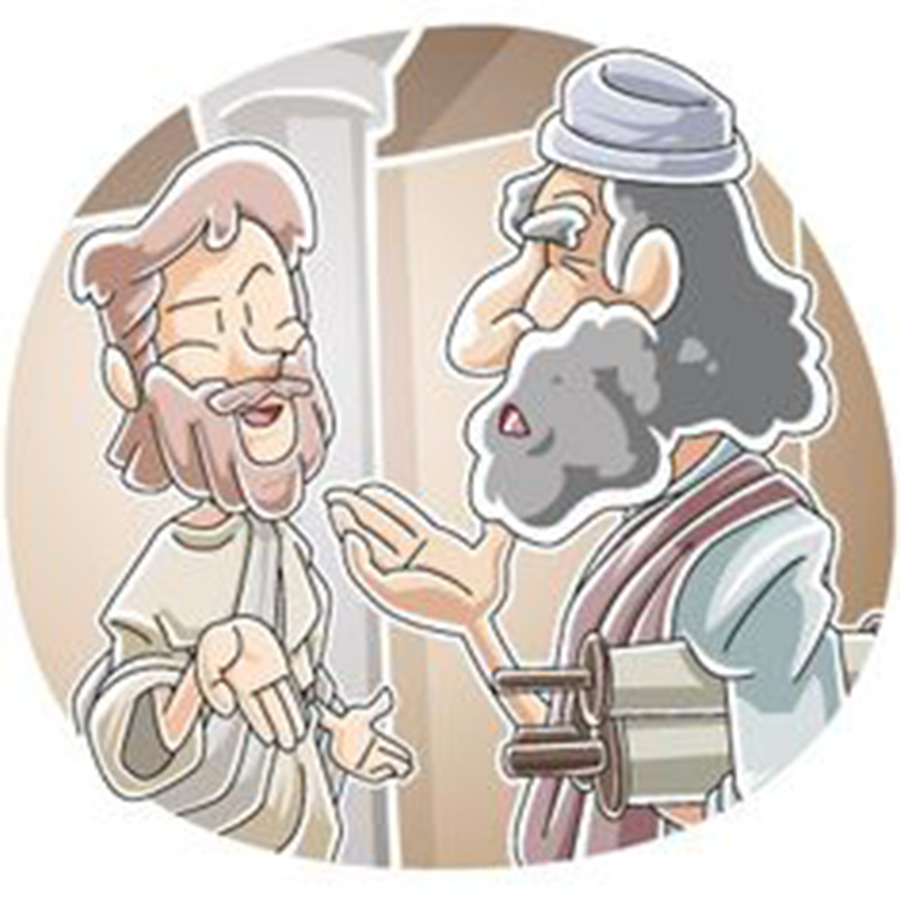
In today’s Gospel, Jesus taught the disciples how to pray. He taught them the most beautiful prayer, the ‘Our Father’. Though Luke’s version is shorter than Matthew’s version, both contain the same basic attitude. This is the prayer of petition. We ask that His Kingdom come. We ask for our daily bread. We ask for forgiveness and deliverance from evil. We ask God for the most essential needs in our daily life.

Jesus did not only teach us to pray humbly, but also to pray confidently. We pray confidently because Jesus introduced us to a God who is a caring and loving Father. I am aware that not every one of us has a very pleasant experience with our own fathers. Some, just like myself, are fortunate to have dependable fathers. But, others have to deal with abusive and violent fathers. Others have no idea who their fathers are. Thus, Jesus assured us that Our Father in heaven is the most caring, most loving and best father of all. “What father among you would hand his son a snake when he asks for a fish? Or hand him a scorpion when he asks for an egg? If you then, who are wicked, know how to give good gifts to your children, how much more will the Father in heaven give the Holy Spirit to those who ask him? (Luk 11:11-13)”

Sometimes, we wonder why God does not answer our prayer of petition. This is precisely because God is our Father. He knows what best for us, and sometimes, what we want is not really the best for us. There is something better in store for us. He always answers our prayers, but often, we do not listen to His answer.

The highest form of prayer in the Catholic tradition is the Holy Eucharist. By its name, Eucharist means thanksgiving (from Greek ‘eucharistein’, to give thanks), yet it is also true that Eucharist is a prayer of petition. In fact, in the Eucharist, we ask God for something we need most, our salvation and the salvation of the world. In order to achieve this, we offer the most pleasing sacrifice, Jesus Christ Himself to the Father, the source of salvation. The heavenly Father could not resist this most perfect offering. God then abundantly showers us with His grace. Our salvation is hinged in prayer.

We pray because this is who we are. We are nothing apart from God. We are dependent on God. We kneel and humble ourselves before Him. Yet, we pray because we are confident that He will listen to our prayer. We are assured that God will take care of us. We pray because God is our Father.

Br. Valentinus Bayuhadi Ruseno, OP

Introvert or Extrovert?

16th Sunday in Ordinary Time. July 17, 2016 [Luke 10:38-42]

 “There is need of only one thing. Mary has chosen the better part and it will not be taken from her (Luk 10:42).”

Martha and MaryFew weeks ago, I participated in a seminar-workshop on personality recognition and development. The activity was organized by the ministry of Lectors of Santo Domingo Parish and facilitated by seasoned speaker Sr. Leticia Garcia, DC. As I expected, the test result told me that I was dominantly introvert, meaning I was silent and more reserved guy. I found strength in solitude. I shared this treats with many of the participants. Yet, not few were actually our opposite. They were extrovert, meaning they were people-oriented and action-driven. They were recharged in interaction with others. Sr. Garcia made a point that the difference must not bring us into animosity. When properly developed, our personalities shall complete each other and contribute in the service of God.
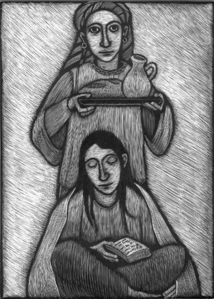
Reading today’s Gospel, we encounter two lovely protagonists, Martha and Mary. Doubtless, Martha was dominantly extrovert. She did all the chores. She was very mobile and action-driven. In fact, she did all talk. Mary, meanwhile, was predominantly introvert. She did nothing but listened to Jesus. She was not even moving at the foot of Jesus. No single word was uttered from her mouth.

In the story, when Martha complained to Jesus about her sister’s inactivity, Jesus defended Mary. It seems that Jesus was favoring Mary over Martha. Does it mean that Jesus preferred introvert people than extrovert one? Not really. Looking deeper into the life of Jesus, we may justifiably say that Jesus himself was predominantly extrovert. He was action-oriented, He did a lot of things: healing, exorcising, feeding, doing miracles, and teaching. He involved in people’s lives. He attended many parties, and even accused as a glutton and a drunkard, a friend of tax collectors and sinners (Mat 11:19)!

So, why is it that Jesus said to Martha, There is need of only one thing. Mary has chosen the better part (Luk 10:42)?” I believe Jesus was not playing favoritism. Rather, Jesus intended to remind Martha that she has missed the point of serving. Not that being extrovert and energetic were wrong, but she began to compare herself with her sister. Worse, she imposed her way as the best option to serve the Lord. As she was immersed in herself, Martha was losing Jesus.

Mary chose a better part because she allowed Martha to be Martha, and to serve Jesus through her unique personalities. She did not complain when Martha did something different from her, because her focus was on Jesus not herself. Mary refused the temptation to make herself as the center of activities and life, create a little god out of herself. Thus, not only she allowed Martha to be Martha, she allowed Jesus to be God. This is the best part.

Every one of us, with our different unique personalities and talents, are called to become Jesus’s disciple, and to contribute in building His Church. The Church needs both the introvert and the extrovert. In fact, when we are working together, we may contribute even significantly larger than our individual contribution. Some of my brothers in the community are truly outgoing and enjoy to do missions and preaching in many places. I admit I have to exert extra effort to go out seminary, and a lot easier for me to spend hours reading and writing. We then work together as I provide them with preaching modules and my friends do the actual preaching.

The danger is when we only think that our ways are the only way and begin to complain about those who are different from us. We no longer think of Christ, but ourselves, and make ourselves as little gods. We pray that we may choose the better part as we work together to serve God and in our works and lives, God is truly glorified.

Br. Valentinus Bayuhadi Ruseno, OP

Do Love and You May Live!

15th Sunday in Ordinary Time. July 10, 2016 [Luke 10:25-37]

“Teacher, what must I do to inherit eternal life? (Luk 10:25)”

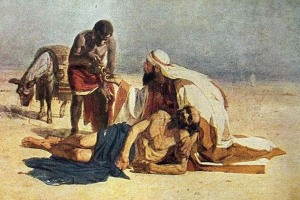
good samaritanThe scholars of the Law were representing the intellectual elite in Jewish society at the time of Jesus. While the rest of Jewish people were struggling to fill their stomach and living in bare necessity, this group had a rare access to good education. We may reasonably suspect that the scholars were affluent enough to read and study the Torah extensively and undisturbed. Compared to the ordinary Jews, they were experts with the details and interpretation of the Law. No wonder, they could easily develop the vice of pride.
Luke described the scholar as one who ‘stood up’ and ‘test’ Jesus. Clearly, he came out with his intellectual superiority and confronted Jesus to prove that he was far better than Him. He might think, “Son of carpenter; he knows nothing!” But, his pride brought him nothing but defeat. He attacked Jesus with the most difficult question he had in his arsenal. “Teacher, what must I do to inherit eternal life?” Yet, Jesus was aware of his intention. Jesus reminded him that the answer laid at the very heart of Torah itself, and allowed him to answer for himself. “You shall love the Lord, your God, with all your heart, with all your being, with all your strength, and with all your mind, and your neighbor as yourself (Deu 6:5).” The answer was so simple yet true that every Jew who were with Jesus, would immediately give their nod, and perhaps their little victorious smile.

Refusing to accept his defeat, the scholar made a last-ditch attempt to justify himself. He asked Jesus who is this ‘neighbor’ he had to love. With His ingenuity and wit, Jesus then presented him one of the loveliest parables ever told: the Good Samaritan. To love means to love radically. To love means to do good even to those who do not deserve our love. Yet, the genius of Jesus is not only to force the scholar to acknowledge his defeat, but He allowed the scholar to reflect on his life’s deeper purpose as a Jew.

At times, we are so confident with ourselves. We feel we know a lot. We engage in discussion and debate on various issues in the Church and society. We take sides, either on the progressive team or conservative group, and fight endlessly. We learn theology, spirituality and leadership, and we feel we are better than the rest of Church. We serve a particular ministry for so long, that we look down at newcomers in the group. Unconsciously, we become like this scholar of the Law who stands up and puts other into test. I confess also at times, I manifest this prideful attitude. When I teach, I often project myself as the all-knowing teacher and throw the hardest questions to my students. It gives a sense of pleasure when I know I am the only one who can answer the questions. Lord, have mercy on me!

Yet, Jesus reminds us today a simple yet fundamental truth: pride only brings defeat, only humility can bring us eternal life. And this humility can be best practiced in love. To borrow the words of St. Paul, “And if I have the gift of prophecy and comprehend all mysteries and all knowledge; if I have all faith so as to move mountains but do not have love, I am nothing. If I give away everything I own, and if I hand my body over so that I may boast but do not have love, I gain nothing (1 Cor 13:2-3).”

Br. Valentinus Bayuhadi Ruseno, OP

Preaching Peace

14th Sunday in Ordinary Time. July 3, 2016 [Luke 10:1-12, 17-20]

 “Into whatever house you enter, first say, ‘Peace to this household (Luk 10:5).”

sending 72 The life of Jesus’ disciples is difficult. It is all the more difficult because we are sent to preach peace. Nothing is harder to sell than peace. In the world intoxicated with fundamental ideologies and narrow-mindedness, violence has become daily food. In Syria and Iraq, the war seems far from an end, and every day, it claims countless of innocent lives. Suicide bombings and shooting rampage insanely become common occurrences. Just recently, some unidentified individuals detonated themselves inside a busy airport in Istanbul, Turkey, killing more than 40 people and injuring countless others. Few weeks back, a heavily armed guy opened fire inside a gay bar in Orlando, US, and murdered more 50 persons. It was the worst case in the US history.

Violence breeds violence. Fear of violence even fuels more violence. A couple days ago, I was able to have conversation with Prof. Steven Friesen from the University of Texas. We discussed a lot of things, but one thing that caught my attention was how fear has influenced many Americans. The law has been passed that now a student may carry a gun inside the campus and the classroom. Prof. Friesen could not find the logic in it. The students are not allowed to smoke inside the school, but they are permitted to bring a fire arm!

Sadly, the culture of violence is not far from us. It is in our daily midst. Physical violence is the most obvious one, but not the only one. Violence can take forms of bullying, verbal abuses, sexual harassment, discrimination and even indifference. Violence may happen in our workplace and our own house. We may do violence to our friends, family members and even our environment. The grimmer part is that often, we are not aware of doing this. Giving recollections and retreats to the youth, I am privileged to listen to their personal stories. It is saddening that some of these kids turn to be victims of domestic violence. Their intellectual and emotional growth was hampered, and they bear the traumatic experience for the entire of their lives. My fear is that they will embody their suppressed anger and hatred inside and turn to be the perpetrators of violence themselves.

We are the Disciples of Christ. This means we are sent to preach peace. We may join the anti-violence movement in our society. I myself supporting our bishops’ call to end vigilantism and uphold rule of law in the Philippine nation that has increasingly turned bloody in his fight against illegal drugs and crime. Yet, the best place to preach peace is within ourselves. We examine our own lives and we may be surprised with little violence we do every day. To preach peace means to stop doing subtle violence, to ask forgiveness, and to repair the damages. I have to admit that sometimes, I committed violence myself. Involved in the teaching and formation ministry, at times, I need to push people to their limit. Yet, instead helping them, I hurt them.

It is true preaching peace is difficult. At times, in promoting peace, we receive violence. At times, we are discouraged by the result. At times, despite our good effort, we do violence even to our beloved ones. Yet, we must not back down. Without preaching peace, we shall always be part of violence. Without preaching peace, we shall never attain peace in ourselves. Without preaching peace, we stop following Christ and his way of the cross.

Br. Valentinus Bayuhadi Ruseno,m OP

The Demand of Love

 13th Sunday in Ordinary Time. June 26, 2016 [Luke 9:51-62]

 “Let the dead bury their dead (Luk 9:60).”

Follow meFollowing Jesus is difficult. In today’s Gospel, He demands that we let go three things. The first is our concern for our enemies. It seems easy to ignore those people whom we don’t like, but in reality, they consume our attention and energy. My friend shared to me how he was bullied at his officemates, and this drained so much of his productivity and focus in work. Often, like James and John, our anger moves to seek revenge and even violence. “Lord, do you want us to call down fire from heaven to consume them (the Samaritans who rejected them)?” Yet, Jesus reminds us to leave these behind.

The second thing is our pursuit for life security and comfort. Jesus put simply, the Son of Man has nowhere to rest his head.” It is part of our nature to look for comfort and enjoyable life, often through seeking material possession. Our modern mentality also trains us to love work and compete for highest position and biggest success. When we work hard and achieve in various fields of our live, like in our career, even our service in the Church, this gives us immeasurable sense of fulfillment. Yet, Jesus also wants us to put this aside.

Thirdly, and I believe most difficult for many of us, it is the family. When a follower wanted to bury his father, Jesus made a strong yet symbolic statement, “Let the dead bury the dead.” Being an Asian, particularly Indonesian, I have strong sense of family-orientation. In almost all major events of my life like graduation and solemn religious profession, my parents were proudly present. Though, it means they needed to fly to Manila and spent a lot of money. For my Filipino brothers in the community, it is unthinkable to totally detach from their families. Yet, even this most precious possession we have, Jesus wants us to set it aside.

It looks like that Jesus’ demand is not only difficult but also impossible. Why does it have to be like this? We read today’s Gospel closely, we realize that by this time, Jesus has fixed His course to Jerusalem. He knew well that nothing but failure, frustration and death awaited Him there. Yet, He still did this because He obeyed His Father’s radical demand. What is this demand of the Father? It is no other than the demand of love: You shall love the Lord, your God, with all your heart, with all your soul, and with all your mind.” Jesus invites us to this radical reorientation of our love. When we love God, then the rest will fall into its proper place.

When we see God first, we will try our best to love those who hate us because people unworthy of our love bear God’s image as well. When we seek God first, the material possession, successful career and life security are seen as blessing from God. Then, they are also blessing to share with others. When we love God first, our love for our family will be purified, as we will bring them to closer to God.

A friend told me how his family is so dear to him. But, thing began to fall apart, as his younger brother was trapped into drug addiction. Initially, he did not like his brother to undergo rehabilitation and be separated from the family for indefinite time. But, after long prayer and discernment, he decided to bring his brother into a center of recovery. It was a painful decision, but his love for God has brought him into a bigger love for his brother. Now, he becomes even more pious as he attends mass every day for the recovery of his brother.

To follow Jesus is difficult and demanding, but it is necessary as we expand our love for God and others.

Br. Valentinus Bayuhadi Ruseno, OP

“Who Do You Say that I Am?”

12th Sunday in The Ordinary Time. June 19, 2016 [Luke 9:18-24]

 simon n jesus - for blogWhat will be your answer to Jesus’ question “Who do you say that I am?” We may come up with multiple answers. He is my God, my savior, my friend or my brother. But, we seldom ask, “Do we really understand Jesus’ question? Do we get the right answer? Why is it that Peter would confess that Jesus is Christ of God in the first place?
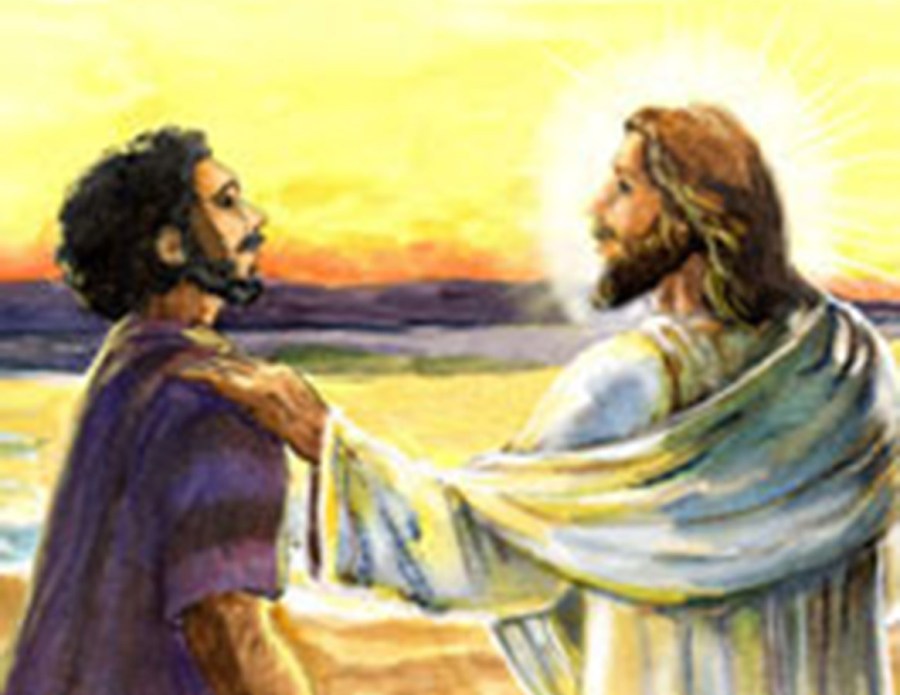
Christ comes from a Greek ‘Christos’, meaning Messiah or the Anointed One. In the Old Testament, the Anointed One of God refers to the great kings of Israel like Saul and David. Less often, the anointed one applies to prophets and priests. They were called as such because they were anointed with the sacred oil before they assumed the important office. They are leaders of the people as well as God’s representative. When God chose David to lead His People, He instructed Prophet Samuel to go to Bethlehem to house of Jesse and look for David. When the holy prophet found him, he anointed David with the sacred oil. The Spirit of the Lord then rushed and filled upon David (1 Sam 16:1-14). Under King David, Israel reached its pinnacle. Yet, after his demise, Israel’s glory slowly fading and even disappeared altogether. Since then, the Israelites long for the coming of the Anointed One who will restore their glory.

Jesus definitely was aware that He is the Anointed One. In the beginning of his preaching ministry, Jesus went to the synagogue in Nazareth and proclaimed, “The Spirit of the Lord is upon me, because he has anointed me to bring glad tidings to the poor. (Luk 4:18).” Yet, Jesus avoided public proclamation that He is the Christ. He knew well that He would be misunderstood by the Jews. He never came as a political liberator nor a military chieftain. Thus, He waited until the best time arrived.

The time reached fulfillment when Peter was able to answer correctly. Tired of Roman oppressions, the entire Israel, including Peter, was impatient for the coming of the Messiah. When Jesus nodded that He is the Christ, Peter and other disciples would not have a second thought. They would follow their Messiah until the New Israel is born. For Peter, his answer is more than making a confession on Jesus’ identity, but promising firm allegiance to Jesus. Yet, again Jesus had to remind them of the false image of Messiah. He would be rejected, persecuted and even murdered. Following Him means also suffering the same fate as their Master.

When Jesus confronts us with this question “Who do you say that I am?” it is not about giving personal and favorite status of Jesus. Following Peter, our answer is fundamentally about radical commitment to Jesus. It means to follow Him for better or worse. It entails sufferings and cross. Even we may lose our life. We can easily and joyfully sing and praise Jesus in worship meetings, but do we get involved in dirty works of helping the poor? We are proud to have our wedding at the big Church with glamorous celebration, but are we patient enough to endure the trials of marriage life ‘until death do us part’? We are called Christian, because we bear Christ in us. But, do we live like Christ’s image in the world?

To answer rightly, we need to get the question correctly. Have we understood Jesus’ question “Who do you say that I am?” Have we dared to give the right answer? May St. Paul reminded us who we are, “I have been crucified with Christ; yet I live, no longer I, but Christ lives in me (Gal 2:19-20)”


Br. Valentinus Bayuhadi Ruseno, OP

“Menurut Kamu, Siapakah Aku ini?”

Minggu Biasa ke-12. 19 Juni 2016 [Lukas 9:18-24]

quo vadisApa yang akan menjadi jawaban kita saat Yesus bertanya “Menurut kamu, siapakah Aku ini?” Kita mungkin menjawab: Dia adalah Tuhan, Juruselamat, sahabat atau saudara. Tapi, apakah kita sudah mengerti dengan baik pertanyaan Yesus? Apakah jawaban kita inilah yang Yesus harapkan? Mengapa jawaban Petrus adalah Kristus dan bukan jawaban lainnya?
Kristus berasal dari kata Yunani ‘Christos’ yang berarti Mesias atau Yang Terurapi. Dalam Perjanjian Lama, Yang Terurapi mengacu pada raja-raja besar Israel seperti Saul dan Daud. Tapi kadang juga, Mesiah berlaku bagi para nabi dan imam. Mereka disebut seperti itu karena mereka diurapi dengan minyak suci sebelum mereka mengemban tugas penting. Mereka adalah pemimpin bangsa Israel dan juga wakil Allah. Ketika Tuhan memilih Daud untuk memimpin umat-Nya, Dia memerintahkan Nabi Samuel untuk pergi ke Betlehem ke rumah Isai dan mencari Daud. Ketika sang nabi menemukannya, ia mengurapi Daud dengan minyak suci. Roh Tuhan kemudian bergegas dan memenuhi Daud (1 Sam 16: 1-14). Di bawah Raja Daud, Israel mencapai puncak kejayaannya. Namun, setelah kematiannya, kejayaan Israel perlahan memudar dan bahkan hilang sama sekali. Sejak saat itu, Israel merindukan kedatangan Mesias yang akan mengembalikan kejayaan mereka.

Yesus menyadari bahwa Dia adalah Kristus. Pada awal misi pewartaan-Nya, Yesus pergi ke rumah ibadat di Nazaret dan menyatakan, “Roh Tuhan ada pada-Ku, oleh sebab Ia telah mengurapi Aku, untuk menyampaikan kabar baik kepada orang-orang miskin; dan Ia telah mengutus Aku (Luk 4:18). Namun, Yesus menghindari proklamasi publik bahwa Dia adalah Kristus. Dia tahu betul bahwa ia akan disalahpahami oleh orang-orang Yahudi. Dia tidak pernah datang sebagai tokoh politik ataupun seorang pemimpin militer. Dengan demikian, Ia menunggu sampai waktu yang tepat.

Waktunya tiba ketika Petrus mampu menjawab dengan benar. Lelah dengan penindasan Romawi, seluruh Israel, termasuk Petrus, tidak sabar akan kedatangan Mesias. Ketika Yesus mengamini bahwa Ia adalah Kristus, Petrus dan murid-murid lainnya tidak akan berpikir dua kali. Mereka akan mengikuti Mesias mereka sampai Ia membawa Israel yang baru. Bagi Petrus, jawabannya lebih dari sekedar pengakuan tentang identitas Yesus, tetapi menyatakan kesetiaannya kepada Yesus. Namun, sekali lagi Yesus harus mengingatkan mereka akan ide salah tentang Mesias di kepala mereka. Dia akan ditolak, dianiaya dan bahkan dibunuh. Mengikuti Yesus berarti juga menderita nasib yang sama seperti Guru mereka.

Ketika Yesus menghadapkan kita dengan pertanyaan Menurut kamu, siapakah Aku ini?” Ini bukan saja tentang memberikan jawaban personal dan favorit tentang Yesus. Seperti Petrus, jawaban kita pada dasarnya adalah komitmen radikal kepada Yesus. Ini berarti untuk mengikuti-Nya dalam suka dan duka. Hal ini menuntut penderitaan dan salib. Bahkan mungkin kita akan kehilangan hidup kita. Kita dengan mudah bernyanyi dan memuji Yesus dalam prayer meeting, tapi apakah kita mau terlibat dalam karya sulit untuk membantu orang-orang miskin? Kita bangga mengalami pernikahan kita di Gereja besar dan indah, tapi apakah kita mampu sabar untuk menanggung cobaan hidup perkawinan ‘sampai kematian memisahkan kita’? Kita dipanggil Kristiani, karena kita adalah milik Kristus. Tapi, apakah kita bisa hidup sebagai citra Kristus di dunia?

Untuk menjawab dengan benar, kita perlu mengerti pertanyaan Yesus dengan benar. Saat, kita mengerti pertanyaan Yesus “Menurut kamu, siapakah Aku ini?” Apakah kita berani memberikan jawaban yang benar? St. Paulus mengingatkan siapa kita sebenarnya, “Aku telah disalibkan dengan Kristus;  namun aku hidup, tetapi bukan lagi aku sendiri yang hidup, melainkan Kristus yang hidup di dalam aku. (Gal 2: 19-20).”

Frater Valentinus Bayuhadi Ruseno, OP

Jesus and the Women

11th Sunday in the Ordinary Time. June 12, 2016 [Luke 7:36—8:3]

 “So I tell you, her many sins have been forgiven; hence, she has shown great love (Luk 7:47).”

women disciplesLuke has a keen eye for the roles of woman in the life of Jesus and the Church. From the beginning of his Gospel to the end, he made sure that women have important role to play. Among the four Gospels, only Matthew and Luke wrote the infancy narrative. While Matthew had Joseph as the main character, Luke chose Mary as his protagonist. Thanks to Luke, we are able to mediate on the great stories of the Annunciation, the Visitation, and the Presentation. Due to Luke also, we may sing Mary’s Magnificat.
In today’s Gospel, Luke presented several women and their important contributions. The first is the unnamed yet repented woman. The woman stands as contrast to the male host, Simon the Pharisee. While Simon felt right and needed no repentance, the woman admitted her sins and asked Jesus’ forgiveness. Jesus presented the woman as good model for us, Christians. Often like Simon the Pharisee, we feel we are in no need of repentance because we are Church’s people. We go to the Church regularly and we are active in various ministries. We feel just right. But, we are forgetting the elementary truth that everyone is a sinner and in need of His mercy. St. Paul reminds us, “All have sinned and are deprived of the glory of God. 24 They are justified freely by his grace through the redemption in Christ Jesus, (Rom 3:23-24).”

When we remind ourselves that we are practically nothing without His love. Everything we are and have, are His gift, we cannot but be grateful. The woman showed a great love to Jesus, she receives forgiveness. We will love and serve the Lord because we are forgiven and loved. The repented woman remind us that humility and gratitude are the right dispositions to serve the Lord. it is not because we are good, capable, and talented.

After the story of the repented woman, Luke also mentioned several women: Mary of Magdalene, Joanna, Susanna and many others. All have something in common. They supported Jesus and His preaching ministry out of their own resources. Male disciples, like Peter, John and James have been always in the spotlight, but Luke gave us an idea that their ministry was practically impossible without the generous support of these woman. Our Church inherited an apostolic tradition. This means the apostles and their successors take the leadership helm. This means also our Catholic, Apostolic Church’s leadership is entrusted to men. Yet, we need to remember without the generosity of women, this Church will not operate well.

I myself have experienced this such generosity. I am part of the Lectors’ group of Sto. Domingo Parish in Metro Manila and many of its members are women. I am always amazed on how generous they are in their time and resources for the parish and ministry despite their problems and limitation. I am also member of the Dominican family, and our female counterpart has played indispensable role. Before he established the Order of Preachers, St. Dominic founded first the Dominican nuns in Prouille. One of the reasons is to spiritually support the rigorous preaching of the brothers. Up to this day, the Dominican sisters are in the forefront in supporting the brothers and the lay Dominicans. Certainly, my own mother has been generous in giving me to the Church. Without their generosity, I would have not been in my place now. Indeed, without women’s generosity, the Church would have not been in this place now.

Br. Valentinus Bayuhadi Ruseno, OP

God of Life

 10th Sunday in Ordinary Time. June 5, 2016 [Luke 7:11-17]

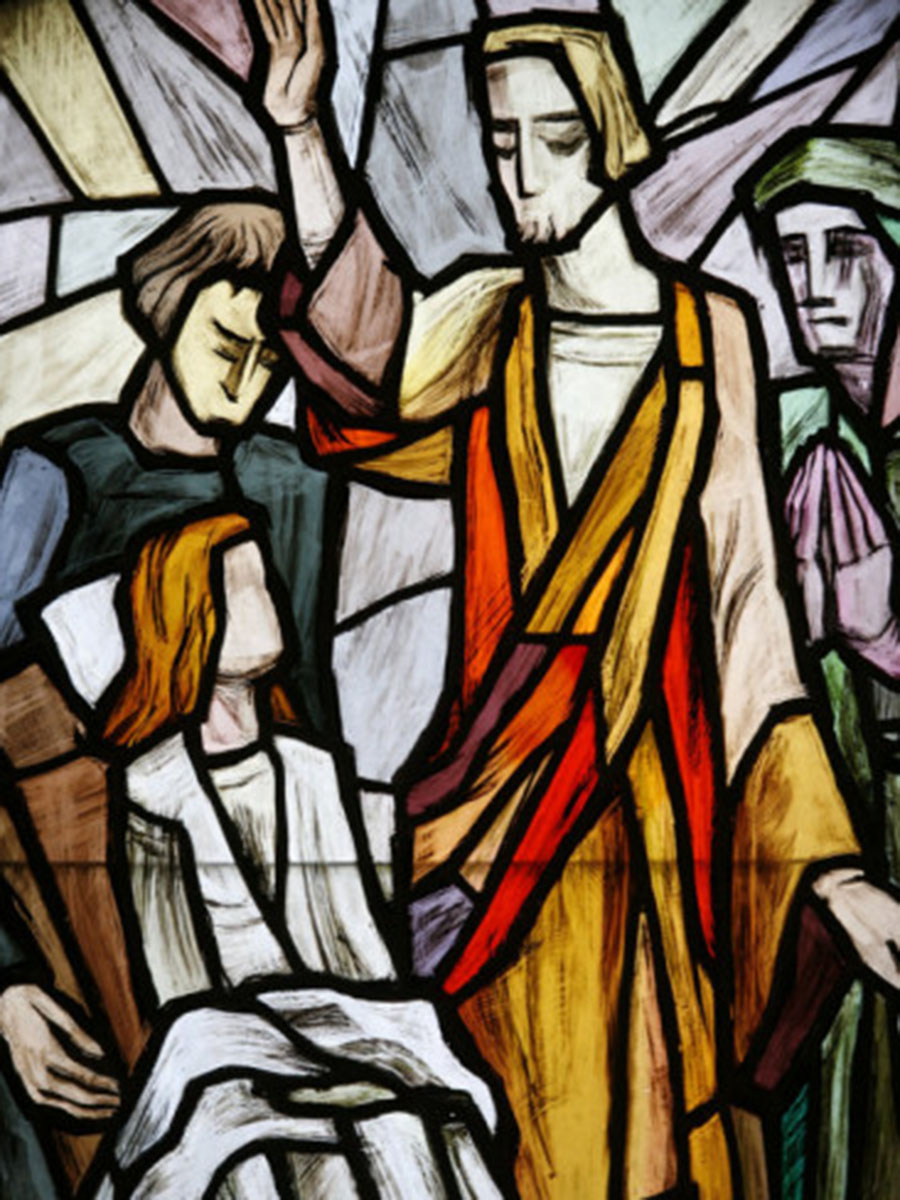
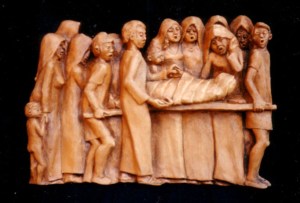
“He stepped forward and touched the coffin; at this the bearers halted, and he said, “Young man, I tell you, arise! (Luk 7:14)”

Jesus raises the son of the Widow of NainThe bible seems to contain a lot of death. Almost all the characters in the Bible tasted death. Some were lucky and enjoyed peaceful end, like Abraham, David and Joshua. Yet, a lot more endured tragic one. Abel was murdered by his own brother. Moses passed away just at the doorstep of the Promised Land. James the son of Zebedee was beheaded, and countless unnamed individuals who were victims of wars, diseases and calamities. In today’s Gospel, a young man died presumably due to illness and left his widowed mother alone. The Bible time was bad period to live.

We are living in a better world where life expectation is significantly higher than the time of Jesus. With modern medical technologies and well-trained and professional medical practitioners, we are enjoying the greater possibility to live longer. Had the young man of Nain lived today, he would not have died early. Yet despite all these advancements, death remains a most certain reality. As Benjamin Franklin said, “In this world nothing can be said to be certain, except death and taxes!” This may lead us to think that God is a kind an uncaring God that allows even His people to suffer and receive violent death.

Jesus then came into the rescue and moved by his compassion, He brought the young man to life. To raise people from the death is one of the greatest miracles of Jesus, and this not only recorded in Luke, but in all the four Gospels. This story of young man of Nain resembles the story of the daughter of the synagogue official in Matthew 9 and Mark 5, and the story of Lazarus, the brother of Mary and Martha in John 11. Yet, we understand that the miracle will not last long. The young man would finally die again. Jesus seemed to cheat death and gives false hope to the widow and the crowd who expected the ‘the great prophet’.

Jesus’ miracles are not a quick-fix to many problems we have, but basically pedagogical, meaning they were designed to teach us a core value. Jesus comes into the story precisely to correct the mindset of the people on God. While the sorrowful widow and the lethargic crowd marched toward certain graveyard, a symbol of despair, Jesus stopped them and pointed to a different direction. They cannot find God among the dead, since He is not the god of the dead, but of the living (Mrk 12:27). Undeniably, we are going to die, but live is not about dying, but about living, and living life to the fullest.

    Yes, we die every day because of our sins, failures, and problems. Like the crowd, we march hopelessly toward our graveyard and despair. We are crushed by the weight of the financial issues. We are down by heavy workload. We are depressed by difficulties in the family. We forget to live fully as we focus our attention on death. But, we must not be hopeless, because our God is not the god of death, and His Son comes to bring us to life once again. “I came so that they might have life and have it more abundantly (John 10:10).”

 Together with St. Paul, we shall boldly say, “We are afflicted in every way, but not constrained; perplexed, but not driven to despair; persecuted, but not abandoned; struck down, but not destroyed; always carrying about in the body the dying of Jesus, so that the life of Jesus may also be manifested in our body (2 Cor 4:8-10).”

Br. Valentinus Bayuhadi Ruseno, OP

The Spirit Connects!

Pentecost Sunday. May 15, 2016 [John 14:15-16,23-25]

“They were all filled with the Holy Spirit and began to speak in different tongues, as the Spirit enabled them to proclaim (Acts 2:4).”

pentecost 2My first time to attend a Catholic Charismatic prayer meeting was around 10 years ago in Singapore. It was a gathering characterized by upbeat music and intensified prayers. As the prayer was getting intense, suddenly I witnessed some of participants began to experience kind of trance and utter unintelligible words. For a while I was dumbfounded, but soon realized that they may actually speak in tongue. This may refer to the one of the Holy Spirit’s charismatic gifts, described no less than St. Paul himself.  “For one who speaks in a tongue does not speak to human beings but to God, for no one listens; he utters mysteries in spirit (1 Cor 14:2)”

All the way, I thought that this speaking of tongue phenomenon was what took place on the Pentecost Sunday. When mother Mary and the disciples gathered fifty days after Jesus’ resurrection and the Holy Spirit started to descend upon them and filled them with His power. They began to speak in different languages. Yet, I was mistaken, they did not speak in tongue. The Holy Spirit bestowed on them a different kind of gift. That was the gift of understanding and language. The Apostles did speak different tongues but this gift empowered to communicate clearly the Gospel of Jesus Christ. People from different regions like Syria, Asia Minor (present-day Turkey), Arab peninsula, North Africa, even Europe, certainly speaking in multitude of languages, were able to comprehend the apostles who were native Palestinian. The Spirit enabled them to connect.

The Pentecost and the gift of language speaks deeper reality about the Holy Spirit. He is the Spirit that unites us. He heals our brokenness and cures our tendency to be selfishly autonomous. In Pentecost, the Spirit undid the curse of the Tower of Babylon in Genesis 11. This is a symbolical story on human egocentric desire to usurp God, to be equal with God, by building a super-tall tower that can reach God with their own efforts and cunningness. Yet, human ambition and greed for power brought divisions and ruins to human race itself. Perhaps, one of the modern depictions of the Tower of Babel is the best-seller novel and most-anticipated TV series Game of Thrones. The novel smartly narrates how men’s unquenchable passion for the Iron Throne moves various characters in the novel to employ various cunning and dirty tricks to destroy their rivals. The seven Kingdoms, formerly united, divided, falls and they are at each others’ throats.

John Maxwell in his book, Everyone Communicates, Few Connects, argues that everything rises and falls on leadership, and yet, leadership is only possible with the leaders’ ability to connect with others. United States president Abraham Lincoln once also said, “If you would win a man to your cause, first convince him that you are his sincere friend.”  Yet, fundamental to a genuine connecting is all about others. It means setting aside our vain ambition and untamed desire to gain all the attention to ourselves and we make others, their concerns, their struggles as ours.

The Holy Spirit comes to bring us that original connection with God and each other. It is true that often we do not get always the ‘high feeling’ of indwelling of the Spirit, just like in the charismatic prayer meetings, but it does not mean the Holy Spirit is absent. In fact, most of the time, He is working in silence and ordinary ways. He is working when we become more persevering in the sufferings of life. He is working when we are more patient in loving people who often give us problems. He gave us little joy in small realization of various blessing we receive today. I believe fruitful and meaningful reading of this reflection is His work in us.

As we celebrate the Pentecost, we pray that we may continue to open ourselves to the grace of the Holy Spirit and allow Him to make our lives ever fruitful.

Br. Valentinus Bayuhadi Ruseno, OP