Featured

The Eucharistic Miracles

The Solemnity of the Most Holy Body and Blood of Christ

John 6:51-58

June 7, 2026

At the heart of the Catholic faith lies a profound mystery: during the Eucharist, the consecrated bread and wine become the true Body and Blood of Jesus Christ. Ordinarily, while the underlying substance changes, the physical appearances of bread and wine remain. Yet, throughout history, there have been extraordinary moments when even these physical appearances have transformed into actual flesh and blood. The Church recognizes these awe-inspiring events as Eucharistic miracles.

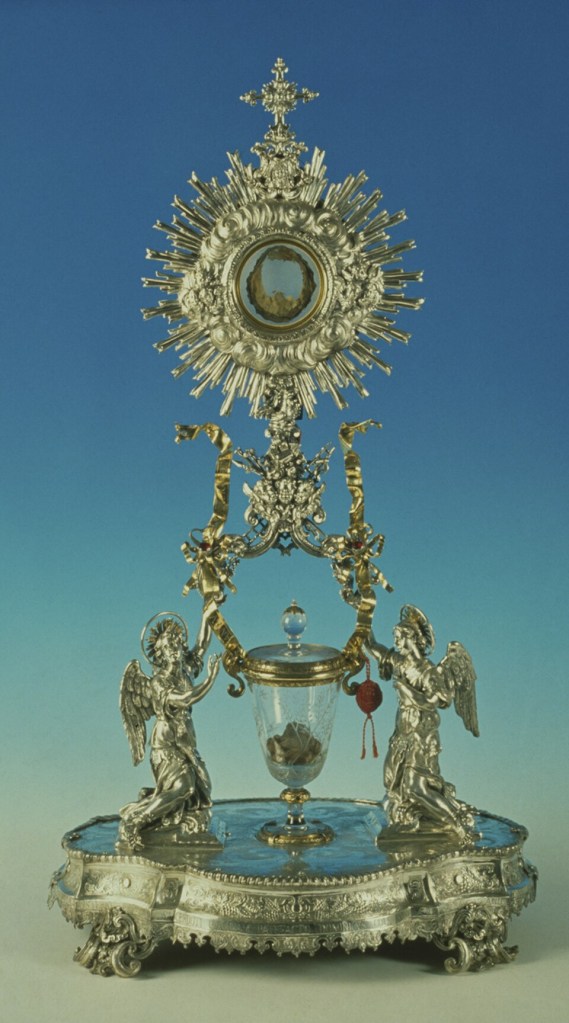
Among the most ancient and renowned of these is the miracle of Lanciano, Italy. According to a tradition formally documented in 1574, an eighth-century priest was celebrating Holy Mass while struggling with profound doubts about the real presence of Christ in the Eucharist. Right after the words of consecration, the unleavened bread visibly transformed into living flesh, and the wine into blood, which soon coagulated into five distinct globules of varying sizes. Remarkably, these miraculous relics are still preserved and can be venerated in the Shrine of Lanciano today.

This ancient miracle underwent rigorous scientific scrutiny between 1970 and 1971, led by Dr. Odoardo Linoli, a professor of anatomy and histology. His findings were astonishing. He concluded that the flesh is authentic human myocardial tissue (flesh from a heart) and the blood is genuine human blood containing normal proteins and minerals. Both the flesh and the blood belong to the AB blood group. Furthermore, Dr. Linoli found no traces of mummification chemicals, salts, or preservatives, making the uncorrupted preservation of this biological tissue over so many centuries scientifically inexplicable.

Lanciano, however, is not an isolated event. In his book, A Cardiologist Examines Jesus, Italian physician Dr. Franco Serafini gathered scientific data from four modern Eucharistic miracles—Buenos Aires in 1996, Tixtla in 2006, Sokółka in 2008, and Legnica in 2013—and compared them with the Lanciano findings. A striking pattern emerged: all the relics consist of human heart tissue of the AB blood type. Even more profoundly, the modern miracles all display active signs of severe physiological stress, trauma, and a lack of oxygen, indicative of a heart in its final agony. Interestingly, while scientists have been able to isolate human DNA from these samples, they have found it remarkably elusive to fully sequence. It is almost as if the DNA itself resists yielding its complete genetic code, though the fragments consistently indicate a male profile.

These miracles defy human explanation, offering extraordinary physical affirmations of the Eucharist. Yet, we must ultimately view them as gentle instruments of God meant to strengthen our faith, rather than something we should actively demand. I remember celebrating Holy Mass in Lanciano when a pilgrim confided in me, hoping to witness a Eucharistic miracle right there at the altar. I replied that I would not want that to happen, simply because I already believe. The truest and greatest miracle happens invisibly within our own hearts when we are granted the faith to recognize that what appears to be simple bread and wine is truly the Lord. That profound, quiet faith is the kind that can move mountains of doubt and fear.

Rome

Valentinus Bayuhadi Ruseno, OP

Guide questions:

When I encounter doubt in my own life, do I bring it to God, or do I allow it to silently distance me from Him? How does recognizing the profound depth of Christ’s sacrificial love in the Eucharist change the way I respond to my own personal trials and sufferings? Am I constantly seeking extraordinary signs to validate my beliefs, or am I cultivating the faith to recognize God’s presence in the ordinary, everyday moments of my life?

Misteri

Hari Raya Tritunggal Mahakudus

31 Mei 2026

Yohanes 3:16-18

Dalam ensiklik pertamanya, Magnifica Humanitas, Paus Leo XIV menegaskan bahwa kita diciptakan menurut citra Tritunggal Mahakudus. Namun, apa sebenarnya makna dari kebenaran ini?

Diciptakan menurut citra Allah memiliki beberapa implikasi yang mendalam. Hal ini berarti kita memiliki kemiripan dengan Tuhan sendiri, meskipun dalam kapasitas yang sangat terbatas. Contohnya, karena Allah memiliki akal budi dan kehendak yang sempurna, kita pun dianugerahi akal budi dan kehendak bebas, walaupun sangat terbatas. Karena Allah adalah kekal, jiwa kita pun bisa bertahan bahkan setelah kematian. Dan karena Tritunggal Mahakudus adalah persekutuan kasih yang tak terbatas, kita secara alami adalah makhluk sosial yang menemukan kebahagiaan sejati kita saat kita mengasihi sesama.

Namun, ada aspek lain yang lebih dalam tentang identitas kita sebagai citra Allah: sama seperti Tritunggal Mahakudus yang adalah sebuah misteri, kita pun diciptakan sebagai sebuah misteri. Namun, apa yang dimaksud dengan “misteri”? Dalam pola pikir kontemporer kita, kata ini seringkali diasosiasikan dengan sebuah rahasia yang menakutkan, sebuah kejahatan yang disembunyikan, teori konspirasi atau sesuatu yang horor dan mistis. Namun, dalam Kitab Suci dan teologi, sebuah misteri (dari bahasa Yunani mysterion) adalah kebenaran dan realitas yang mendalam tentang Allah sendiri. Karena itu, misteri ilahi sejati melampaui kemampuan manusiawi kita untuk memahaminya, sampai Tuhan sendiri memilih untuk mengungkapkannya. Inilah mengapa kita menyebut Tritunggal Mahakudus sebagai sebuah misteri, karena ini adalah sebuah kebenaran yang hanya dapat diketahui jika Allah sendiri berkenan mewahyukannya kepada kita.

Kita pun adalah misteri, karena kebenaran sejati tentang siapa kita tetap tersembunyi di dalam Allah. Tanpa pewahyuan-Nya, jati diri kita yang terdalam tidak bisa diketahui secara penuh. Memang, kemajuan ilmu pengetahuan dan teknologi memungkinkan kita untuk menemukan dan mempelajari berbagai aspek biologi dan psikologi kita, dan hal ini membantu kita berkembang sebagai spesies. Namun, tanpa pewahyuan ilahi, identitas sejati kita, martabat kita, asal-usul kita, dan tujuan akhir kita akan selalu berada di luar jangkauan otak kita.

Karena kita adalah misteri, kebenaran tentang pribadi manusia tidak dapat dikerdilkan menjadi sekadar konsep yang dapat dianalisa oleh pikiran kita, dan realitas kita tidak dapat sepenuhnya dikuasai oleh kehendak bebas kita. Sama seperti pikiran kita tidak dapat sepenuhnya memahami Allah dan kehendak kita tidak dapat menaklukkan-Nya. Sejatinya, misteri hadir bukan untuk ditaklukkan, tetapi dirangkul, dialami, dan dikasihi. Kebenaran ini juga berlaku bagi kita. Sebagai misteri yang hidup, kita tidak dimaksudkan untuk tunduk pada dominasi pikiran dan kehendak kita; kita dimaksudkan untuk dipeluk, dialami, dan dicintai.

Kita bukanlah sekadar statistik atau data yang kemudian diolah oleh AI. Kita bukanlah sekadar hewan yang akan bisa dibedah, juga bukan tubuh yang dapat dimanipulasi demi “kemajuan.” Kita bukanlah mesin ekonomi yang dibuang ketika tidak lagi produktif, juga bukan konsumen yang tak berakal. Pribadi manusia adalah misteri yang harus dihormati, bukan masalah yang harus diselesaikan. Maka, Filsuf Katolik Gabriel Marcel mengatakannya dengan indah: “Pergi ke Mars adalah masalah. Jatuh cinta adalah misteri.”

Roma

Valentinus Bayuhadi Ruseno, OP

Pertanyaan panduan:

Kapan saya memperlakukan diri sendiri atau orang lain sebagai “masalah yang harus diselesaikan” daripada “misteri yang harus dicintai”? Jika Tritunggal Mahakudus adalah persekutuan kasih yang tak terbatas, bagaimana kenyataan ini mengubah cara saya mendekati orang-orang di sekitar saya? Ketika kehidupan modern menggoda saya untuk memandang orang sebagai sekadar statistik, pekerja, atau konsumen, langkah spesifik apa yang dapat saya ambil untuk mengenali martabat ilahi yang tersembunyi dalam diri mereka?

The Mystery

The Solemnity of the Most Holy Trinity

May 31, 2026

John 3:16-18

In his first encyclical, Magnifica Humanitas, Pope Leo XIV reminds us that we are created in the image of the Holy Trinity. But what does this truly mean?

Being created in the image of God has several profound implications; primarily, it means we share in His attributes, albeit to a finite degree. Because God possesses perfect intellect and will, we too are endowed with these faculties. Because God is eternal, our souls are immortal, destined to survive death and stand before our Creator. And because the Holy Trinity is a communion of infinite love, we are inherently social beings who find our truest happiness in loving others.

There is, however, another, deeper aspect we share with the Divine: just as the Holy Trinity is a mystery, we too are created as a mystery. But what do we mean by “mystery”? In our contemporary mindset, the word often conjures ideas of secrets, true crime, or thriller films. Yet, in Scripture and theology, a mystery (from the Greek mysterion) is a profound truth and reality about God. Because it belongs to God, it exceeds our natural human capacity to grasp—until the Lord chooses to reveal it. This is why we refer to the Holy Trinity as a mystery; it is a truth that can only be known because God has graciously made it known to us.

We, too, are mysteries, because the ultimate truth about who we are remains hidden in God. Without His revelation, our deepest selves remain partially unknown even to us. Certainly, advances in science and technology allow us to discover and study various aspects of our biology and psychology, helping us improve as a species. Yet, without divine revelation, our truest identity, our inherent dignity, our origin, and our ultimate destiny will always remain beyond the reach of a microscope.

Because we are a mystery, the truth of the human person cannot be reduced to a mere concept for the mind to dissect, nor can our reality be entirely mastered by human will. Just as our minds cannot fully comprehend God and our wills cannot conquer Him—yet we can embrace, experience, and love Him—the same applies to us. As living mysteries, we are not meant to be subjected to oppressive domination or mere analysis; we are meant to be embraced, experienced, and loved.

We are not mere statistics or data points in a computer. We are not just animals to be dissected, nor bodies to be manipulated for the sake of “progress.” We are not economic machines to be discarded when we are no longer productive, nor are we mindless consumers. Recognizing that the human person is a mystery to be reverenced rather than a problem to be solved, the Catholic philosopher Gabriel Marcel put it beautifully: “Getting to Mars is a problem. Falling in love is a mystery.”

Rome

Valentinus Bayuhadi Ruseno, OP

Guide questions:
In what areas of my life am I treating myself or someone else as a “problem to be solved” rather than a “mystery to be loved”? If the Holy Trinity is a communion of infinite love, how does that reality challenge or change the way I approach my daily relationships? When modern life tempts me to view people as mere statistics, workers, or consumers, what specific steps can I take to recognize their hidden, divine dignity?

Abraham the Father of Faith

2nd Sunday of Lent [A]

March 1, 2026

Gen 12:1-4

The first readings of the Sundays of Lent offer us a glimpse into the history of salvation, particularly within the Old Testament. Last Sunday, we encountered Adam and Eve, reflecting on their creation and their eventual fall from grace. Today, we meet Abraham, the first patriarch. But why Abraham?

Abraham’s original name was Abram, which literally means “the exalted father.” For much of his life, this name served as a source of irony, perhaps even mockery, since he was elderly and childless. How could he be an “exalted father” with no children to exalt him? It was then that the Lord appeared to Abram. At seventy-five years old, he received a staggering command: leave his homeland for a faraway territory. With this command came a promise: he would become the father of many nations, and through him, blessings

At first glance, this calling might have seemed like another cruel joke in Abram’s life. Though childless, he lived comfortably among his kinsmen and was set to die in his homeland under the protection of familiar “gods.” Yet, the Lord called him out of his comfort zone and into unknown territories where danger and misery often lurked. We cannot know exactly what was in Abram’s mind, but we know his actions: he chose to trust a God he barely knew and put his life on the line. His kinsmen might have thought him delusional or senile. Little did he know that his decision would not only change his life but transform the future of humanity.

Following the Lord is rarely a breeze. While Abram was blessed with great wealth, vast livestock, and hundreds of retainers, even defeating four kings with his 318 trained men (Gen 14). he still lacked a promised heir. When he reached the age of ninety-nine, God changed his name to Abraham, meaning “father of many nations.” Yet, he continued to wait for the one thing that would make that title a reality. Finally, when Abraham was 100 years old, Sarah gave birth to Isaac (Gen 21:5).

However, the story did not end with a simple “happily ever after.” God eventually asked for something unthinkable: that Abraham sacrifice his only son, Isaac (Gen 22). Just as he had obeyed in the beginning, Abraham obeyed again. Fortunately, an angel prevented him from harming Isaac, and the Lord blessed Abraham even more for his faithfulness.

Abraham passed away at the age of 175. While he had other sons, one through Hagar and six through Keturah, their numbers still fell short of the literal “many nations” promised to him. Abraham closed his eyes without seeing the full extent of those nations, yet he did not complain or grow bitter. Abraham was not perfect. At one point, he was dishonest with Pharaoh and acted cowardly by giving up his wife, Sarah, to the King of Egypt (Gen 12:10-20). Yet, despite his imperfections, he fundamentally believed that God would fulfill His word. From Abraham came the Israelites, and from the Israelites, we received Jesus.

Rome

Valentinus Bayuhadi Ruseno, OP

Guide Questions:
In your life right now, what is the “homeland” or comfort zone God might be asking you to leave behind to follow Him more fully? Have you ever felt that God’s promises for your life contradict your current reality? How do you maintain hope when your circumstances seem to “joke” at your faith? How does knowing that God uses imperfect, flawed people to transform the future of humanity change the way you view your own mistakes and shortcomings?

Jesus and the Law

Sixth Sunday in Ordinary Time [C]

February 15, 2026

Matthew 5:17-37

Jesus makes it crystal clear that He came to fulfill the Law rather than abolish it. However, a deeper question remains: “Why is the Old Testament Law so vital that Jesus Himself felt bound to fulfill it?”

We often view laws and regulations as constraints that bind our freedom and limit our movement—something external imposed upon us. Yet, when we look at the bigger picture, we realize that laws are an integral part of almost all human communities. Even in the smallest contexts, such as the family, children obey their parents’ commands, even though they are often unwritten. Certainly, the larger and more complex a society becomes, the larger and more sophisticated the body of laws required.

Laws are necessary precisely because they guarantee the common good. By incentivizing those who contribute to society and punishing those who harm it, laws ensure the proper functioning and flourishing of the human community. Just as we use our minds to control our passions and govern ourselves toward genuine personal growth, we create laws to check our collective harmful behaviors and guide our society toward progress. Laws are not merely external impositions; they are the products of human reason designed to help us live better.

We can also view laws as tools to help us “domesticate” ourselves. Just as we domesticate wolves to transform them into dogs—taming their wildness to make them into helpful companions—so too do we subject our aggressive and violent natures to the rule of law to make ourselves into more mature individuals.

This brings us back to Jesus. While human minds are imperfect and therefore create imperfect laws, God’s mind is perfect and creates laws that are infallible (Ps 19:7). This is why Jesus clearly revealed His purpose: to fulfill God’s laws, not to abolish them. If human laws are designed to form us into better members of human society, then God’s laws are designed to form us into perfect men and women, ready for the Kingdom of Heaven.

However, Jesus also recognized that some regulations in the Old Testament were directed specifically at the ancient Israelites rather than at all people of all times. In fact, some laws, such as the regulation on divorce (Matt 5:31), were obviously enacted as a result of God’s concession to the hardness of human hearts.

Therefore, fulfilling the Law does not mean that Jesus simply endorsed all Old Testament regulations. Rather, He purified and re-taught them with greater clarity, specifically revealing the “heart” of the laws themselves. For instance, when Jesus reaffirmed the Ten Commandments, He pointed to the truth that killing and violence toward fellow human beings are rooted in the wrath within our own hearts. Unless we are able to control this internal anger, we are bound to harm others, leading to the destruction of life (Matt 5:21-22).

Ultimately, Jesus demonstrates that the Law is not a set of cold restrictions, but a path toward spiritual maturity and internal transformation. By fulfilling the Law, He invites us to move beyond mere outward obedience and instead embrace a heart aligned with the perfect love of God.

Rome

Valentinus Bayuhadi Ruseno, OP

Guide questions:

Do I view God’s commandments as burdens that restrict my freedom, or as a loving pathway designed for my genuine growth and happiness? Jesus teaches that violence begins internally; what hidden anger or resentment am I holding onto that prevents me from having a truly pure heart?Am I merely following the rules to appear “good” on the outside, or am I allowing God’s Law to tame my nature and transform me for His Kingdom?

Yesus dan Hukum

Minggu Biasa Keenam [A]

15 Februari 2026

Matius 5:17-37

Yesus dengan jelas menyatakan bahwa Ia datang untuk menggenapi Hukum, bukan untuk menghapusnya. Namun, pertanyaan yang lebih mendalam adalah: “Mengapa Hukum di Perjanjian Lama begitu penting sehingga Yesus sendiri seperti terikat untuk menggenapinya?”

Kita sering memandang hukum dan peraturan sebagai batasan yang mengekang kebebasan kita dan membatasi gerak kita, sesuatu yang dipaksakan dari luar. Namun, ketika kita melihat gambaran yang lebih besar, kita menyadari bahwa hukum merupakan bagian integral dari semua komunitas manusia. Bahkan dalam konteks yang paling kecil sekalipun, seperti keluarga, anak-anak menaati perintah orang tua mereka, meskipun seringkali tidak tertulis. Tentu saja, semakin besar dan kompleks suatu masyarakat, semakin besar dan rumit pula sistem hukum yang diperlukan.

Hukum diperlukan tepatnya karena hal ini menjamin kebaikan bersama. Dengan memberi insentif kepada mereka yang berkontribusi pada komunitas dan menghukum mereka yang merugikannya, hukum memastikan komunitas berfungsi dengan baik dan menghasilkan kemakmuran bersama. Sama seperti kita menggunakan akal budi kita untuk mengendalikan nafsu dan mengatur diri kita menuju pertumbuhan pribadi yang sejati, kita menciptakan hukum untuk mengendalikan perilaku kolektif kita yang merugikan dan mengarahkan masyarakat kita menuju kemajuan. Hukum bukanlah sekadar paksaan eksternal; namun, hal ini adalah produk dari akal budi manusia yang dirancang untuk membantu kita hidup lebih baik.

Kita juga dapat memandang hukum sebagai alat untuk membantu kita “menjinakkan” diri kita sendiri. Sama seperti kita menjinakkan serigala untuk mengubahnya menjadi anjing—menjinakkan sifat liar mereka agar menjadi teman yang berguna—demikian pula kita menundukkan sifat agresif dan kekerasan kita dengan bantuan aturan hukum untuk menjadikan diri kita individu yang lebih dewasa.

Hal ini membawa kita kembali kepada Yesus. Akal budi manusia tidak sempurna dan oleh karena itu menciptakan hukum-hukum yang bisa salah, sementara akal budi Allah sempurna dan menciptakan hukum-hukum yang tidak dapat salah (Mz 19:7). Itulah mengapa Yesus dengan jelas mengungkapkan tujuan-Nya: untuk memenuhi hukum-hukum Allah, bukan untuk menghilangkannya. Jika hukum-hukum manusia dirancang untuk membentuk kita menjadi anggota masyarakat yang lebih baik, maka hukum-hukum Allah dirancang untuk membentuk kita menjadi pria dan wanita yang sempurna, siap untuk Kerajaan Surga.

Namun, Yesus juga menyadari bahwa beberapa peraturan dalam Perjanjian Lama ditujukan secara khusus kepada orang Israel kuno, bukan kepada semua orang di semua zaman. Faktanya, beberapa hukum, seperti peraturan tentang perceraian (Mat 5:31), jelas dibuat karena “kerasnya hati manusia.”

Oleh karena itu, menaati Hukum tidak berarti Yesus sekadar menyetujui semua peraturan di Perjanjian Lama. Sebaliknya, Dia memurnikan dan mengajarkan kembali peraturan-peraturan tersebut dengan lebih jelas, khususnya mengungkapkan “hati” dari hukum-hukum itu sendiri. Misalnya, ketika Yesus mengukuhkan kembali Sepuluh Perintah Allah, Dia menunjuk pada kebenaran bahwa pembunuhan dan kekerasan terhadap sesama manusia berakar pada amarah yang ada di dalam hati kita. Kecuali kita mampu mengendalikan amarah di hati, kita akan terus menyakiti orang lain, yang pada akhirnya akan menyebabkan kehancuran hidup mereka (Mat 5:21-22).

Pada akhirnya, Yesus menunjukkan bahwa Hukum bukanlah sekumpulan aturan yang kaku, tetapi jalan menuju kedewasaan rohani dan transformasi batin. Dengan memenuhi Hukum Allah, Dia mengundang kita untuk melampaui ketaatan external semata dan sebaliknya membentuk hati yang selaras dengan kasih sempurna Allah.

Roma

Valentinus Bayuhadi Ruseno, OP

Pertanyaan panduan:

Apakah saya memandang perintah Allah sebagai beban yang membatasi kebebasan saya, atau sebagai jalan kasih yang dirancang untuk pertumbuhan dan kebahagiaan sejati saya? Yesus mengajarkan bahwa kekerasan bermula dari dalam; amarah atau dendam tersembunyi apa yang saya simpan yang menghalangi saya memiliki hati yang benar-benar murni? Apakah saya hanya mengikuti aturan untuk terlihat “baik” di luar, atau apakah saya membiarkan Hukum Allah menaklukkan sifat saya dan mengubah saya untuk Kerajaan-Nya?

Purifying One’s Heart

5th Sunday in Ordinary Time [A]

February 8, 2026

Matthew 5:13-16

Continuing His Sermon on the Mount, Jesus reveals our identity as the “light of the world.” As such, our light must shine and be seen by others. Interestingly, only one chapter after this teaching, Jesus instructs His listeners: “Be careful not to practice your righteousness in front of others to be seen by them” (Mt 6:1). At first glance, it may seem that Jesus is contradicting Himself. How are we to understand this?

While these instructions appear opposing, they are, in essence, complementary. The bridge between these two statements is intention: is the action meant to glorify the Lord or simply to seek personal glory? As Matthew 5:16 suggests, the motivation behind our good works is decisive. If we perform noble deeds to receive personal recognition, they lose their merit before the Lord. However, if we sincerely desire to lead people to God, our efforts truly please Him rather than men.

The Art of Discernment

Recognizing our true intentions is never a child’s play. It requires us to dwell in silence and reflect deeply on our actions and the motivations behind them. In the Catholic tradition, we call this spiritual process discernment; in our Dominican tradition, it is a vital part of contemplation. In modern scientific terms, this is meta-cognition—the act of “thinking about thinking.”

To practice this discernment, we can follow three simple steps:

  1. Seek the Virtue of Humility The ability to recognize our deepest intentions begins with God’s grace softening our hearts. Without humility, we may never consider that something might be “off” with our actions. Humility empowers us to face the unpolished parts of our humanity with contrition, leading to repentance. It acts as a sensor, detecting hidden motives driven by pride or self-interest.
  2. Ask Difficult Questions We must be attentive to our emotional reactions. Ask yourself: “When others ignore or fail to appreciate my good deeds, do I feel sad, angry, or disappointed? Do I lose the motivation to continue?” If the answer is yes, the motivation may be self-centered. Another vital question is: “If these good works were taken away from me, would I feel deeply pained or resentful?” Such a reaction often indicates an unhealthy attachment, suggesting we view the work as “ours” rather than “the Lord’s.”
  3. Request the Purification of Intentions Once we become aware of our interior motivations, we should not be discouraged or stop doing good. Even if our intentions are mingled with selfish desires, God’s grace is constantly working to sanctify us. To purify your heart:
    • Be grateful for every opportunity to do good, whether the task is big or small, a success or a failure.
    • Redirect praise: When people appreciate your deeds, invite them to thank the Lord with you.
    • Embrace criticism: Be thankful for those who criticize you, as they can be instruments of your spiritual purification.

Rome

Valentinus Bayuhadi Ruseno, OP

Guide Questions:
What are our good works we do for our families, our community and the Church? When others ignore or fail to appreciate my good deeds, do I feel sad, angry, or disappointed? Do I lose the motivation to continue? If these good works were taken away from me, would I feel deeply pained or resentful? Do I prioritize our ministries more than my family?

Pemurnian Hati

Minggu Biasa Kelima [A]

8 Februari 2026

Matius 5:13-16

Dalam kelanjutan Khotbah di Bukit, Yesus mengungkapkan identitas kita sebagai “terang dunia.” Sebagai terang, kita harus bersinar dan terlihat oleh orang lain. Menariknya, hanya satu bab setelah pengajaran ini, Yesus memberi perintah kepada pendengarnya, “Ingatlah, jangan kamu melakukan kewajiban agamamu di hadapan orang supaya dilihat mereka…” (Mat 6:1). Sepertinya Yesus mengajarkan dua hal yang saling bertentangan. Bagaimana kita memahami hal ini?

Meskipun perintah-perintah ini tampak bertentangan, pada dasarnya mereka saling melengkapi. Jembatan antara kedua pernyataan ini adalah “niat” kita. Apakah tindakan baik atau keagamaan yang kita lakukan untuk memuliakan Tuhan atau sekadar mencari kemuliaan pribadi? Jika kita melakukan perbuatan yang baik untuk mendapatkan pengakuan dan pujian dari orang lain, tindakan-tindakan ini kehilangan nilainya di hadapan Tuhan. Namun, jika kita dengan tulus ingin membawa orang kepada Allah, usaha kita benar-benar akan berkenan bagi Allah.

Mengenali niat atau intensi di balik tindakan-tindakan kita sejati bukanlah hal yang mudah. Hal ini menuntut kita untuk meluangkan waktu untuk merenung dalam keheningan dan memikirkan secara mendalam tentang tindakan kita serta motivasi di baliknya. Dalam tradisi Katolik, proses spiritual ini disebut “discernment” (pembedaan roh); dalam tradisi Dominikan, hal ini merupakan bagian penting dari kontemplasi. Dalam istilah ilmiah modern, ini disebut meta-kognisi atau proses “berpikir tentang berpikir.”

Untuk mempraktikkan “discernment” ini, kita dapat mengikuti tiga langkah sederhana:

  1. Memohon keutamaan Kerendahan Hati. Kemampuan untuk mengenali niat terdalam kita dimulai dengan rahmat Allah yang melembutkan hati kita. Tanpa kerendahan hati, kita mungkin tidak pernah mempertimbangkan bahwa ada sesuatu yang “tidak beres” dengan tindakan-tindakan kita. Kerendahan hati memberdayakan kita untuk menghadapi bagian-bagian yang belum sempurna dari kemanusiaan kita dengan penyesalan, yang mengarahkan kita pada pertobatan. Kerendahan hati bertindak sebagai “sensor,” mendeteksi motif tersembunyi yang berasal dari kesombongan atau kepentingan diri sendiri.
  2. Bertanya pertanyaan sulit dan memperhatikan reaksi emosional kita. Saat discernment, kita perlu bertanya pada diri sendiri: “Ketika orang lain mengabaikan atau tidak menghargai perbuatan baik saya, apakah saya merasa sedih, marah, atau kecewa? Apakah saya kehilangan motivasi untuk terus melakukannya?” Jika jawabannya ya, niat kita mungkin masih bersifat egois. Pertanyaan penting lainnya adalah: “Jika perbuatan baik ini diambil dari saya, apakah saya merasa sangat sakit hati atau dendam?” Reaksi semacam ini sering kali menunjukkan keterikatan yang tidak sehat, dan kita cenderung memandang karya baik tersebut sebagai “milik kita” daripada “milik Tuhan.”
  3. Meminta permurnian niat. Setelah kita menyadari motivasi batin kita, kita tidak boleh putus asa atau berhenti berbuat baik. Ini juga godaan dari sang jahat untuk menjauhkan kita dari Tuhan. Meskipun niat kita tercampur dengan keinginan egois, rahmat Allah terus bekerja untuk menyucikan kita. Untuk memurnikan hati kita, ada beberapa hal praktis yang bisa kita lakukan:
  • Belajar bersyukur. Bersyukurlah atas setiap kesempatan untuk berbuat baik, baik karya besar maupun kecil, sukses maupun gagal.
  • Alihkan pujian: Ketika orang lain menghargai perbuatan Anda, ajaklah mereka untuk bersyukur kepada Tuhan bersama Anda.
  • Terima kritik: Bersyukurlah kepada mereka yang mengkritik Anda, karena mereka dapat menjadi alat permurnian rohani Anda.

Roma

Valentinus Bayuhadi Ruseno, OP

Pertanyaan Panduan:

Apa saja perbuatan baik yang saya lakukan untuk keluarga, komunitas, dan Gereja? Ketika orang lain mengabaikan atau tidak menghargai perbuatan baik saya, apakah saya merasa sedih, marah, atau kecewa? Apakah saya kehilangan motivasi untuk terus melakukannya? Jika perbuatan baik ini diambil dari saya, apakah saya akan merasa sangat sakit hati atau dendam? Apakah saya memprioritaskan pelayanan ini lebih dari keluarga saya?

Sabda Bahagia: Jalan Kebahagiaan yang Tidak Biasa

Minggu Biasa Keempat [A]

1 Februari 2026

Matius 5:1-12a

Khotbah Yesus di Bukit dimulai dengan Delapan Sabda Bahagia. Saat Paus Santo Yohanes Paulus II mengunjungi Bukit ini di tahun 2000, ia menyebut bahwa Sabda Bahagia adalah “Magna Charta Kristiani,” membandingkannya dengan Sepuluh Perintah Allah dalam Perjanjian Lama. Ia menyatakan bahwa, “Sabda Bahagia bukan daftar larangan, tetapi undangan untuk hidup baru yang menarik.” Undangan ini memang menarik karena menyentuh cita-cita fundamental yang kita semua miliki: menjadi bahagia. Namun, saat kita membaca Sabda Bahagia ini, kita menyadari bahwa jalan Yesus menuju kebahagiaan bukanlah jalan biasa. Mengapa demikian?

Kita cenderung percaya bahwa memiliki kekayaan adalah tanda berkat Allah dan sarana menuju kebahagiaan kita. Namun, Yesus mengajarkan, “Berbahagialah orang-orang yang miskin di hadapan Allah, karena merekalah empunya Kerajaan Surga.” Meskipun pada dasarnya harta duniawi adalah baik adanya, keinginan kita untuk mencapai kesuksesan yang lebih besar, mengumpulkan kekayaan yang lebih banyak, dan tetap di puncak seringkali menyebabkan berbagai masalah kesehatan, kelelahan mental, dan juga masalah dalam relasi dengan orang-orang kita kasihi. Pada akhirnya, pengejaran ini melemahkan jiwa kita, menjauhkan kita dari Tuhan, dan kita menyadari bahwa kita sebenarnya tidak bahagia.

Kita sering berpikir bahwa tawa dan “good vibes” adalah tanda-tanda paling pasti dari kebahagiaan, tetapi Yesus berkata bahwa orang yang berdukacita akan dihibur. Terkadang, kita lupa cara bersedih dan berduka, secara khusus saat ketika kehilangan sesuatu yang berharga, seperti orang yang kita cintai. Alih-alih, kita mencoba melarikan diri dari kesedihan dengan menikmati kesenangan instan seperti bermain HP berjam-jam, menyibukkan diri dengan berbagai aktivitas atau bahkan menjadi “workaholic”, atau bahkan menyalahkan Tuhan. Namun, kemampuan berduka membantu kita menghadapi kenyataan hidup dan berdamai dengan keterbatasan manusiawi kita. Kitapun lebih bergantung pada kerahiman Tuhan, dan pada akhirnya menemukan penyembuhan dan penghiburan.

Kita biasanya menganggap bahwa melalui kekuatan, agresi, dan dominasi, kita dapat memperoleh apa pun yang kita inginkan. Namun, Yesus mengajarkan hal yang sebaliknya: orang yang lemah lembut akan mewarisi bumi, orang yang berbelas kasih akan menerima belas kasihan, dan orang yang membawa damai akan disebut anak-anak Tuhan. Meskipun ini terdengar bertentangan dengan asumsi kita, ketika kita melihat sekitar kita, kita menyadari bahwa begitu banyak masalah dalam keluarga, masyarakat, dan lingkungan disebabkan oleh keserakahan manusia, agresi dan kekerasan, dan juga balas dendam. Hanya ketika kita belajar untuk menjadi lembut, mampu memaafkan, dan menbawa damai, kita menciptakan damai tidak hanya dalam diri kita sendiri tetapi juga bagi orang-orang di sekitar kita.

Seringkali, kita tanpa sadar mengisi hati kita dengan ambisi untuk menjadi yang terbesar, paling berkuasa, dan paling berpengaruh. Kita membiarkan hasrat akan kesenangan dan kepuasan instan mengendalikan kita. Namun, Yesus mengingatkan kita bahwa hanya orang yang hatinya suci yang dapat melihat Allah. Oleh karena itu, sangat penting untuk menyadari apa yang mencemari hati kita, mengakui noda-noda tersebut, dan memohon rahmat Allah untuk membersihkannya. Dalam tradisi Katolik, proses ini disebut pemeriksaan batin dan pengakuan dosa, di mana rahmat Allah hadir, membersihkan hati kita dan mempersatukan kita kembali dengan-Nya, sumber kebahagiaan kita.

Akhirnya, Yesus menutup Sabda Bahagia dengan menempatkan diri-Nya sebagai tujuan akhir kebahagiaan kita. Yesus bukan sekadar guru bijak atau “coach” yang mempromosikan prinsip-prinsip “self-help” untuk kesuksesan, tetapi Dia adalah sumber kebahagiaan itu sendiri. Hanya saat kita berpegang pada-Nya dan menyerahkan hati kita kepada-Nya, hidup kita menemukan makna, dan kebahagiaan abadi menjadi tujuan akhir kita.

Roma

Valentinus Bayuhadi Ruseno,

Pertanyaan Refleksi:

Ambisi duniawi apa yang saat ini menguras energiku, dan bagaimana melepaskan ambisi tersebut dapat membawa kedamaian bagiku? Apakah ada konflik dalam hidup saya di mana saya mencoba “menang” melalui dominasi atau agresi, daripada menyelesaikannya melalui kelembutan dan belas kasihan? Jika saya melihat kebiasaan harian saya, apakah mereka menunjukkan bahwa saya mencari kebahagiaan terutama dalam pencapaian duniawi, atau dalam hubungan dengan Yesus?

Beatitude: The Counter-Intuitive Path to Happiness

4th Sunday in Ordinary Time [A]

February 1, 2026

Matthew 5:1-12a

Jesus’ Sermon on the Mount begins with the Eight Beatitudes. Pope St. John Paul II calls the Beatitudes the “Magna Charta of Christianity,” comparing them to the Ten Commandments of the Old Testament. He notes, “They are not a list of prohibitions, but an invitation to a new and fascinating life.” They are indeed an exciting invitation because they address the one fundamental desire we all share: happiness. However, as we read the Beatitudes, we realize that Jesus’ path to happiness is counter intuitive. Why is this?

We tend to believe that possessing wealth is a sign of God’s blessing and the means to our happiness. Yet, Jesus teaches, “Blessed are the poor in spirit, for theirs is the Kingdom of Heaven.” While Jesus speaks specifically of “poverty of spirit,” our eagerness to achieve major successes, accumulate wealth, and stay at the top often leads to health problems, mental exhaustion, and difficult relationships with our loved ones. Eventually, these pursuits wear down our spirits, and we find we are not truly happy.

We often think that laughter and “good vibes” are the surest signs of happiness, but Jesus says that the one who mourns will be comforted. Sometimes, we forget how to mourn when we lose something precious, such as a loved one. Instead, we try to run from grief by indulging in instant pleasures or endless scrolling, distracting ourselves with busy activities and overworking, or even blaming God. Yet, mourning helps us confront the truth of our fragile nature, rely more on God’s mercy, and ultimately find healing and comfort.

We normally perceive that through strength, aggression, and dominance, we can acquire whatever we desire. Jesus teaches exactly the opposite: the meek will inherit the land, the merciful will receive mercy, and the peacemakers will be called children of God. While this sounds counter-intuitive, when we look around, we realize that so many problems in our families, societies, and environments are caused by human greed, violent aggression, and vengeance. Only when we learn to be gentle, merciful, and peace-loving do we create peace not only within ourselves but also for the people around us.

Often, we unconsciously fill our hearts with ambitions to be the greatest, most powerful, and influential. We allow desires for pleasure and instant gratification to control us, but Jesus reminds us that only the pure in heart can see God. Hence, it is critical to be aware of what contaminates our hearts, to acknowledge these impurities, and to ask for God’s grace to purify them. In the Catholic tradition, this process is the examination of conscience and the confession of sins, through which God’s grace cleanses our hearts and reunites us with Him, the source of our happiness.

Finally, Jesus concludes the Beatitudes by positioning Himself as the endpoint of our happiness. Jesus is not just a wandering wise teacher promoting self-help principles for successful living, but the source of happiness itself. Unless we cling to Him and offer up our hearts to Him, our lives remain fruitless, and eternal happiness remains beyond our reach.

Rome

Valentinus Bayuhadi Ruseno, OP

Guide questions:

Which worldly ambition/s is currently draining my energy, and how might letting go of it bring me more peace? When I feel hurt or overwhelmed, do I tend to numb the pain with distractions (like screens, busy work, or pleasure), or do I bring that grief honestly to God? Is there a conflict in my life where I am trying to “win” through dominance or aggression, rather than resolving it through gentleness and mercy? If I look at my daily habits, do they show that I am seeking happiness primarily in worldly achievements, or in a relationship with Jesus?